


Report: Trump Considers Targeted Strike Against Iran, Followed by Larger Attack 

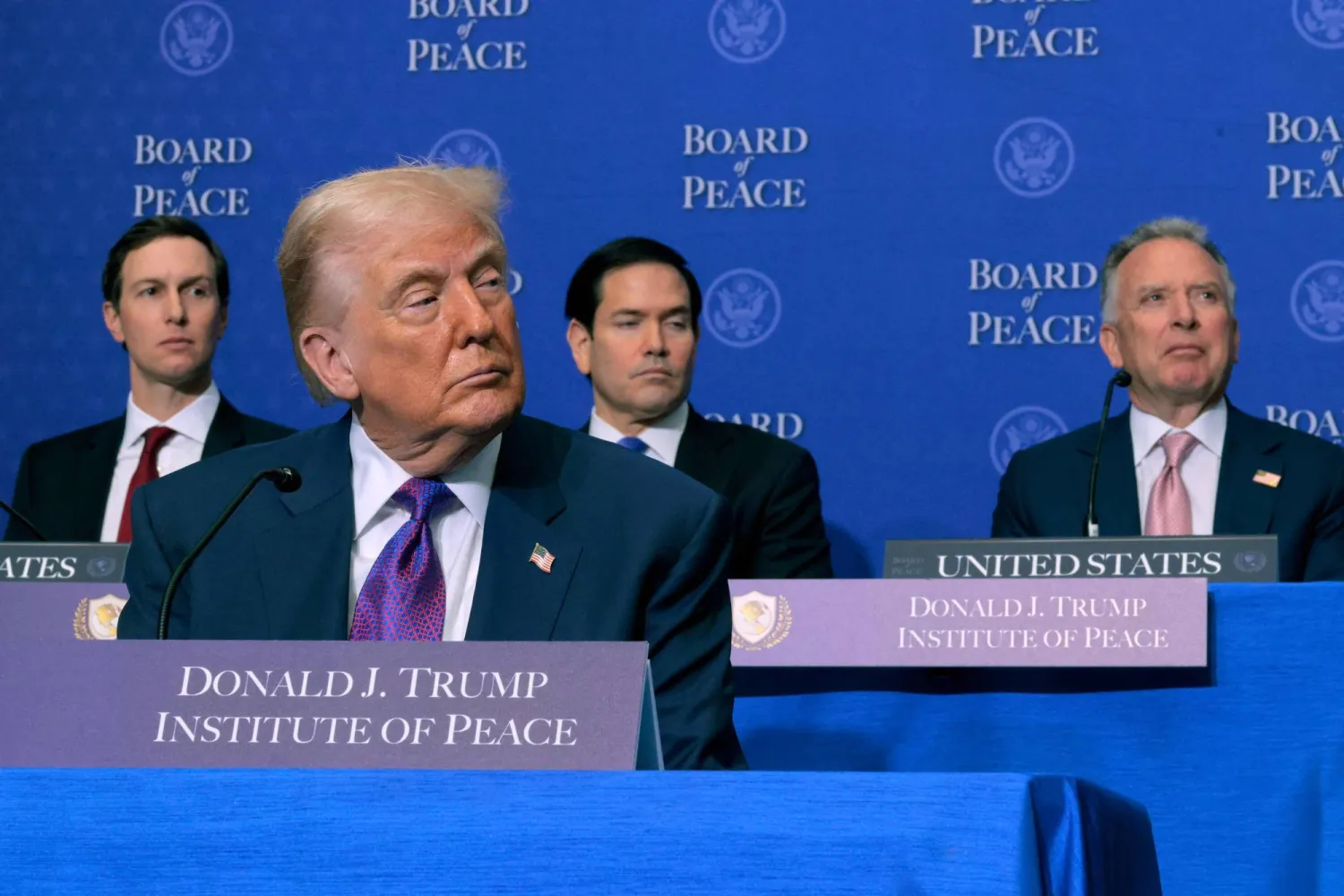
Jared Kushner, US President Donald Trump, US Secretary of State Marco Rubio, and Special Envoy to the Middle East Steve Witkoff attend the inaugural meeting of the Board of Peace at the Donald J. Trump Institute of Peace on February 19, 2026 in Washington, DC. (Getty Images/AFP)
TT

Report: Trump Considers Targeted Strike Against Iran, Followed by Larger Attack 

Jared Kushner, US President Donald Trump, US Secretary of State Marco Rubio, and Special Envoy to the Middle East Steve Witkoff attend the inaugural meeting of the Board of Peace at the Donald J. Trump Institute of Peace on February 19, 2026 in Washington, DC. (Getty Images/AFP)

US President Donald Trump has told advisers that if diplomacy or any initial targeted US attack does not lead Iran to give in to his demands that it give up its nuclear program, he will consider a much bigger attack in coming months intended to drive that country’s leaders from power, people briefed on internal administration deliberations told the New York Times.

Negotiators from the United States and Iran are scheduled to meet in Geneva on Thursday for what appears to be last-ditch negotiations to avoid a military conflict. But Trump has been weighing options for US action if the negotiations fail.

Though no final decisions have been made, advisers said, Trump has been leaning toward conducting an initial strike in coming days intended to demonstrate to Iran’s leaders that they must be willing to agree to give up the ability to make a nuclear weapon.

Targets under consideration range from the headquarters of Iran’s Revolutionary Guard Corps to the country’s nuclear sites to the ballistic missile program.

Should those steps fail to convince Tehran to meet his demands, Trump told advisers, he would leave open the possibility of a military assault later this year intended to help topple Ali Khamenei, the supreme leader.
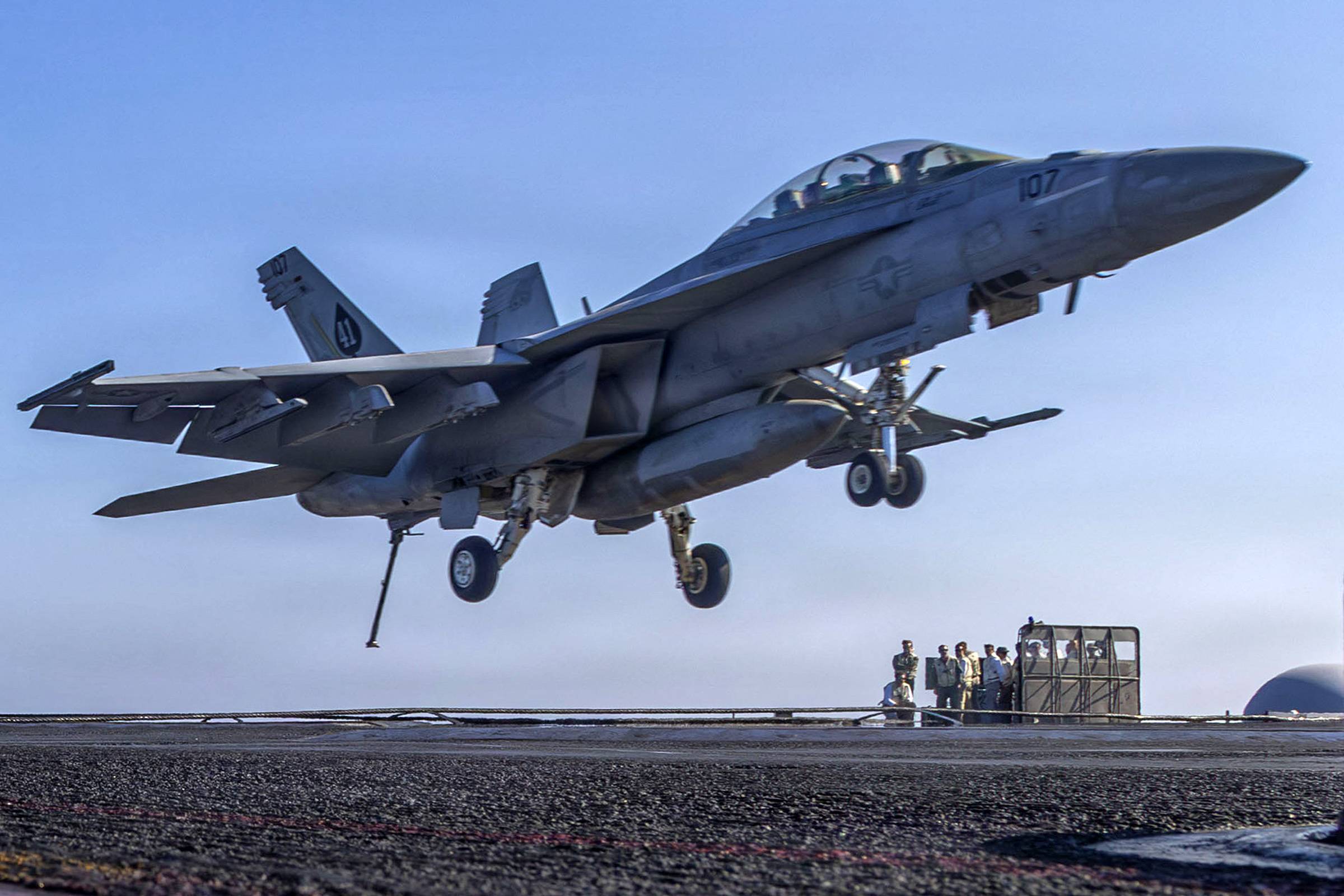
In this handout photograph released by the US Navy, an F/A-18F Super Hornet, attached to Strike Fighter Squadron (VFA) 41, prepares to make an arrested landing on the flight deck of Nimitz-class aircraft carrier USS Abraham Lincoln (CVN 72) in the Arabian Sea on February 15, 2026. (AFP photo / US Navy)

Doubts

There are doubts even inside the administration about whether that goal can be accomplished with airstrikes alone. And behind the scenes, a new proposal is being considered by both sides that could create an off-ramp to military conflict: a very limited nuclear enrichment program that Iran could carry out solely for purposes of medical research and treatments.

It is unclear whether either side would agree. But the last-minute proposal comes as two aircraft carrier groups and dozens of fighter jets, bombers and refueling aircraft are now massing within striking distance of Iran.

Trump discussed plans for strikes on Iran in the White House Situation Room on Wednesday. The meeting included Vice President JD Vance; Secretary of State Marco Rubio; Gen. Dan Caine, the chairman of the Joint Chiefs of Staff; the CIA director, John Ratcliffe; and Susie Wiles, the White House chief of staff.

During the meeting, Trump pressed Caine and Ratcliffe to weigh in on the broader strategy in Iran, but neither official generally advocates a certain policy position. Caine discussed what the military could do from an operational standpoint, and Ratcliffe preferred to discuss the current situation on the ground and possible outcomes of proposed operations.

During the discussions of the operation last month to seize President Nicolas Maduro of Venezuela, Caine told Trump there was a high likelihood of success. But Caine has not been able to deliver the same reassurances to Trump during the Iran discussions, in large measure because it is a far more difficult target.

Vance, who has long called for more restraint in overseas military action, did not oppose a strike, but he intensely questioned Caine and Ratcliffe in the meeting. He pressed them to share their opinions of the options and wanted more of a discussion of the risks and complexity of carrying out a strike against Iran.
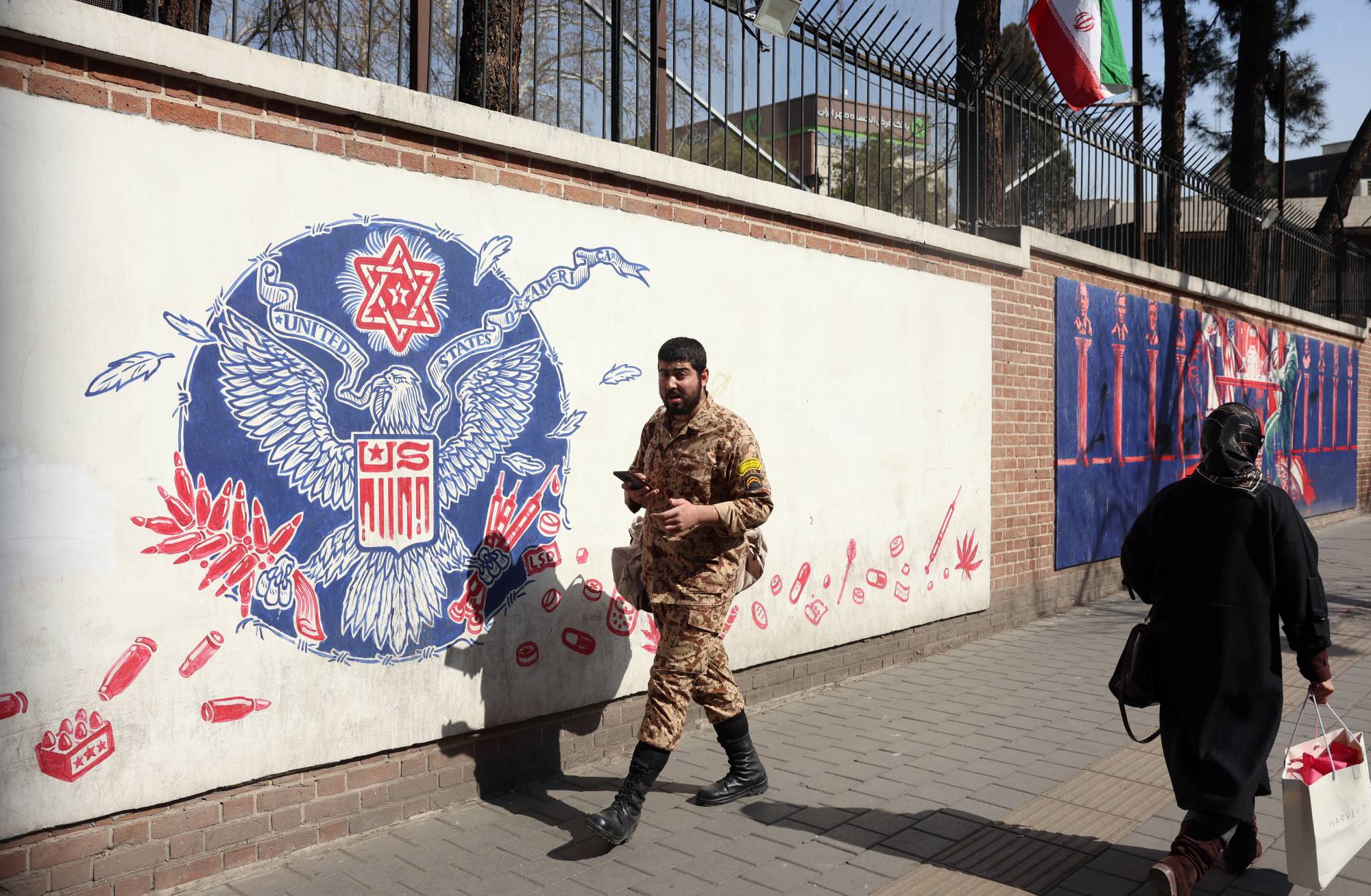
An Iranian soldier walks next to an anti-US mural in Tehran, Iran, 23 February 2026. (EPA)

Options against Iran

Earlier, the United States had been considering options that included putting teams of special operations forces on the ground that could carry out raids to destroy Iranian nuclear or missile facilities. That included manufacturing and enrichment operations buried far below the surface, outside the range of American conventional munitions.

But any such raid would be highly dangerous, requiring special operations forces to be on the ground far longer than they were for the raid to capture Maduro. Multiple US officials said that for now, the plans for a commando raid had been shelved.

Army, Navy and Air Force officials have also raised concerns about the impact that a protracted war with Iran, or just remaining poised for such a conflict, could have on the readiness of Navy ships, scarce Patriot antimissile defenses, and overstretched transport and surveillance planes.

The White House declined to comment on Trump’s decision making.

“The media may continue to speculate on the President’s thinking all they want, but only President Trump knows what he may or may not do,” Anna Kelly, a White House spokeswoman, said in a statement.
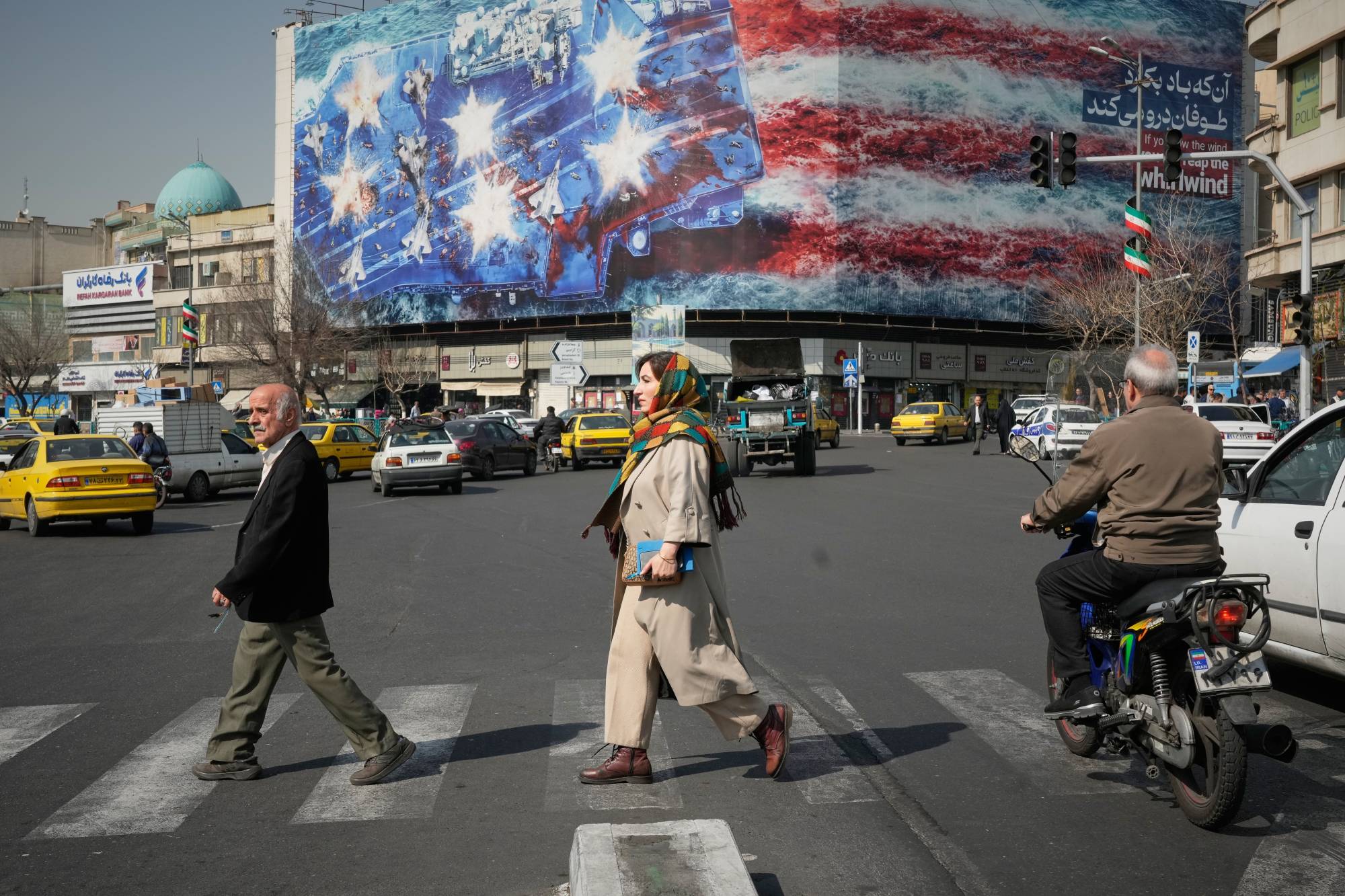
Pedestrians walk past a billboard depicting a US aircraft carrier with damaged fighter jets on its deck and a sign in Farsi and English reading, "If you sow the wind, you'll reap the whirlwind," at Enqelab-e-Eslami Square in Tehran, Iran, Sunday, Feb. 22, 2026. (AP)

‘Zero enrichment’

Even before the Iranians submit what appears likely to be their last proposal — officials said they expected it to be transmitted to the Trump administration on Monday or Tuesday — the two sides appeared to be hardening their positions. Steve Witkoff, the president’s special envoy, said on Fox News that Trump’s “clear direction” to him and Jared Kushner, his co-negotiator and the president’s son-in-law, was that the only acceptable outcome for an agreement was that Iran would move to “zero enrichment” of nuclear material.

But Iran’s foreign minister, Abbas Araghchi, insisted anew in an interview on CBS’s “Face the Nation” on Sunday that the country was not ready to give up what he said was its “right” to make nuclear fuel under the Nuclear Nonproliferation Treaty.

With that statement, the decision about whether the United States was about to attack targets in Iran — with the apparent goal of further weakening the government of Khamenei — seemed to come down to whether both sides could agree to a face-saving compromise about nuclear production that Washington and Tehran could each describe as a total victory.

One such proposal is being debated by both the Trump administration and the Iranian leadership. According to several officials, it emanated from Rafael Grossi, the director general of the International Atomic Energy Agency, a United Nations organization that inspects Iran’s nuclear facilities.

Under the proposal, Iran would be permitted to produce very small amounts of nuclear fuel for medical purposes. Iran has been producing medical isotopes for years at the Tehran Research Reactor, a nearly 60-year-old facility outside the country’s capital that was, in one of the strange twists of modern nuclear history, first supplied to the pro-American shah of Iran by the United States under the “Atoms for Peace” program.

If adapted, Iran could claim that it was still enriching uranium. Trump could make the case that Iran is shuttering all the facilities that would enable it to build a weapon — most of which were left open, operating at low levels, under the 2015 agreement between Iran and the Obama administration. Trump exited that agreement in 2018, leading the Iranians to eventually bar inspectors and produce near-bomb-grade uranium and setting the stage for the current crisis.

But it is far from clear whether the Iranians are willing to shrink what is now a vast, industrial-production nuclear program, on which they have spent billions of dollars, to a tiny effort of such limited scope.

And it is also unclear whether Trump would allow nuclear production limited to cancer treatment studies and other medical purposes, given his public “zero enrichment” declarations.
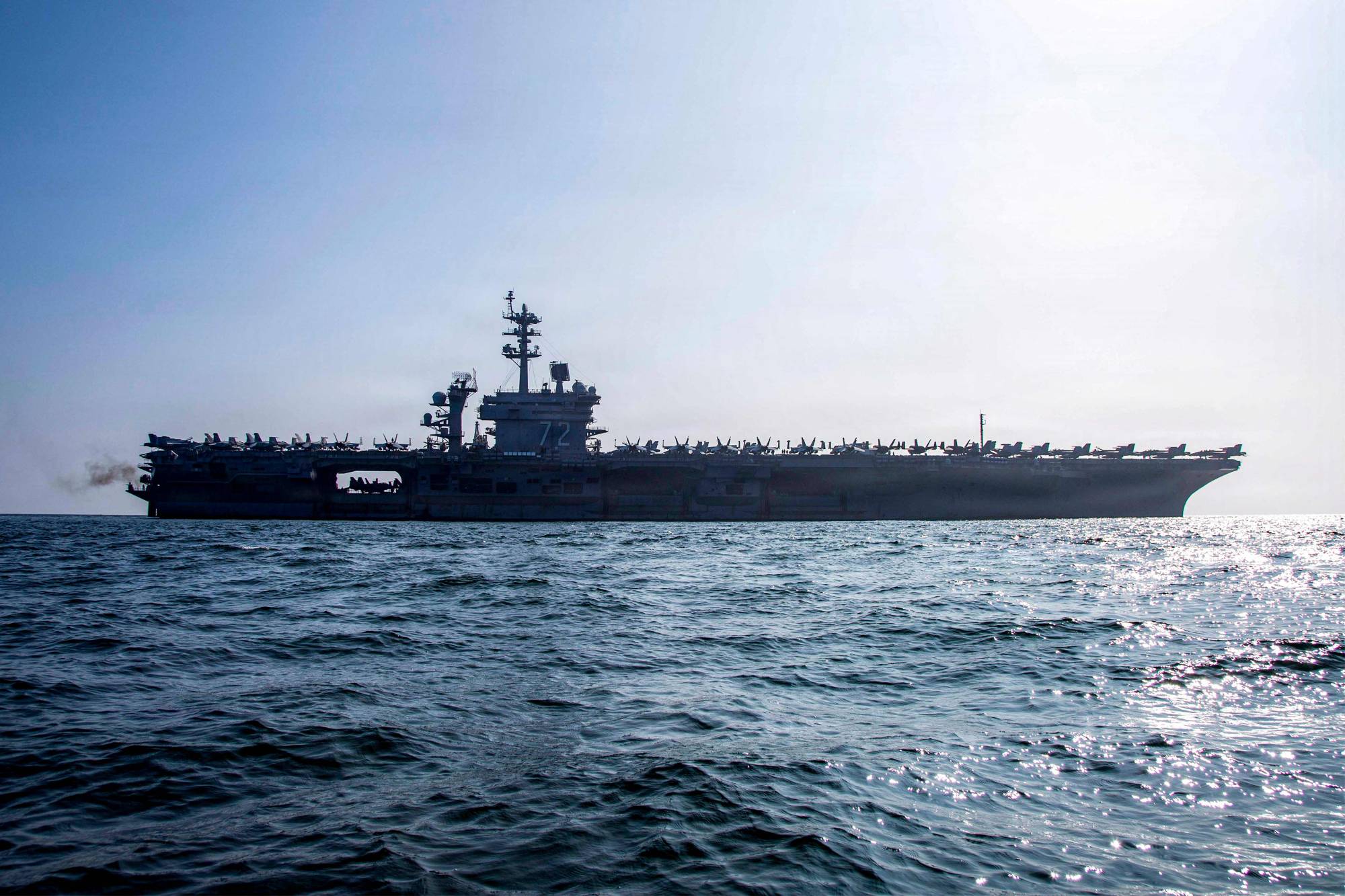
In this handout photograph released by the US Navy, an F/A-18F Super Hornet, attached to Strike Fighter Squadron (VFA) 41, prepares to make an arrested landing on the flight deck of Nimitz-class aircraft carrier USS Abraham Lincoln (CVN 72) in the Arabian Sea on February 15, 2026. (AFP photo / US Navy)

‘Military buildup cannot help’

Araghchi made no direct mention of the proposal when he spoke from Tehran. But he said, “I believe that still there is a good chance to have a diplomatic solution,” adding, “So there is no need for any military buildup, and military buildup cannot help it and cannot pressurize us.”

In fact, pressure is the key to these negotiations. What Trump calls the “vast armada” that the United States has built up in the seas around Iran is the largest military force it has concentrated in the region since it prepared for the invasion of Iraq, nearly 23 years ago.

Two aircraft carrier groups, scores of fighter jets, bombers and refueling planes, and antimissile batteries have poured into the region, a demonstration of gunboat diplomacy even larger than the one that preceded the forced extraction of Maduro from Venezuela in early January.

The second carrier, the Gerald R. Ford, was steaming south of Italy in the Mediterranean Sea on Sunday, and will soon be off the coast of Israel, military officials said.

Further complicating any final decision on military strikes, Arab leaders have been calling counterparts in Washington to complain about comments from Mike Huckabee, the US ambassador to Israel. In an interview with Tucker Carlson, the conservative commentator, that aired on Friday, Huckabee said Israel had a right to much of the Middle East, outraging Arab countries.

Administration officials have been unclear what their objectives are as they confront Iran, a country of more than 90 million people. While Trump often talks about preventing Iran from ever being able to produce a weapon, Rubio and other aides have described a range of other rationales for military action: protecting the protesters whom Iranian forces killed by the thousands last month, wiping out the arsenal of missiles that Iran can use to strike Israel, and ending Tehran’s support for Hamas and Hezbollah.

But American military action could also result in a nationalistic response, even among Iranians eager to see the end of Khamenei’s brutal hold on power.

European officials attending the Munich Security Conference last weekend said they doubted that the military pressure would force the Iranian leadership to give up a program that has become a symbol of resistance to the United States.



Risk of ‘Escalation’ if Iran Attacked, Warns Deputy Foreign Minister

Iranians walk past shops selling food ahead of Iftar, the Ramadan fast-breaking meal, in northern Tehran on February 23, 2026. (AFP)
TT

Risk of ‘Escalation’ if Iran Attacked, Warns Deputy Foreign Minister

Iranians walk past shops selling food ahead of Iftar, the Ramadan fast-breaking meal, in northern Tehran on February 23, 2026. (AFP)

Iran's deputy foreign minister Kazem Gharibabadi warned of a wider escalation if his country was attacked, after US President Donald Trump raised the threat of strikes.

Trump has sent a major deployment of air and sea power to the Middle East and has threatened to strike Iran if it does not reach a deal on key concerns starting with its nuclear program.

"We call upon all nations committed to peace and justice to take meaningful steps to prevent further escalation," Gharibabadi said at the Conference on Disarmament in Geneva.

"The consequences of any renewed aggression wouldn't remain confined to one country -- and responsibility would rest with those who initiate or support such actions."

Iranian and US negotiators held indirect talks in Geneva last week on Tehran's nuclear program, hosted by Oman.

A fresh round of talks in the Swiss city this Thursday has been confirmed by Muscat, though not by Washington.

"Iran remains committed to diplomacy and dialogue as the most effective path towards de-escalation and sustainable security," Gharibabadi said.

"Recent diplomatic engagement here in Geneva, which will continue this Thursday, demonstrates that a new window of opportunity exists for negotiations to address differences and build confidence -- provided that they uphold mutual respect, equitable treatment and non-selective application of international norms.

"Any sustainable and credible negotiation must respect the legitimate rights of all states under international law, and deliver tangible security benefits without coercion, unilateral demands or threats of force."

- 'Chaos and change' -

The United States and Israel threatened new military action against Iran after mass protests in the regime, which the Iranian authorities crushed at a cost of thousands of lives.

After last week's indirect talks with Washington through Omani mediators in Geneva, Tehran said they had reached broad agreement on a set of guiding principles.

Gharibabadi said that while Tehran sought the path of diplomacy, it was prepared to defend its sovereignty, territory and people, insisting it would exercise its right to self-defense "if necessary".

He said meaningful progress in disarmament and non-proliferation could only be achieved through mutual, balanced and legally-binding commitments.

He called upon nuclear weapons states to engage constructively in talks towards a comprehensive nuclear weapons convention, plus offer legally-binding security assurances for countries without nuclear weapons.

Speaking just before, UN Secretary-General Antonio Guterres said the world was living through a period of "chaos and change", with international law being brazenly violated.

"The international order that defined security relations for nearly eight decades is shifting rapidly. The reckless use of force in many regions is fomenting mistrust," he warned.


Netanyahu Says Israel Facing ‘Challenging Days’ with Iran-US Tensions

Israeli Prime Minister Benjamin Netanyahu delivers a speech during a plenary session of the Knesset, the Israeli parliament, in Jerusalem, 23 February 2026. (EPA)
TT

Netanyahu Says Israel Facing ‘Challenging Days’ with Iran-US Tensions

Israeli Prime Minister Benjamin Netanyahu delivers a speech during a plenary session of the Knesset, the Israeli parliament, in Jerusalem, 23 February 2026. (EPA)

Prime Minister Benjamin Netanyahu said Monday that Israel was facing "complex and challenging days" as tensions escalate between the United States and Iran following President Donald Trump's threat of strikes should Tehran refuse to accept a new nuclear agreement.

"We are in very complex and challenging days," Netanyahu told lawmakers in a brief address to parliament. "We are keeping our eyes open and are prepared for any scenario."

He also reiterated a warning to Iran's leadership: "I have conveyed to the Iranian regime that if they make the gravest mistake in their history and attack the State of Israel, we will respond with a force they cannot even imagine."

The premier further highlighted Israel's close military cooperation with the US, as Washington continues to build up its military presence near Iran and in the Middle East.

"The alliance with the United States has never been closer," Netanyahu said.

"Between the Israel forces and the United States military, between our security agencies and their security services, there has never been anything like this," he added.

Arch-foes Israel and Iran faced each other in a first direct confrontation last June during a 12-day war in which the Israeli military targeted Tehran's nuclear facilities and ballistic missile arsenal.

Iran responded with drone and missile strikes on Israel. Later on in the war, the United States joined Israel in targeting Iran's underground nuclear facilities.


Iranian Students Protest for Third Day as US Pressure Mounts

Iranians drive along a street in Tehran, Iran, 23 February 2026. (EPA)
TT

Iranian Students Protest for Third Day as US Pressure Mounts

Iranians drive along a street in Tehran, Iran, 23 February 2026. (EPA)

Iranian students ‌defied authorities with protests for a third day on Monday, weeks after security forces crushed mass unrest with thousands killed and as the United States weighs possible air strikes against the country.

State media outlets reported students chanting anti-government slogans at Tehran University, burning flags at the all-women al-Zahra University, and scuffles at Amir Kabir University, all located in the capital.

Reuters also verified video showing students at al-Zahra University chanting slogans including "we'll reclaim Iran", but was not able ‌to confirm ‌when it was recorded.

In a new ‌sign ⁠of the mounting ⁠tension in the Middle East, the United States began pulling non-essential personnel and family members from the embassy in Beirut, a senior State Department official said.

US President Donald Trump has repeatedly threatened Iran since major nationwide protests across the country in January, saying on Thursday that "really bad things will ⁠happen" if talks between the countries fail ‌to produce a deal.

Washington wants ‌Iran to give up much of its nuclear program, which ‌it believes is aimed at building a bomb, limit the ‌range of its missiles to short distances and stop supporting groups it backs in the Middle East.

It has built up forces across the Middle East, putting increased pressure on Iran ‌as it weighs its response to US demands amid ongoing talks.

Iranian Supreme Leader Ali ⁠Khamenei ⁠already faces the gravest crisis of his 36-year tenure, with an economy struggling under the weight of international sanctions and growing unrest that broke out into major protests in January.

On Sunday Iranian President Masoud Pezeshkian said negotiations with the US had "yielded encouraging signals" even as a second US aircraft carrier headed towards the Middle East.

Trump has not laid out in detail his thinking on any possible Iran strike. A senior White House official told Reuters last week there was still no "unified support" within the administration to go ahead with an attack.