



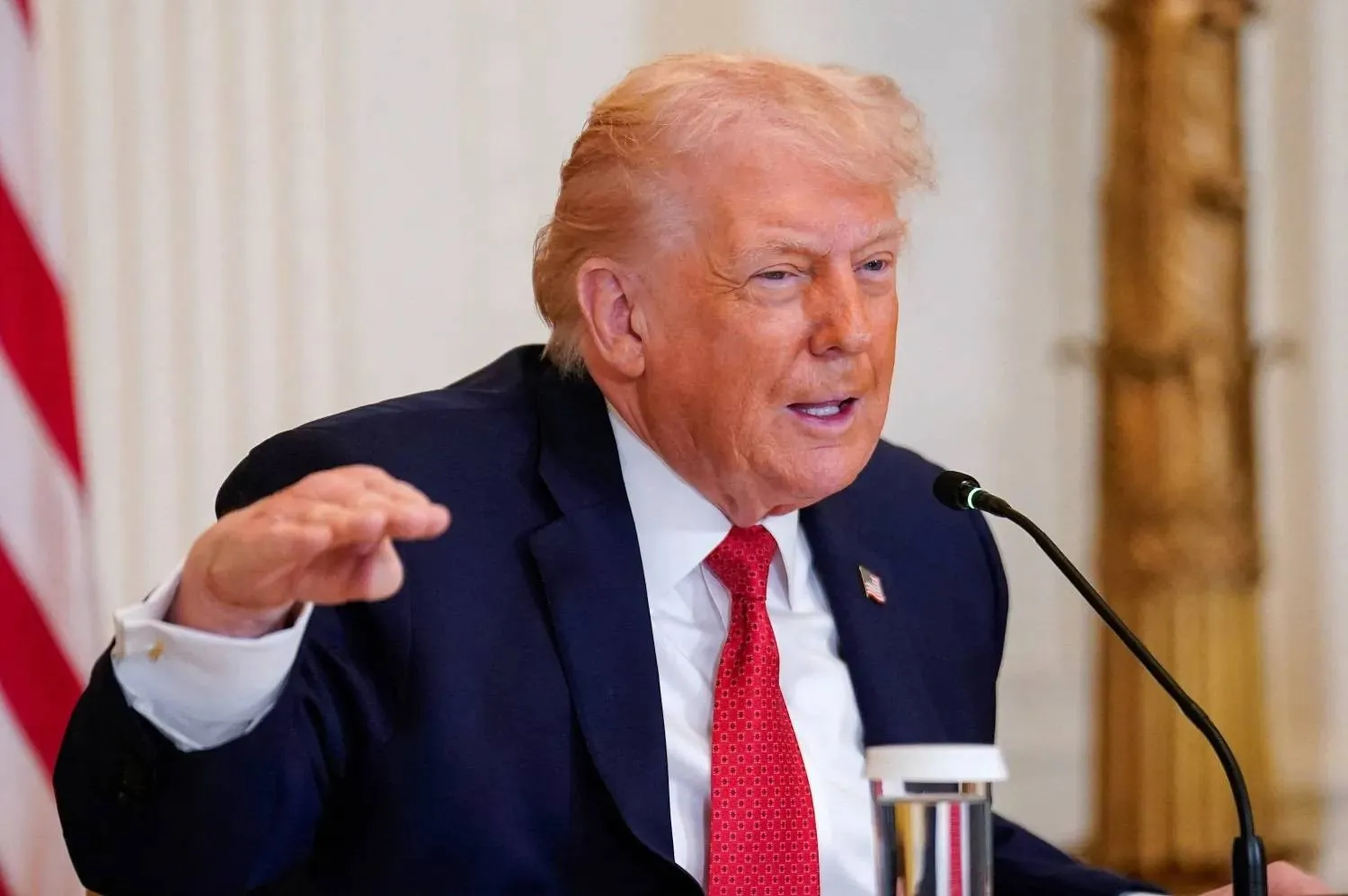

President Donald Trump's State of the Union address is expected to tilt heavily on domestic issues, but it's also a chance for the Republican to make the case for his foreign policy efforts to Americans who are increasingly demonstrating uneasiness about his priorities.
The president counts brokering a fragile ceasefire deal in Gaza, capturing autocratic leader Nicolás Maduro in Venezuela and pressing fellow NATO members to increase defense spending among his biggest wins, The Associated Press said.
At a moment when polls show the American public increasingly concerned about the economy, Trump's assignment Tuesday evening also is to cut through thickening skepticism that he’s staying true to his “America First” philosophy after a year in which his focus was often far from home. It's a wariness shared by some who once counted themselves among Trump's closest allies.
“If you had put America FIRST from the start, instead of your rich donor class and foreign policy, you wouldn’t have to strategize on how to gaslight Americans,” former Rep. Marjorie Taylor Greene, a Georgia Republican who resigned from Congress last month after a bitter split with Trump, grumbled on X as the White House prepared its messaging blitz around the address.
Sixty-one percent of US adults said they disapprove of how Trump is handling foreign policy, while 56% say Trump has “gone too far” in using the US military to intervene in other countries, according to surveys from The Associated Press-NORC Center for Public Affairs Research conducted earlier this month and in January.
Here are a few things to look out for in Trump's major address:
Will he take action against Iran? The growing unease comes as Trump weighs whether to carry out new military action on Iran. He last week warned Iran that “bad things will happen” soon if a deal is not reached over its nuclear program.
Trump envoys Steve Witkoff and Jared Kushner are scheduled to meet again Thursday in Geneva with Iranian officials as US warships and fighter jets mass in the Mideast.
The administration appears flummoxed that Iran has not blinked to the mounting pressure.
“He’s curious as to why they haven’t — I don’t want to use the word capitulated — but why they haven’t capitulated,” Witkoff said of Trump in a weekend Fox News appearance.
Trump could use the moment to explain to Americans why military action could be needed, just eight months after he claimed that US strikes had “obliterated” three critical Iranian nuclear facilities and left “the bully of the Middle East" with no choice but to make peace.
The pathway to a deal seems murky as the authoritarian clerics who rule Iran say they will only discuss the nuclear issue. The US and Israel also want to address Iran’s ballistic missile program and its support for regional armed proxies, including Hezbollah, Hamas and the Houthis.
Trump struggles to end the war in Ukraine Tuesday also marks the four-year anniversary of Russia's invasion of Ukraine.
On the campaign trail, Trump boasted that he would be able to end Russia's war on Ukraine in one day, but he has struggled to fulfill his pledge.
Russian and Ukrainian officials are negotiating in US-mediated talks but are at loggerheads over key issues, including Russian demands that Kyiv concede Ukrainian territory still in its control and who will get the Zaporizhzhia nuclear power plant, the biggest in Europe.
Russian troops have moved only about 30 miles (about 50 kilometers) into eastern Ukraine's Donetsk region in the past two years.
Despite the slow pace, Russian President Vladimir Putin maintains his maximalist demands, saying Kyiv must pull its forces from four Ukrainian regions that Moscow illegally annexed but never fully captured.
Trump argues it's inevitable that Russia will win control of the Ukrainian territory and has pressured President Volodymyr Zelenskyy to make a deal to save lives.
“Russia wants to make a deal, and Zelenskyy is going to have to get moving," Trump said last week.
Trump appears eager for a peace deal before the US midterm elections despite the challenges. Zelenskyy says the White House has set a June deadline for the war’s end and will likely pressure both sides to meet it.
Ukraine, Russia and the rest of Europe will be listening closely to hear what Trump has to say about ending the war.
Another victory lap on Maduro and focus on Western Hemisphere Expect Trump to once again celebrate last month's capture of the Venezuelan leader in an audacious military operation.
Maduro and his wife were whisked to New York where they are being held to face trial on federal drug conspiracy charges.
In the aftermath, Trump has called on US oil executives to rush back into Venezuela as the White House tries to quickly secure $100 billion in investments to fix the country’s neglected infrastructure and fully tap into its expansive reserves of petroleum.
Trump’s action against Maduro, coupled with an increasingly aggressive posture in the Western Hemisphere aimed at eliminating drug trafficking and illegal migration, are a concern for many in the region — although they also have won support from some smaller countries.
Trump has likened the strategy to the Monroe Doctrine, with its rejection of outside influences and assertion of US primacy throughout what the administration considers to be “America’s backyard."
US forces, under Trump's orders, have carried out dozens of military strikes on alleged drug-running vessels in the Caribbean, seized sanctioned oil tankers and tightened the embargo of Cuba as part of what the president is referring to as the “Donroe Doctrine.”
Brian Fonseca, a scholar at Florida International University who studies the Americas, said Venezuela is a work in progress for Trump. But it may be the rare issue where he can clearly articulate how a foreign policy directive benefits Americans, Fonseca said.
“With Venezuela, he has the chance to say, ‘The US military under my direction displaced a violent, narco-dictator that was repressing his own people and perpetuating the global drug trade,'” Fonseca said. "'And, by the way, there are now opportunities for America to make a lot of money in Venezuela.'”
Tariff strategy following Supreme Court ruling The president has ridiculed the six justices, including two conservatives he appointed in his first term, who last week struck down his use of a 1977 legal authority he had cited for most of the tariff hikes he imposed over the past year on friends and foes alike.
Trump on Monday threatened countries around the world to abide by any tariff deals they have already agreed to.
Any country that wants to “play games” with the Supreme Court decision, Trump posted on social media, will be met with “a much higher Tariff, and worse, than that which they just recently agreed to.”
Over the weekend, Trump announced he would increase to 15% a new global tariff aimed at replacing many of the import taxes ruled illegal by the Supreme Court last week.
He’s already signed an executive order enabling him to bypass Congress and impose a 10% tax on imports from around the world, starting Tuesday. Those tariffs are limited to 150 days unless they are extended legislatively.
Bharat Ramamurti, who served as a deputy director of the White House National Economic Council in the Biden administration, predicted that Trump's tack will lead to businesses and investors sitting on the sidelines because “they’re just not sure what the tariff outlook is going to be.”
“This decision and the follow-up to pursue other forms of tariffs under other legal authorities is only going to add to that confusion,” Ramamurti added.


