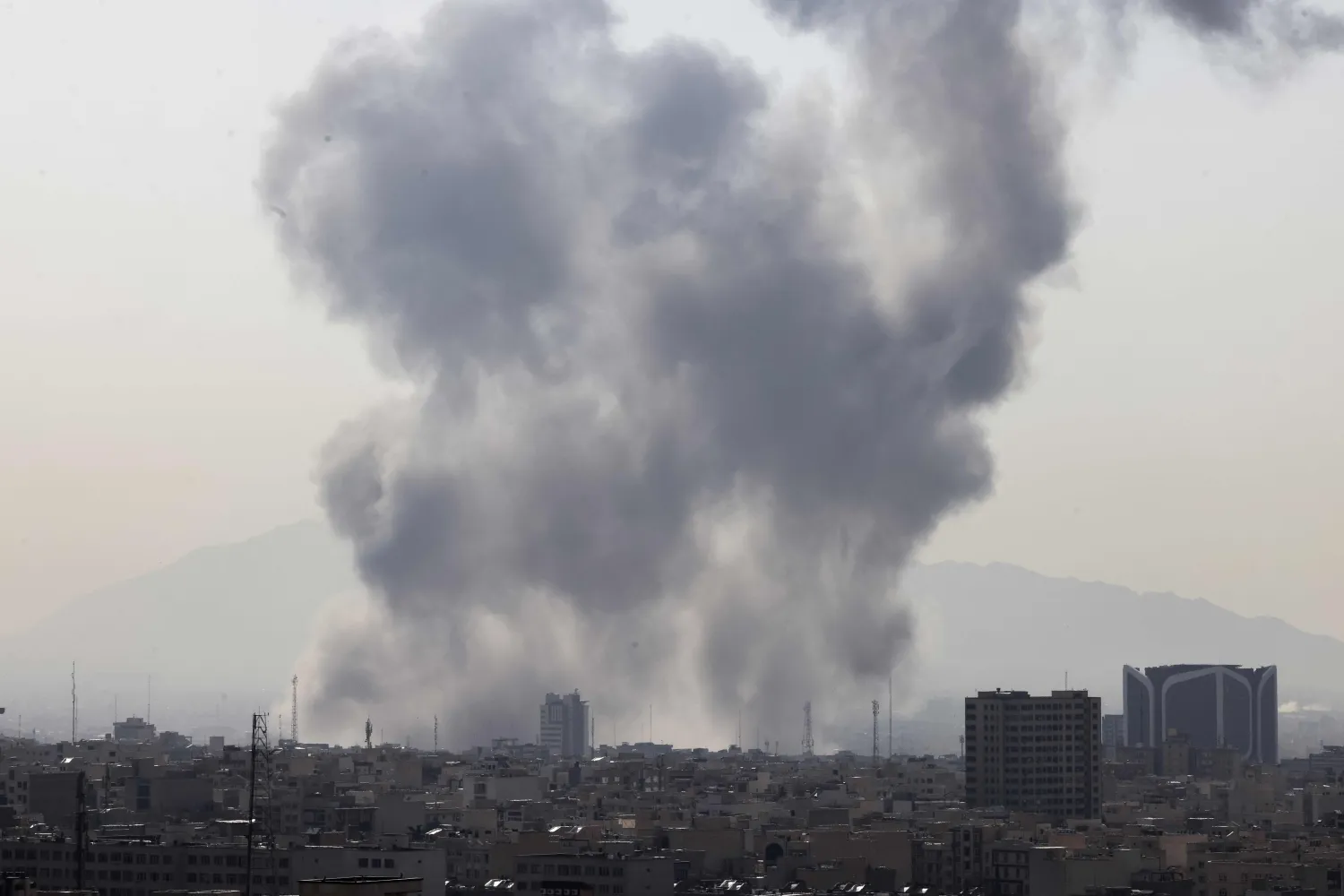

The United States and Israel launched strikes on Iran on Saturday, targeting its leadership and plunging the Middle East into a new conflict.
The strikes put Gulf Arab countries on edge as fears of escalation in the region grew, and Tehran responded by launching missiles towards Israel.
The first wave of strikes in what the Pentagon named "OPERATION EPIC FURY" mainly targeted Iranian officials, a source familiar with the matter said.
An Iranian source close to the establishment said several senior commanders in Iran's Revolutionary Guards and political officials had been killed. Reuters could not independently confirm the report.
Iran’s Revolutionary Guards said a first wave of retaliatory Iranian missile and drone attacks had been launched against Israel, and that all US bases and interests in the region were within Iran's reach, an Iranian official told Reuters.
Iran's retaliation would continue until "the enemy is decisively defeated," the Revolutionary Guards said.
In a video message published on social media, US President Donald Trump urged Iranians to stay sheltered because "bombs will be dropping everywhere” But he also added: "When we are finished, take over your government. It will be yours to take. This will be probably your only chance for generations.”
Israeli Defense Minister Israel Katz said the attack was pre-emptive and intended to remove threats to Israel.
An Israeli defense official said the operation had been planned for months in coordination with Washington, and that the launch date was decided weeks ago.
The Israeli military announced the closure of schools and workplaces, with exceptions for essential sectors, and a ban on public airspace. Israel closed its airspace to civilian flights.
The US and Iran renewed negotiations in February in a bid to resolve the decades-long dispute through diplomacy and avert the threat of a military confrontation that could destabilize the region.
Israel, however, insisted that any US deal with Iran must include the dismantling of Tehran's nuclear infrastructure, not just stopping the enrichment process, and lobbied Washington to include restrictions on Iran's missile program in the talks.
Iran said it was prepared to discuss curbs on its nuclear program in exchange for lifting sanctions but ruled out linking the issue to missiles.
Tehran also said it would defend itself against any attack.
It warned neighboring countries hosting US troops that it would retaliate against American bases if Washington struck Iran.