


Trump Says US Not Ready to Agree Deal to End Iran War

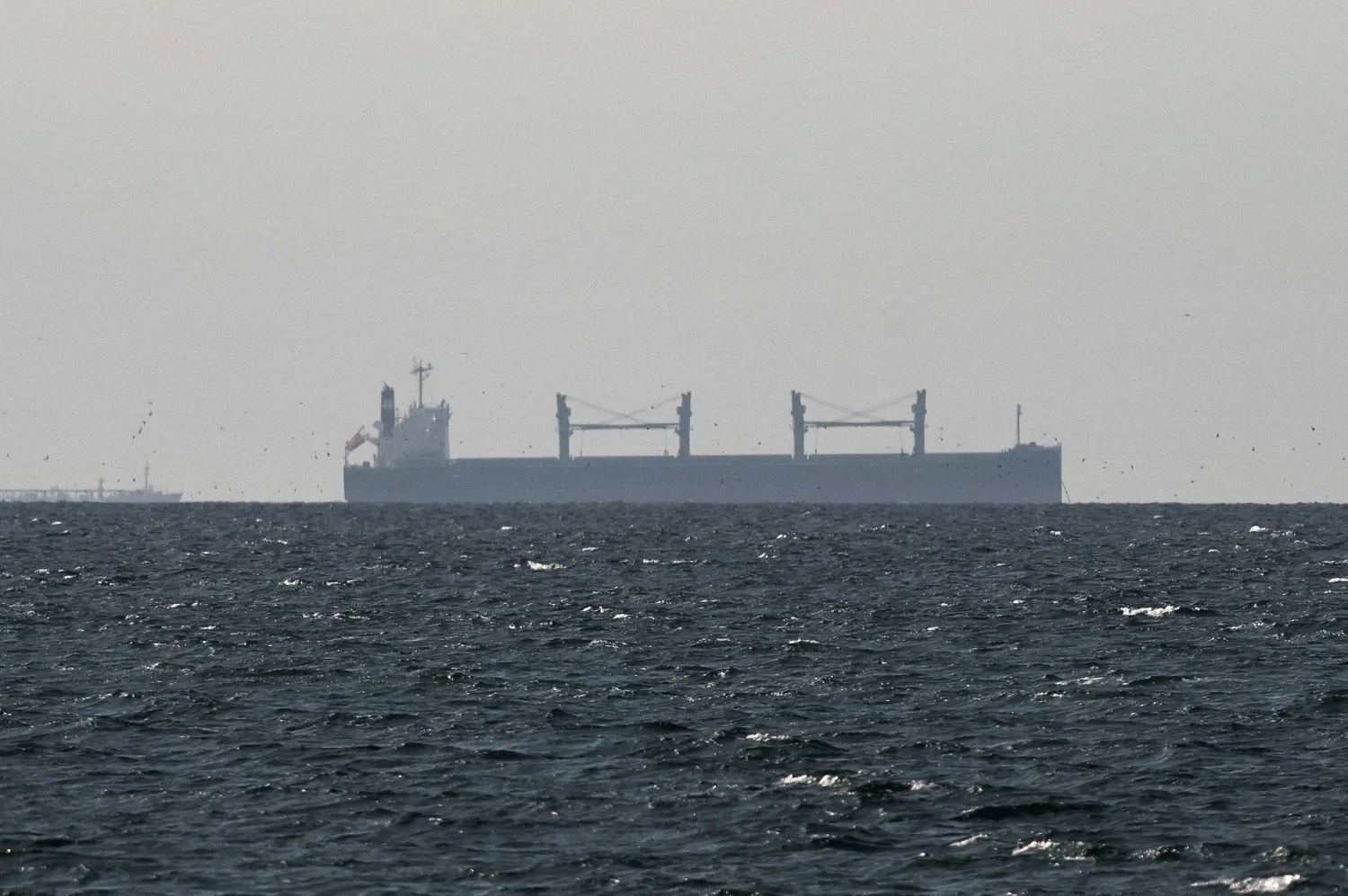
A tanker sails in the Gulf, near the Strait of Hormuz, as seen from northern Ras al-Khaimah, near the border with Oman’s Musandam governance, amid the US-Israeli conflict with Iran, in United Arab Emirates, March 11, 2026. (Reuters)
TT

Trump Says US Not Ready to Agree Deal to End Iran War

A tanker sails in the Gulf, near the Strait of Hormuz, as seen from northern Ras al-Khaimah, near the border with Oman’s Musandam governance, amid the US-Israeli conflict with Iran, in United Arab Emirates, March 11, 2026. (Reuters)

Donald Trump warned that he is not ready to seek a deal to end the war with Iran, as US ally Israel launched a new wave of strikes Sunday and Tehran's Revolutionary Guards threatened to hunt down and kill the Israeli leader. 

The US president, in an interview with NBC News, said he thought Tehran was keen to come to the table, but that Washington would fight on for better terms and might bomb targets on Iran's oil hub Kharg Island once, again, "just for fun". 

More than two weeks into the US-Israeli war against Iran, neither side is moderating its rhetoric despite a mounting death toll and economic damage from soaring oil prices caused by the effective closure of the Strait of Hormuz sea lane. 

"Iran wants to make a deal, and I don't want to make it because the terms aren't good enough yet," Trump told NBC News, warning that US forces would step up strikes on the Iranian coast north of the strait to clear a path for oil shipments to resume. 

Iran's new supreme leader, Mojtaba Khamenei, has -- in a written statement -- vowed to keep Hormuz closed. But Trump dismissed this and suggested his foe might not even be in control, saying: "I don't know if he's even alive. So far, nobody has been able to show him." 

Iran said on Saturday that "there is no problem with the new supreme leader", even though he has yet to appear in public. 

The Israeli military, meanwhile, announced a wave of strikes against targets in Western Iran, after Iran's Revolutionary Guards branded Prime Minister Benjamin Netanyahu a criminal and vowed that they would pursue and kill him. 

- Tehran cafes reopen - 

The United States has urged its citizens to leave Iraq, where pro-Iranian groups have launched attacks on the US embassy and bases hosting western military units, 

Despite the hardline talk from all sides, the citizens of Tehran were able to go about their work week in the most normal atmosphere since the start of the war on February 28, when US-Israeli strikes killed the previous supreme leader, Mojtaba's father Ali Khamenei. 

Traffic was busier than last week and some cafes and restaurants had reopened. 

One resident whizzed down the street on an electric hoverboard, and more than a third of stalls in the Tajrish bazaar, a popular shopping hub in the north of the capital, had reopened, five days before Nowruz, the Persian New Year. 

Some shoppers queued at ATMs to withdraw cash. Online operations at Bank Melli, one of the country's largest, had been paralyzed in recent days. 

Further on, passengers were waiting at bus stops, which had been largely deserted since the beginning of the war. 

Trump has suggested an international naval operation could escort oil tankers through the Strait of Hormuz, lessening pressure on the oil price and securing supplies for countries whose economies are most exposed to the conflict. 

"Hopefully China, France, Japan, South Korea, the UK, and others, that are affected by this artificial constraint, will send Ships to the area," Trump said in a social media post on Saturday. 

Asked about this, the UK ministry of defense was non-committal. "As we've said previously, we are currently discussing with our allies and partners a range of options to ensure the security of shipping in the region," it said. 

South Korea said it was "closely monitoring President Trump's remarks on social media". 

- Missile barrage - 

The policy chief of Japanese Prime Minister Sanae Takaichi's ruling party, Takayuki Kobayashi, said the bar for sending Japanese navy ships to the region under existing laws was "extremely high". 

Saudi Arabia and Bahrain said separately on Sunday they had intercepted renewed barrages of projectiles after an AFP journalist heard warning sirens in Manama. 

Late Saturday, authorities in Dubai also said air defenses had made further interceptions after Iran's military warned UAE civilians to avoid port areas. 

US forces struck Iran's Kharg Island on Friday -- from which nearly all of Iran's oil exports flow -- but both sides confirmed that the strikes only took out military defenses and left the oil export terminals intact. 

More than 1,200 people have been killed by US and Israeli strikes, according to Iranian health ministry figures that could not be independently verified. 

The UN refugee agency says up to 3.2 million people have been displaced in Iran, most of them fleeing the capital and other cities to seek safety. 

The Pentagon says more than 15,000 targets in Iran have been hit by US and Israeli forces. 

US media reported that the Pentagon has dispatched the amphibious assault ship USS Tripoli and around 2,500 Marines to the region. 


Pope Renews Appeal for Peace in Middle East

 Pope Leo XIV appears at the window of his studio overlooking St. Peter's Square at the Vatican where Catholic faithful and pilgrims gathered for the traditional Sunday blessing at the end of the noon Angelus prayer, Sunday, March 15, 2026. (AP)
Pope Leo XIV appears at the window of his studio overlooking St. Peter's Square at the Vatican where Catholic faithful and pilgrims gathered for the traditional Sunday blessing at the end of the noon Angelus prayer, Sunday, March 15, 2026. (AP)
TT

Pope Renews Appeal for Peace in Middle East

 Pope Leo XIV appears at the window of his studio overlooking St. Peter's Square at the Vatican where Catholic faithful and pilgrims gathered for the traditional Sunday blessing at the end of the noon Angelus prayer, Sunday, March 15, 2026. (AP)
Pope Leo XIV appears at the window of his studio overlooking St. Peter's Square at the Vatican where Catholic faithful and pilgrims gathered for the traditional Sunday blessing at the end of the noon Angelus prayer, Sunday, March 15, 2026. (AP)

Pope Leo XIV renewed his appeal for peace in the Middle East on Sunday, calling for an end to the war and reopening of dialogue.

"Dear brothers and sisters, for two weeks the peoples of the Middle East have suffered the atrocious violence of war," the US pontiff said at his weekly Angelus prayer at the Vatican.

"Thousands of innocent people have been killed, and countless others have been forced to flee their homes.

"I renew my closeness to all those who have lost loved ones in the attacks that have hit schools, hospitals, and residential areas."

Leo said the situation in Lebanon was a particular cause for concern.

"On behalf of the Christians of the Middle East and of all women and men of goodwill, I address those responsible for this conflict," he said in Italian.

"Cease fire! Let paths of dialogue be reopened!

"Violence can never lead to the justice, stability and peace that people await."


Israel Approves Emergency Military Funding as Iran War Rages

Israeli security forces check the damage to cars after a rocket strike in Holon, in the Tel Aviv District on March 15, 2026. (AFP)
TT

Israel Approves Emergency Military Funding as Iran War Rages

Israeli security forces check the damage to cars after a rocket strike in Holon, in the Tel Aviv District on March 15, 2026. (AFP)

Israel has approved an $827-million emergency budget allocation for military purchases, Israeli media reported Sunday, as the war with Iran entered its third week.

The 2.6-billion-shekel package was approved over the weekend by cabinet ministers during a telephone meeting, the daily Haaretz reported.

It will be used for "security purchases" and to address "urgent needs", it said, without providing further details.

A finance ministry document circulated to all ministers and reported by several media outlets, including Channel 12, said that "given the intensity of the fighting" the additional budget allocation was necessary.

"An urgent and immediate need has arisen to provide an operational response, including the acquisition of munitions, the procurement of advanced weapons systems and the replenishment of critical combat stocks," the document said.

The document added that the move constituted "an exceptional emergency decision intended solely to address needs arising from the conduct of the fighting".

The funds will be drawn from the state budget, totaling $222 billion and approved by the government on March 12, and expected to be adopted by the Knesset by March 31, according to the reports.

The government of Prime Minister Benjamin Netanyahu has not yet officially commented on the measure or specified what purchases the funds will cover.

Since the Israeli-US bombardments against Iran that began on February 28, Israel has been targeted daily by Iranian ballistic missile fire, which the military has mostly intercepted using its missile defense systems.

According to Haaretz, citing security officials, 250 ballistic missiles had been fired by Iran at Israel as of March 13.

Twelve people have been killed in Israel by missiles or falling debris since the start of the war, according to an AFP tally of figures given by Israeli authorities and first responders.


UK Says Vital to 'De-escalate' Middle East War

FILE PHOTO: An aerial view of the island of Qeshm, separated from the Iranian mainland by the Clarence Strait, in the Strait of Hormuz, December 10, 2023. REUTERS/Stringer/File Photo
TT

UK Says Vital to 'De-escalate' Middle East War

FILE PHOTO: An aerial view of the island of Qeshm, separated from the Iranian mainland by the Clarence Strait, in the Strait of Hormuz, December 10, 2023. REUTERS/Stringer/File Photo

A British minister on Sunday said it was essential to calm the situation in the Middle East after US President Donald Trump demanded that other nations help protect world oil supplies passing through the Strait of Hormuz. 

The "plan now has to be to de-escalate the conflict", Energy Security Minister Ed Miliband told the BBC. 

"We are talking to our allies. There are different ways in which we can make maritime shipping possible. We are intensively looking with our allies at what can be done, because it's so important that we get the strait reopened," he added, speaking to Sky News. 

A spokesperson for the defense ministry said late on Saturday: "As we've said previously, we are currently discussing with our allies and partners a range of options to ensure the security of shipping in the region."
