


Israel Says ‘No Interceptor Shortage’ After Reports of Scarcity as Iranian Missiles Injure at Least 8

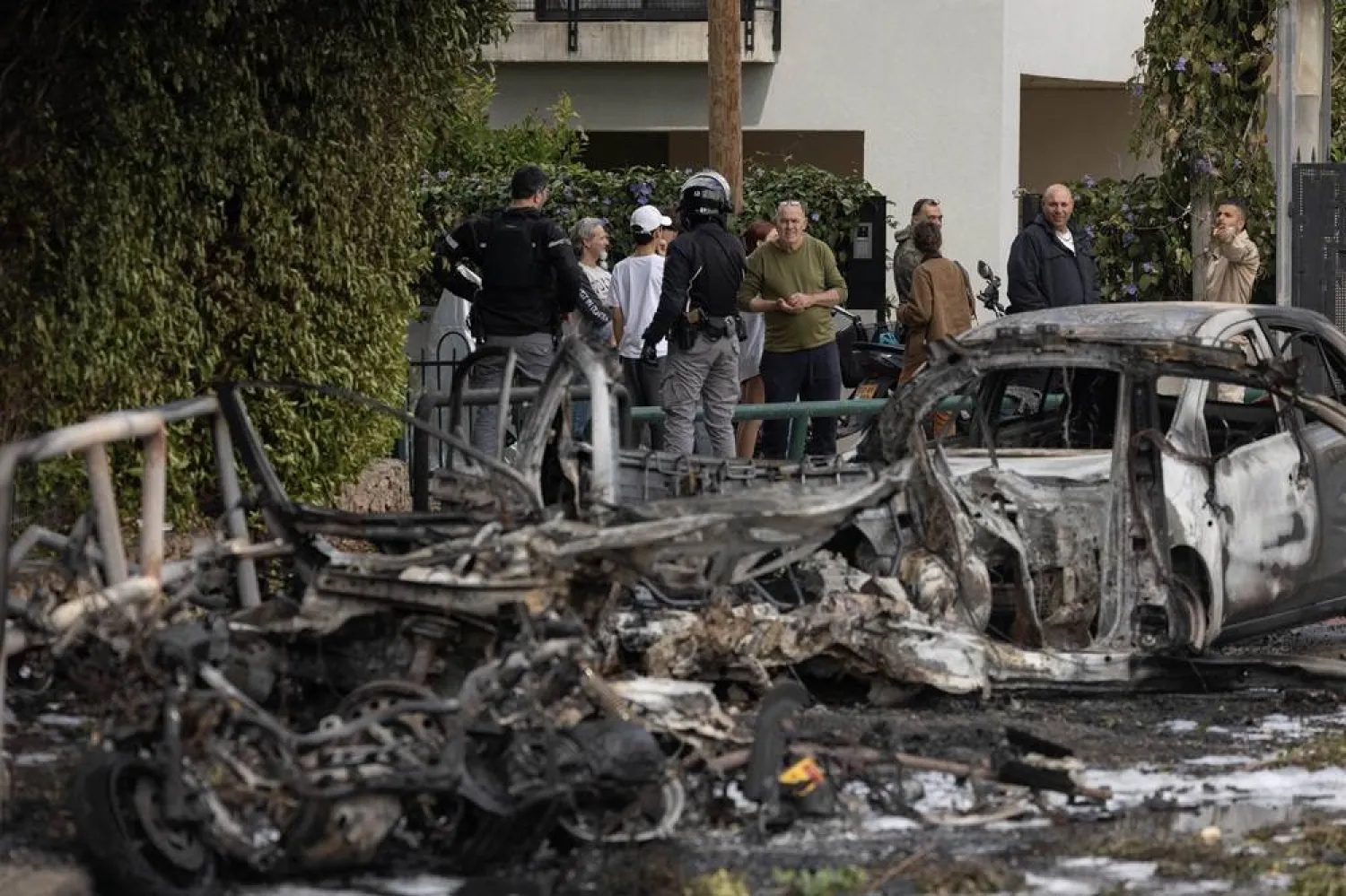
15 March 2027, Israel, Tel Aviv: People watch the site of a projectile impact following an Iranian strike on Tel Aviv. (dpa)
TT

Israel Says ‘No Interceptor Shortage’ After Reports of Scarcity as Iranian Missiles Injure at Least 8

15 March 2027, Israel, Tel Aviv: People watch the site of a projectile impact following an Iranian strike on Tel Aviv. (dpa)

An Israeli military source on Sunday denied media reports that Israel was running low on missile interceptors crucial to its air defenses, adding that the army was "continuously monitoring the situation". 

Citing US officials, news outlet Semafor had reported that Israel had informed the United States that it was "running critically low on ballistic missile interceptors", as the US-Israeli war against Iran entered its third week. 

"As of now, there is no interceptor shortage. The Israeli army is prepared for prolonged combat. We are continuously monitoring the situation," the military source said, in response to media queries. 

Israeli Foreign Minister Gideon Saar also dismissed the reports when questioned by journalists earlier on Sunday. 

At least eight people were injured in Israel Sunday following repeated missile launches from Iran, at least two of which contained cluster munitions according to Israeli authorities. 

Israeli police released footage from a CCTV camera in the Tel Aviv area showing an impact on a road, saying that it was from "cluster munitions" that caused "damage at several locations". 

Bomblets and shrapnel from the missile wounded four people in various parts of the Tel Aviv metropolitan area, according to the Magen David Adom (MDA) rescue service. 

A man in his 60s was hospitalized with moderate injuries to his head from broken glass, while three were treated due to the shock waves from the blast. 

In another barrage shortly before noon, two men aged 62 and 44 reported minor injuries "from pieces of asphalt that struck them as a result of the blast", according to MDA. 

During a salvo toward the Tel Aviv area at around 3:00 am (0100 GMT), a man and a woman in their 80s suffered light injuries, from glass shards and smoke inhalation respectively. 

Another Iranian missile directed at Israel's southernmost city of Eilat was intercepted before reaching the target, without causing injuries. The municipality of Eilat quoted security sources saying it was a cluster missile. 

By late midday on Sunday, seven missile salvos were launched from Iran toward the State of Israel, some of which were intercepted. 

Saar on Sunday accused Iran of targeting civilian areas, during a visit to the northern Arab Israeli town of Zarzir, hit two days prior by shrapnel from an Iranian missile that lightly wounded almost 60 residents. 

"While we are targeting military objectives... the Iranian regime is targeting civilians," Saar said. 

"All the casualties we faced during these two weeks of confrontation... are civilians from Iranian missiles. This is of course a war crime," he added. 

His words were echoed by police superintendent Shlomi Schlezinger while speaking near the site of one of the impacts on Sunday. 

Iran is "always targeting crowded places, with people, the big major cities," he said in central Tel Aviv. 

He attributed the relatively low number of Israeli casualties to civilians' adherence to safety instructions. 

"We have a lot of collateral damage to cars and buildings, as you can see," he said. 

"We're used to, in the last 16 days, to be in shelters and in safe rooms when we have the alarm." 

According to Haaretz, citing security officials, 250 ballistic missiles had been fired by Iran at Israel as of March 13. 

Twelve people have been killed in Israel by missiles or falling debris since the start of the war, according to an AFP tally of figures given by Israeli authorities and first responders. 


Overnight Attacks Kill Children in Ukraine, Russia

 The site of a Russian strike on a residential building in Odesa, Ukraine, 06 April 2026, amid the ongoing Russian invasion. (EPA)
The site of a Russian strike on a residential building in Odesa, Ukraine, 06 April 2026, amid the ongoing Russian invasion. (EPA)
TT

Overnight Attacks Kill Children in Ukraine, Russia

 The site of a Russian strike on a residential building in Odesa, Ukraine, 06 April 2026, amid the ongoing Russian invasion. (EPA)
The site of a Russian strike on a residential building in Odesa, Ukraine, 06 April 2026, amid the ongoing Russian invasion. (EPA)

Two boys were killed in Russia and Ukraine overnight, officials said Tuesday, as the two sides exchanged latest strikes more than four years after Moscow sent troops into its neighbor.

Moscow has been launching drones and missiles at Ukraine almost nightly throughout its offensive -- the bloodiest conflict in Europe since World War II.

Ukraine has stepped up attacks on Russian energy infrastructure in recent weeks in a bid to reduce Moscow's earnings from oil exports, as the Middle East war pushes up prices.

As a result of the latest strikes, in Russia a boy born in 2014 was among three people killed in the Vladimir region after a drone struck a residential building, the regional governor said.

In Ukraine, an 11-year-old boy died and five others were wounded when a house caught fire as a result of a drone strike in the Dnipropetrovsk region, the head of the regional military administration said.

In Russia's Vladimir region, two adults and their son, born in 2014, were killed, governor Alexander Avdeev said on Telegram, adding that the couple's five-year-old daughter was in hospital with burns.

According to the Russian defense ministry quoted by media, Russia shot down 45 Ukrainian drones over the country overnight.

In Ukraine, "the enemy attacked four districts of the region more than 10 times with drones," Oleksandr Ganzha, the head of the regional military administration said on Telegram.

A house caught fire while three other homes and a vehicle were damaged in the Synelnykove district, Ganzha said.

"An 11-year-old boy was killed," he added, saying two women and a man were hospitalized. In other areas, strikes sparked fires and damaged an administrative building and power lines, wounding two men.


Strikes ‘Completely Destroyed’ Synagogue in Iranian Capital

Workers remove debris at Tehran's Sharif University of Technology complex that Iranian authorities say was hit early Monday by a US-Israeli strike, in Tehran, Iran, Monday, April 6, 2026. (AP)
TT

Strikes ‘Completely Destroyed’ Synagogue in Iranian Capital

Workers remove debris at Tehran's Sharif University of Technology complex that Iranian authorities say was hit early Monday by a US-Israeli strike, in Tehran, Iran, Monday, April 6, 2026. (AP)

US-Israeli strikes early on Tuesday "completely destroyed" a synagogue in Tehran, Iran's Mehr news agency and the Shargh newspaper reported.

"According to preliminary information, the Rafi-Nia Synagogue... was completely destroyed in this morning's attacks," Shargh wrote.

Judaism is one of Iran's legally recognized minority religions, and the country has a small Jewish community, although many members fled in the aftermath of the 1979 revolution.

There are no publicly available official numbers, but there are thought to be a few thousand Jewish people in Iran.

Shargh called the synagogue "one of the most important places for Khorasan Jews to gather and celebrate", referring to the northeastern province of Iran.


Istanbul’s Jailed Mayor Faces Fresh Investigation

Protesters attend a rally called by the Republican People's Party (CHP) in support of Istanbul's former arrested Mayor Ekrem Imamoglu in Maltepe, on the outskirts of Istanbul, March 29, 2025. (AFP)
TT

Istanbul’s Jailed Mayor Faces Fresh Investigation

Protesters attend a rally called by the Republican People's Party (CHP) in support of Istanbul's former arrested Mayor Ekrem Imamoglu in Maltepe, on the outskirts of Istanbul, March 29, 2025. (AFP)

Turkish prosecutors on Tuesday launched their latest investigation into Istanbul's jailed opposition mayor Ekrem Imamoglu -- a prominent rival of President Recep Tayyip Erdogan -- on allegations of "insulting a public official", the local prosecutor's office said.

Imamoglu is already facing multiple legal cases, including a major trial that opened last month in which he is accused of leading a criminal organization.

The mass trial at the Silivri courthouse on Istanbul's outskirts involves more than 400 defendants -- 107 of them are in detention. The judge on Friday ordered the release of 18 of them pending trial.

During Monday's hearing, Imamoglu reportedly took the floor and said: "There is only one criminal organization in this case, it is the prosecution."

The remark prompted an immediate reaction from prosecutors.

"An investigation has been launched by the Bakirkoy chief public prosecutor's office for the crime of 'insulting a public official in the performance of their duty' due to the words allegedly spoken by the defendant Ekrem Imamoglu during the hearing on April 6," the prosecutor's office said in a statement posted on X.

Imamoglu was arrested on March 19 last year on a series of charges widely viewed by the opposition as an attempt to derail his prospects of challenging Erdogan at the ballot box.

He has been held in pre-trial detention since then. Prosecutors are seeking a cumulative sentence of up to 2,430 years, a move rights groups say highlights the "weaponization" of Türkiye's judiciary to sideline political opponents.

The proceedings have been marked from the outset by tense exchanges between the judge, defense lawyers and journalists, with repeated disputes over access and seating arrangements inside the Silivri courthouse.
