
Trump Pressures NATO, China over Iran's Closure of Key Waterway

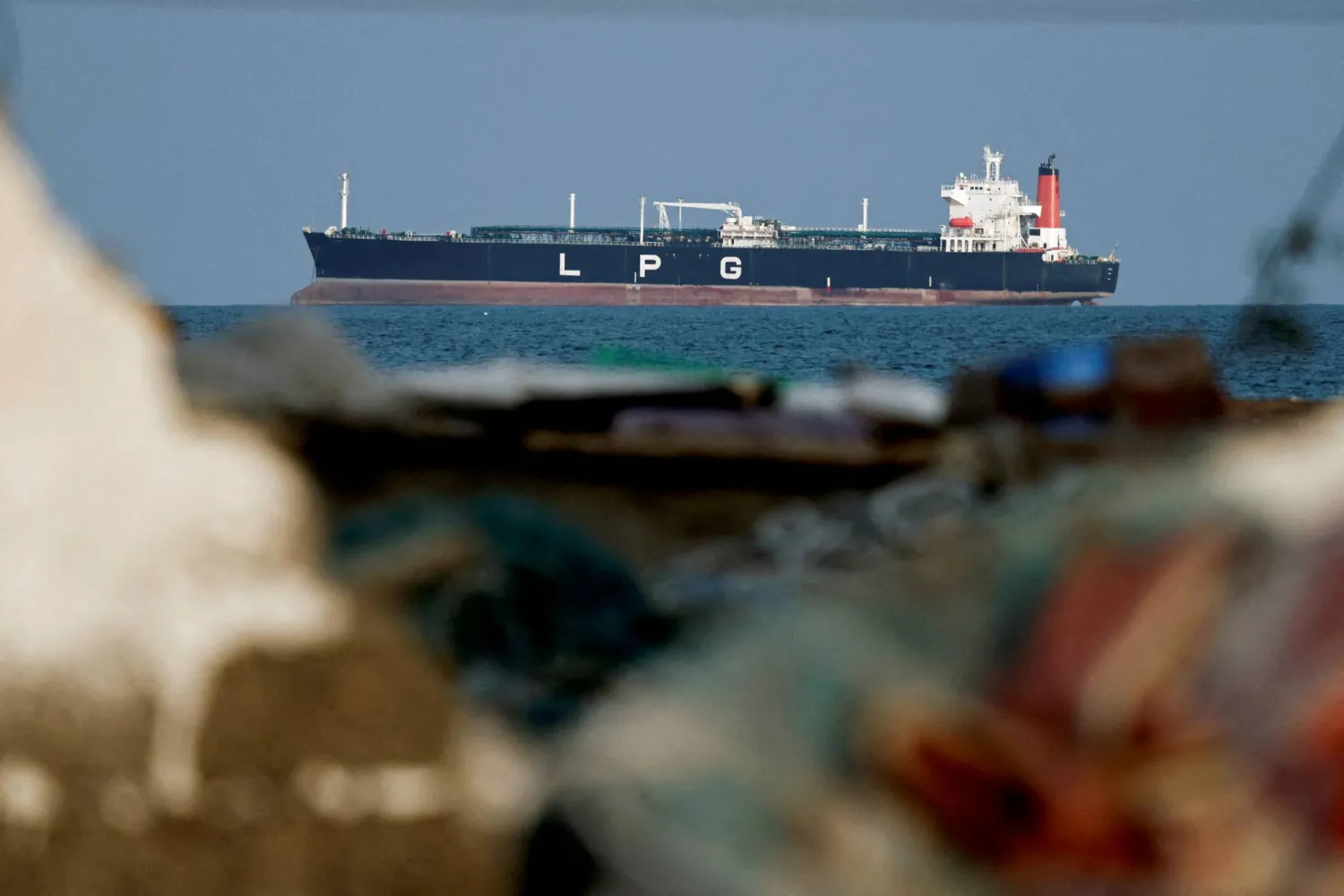
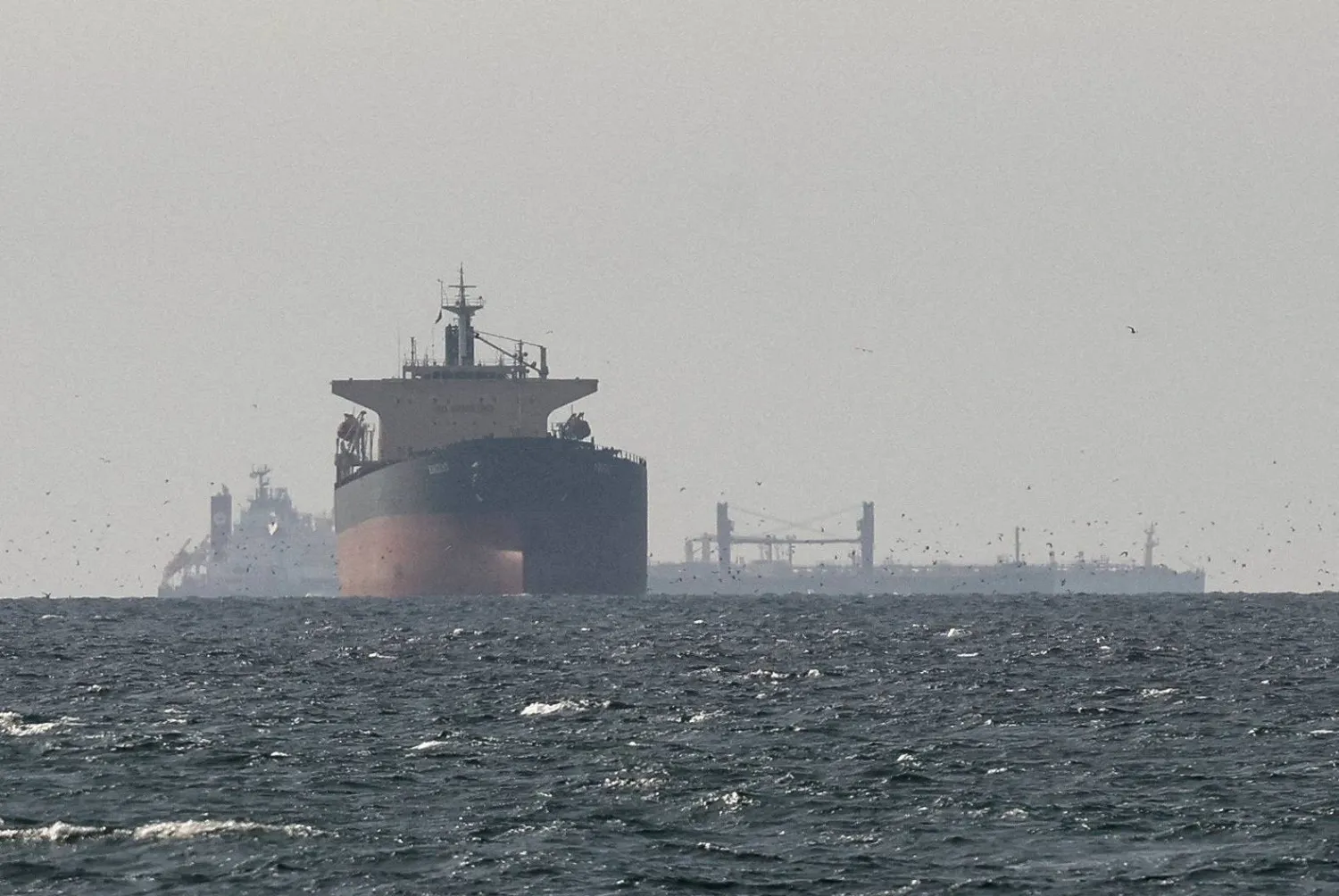
FILE PHOTO: Tankers sail in the Gulf, near the Strait of Hormuz, as seen from northern Ras al-Khaimah, near the border with Oman’s Musandam governance, amid the US-Israeli conflict with Iran, in United Arab Emirates, March 11, 2026. REUTERS/Stringer//File Photo
TT

Trump Pressures NATO, China over Iran's Closure of Key Waterway

FILE PHOTO: Tankers sail in the Gulf, near the Strait of Hormuz, as seen from northern Ras al-Khaimah, near the border with Oman’s Musandam governance, amid the US-Israeli conflict with Iran, in United Arab Emirates, March 11, 2026. REUTERS/Stringer//File Photo

President Donald Trump urged NATO partners and China to help reopen the Strait of Hormuz, the critical conduit for crude that Iran has effectively closed, as major economic players began releasing oil reserves on Monday to ward off supply disruptions.

Global oil prices have surged by 40 to 50 percent after Iran choked off the waterway and attacked energy and shipping industry targets in the Gulf in retaliation for the US-Israeli war against the Iranian republic.

Crude prices were hovering around $100 on Monday as the Middle East war entered its third week, with Israel saying it still has "thousands of targets in Iran", where it was also "identifying new targets every day".

Trump said the United States was in discussions with Iran but that Tehran was not ready for a deal to end the war, although the Iranian republic's foreign minister had earlier denied any talks with Washington.

"I don't think they're ready. But they are getting pretty close," Trump said.

The US president had called on countries including China, France, Japan, South Korea and Britain at the weekend to send ships to escort tankers through the strait.

"It's only appropriate that people who are the beneficiaries of the strait will help to make sure that nothing bad happens there," Trump told the Financial Times on Sunday. Unlike the United States, Europe and China are heavily dependent on the Gulf for oil imports.

Trump threatened to delay a planned summit with Chinese leader Xi Jinping later this month if Beijing does not assist with reopening the strait.

He also warned that no response or a negative reply to his request would be "very bad for the future of NATO".

But Tokyo and Canberra both said they were not planning deployments.

- Iran warning -

Trump's comments came after Iran warned other countries against getting involved in the war, which has spread across the Middle East.

In a phone conversation with his French counterpart Jean-Noel Barrot, Tehran's top diplomat Abbas Araghchi called on other countries to "refrain from any action that could lead to escalation and expansion of the conflict".

Arguing that the US security umbrella in the region was "inviting rather than deterring trouble", Araghchi on X urged neighboring countries "to expel foreign aggressors".

Iran has launched waves of attacks on countries in the Middle East that host US forces, and Italy's military said a drone attack at Ali Al Salem airbase in Kuwait -- which hosts both US and Italian forces -- destroyed an unmanned aircraft belonging to Italy but caused no casualties.

Italy's foreign minister, Antonio Tajani, sought to play down the attack -- the second on an Italian base in the Middle East this week -- insisting: "We are not at war with anyone."

Iraqi authorities meanwhile said rockets wounded five people at Baghdad's airport, which houses a US diplomatic facility, while Iran's Revolutionary Guards said about 700 missiles and 3,600 drones had been fired at US and Israeli targets so far.

Saudi Arabia intercepted more than 60 drones since midnight, according to a tally of defense ministry figures released on Monday, while Dubai airport suspended flights briefly after a "drone-related incident" sparked a fire nearby.

And French President Emmanuel Macron told Iran's President Masoud Pezeshkian it was "unacceptable" to target French interests after an Iranian-designed drone killed a French soldier in Iraq's Kurdistan region.

The war has also spread to Lebanon, where Israel launched a new strike on Beirut's southern suburbs late on Sunday.

- Energy markets -

On the economic front, the International Energy Agency said members will begin releasing 400 million barrels of oil from their strategic reserves, with Asia Oceania nations to make stocks available immediately, and Europe and the Americas follow in the weeks to come.

Japan, which depends on the Middle East for 95 percent of its oil imports, said Monday in a notice in its official government gazette that the level of oil reserves in the country "is being lowered".

The issuance of the notice compels managers of oil reserves to release part of their stockpile to meet the new standard.

The blockade of Hormuz has been felt across the globe, with Australia officials urging the public against price-gouging and panic buying as prices soar, while India restaurants were forced to adapt their menus to save cooking gas.

On the outskirts of Sydney, landscaper Emma Futterleib, who drives up to 500 km a week, told AFP "there's definitely some penny pinching going on".

"It hurts the budget, that's for sure," she said, adding she was "trying to be a bit careful on how much we are spending on groceries."

In Tehran, some residents sought to restore some normalcy at the weekend compared to the start of the war on February 28.

Traffic was busier than last week and some cafes and restaurants had reopened, as had more than a third of stalls in the Tajrish bazaar, a popular shopping hub, with Nowruz, the Persian New Year, just days away.

Some shoppers queued at ATMs to withdraw cash. Online operations at Bank Melli, one of the country's largest, had been paralyzed in recent days.

It was a similar story outside the capital. In an interview from Tonekabon, a city in Mazandaran province on the Caspian Sea, 49-year-old Ali told AFP that shops were open and crowded despite steep price rises.

"Only the main square is closed every night, and government demonstrations take place," he said, adding that only Iran's domestic intranet was working, without outside connections.

More than 1,200 people have been killed by US and Israeli strikes, according to Iranian health ministry figures that could not be independently verified.

The UN refugee agency says up to 3.2 million people have been displaced in Iran.


Appeal Trial Opens for France’s Sarkozy Over Alleged Libyan Funding

FILED - 17 June 2011, Berlin: Then French President Nicolas Sarkozy speaks at a press conference in the Chancellery in Berlin. Photo: Michael Kappeler/dpa
TT

Appeal Trial Opens for France’s Sarkozy Over Alleged Libyan Funding

FILED - 17 June 2011, Berlin: Then French President Nicolas Sarkozy speaks at a press conference in the Chancellery in Berlin. Photo: Michael Kappeler/dpa

Former French president Nicolas Sarkozy was back in court Monday for a retrial on charges he sought Libyan financing for his 2007 election, in a case that last year saw him become France's first modern-day head of state to go to prison.

A lower court in September found the right-wing politician -- who was president from 2007 to 2012 -- guilty of seeking to acquire funding from Muammar Gaddafi's Libya for the campaign that saw him elected.

Sarkozy -- who has denied any wrongdoing -- in October entered a Paris prison, serving 20 days before he was released pending the appeal, AFP reported.

The 71-year-old entered the Paris Appeal Court ahead of Monday's hearing, shaking hands with police and lawyers before taking his seat in the front row of the dock.

In the retrial, set to run until June 3, the former head of state is once again presumed innocent.

Sarkozy has faced a series of legal issues since leaving office and has already received two definitive convictions in other cases.

In one, he wore an electronic ankle tag for several months, until it was removed in May last year, after being convicted for trying to extract favours from a judge.

And in the other, he will have to serve more time over illegal financing of his failed 2012 re-election bid.

In the so-called "Libyan case", he has appealed a five-year prison sentence.

A lower court in September convicted Sarkozy of criminal conspiracy over what it said was a scheme to acquire Libyan funding for his 2007 presidential run.

But it did not conclude that Sarkozy received or used the funds for the campaign.

His legal team immediately appealed, but the lower court ordered him to be sent behind bars, citing the "exceptional gravity" of the conviction.

On October 21, he became the first former head of a European Union state to be incarcerated.

- Prison diaries -

In the initial trial, prosecutors had argued Sarkozy's aides, acting in his name, struck a deal with Gaddafi in 2005 to illegally fund his victorious presidential election bid two years later.

Investigators believe that in return, Gaddafi was promised help to restore his international image after Tripoli was blamed for the 1988 bombing of a passenger jet over Lockerbie, Scotland, and another over Niger in 1989, killing hundreds of passengers.

Members of Sarkozy's circle did not wish to comment before the retrial.

Sarkozy published a hastily written book about his time in prison titled "Diary of a Prisoner", with supporters lining up around a city block in Paris to buy a copy when it came out in December.

In the 216-page book, he recounts his mundane struggles with noise and low-quality food.

But he also hints at a possible alliance between the traditional right-wing Republicans party he once headed and the country's main far-right party to "rebuild the right".

He and his wife, singer and model Carla Bruni, face another possible trial over allegations that they tried to bribe a key prosecution witness in the Libya campaign financing case with the help of a paparazzi boss. They deny wrongdoing.


Spain Rules Out Participating in Military Operations in Strait of Hormuz

FILE PHOTO: An LPG gas tanker at anchor as traffic is down in the Strait of Hormuz, amid the US-Israeli conflict with Iran, in Shinas, Oman, March 11, 2026. REUTERS/Benoit Tessier/File Photo
TT

Spain Rules Out Participating in Military Operations in Strait of Hormuz

FILE PHOTO: An LPG gas tanker at anchor as traffic is down in the Strait of Hormuz, amid the US-Israeli conflict with Iran, in Shinas, Oman, March 11, 2026. REUTERS/Benoit Tessier/File Photo

Spain will not take part in any military mission in the Strait of Hormuz because it considers the US-Israeli war on Iran to be illegal, Madrid's defense and foreign affairs ministers said on Monday. The leftist coalition government led by Prime Minister Pedro Sanchez has criticized the offensive and banned participating US aircraft from using jointly operated bases in southern Spain.

Defense Minister Margarita Robles rejected a demand by US President Donald Trump for military support to secure the waterway - which Tehran has de facto blocked to oil tanker traffic - and his threats of a "very bad future" for NATO allies failing to do so.

"Spain will never accept any stopgap measures, because the objective must be for the war to end, and for it to end now," Robles said.

The situation in the strait is a matter of grave concern for Europeans, but the European Union's position should be that the war must end regardless of economic considerations, Foreign Minister Jose Manuel Albares said, Reuters reported.

"We mustn't do anything that would add even more tension or cause the situation to escalate further," he told reporters in Brussels.

Some EU members such as Germany, Italy or Greece have also signalled they will not join military operations in the strait, while others including Denmark have yet to make a decision.


UK PM Starmer Says Work to Reopen Strait of Hormuz Will Not Be NATO-led

13 March 2026, Ireland, Cork: UK Prime Minister Keir Starmer meets student researchers at the Tyndall National Institute in Cork. Photo: Cathal Mcnaughton/PA Wire/dpa
TT

UK PM Starmer Says Work to Reopen Strait of Hormuz Will Not Be NATO-led

13 March 2026, Ireland, Cork: UK Prime Minister Keir Starmer meets student researchers at the Tyndall National Institute in Cork. Photo: Cathal Mcnaughton/PA Wire/dpa

British Prime Minister Keir Starmer said on Monday that ongoing work to reopen the Strait of Hormuz would not be a NATO mission but would involve a broad alliance ‌including Gulf ‌partners as well ‌as ⁠European countries and the ⁠United States.

"We are working with others to come up with a credible plan for the Straits ⁠of Hormuz to ‌ensure ‌that we can reopen shipping and ‌passage through the ‌Strait. Let me be clear, that won't be and it's never been envisioned ‌to be a NATO mission," Starmer told reporters.

"That ⁠will ⁠have to be an alliance of partners, which is why we're working with partners, both in Europe, in the Gulf, and with the US."