


Iran Parliament Speaker Says Mideast Post-war Order Will Exclude US

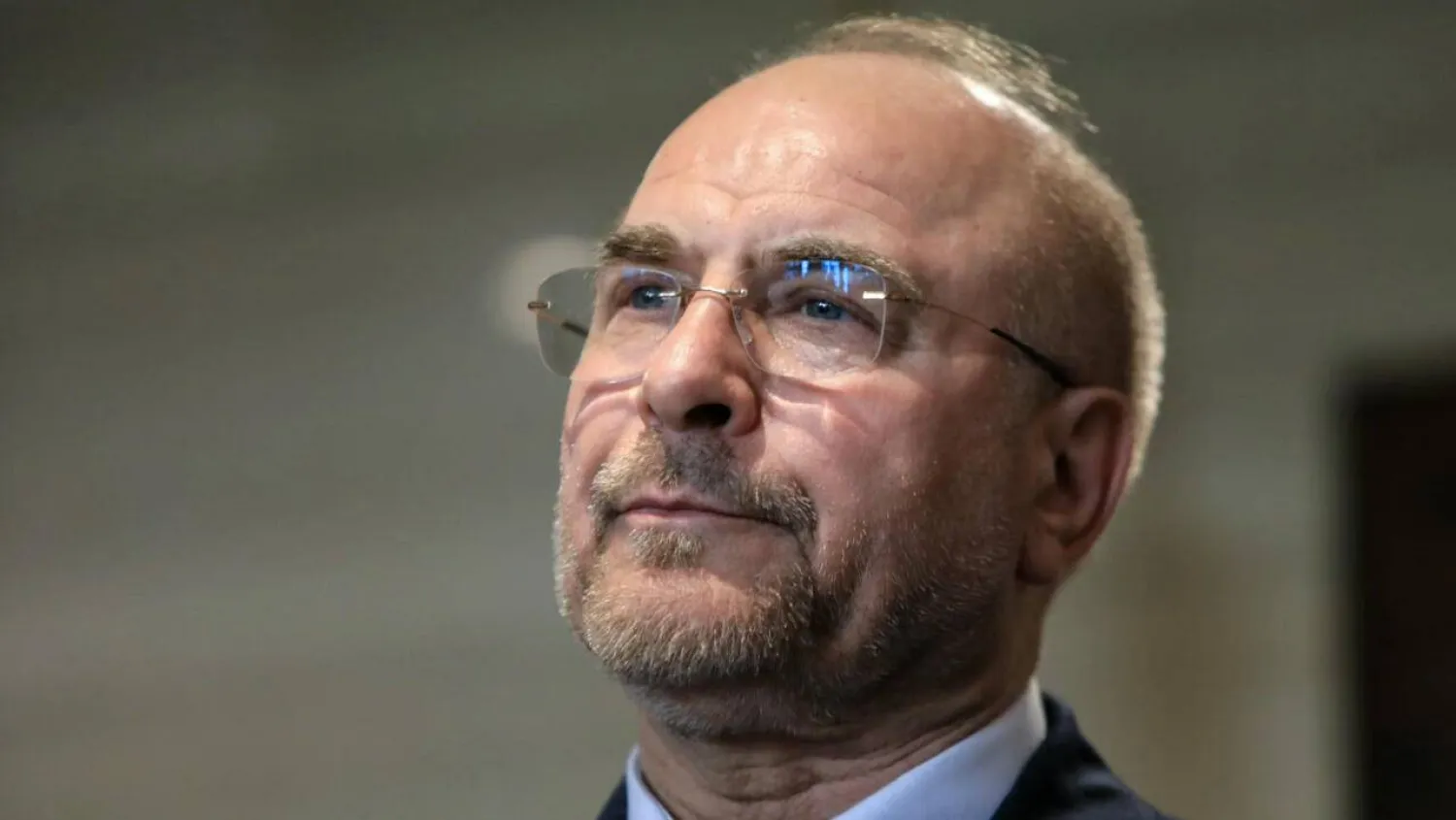
Iran's Parliament Speaker Mohammad Bagher Ghalibaf. AFP/File
TT

Iran Parliament Speaker Says Mideast Post-war Order Will Exclude US

Iran's Parliament Speaker Mohammad Bagher Ghalibaf. AFP/File

Iran's influential parliament speaker Mohammad Bagher Ghalibaf said on Tuesday that the United States would not create the Middle East's post-war order.

"The order here will change, but it will not be an order in which the will of the United States prevails," Ghalibaf said in a recorded video interview, carried by Tasnim news agency and other media.

"This will be a regional, indigenous order."

The speaker, a powerful figure in Iran and a former commander in the Revolutionary Guards, also denounced what he called a cycle of negotiations with the United States followed by military attacks on Iran, saying it would end.

"They (US and Israel) must know that we no longer accept this cycle," said Ghalibaf.

Two days before Washington and Tehran were scheduled to hold technical talks, following three-rounds of Omani-mediated negotiations, the US and Israel launched a massive wave of strikes on the country.

The attacks on February 28, killed Iran's supreme leader Ali Khamenei and triggered a war that has spread across the Middle East.

Omani mediators had said there was "significant progress" in the talks, which had included discussions of Iran's nuclear program.

The strikes recalled the 12-day war in June last year, when Israel launched attacks just days before a planned sixth round of talks between Tehran and Washington.

The United States briefly joined those strikes, hitting Iranian nuclear sites.

"This cycle must be broken, meaning the threat must be removed from over the Islamic Republic and the region," Ghalibafi said.



Ukraine Says Received 501 Bodies from Russia

Russian soldiers in Crimea (Reuters - file photo)
TT

Ukraine Says Received 501 Bodies from Russia

Russian soldiers in Crimea (Reuters - file photo)

Ukraine has received 501 bodies from Russia believed to be those of fallen soldiers, authorities Thursday, in one of the few areas of cooperation between the warring neighbours.

"As a result of repatriation efforts, 501 bodies of the deceased have been returned to Ukraine, which, according to the Russian side, may belong to Ukrainian servicemen," Kyiv's prisoners of war centre said, AFP reported.

The Red Cross helped facilitate the exchange, it added.

Investigators and forensic experts will now identify the repatriated remains, the Ukrainian body said.

Russia received the bodies of 31 soldiers, Russian lawmaker Shamsail Saraliyev told the RBC news outlet.

Since Russia's 2022 invasion, exchanges of prisoners and the remains of fallen fighters have been one of the few areas of contact between Moscow and Kyiv.


UK Unveils Sanctions against Sudan Gold Networks

The Britain's national flag flies next to the Elizabeth Tower, commonly known as Big Ben, in London, Britain, March 23, 2022. REUTERS/Peter Cziborra/ File Photo
TT

UK Unveils Sanctions against Sudan Gold Networks

The Britain's national flag flies next to the Elizabeth Tower, commonly known as Big Ben, in London, Britain, March 23, 2022. REUTERS/Peter Cziborra/ File Photo

Britain on Thursday announced sanctions targeting what it said are "illicit gold and finance networks" propping up rival factions in Sudan's devastating civil war.

The foreign ministry said the war-torn country's gold trade worth billions of dollars was helping finance "weapons procurement, military operations and the activities of armed groups".

The sanctions are aimed at 11 individuals and businesses suspected of being linked to the networks financing and supporting the Rapid Support Forces (RSF) and the regular army, AFP reported.

The war between the Sudanese Armed Forces (SAF) and the RSF, that erupted in April 2023, has killed 200,000 people by some estimates and displaced upwards of 11 million.

"The people of Sudan continue to pay the price for a war fuelled not only by guns and fighters, but by illicit flows of gold and finance to fill the war chests on both sides," Foreign Secretary Yvette Cooper said.

Africa's third-largest country is one of the continent's top gold producers, and the state Sudanese Mineral Resources Company reported a "five-year high" in production of 70 tonnes in 2025.

The United Nations on Wednesday said the rival factions were profiting from control over the country's resources and that a "war economy" was sustaining the conflict.

The UK has previously sanctioned senior commanders of the RSF, who have also been targeted by the European Union.

On Tuesday, the European Council had said it was also boosting sanctions.

In measures designed to "curb sources of financing for the conflict," the Council said it would ban "the purchase, import or transfer if gold originating in Sudan."


UN Atomic Chief Slams 'Unacceptable' Killing at Ukraine Power Plant

A picture showing a side of the Zaporizhzhia Nuclear Power Plant, which is controlled by Russia in southeastern Ukraine (Reuters - Archival)
TT

UN Atomic Chief Slams 'Unacceptable' Killing at Ukraine Power Plant

A picture showing a side of the Zaporizhzhia Nuclear Power Plant, which is controlled by Russia in southeastern Ukraine (Reuters - Archival)

The United Nations atomic agency's head has denounced the killing of the chief engineer of Ukraine's Russian-occupied Zaporizhzhia nuclear power plant in a drone strike Moscow has blamed on Kyiv.

The head of Russian nuclear giant Rosatom, Alexei Likhachev said on Wednesday that Aleksandr Yakovlev died when "a drone belonging to the Ukrainian armed forces" hit a service vehicle near the flashpoint power station. Ukraine did not immediately comment on the case.

International Atomic Energy Agency chief Rafael Grossi "condemns the reported incident which he says represents an unacceptable attack on the plant and its management, seriously threatening nuclear safety", the watchdog posted late on Wednesday on X.

"The IAEA calls for an immediate end to all attacks on or near nuclear sites and their staff," it added.

Russia's foreign ministry spokeswoman Maria Zakharova had urged the agency to condemn the alleged "murder".

Likhachev said in a post on Rosatom's Telegram account that Yakovlev "devoted his entire life to nuclear energy and he died, in effect, at his combat post".

A driver was also killed in the attack, he said.

The Telegram accounts of the plant and Rosatom have never previously mentioned Yakovlev.

Normally, the plant's Moscow-appointed director Yuri Chernichuk, a former chief engineer at the plant, speaks publicly.

Russian troops captured the Zaporizhzhia plant in March 2022, shortly after Moscow's full-scale invasion of Ukraine.

The plant is the largest in Europe and its safety has been a recurring source of concern throughout the long-running conflict.

Both sides regularly accuse the other of carrying out strikes on the site, which is located in Enerhodar, on the banks of the Dnipro river, which marks the frontline in the area.