


Iran Says Nuclear Doctrine Unlikely to Change, Hormuz Strait Needs New Protocol

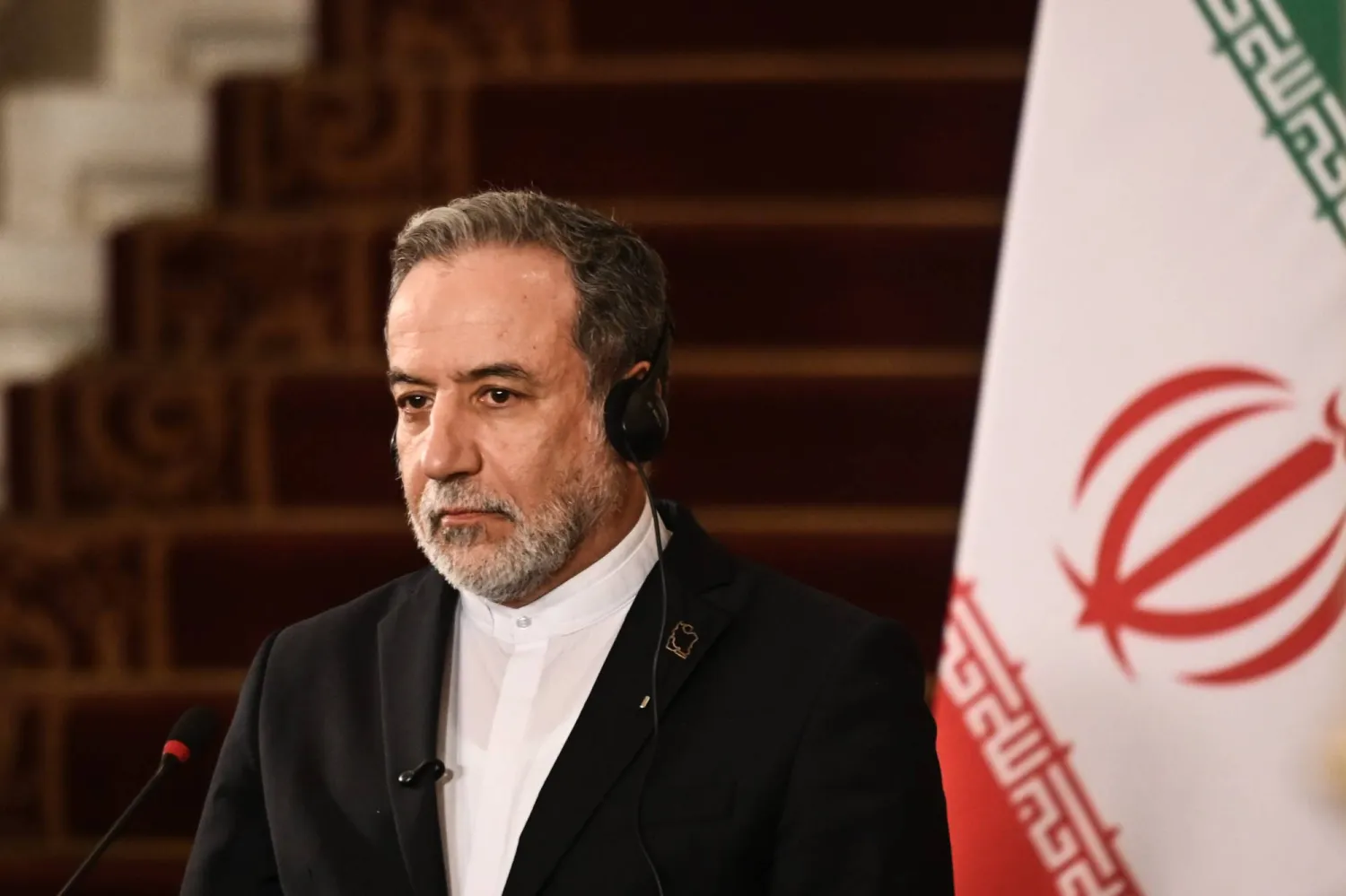
09 September 2025, Egypt, Cairo: Iranian Foreign Minister Abbas Araqchi attends a joint press conference in Cairo. (dpa)
TT

Iran Says Nuclear Doctrine Unlikely to Change, Hormuz Strait Needs New Protocol

09 September 2025, Egypt, Cairo: Iranian Foreign Minister Abbas Araqchi attends a joint press conference in Cairo. (dpa)

Iran's stance against the development of nuclear weapons will not significantly change, Foreign Minister Abbas Araqchi told Al Jazeera in remarks relayed by Iranian media on Wednesday, cautioning that the new supreme leader is yet to publicly express his view on the matter.

Former Supreme Leader Ali Khamenei, who was killed early in the US-Israeli war against Iran, opposed the development of weapons of mass destruction in a fatwa, or religious edict, issued in the early 2000s.

Western countries, including the US and Israel, have for years accused Tehran of seeking nuclear weapons, while Iranian authorities have said their nuclear program is solely for civilian purposes.

Araqchi ‌said fatwas depend ‌on the Islamic jurist issuing them and added he ‌was ⁠not yet in ⁠a position to judge the jurisprudential or political views of Mojtaba Khamenei, Iran's new supreme leader.

A NEW PROTOCOL FOR THE STRAIT OF HORMUZ

Iran's foreign minister said he believed that after the war comes to an end, countries that border the Gulf should draft a new protocol for the Strait of Hormuz, to ensure that safe passage through the narrow waterway is carried out under certain conditions aligned ⁠with Iranian and regional interests.

Iran shut the vital energy ‌gateway, through which a fifth of global oil ‌and liquefied gas passes, saying it "won't even allow a liter of oil" to reach ‌the US, Israel and their partners.

On Tuesday, Iran's parliament speaker tweeted ‌that the Strait of Hormuz' situation won't return to its pre-war conditions.

The US has sought to build a naval coalition to escort vessels navigating the strait, with most NATO allies saying they don't want to get involved in military operations against Iran.

NATO-member France said ‌it would only consider a joint international coalition to secure passage through the strait following a ceasefire and prior negotiations ⁠with Tehran.

Araqchi ⁠said an end to the war was only conceivable if the conflict is permanently over throughout the region and Iran receives compensation for damages incurred.

STRIKES NEAR URBAN AREAS BLAMED ON US RELOCATION

Asked about Iranian strikes in the Gulf not only targeting US military bases but also impacting residential or commercial areas, Iran's foreign minister said this was because US forces relocated to urban areas.

"Wherever there were American forces gathering, wherever there were facilities belonging to them, they were targeted. It is possible some of these places were near urban areas," the top Iranian diplomat said.

Araqchi acknowledged that regional countries are "upset and their people have been harmed or bothered" by Iranian strikes, but added that the blame lay entirely with the US for starting the war on February 28.



Israel Says Killed Iran Intel Chief, Tells Military to Hunt Down Officials

Destroyed buildings of a police station and nearby houses are seen after Friday's US-Israeli strike in Tehran, Iran, Sunday, March 15, 2026. (AP Photo/Vahid Salemi)
TT

Israel Says Killed Iran Intel Chief, Tells Military to Hunt Down Officials

Destroyed buildings of a police station and nearby houses are seen after Friday's US-Israeli strike in Tehran, Iran, Sunday, March 15, 2026. (AP Photo/Vahid Salemi)

Israel Says Killed Iran Intel Chief, Tells Military to Hunt Down Officials 

Israel said Wednesday its forces had killed another top Iranian official, Intelligence Minister Esmail Khatib, and said its military was authorized to kill any senior figure of the country in its sights. 

The announcement, the day after Iranian security chief Ali Larijani was confirmed killed in an Israeli strike, is part of a longstanding strategy by Israel to target its enemy's leaders. 

"Last night Iran's Intelligence Minister Khatib was also eliminated," Israeli Defense Minister Katz said in a statement. 

"Prime Minister Benjamin Netanyahu and I have authorized the army to eliminate any senior Iranian official for whom the intelligence and operational circle has been closed, without the need for additional approval," he added. 

"We will continue to thwart and hunt them all down." 

There was no immediate comment or confirmation from Iran, which had responded with fury and vows of revenge to the death of Larijani. 

The two sides have been at war for more than two weeks since US-Israeli attacks on Iran on February 28 killed supreme leader Ali Khamenei and ignited a regional conflict. 

Israel said this week it had also targeted Akram al-Ajouri, head of the military wing of the group Palestinian Islamic Jihad, in a strike in Iran. 

And it has vowed to hunt down Iran's new supreme leader, Mojtaba Khamenei, who has not appeared in public since he succeeded his father. 

David Khalfa, co-founder of the Atlantic Middle East Forum, described Israel's strategy as "a campaign of 'counter-regime warfare". 

It was "aimed at dismantling the regime's politico-security architecture to make it waver on its foundations", he wrote on X before the news on Khatib. 

Katz said that “significant surprises are expected throughout this day on all the fronts,” without elaborating.

Khatib’s killing follows Israel killing top Iranian security official Ali Larijani and the head of the Revolutionary Guard’s all-volunteer Basij force.

The US Treasury had sanctioned Khatib in 2022, over the Intelligence Ministry “engaging in cyber-enabled activities against the United States and its allies.”

Khatib “directs several networks of cyber threat actors involved in cyber espionage and ransomware attacks in support of Iran’s political goals,” the Treasury said at the time.

The Treasury also called Iran’s Intelligence Ministry in another round of sanctions “one of the Iranian government’s main security services which is responsible for serious human rights abuses.”

“Under his leadership, the (Intelligence Ministry) has cracked down on a large number of human rights defenders, women-rights activists, journalists, filmmakers, and members of religious minority groups,” it said.

Israel has pursued what analysts have described as a policy of decapitation against Iran and the armed movements it backs in the region, killing Hassan Nasrallah of Hezbollah in 2024 and several top Hamas figures since the October 7, 2023 attacks that sparked the Gaza war. 


Kremlin Condemns US-Israeli ‘Murder’ of Iran’s Leaders After Larijani Killing

Russia's President Vladimir Putin (R) shakes hands with Iran's then parliament Speaker Ali Larijani as they meet after a session of the Valdai International Discussion Club in Sochi, Russia, October 22, 2015. (Reuters)
TT

Kremlin Condemns US-Israeli ‘Murder’ of Iran’s Leaders After Larijani Killing

Russia's President Vladimir Putin (R) shakes hands with Iran's then parliament Speaker Ali Larijani as they meet after a session of the Valdai International Discussion Club in Sochi, Russia, October 22, 2015. (Reuters)

The Kremlin on Wednesday condemned what it called "the murder" of Iran's leaders in US-Israeli airstrikes, a day after Iran's semi-official Fars news ‌agency confirmed that ‌Ali Larijani, ‌a ⁠senior adviser to Iran's ⁠late Supreme Leader Ali Khamenei, had been killed in Tehran.

"We unequivocally ⁠condemn any actions ‌aimed ‌at harming the health ‌of, or indeed ‌murdering or eliminating, members of the leadership of sovereign and ‌independent Iran, as well as those of ⁠other ⁠countries. We condemn such actions," Kremlin spokesman Dmitry Peskov told reporters when asked about Russia's reaction to Larijani's death.

Larijani is the most prominent figure of the country killed since Israel and the United States launched their attacks on Iran on February 28, killing Khamenei and igniting a war across the Middle East.

"Iran's response to the assassination of the secretary of the Supreme National Security Council will be decisive and regrettable," Iranian army chief Amir Hatami said in a statement.


Türkiye Says NATO Deploying More Defenses to Guard Southern Base

This handout picture taken and released by the Turkish Ministry of National Defense press office on March 12, 2026 shows Turkish soldiers waiting in front of Incirlik military base in Adana. (Turkish Defense Ministry / Turkish Ministry of National Defense / AFP)
TT

Türkiye Says NATO Deploying More Defenses to Guard Southern Base

This handout picture taken and released by the Turkish Ministry of National Defense press office on March 12, 2026 shows Turkish soldiers waiting in front of Incirlik military base in Adana. (Turkish Defense Ministry / Turkish Ministry of National Defense / AFP)

NATO ‌is deploying another US Patriot missile defense system to the southern Turkish province of Adana, where personnel from the United States and other countries are located in the Incirlik Air Base, Türkiye’s Defense Ministry said on Wednesday.

Türkiye, which has NATO's second-largest army and neighbors Iran, said last week ‌the alliance ‌had deployed a Patriot ‌system to ⁠its southeastern Malatya ⁠province, near a NATO radar base, as part of steps to boost air defenses against missile threats from the Iran war.

Adana hosts Türkiye’s Incirlik Air Base, where personnel ⁠from the United States, ‌Spain, and ‌Poland are located, as well as Turkish troops.

"In ‌addition to national-level measures taken ‌to ensure the security of our airspace and our citizens, another Patriot system, commissioned by Allied Air Command in Ramstein/Germany, is ‌being deployed in Adana, in addition to the existing ⁠Spanish Patriot ⁠system stationed there," the ministry said at a weekly briefing.

Türkiye, an emerging leader in the global defense industry, lacks its own fully fledged air defenses despite development efforts, and has relied on NATO air defenses stationed in the eastern Mediterranean Sea to intercept three missiles it says were fired from Iran since the war began.