


‘Hollywood-Style’ Narrative in Assassination Campaign Against Iranian Leaders

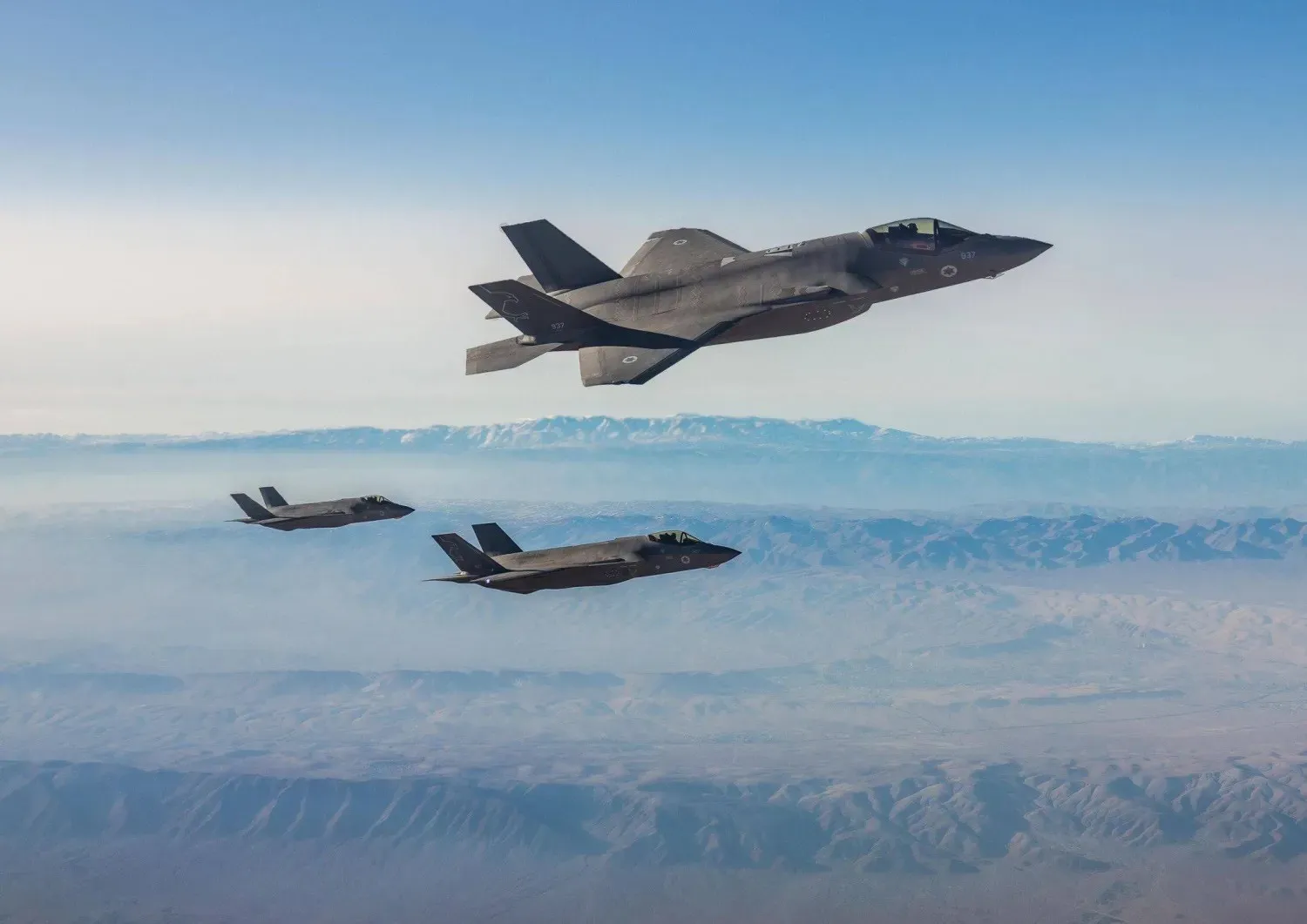
Israeli F-35 (“Adir”) aircraft during their participation in military operations against Iran (Israeli military)
TT

‘Hollywood-Style’ Narrative in Assassination Campaign Against Iranian Leaders

Israeli F-35 (“Adir”) aircraft during their participation in military operations against Iran (Israeli military)

Israeli officials are casting a series of alleged operations against senior Iranian figures as precise, intelligence-driven strikes, while analysts warn the narrative risks overstating their strategic impact and fueling a “false sense of victory.”

Among those cited in Israeli accounts are Ali Larijani, the head of the Supreme National Defense Council, and Esmail Khatib, Iran’s intelligence minister.

Israeli descriptions portray the operations as evidence of deep intelligence penetration within Iran’s Revolutionary Guard, often framed in dramatic, almost cinematic terms.

Officials say the operation against Larijani involved hundreds of personnel from military intelligence, the air force and special operations forces, relying on human sources and advanced surveillance technology.

He was reportedly tracked for months. After appearing at a Quds Day march last Friday, he was placed under continuous surveillance for 72 hours until what Israeli sources described as a “rare opportunity” - combining actionable intelligence, favorable conditions and intensive coordination - prompting the strike.

Following the operation, Israeli Prime Minister Benjamin Netanyahu is reported to have authorized the military to carry out assassinations of Iranian leaders without prior political approval, an extraordinary departure from standard procedure, which typically requires the PM’s authorization.

According to Israel’s public broadcaster, military intelligence recently gathered what it described as “dramatic intelligence” on Larijani’s location after he reportedly went into hiding early in the confrontation. A “golden tip” received Monday night enabled aerial tracking until a decision to strike was made, aided by improved weather conditions.

Channel 12 reported that Israeli aircraft entered Tehran’s airspace upon receiving the intelligence and remained on standby until authorization. The strike allegedly targeted his sister’s apartment using heavy munitions, destroying the building.

Larijani’s public appearance during the Quds Day march was cited as a key factor in the decision to act. Israeli accounts add that he had tried to evade surveillance by frequently changing locations and operating in secrecy, but intelligence services tracked him nonetheless.

Similar claims have been made regarding Iran’s Supreme Leader, Ali Khamenei. Israeli sources say they obtained precise, sometimes real-time, intelligence on his movements. For example, they say his security detail changed the timing of a meeting at the last minute - from Saturday evening, Feb. 28, to Saturday morning - yet the adjustment was reportedly known in advance.

Journalists at the Israeli newspaper Yedioth Ahronoth reported that Israel initially planned a strike for the original time but revised the operation accordingly.

Israeli commentators have questioned how Iran could fail to protect senior officials despite anticipating such threats and deploying extensive security measures. The apparent intelligence breaches raise doubts about the effectiveness of the Revolutionary Guard’s protective apparatus.

However, former Mossad officer Sima Shine, now a researcher at the Institute for National Security Studies in Tel Aviv, warned that such assassinations could prove counterproductive. She said Larijani was seen as a pragmatic figure capable of bringing together different factions within Iran’s leadership. His removal, she said, could empower hard-liners, intensifying resistance and prolonging the conflict.

Similarly, former Israeli military intelligence official Danny Citrinowicz said Tehran has sufficient depth in leadership to absorb such losses. He dismissed the idea that assassinations alone could significantly weaken the system or decisively shift the course of the conflict.



Russia Says It Hopes for New Round of Ukraine Talks with US as Soon as Conditions Allow

FILE PHOTO: Kremlin spokesman Dmitry Peskov looks on as Russia's President Vladimir Putin (not pictured) and Togo's President of the Council of Ministers Faure Gnassingbe (not pictured) meet at the Kremlin in Moscow, Russia November 19, 2025. REUTERS/Ramil Sitdikov/Pool/File Photo
TT

Russia Says It Hopes for New Round of Ukraine Talks with US as Soon as Conditions Allow

FILE PHOTO: Kremlin spokesman Dmitry Peskov looks on as Russia's President Vladimir Putin (not pictured) and Togo's President of the Council of Ministers Faure Gnassingbe (not pictured) meet at the Kremlin in Moscow, Russia November 19, 2025. REUTERS/Ramil Sitdikov/Pool/File Photo

Russia is in contact with the United States about a new round of talks on a Ukraine peace settlement as soon as conditions allow, the Kremlin said on Thursday.

"We remain open, we are in contact with the Americans, and we are counting on holding the next round of talks as soon ‌as circumstances permit," ‌Kremlin spokesman Dmitry Peskov said.

Peskov rejected ‌the ⁠thesis of a ⁠New York Times opinion piece that said the Iran war had caused President Vladimir Putin to lose interest in negotiating an end to the Ukraine conflict, Reuters reported.

"This is an absolutely false invention that does not correspond to reality. During the rounds of trilateral talks that ⁠have taken place, some progress was made ‌toward a settlement," Peskov told ‌reporters.

Peskov said Russia had not lost interest in peace ‌talks but added that key issues - including territory - had ‌yet to be settled.

The NYT opinion piece, by Russian journalist Mikhail Zygar, said Russia's economy had been faltering earlier this year, prompting Putin at that point to take negotiations on ‌a Ukraine settlement more seriously.

However, Zygar said the Iran war had reversed those dynamics by ⁠boosting ⁠oil prices, easing the economic pressure on Moscow and reducing the US focus on Ukraine, weakening any incentive for the Kremlin to seek a settlement.

Earlier this week, Kremlin aide Yuri Ushakov said the US had briefed Russia about Washington's latest round of talks with a Ukrainian delegation in Florida, which took place last Saturday.

The last three-way peace talks between Russia, Ukraine and the US took place last month, before the Trump administration and Israel began airstrikes against Iran on February 28.


Pentagon Reportedly Weighs Diverting Ukraine Military Aid to the Middle East

FILE - The Pentagon and the surrounding area is seen in this aerial view in Washington, Jan. 26, 2020. (AP Photo/Pablo Martinez Monsivais, File)
TT

Pentagon Reportedly Weighs Diverting Ukraine Military Aid to the Middle East

FILE - The Pentagon and the surrounding area is seen in this aerial view in Washington, Jan. 26, 2020. (AP Photo/Pablo Martinez Monsivais, File)

The Pentagon is weighing whether to redirect weapons originally meant for Ukraine to the Middle East, as the war in Iran strains supplies of some of the US military's most critical munitions, the Washington Post reported Thursday, citing three people familiar with the matter.

The weapons that could be redirected include air defense interceptor missiles purchased through a NATO initiative launched last year, under which ⁠partner countries buy ⁠US arms for Kyiv, the report said.

The consideration comes as US operations in the region intensify. Admiral Brad Cooper, the Central Command chief leading US forces in the Middle East, on Wednesday said the US had hit ⁠over 10,000 targets inside Iran and was on track to limit Iran's ability to project power outside its borders.

A Pentagon spokesperson told the newspaper that the Defense Department would "ensure that US forces and those of our allies and partners have what they need to fight and win."

In response to a query about the report, a NATO official said members of ⁠the ⁠alliance and its partners continue to contribute to its Prioritized Ukraine Requirements List (PURL) program that funds the supply of US arms for Kyiv.

"Equipment is continuously flowing into Ukraine," the official added. "The amount pledged to PURL so far is of several billion US dollars and we expect more contributions to follow."

The Pentagon and the US State Department did not immediately respond to Reuters' requests for comment.


Israel Defense Minister Says Iran Guards Navy Commander Killed in Strike

(FILES) This handout photo provided by Iran's Revolutionary Guard Corps (IRGC) official website Sepah News on February 1, 2025, shows navy commander Admiral Alireza Tangsiri. (Photo by SEPAH NEWS / AFP)
TT

Israel Defense Minister Says Iran Guards Navy Commander Killed in Strike

(FILES) This handout photo provided by Iran's Revolutionary Guard Corps (IRGC) official website Sepah News on February 1, 2025, shows navy commander Admiral Alireza Tangsiri. (Photo by SEPAH NEWS / AFP)

Defense Minister Israel Katz announced on Thursday that an Israeli airstrike had killed Alireza Tangsiri, commander of the Iranian Revolutionary Guards' navy.

"Last night, in a precise and lethal operation, the IDF eliminated the commander of the Revolutionary Guards' navy, Tangsiri, along with senior officers of the naval command," Katz said in a video statement.

"The man who was directly responsible for the terrorist operation of mining and blocking the Strait of Hormuz to shipping was blown up and eliminated."

Since the start of the joint US-Israeli attacks on Iran on February 28, Israel has announced the killing of several top Iranian officials, including supreme leader Ali Khamenei and the security chief, Ali Larijani.

In recent days, Israeli forces have carried out several strikes targeting the naval assets of Iran.

Last week, Israeli airstrikes hit several Iranian naval ships in the Caspian Sea, including ones equipped with missile systems, support vessels and patrol craft.