
Israel Threatens Surge in Attacks on Iran as Britain Condemns Tehran Targeting US-UK Air Base

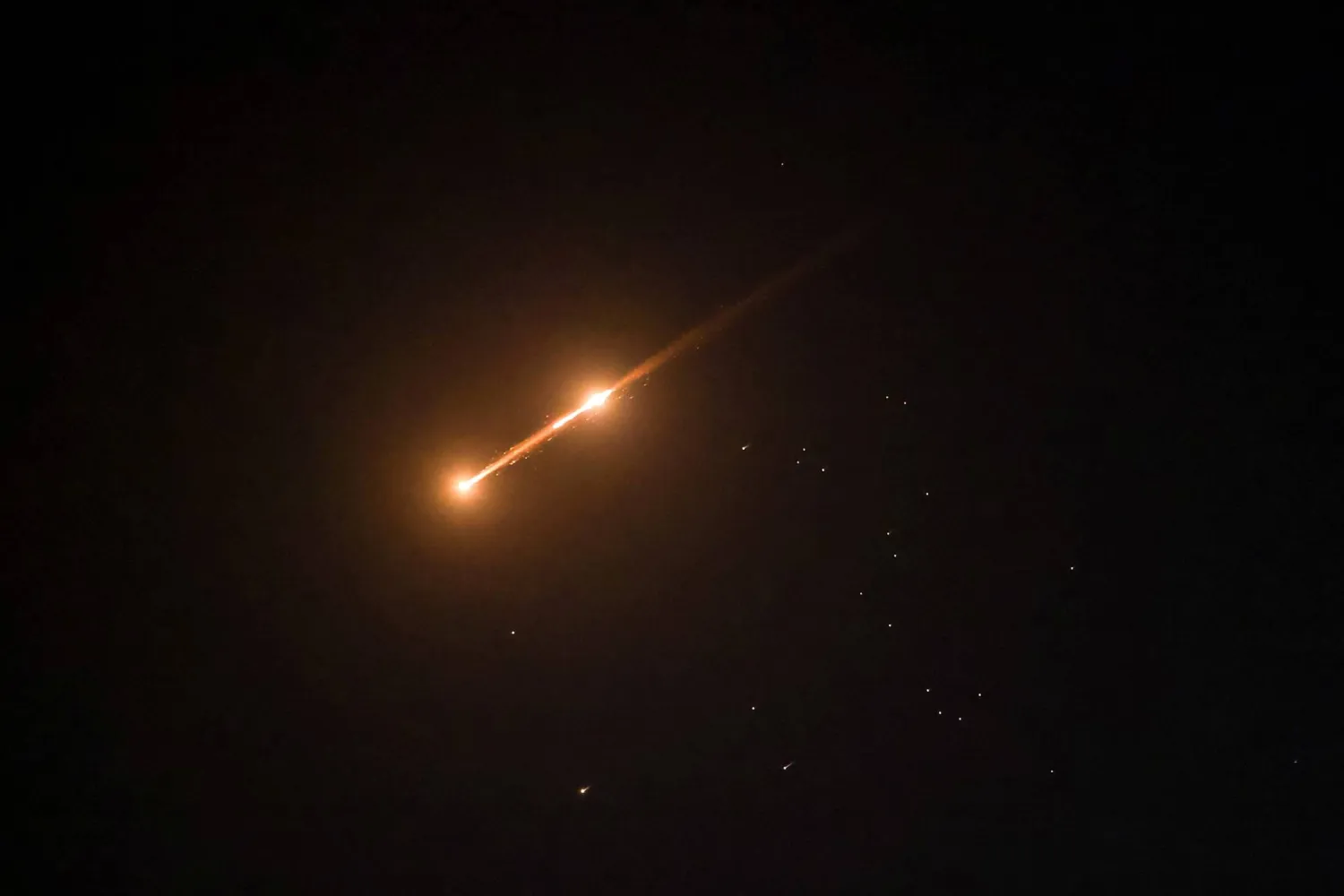
 An Iranian missile with cluster munitions flies over the city, amid the US-Israeli conflict with Iran, in Jerusalem, March 20, 2026. (Reuters)
An Iranian missile with cluster munitions flies over the city, amid the US-Israeli conflict with Iran, in Jerusalem, March 20, 2026. (Reuters)
TT

Israel Threatens Surge in Attacks on Iran as Britain Condemns Tehran Targeting US-UK Air Base

 An Iranian missile with cluster munitions flies over the city, amid the US-Israeli conflict with Iran, in Jerusalem, March 20, 2026. (Reuters)
An Iranian missile with cluster munitions flies over the city, amid the US-Israeli conflict with Iran, in Jerusalem, March 20, 2026. (Reuters)

Israel’s defense minister threatened a surge in attacks against Iran on Saturday and Britain condemned Iran for targeting a joint UK-US base in the Indian Ocean as the war in the Middle East entered its fourth week. 

The Iranian attack on the Diego Garcia air base — located about 2,500 miles (4,000 kilometers) from Iran — suggested Tehran has missiles that can go far further than it had previously acknowledged. 

Also on Saturday, Iran’s Natanz nuclear enrichment facility was hit in an airstrike, an official Iranian news agency reported, saying there was no radiation leakage. 

Israel's Defense Minister Israel Katz said in a video statement that next week, “the intensity of the attacks” by Israel and the United States against Iran’s ruling theocracy will “increase significantly.” 

He spoke shortly after fragments from an Iranian missile slammed into an empty kindergarten near Tel Aviv. Israeli army spokesman Nadav Shoshani posted a video on X of the kindergarten building; no casualties were reported as the place was empty at the time. 

Overnight and into the morning, Tehran, Iran's capital, saw heavy airstrikes, residents said. In Iraq, a drone struck the intelligence service headquarters in Baghdad, killing an officer. No group immediately claimed responsibility for that attack. 

Saudi Arabia said it downed 20 drones in the Eastern Region. No injuries or damage were reported. 

The attacks indicate the Iran war shows no sign of abating. 

Mixed messages  

US President Donald Trump said on Friday he was considering “winding down” military operations in the Middle East even as the US was sending three more amphibious assault ships and roughly 2,500 additional Marines to the region. 

Trump’s post on social media followed an Iranian threat to attack recreational and tourist sites worldwide. 

It also came after another climb in oil prices plunged the US stock market, and was followed by a Trump administration announcement it was lifting sanctions on Iranian oil already loaded on ships, a move aimed at wrangling soaring fuel prices. 

Iran's attempt to hit Diego Garcia air base in the Indian Ocean  

UK officials have not given details of the attempted strike on the ocean air base on Friday, which was unsuccessful. 

Britain's Ministry of Defense said Saturday that Iran’s “lashing out across the region and holding hostage the Strait of Hormuz, are a threat to British interests and British allies.” 

Britain has not participated in US-Israeli attacks on Iran, but has allowed American bombers to use UK bases to attack Iran’s missile sites. 

On Friday, the British government said US bombers can also use UK bases, including Diego Garcia, in operations to prevent Iran attacking ships in the Strait of Hormuz. Iran targeted the base before that UK statement. 

Attack on Iran's Natanz 

Iran's official news agency Mizan said there was no leakage after Saturday's strike on the Natanz nuclear facility, nearly 220 kilometers (135 miles) southeast of Tehran. 

The facility, Iran's main uranium enrichment site, was hit in the first week of the war and several buildings appeared damaged, according to satellite images. The UN nuclear watchdog — the International Atomic Energy Agency — had said “no radiological consequences” were expected from that earlier strike. Natanz had also been targeted in the 12-day war last June. 

On Saturday, the IAEA said on X it was informed by Iran about the Natanz strike and about there being no increase in off-site radiation levels. The agency said it was looking into the incident. 

Trump says US near completion of its goals 

The US and Israel have offered shifting rationales for the war, from hoping to foment an uprising that topples Iran’s leadership to eliminating its nuclear and missile programs. There have been no public signs of any such uprising and no end to the war in sight. 

On social media, Trump said, “We are getting very close to meeting our objectives as we consider winding down our great Military efforts in the Middle East.” 

That seemed at odds with his administration’s move to bolster its firepower in the region and request another $200 billion from Congress to fund the war. 

The US is deploying three more amphibious assault ships and roughly 2,500 additional Marines to the Middle East, an official told The Associated Press. Two other US officials confirmed that ships were deploying, without saying where they were headed. All three spoke on condition of anonymity to discuss the military operations. 

Days earlier, the US redirected another group of amphibious assault ships carrying another 2,500 Marines from the Pacific to the Middle East. The Marines will join more than 50,000 US troops already in the region. 

Trump has said he has no plans to send ground forces into Iran but also has asserted that he retains all options. 

Iran threatens attacks beyond the Middle East 

Iran’s top military spokesperson, Gen. Abolfazl Shekarchi, warned Friday that “parks, recreational areas and tourist destinations” worldwide will not be safe for the country’s enemies. 

Supreme Leader Mojtaba Khamenei praised Iranians’ steadfastness in the face of war in a written statement read on Iranian television to mark the Persian New Year, or Nowruz. Khamenei has not been seen in public since he became supreme leader following Israeli strikes that killed his father, Ali Khamenei, and reportedly wounded him. 

With little information coming out of Iran, it was not clear how much damage its arms, nuclear or energy facilities have sustained in the punishing US and Israeli strikes, which began Feb. 28 — or even who was truly in charge of the country. 

But Iran’s attacks are still choking off oil supplies and raising food and fuel prices far beyond the Middle East. 


WFP: Expanding Conflict Drives Record Hunger in Northern Nigeria

A soldier patrols outside burned homes, days after an attack in the village of Woro, Nigeria, Thursday, Feb. 5, 2026. (AP Photo/Pelumi Salako)
TT

WFP: Expanding Conflict Drives Record Hunger in Northern Nigeria

A soldier patrols outside burned homes, days after an attack in the village of Woro, Nigeria, Thursday, Feb. 5, 2026. (AP Photo/Pelumi Salako)

Hunger across Nigeria's conflict-hit north is at levels not seen in a decade as violence spreads and aid shrinks, the UN's World Food Program warned Thursday, with more than three million people "acutely food insecure".

The country has been battling an extremist insurgency centered in the northeast since 2009, with a resurgence in violence since 2025.

Extremists have also been expanding into the northwest, which is already facing a separate, overlapping crisis from armed "bandit" gangs.

"What concerns us most is how this crisis is expanding," WFP regional director for west and central Africa, Kinday Samba, said in a statement, noting the spread of violence "across a much wider area and forcing people from farmland, driving displacement and restricting humanitarian access".

Aid cuts under US President Donald Trump and other western countries have hit some of Nigeria's poorest households in recent years.

At the same time, the International Monetary Fund reported last month that poverty has risen under President Bola Tinubu, who has embarked on a raft of economic reforms supported by economists but which have also driven punishing inflation.

As conflict in the country's troubled north has expanded, so has the number of areas too dangerous for WFP to operate in, it said.

"The number of inaccessible locations has doubled: a further 15 areas are now considered partially inaccessible for WFP's frontline staff," it said,

Government control is scanty outside urban centers, leaving swathes of rural areas prone to attacks from armed groups.

More than 17 million people across northern Nigeria "are experiencing crisis, emergency, or catastrophic levels of hunger", WFP said.

"Nigeria's food security crisis is worsening faster than previously anticipated," it said. "Conflict is driving hunger in some northern states, particularly the northeast, to levels not seen in almost a decade".

In Borno state, the epicenter of the militants conflict, more than three million people are "acutely food insecure", including 10,000 people facing "catastrophic hunger".

But WFP's footprint is shrinking amid a donor shortfall, it said.

At the height of 2025 "lean season", when the previous year's foodstocks are running low but the current year's crops aren't ready for harvest, the agency delivered food and nutrition aid to 1.3 million people.

Amid "extreme funding shortfalls", it has projected it will reach slightly over half that number this year.


Iran Warns Oil Tankers to Use Approved Routes in Strait of Hormuz or Face a 'Forceful Response'

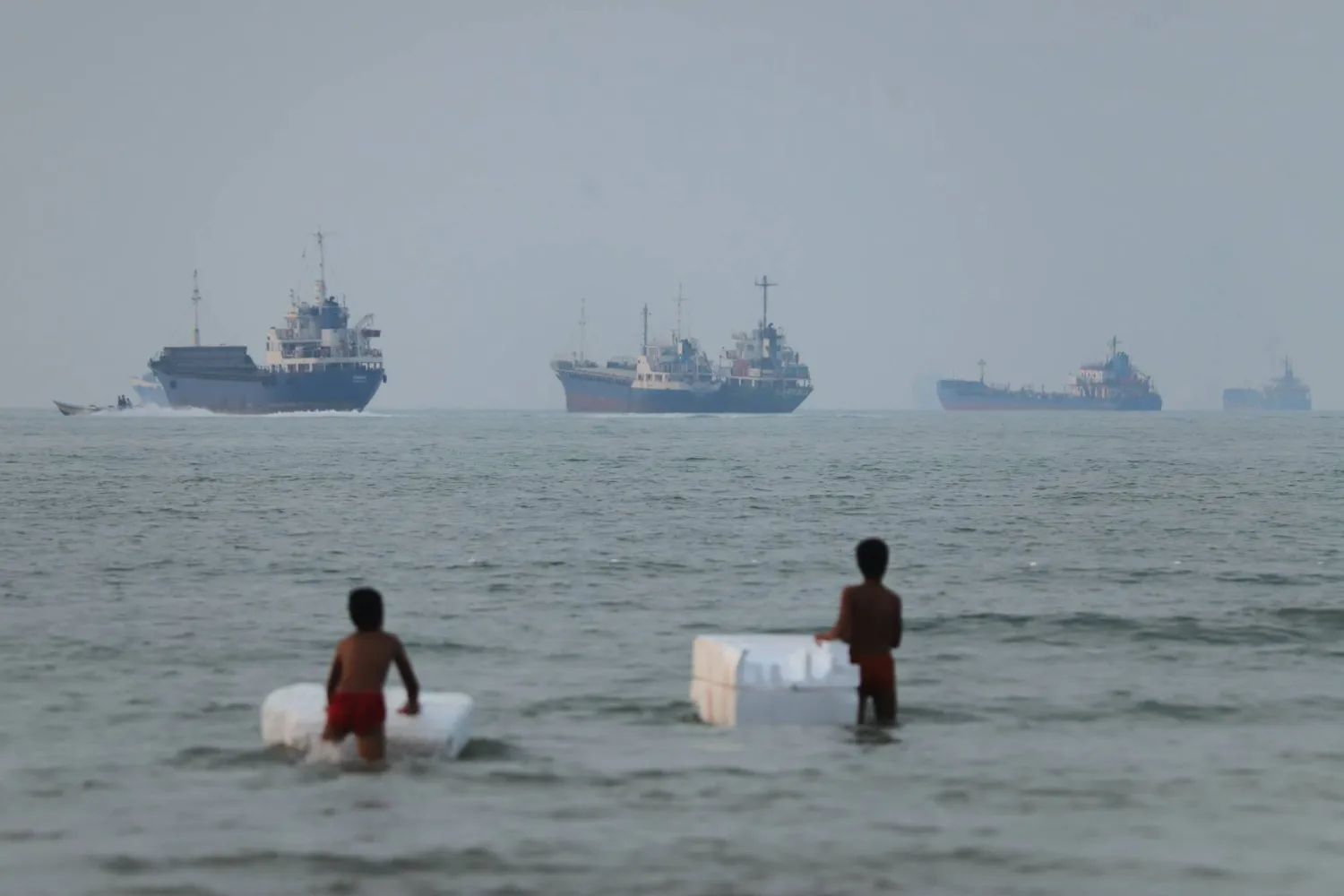
Two boys stand in shallow water with foam floats as cargo ships and other vessels are seen in the Strait of Hormuz off Bandar Abbas, Iran, Tuesday, June 30, 2026. (Amirhosein Khorgooi/ISNA via AP)
TT

Iran Warns Oil Tankers to Use Approved Routes in Strait of Hormuz or Face a 'Forceful Response'

Two boys stand in shallow water with foam floats as cargo ships and other vessels are seen in the Strait of Hormuz off Bandar Abbas, Iran, Tuesday, June 30, 2026. (Amirhosein Khorgooi/ISNA via AP)

Iran’s joint military command warned Thursday that all oil tankers moving through the Strait of Hormuz must use its approved routes or face a “forceful response,” again ratcheting up tensions over a waterway crucial for international energy supplies.

The strait, the narrow mouth of the Arabian Gulf, has emerged as one of the top issues in negotiations to reach a permanent end to the Iran war. The statement from the Khatam al-Anbiya military command, reported by Iranian state television, comes after both US and Iranian diplomats met with mediators on Wednesday in Qatar, The Associated Press said.

It wasn’t immediately clear what sparked the threat from Iran. However, the US military's Central Command had put out a statement about having a meeting with officials from Mideast nations in Bahrain that said “leaders underscored their shared commitment to the free flow of commerce through the Strait of Hormuz.”

“Any failure to comply, deviation from the designated route, or disregard for the navigation protocols of the Islamic Republic of Iran in the Strait of Hormuz will be met with an immediate and forceful response from the armed forces, endangering the security of the violating vessels,” the Iranian statement said.

It also said the continued presence of US fighter jets over the strait “causes insecurity in this waterway and threatens regional security.”

“Any attempt by the United States to interfere in security matters or any disruptive action in the Strait of Hormuz will be considered a threat to Iran’s national sovereignty and will be met with a rapid and decisive reaction,” the Iranian warning added.

Iran and the United States agreed as part of an interim deal to allow ships to pass without paying charges for 60 days. But Tehran insisted it must control the routes of the vessels and later charge fees for passage, upending decades of practice in the waterway.

An effort by Oman and a United Nations agency to launch a new route near Oman’s shore sparked attacks across the Mideast last weekend, highlighting the tensions.


Iran Warns US against Interference in Strait of Hormuz

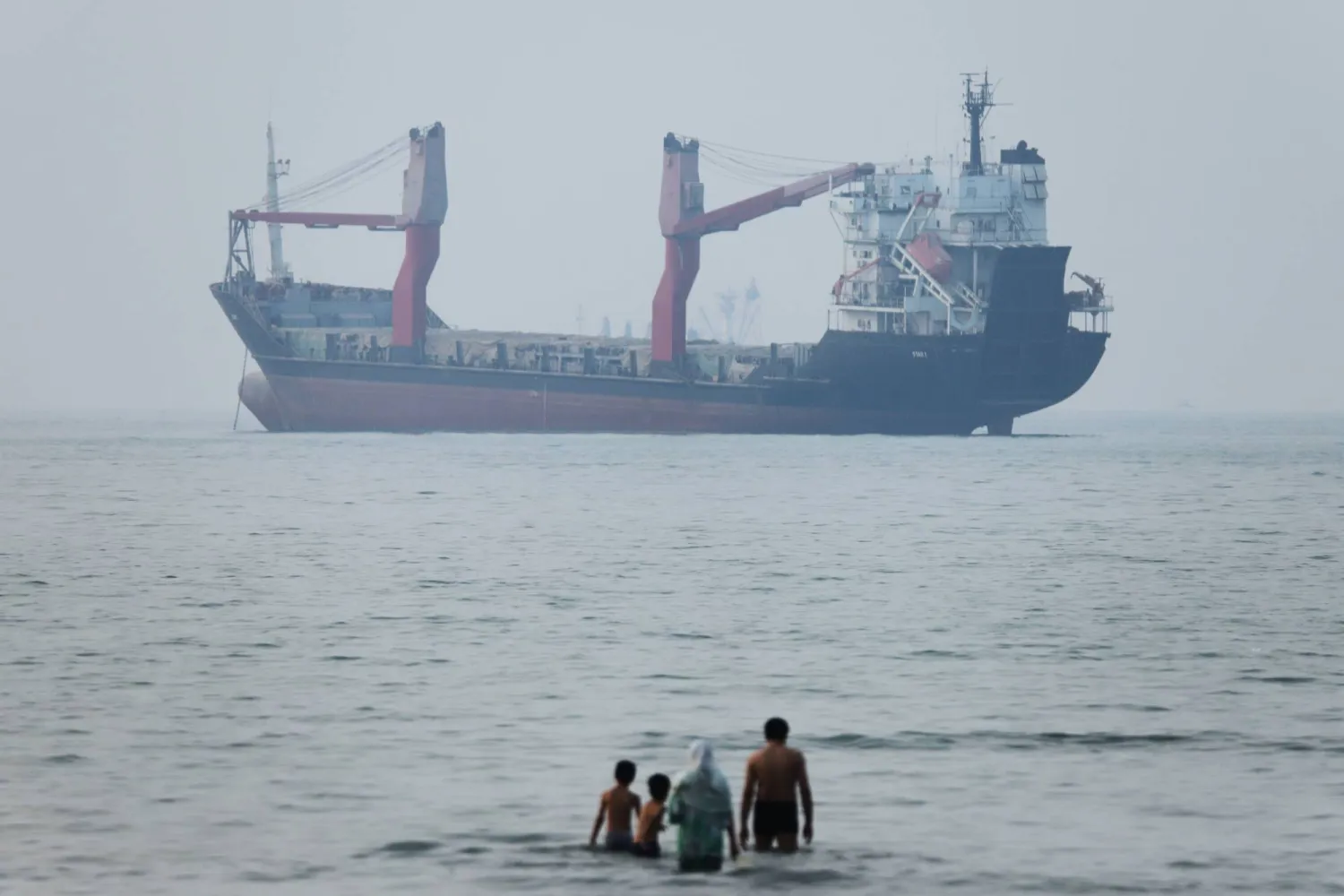
Cargo vessel anchored in the Strait of Hormuz (AP)
TT

Iran Warns US against Interference in Strait of Hormuz

Cargo vessel anchored in the Strait of Hormuz (AP)

Iran said on Thursday that any US interference in the Strait of Hormuz would trigger a "decisive and ‌rapid" ‌response, adding ‌that ⁠the continued presence of US ⁠air assets across the waterway endangered regional security, state media ⁠reported.

Khatam al-Anbiya ‌Central ‌Headquarters, which coordinates Iran's ‌armed forces ‌operations, said all tanker and commercial vessels must follow ‌routes designated by Tehran for ⁠safe ⁠passage through the strait, adding that deviations or failure to comply with navigation protocols would face an immediate response.