


Iran Minister Says US, Israeli Strikes Caused 'Heavy Damage' to Water, Energy Infrastructure

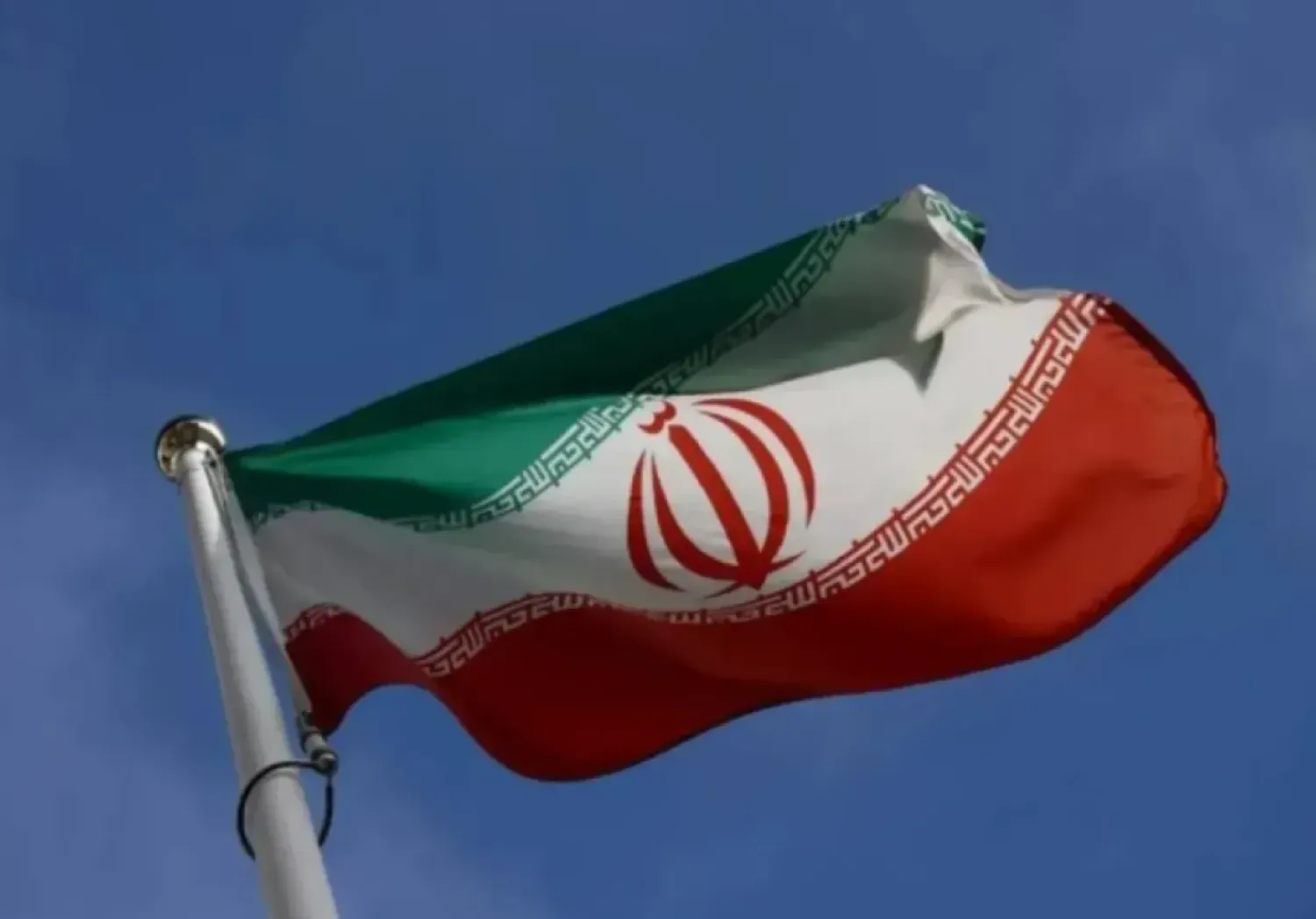
The Iranian flag waves in front of the International Atomic Energy Agency (IAEA) headquarters, before the beginning of a board of governors meeting, amid the coronavirus disease (COVID-19) outbreak in Vienna, Austria, March 1, 2021. (Reuters)
TT

Iran Minister Says US, Israeli Strikes Caused 'Heavy Damage' to Water, Energy Infrastructure

The Iranian flag waves in front of the International Atomic Energy Agency (IAEA) headquarters, before the beginning of a board of governors meeting, amid the coronavirus disease (COVID-19) outbreak in Vienna, Austria, March 1, 2021. (Reuters)

Iran's critical water and energy infrastructure have suffered extensive damage due to US and Israeli strikes on tens of thousands of civilian sites, officials said on Sunday.

Israel and the United States launched strikes on Iran on February 28, killing the Islamic republic's supreme leader and sparking a war that has since spread across the Middle East.

"The country's vital water and electricity infrastructure has suffered heavy damage following terrorist and cyber attacks by the United States and the Zionist regime," said energy minister Abbas Aliabadi, according to ISNA news agency, AFP reported.

"The attacks targeted dozens of water transmission and treatment facilities and destroyed parts of critical water supply networks," he noted, adding that efforts were under way to repair the damage.

Iran's Red Crescent chief Pirhossein Kolivand said the total number of damaged civilian sites "has reached 81,365 based on the latest field assessments".

He said the figure includes residential and commercial units, schools, medical centers and vehicles.

"Behind every damaged unit stands a family, a life, a memory, a livelihood, and a future that has collapsed beneath the rubble of war and violence," he added.

AFP has not been able to access sites or verify the figures outside of the Iranian capital, but journalists in Tehran have reported damage to multiple residential buildings and other civilian infrastructure.

More than 1,200 Iranians have been killed in US and Israeli strikes, according to the latest toll from Iran's health ministry on March 8, which could not be independently verified.

On Sunday, ISNA news agency reported that strikes had damaged a hospital in the southern city of Ahvaz, in Khuzestan province.

Other media, including Fars news agency, showed images of rescuers pulling bodies from the rubble of destroyed buildings in the northern city of Tabriz.

It was not immediately clear when those strikes took place.

Earlier on Sunday, US President Donald Trump threatened to strike Iran's power plants if it failed to reopen the strategic Strait of Hormuz within 48 hours.

Traffic through the vital strait -- through which 20 percent of the world's crude oil and liquefied natural gas normally passes -- has been brought to a near-standstill since the start of the war.

Iranian forces have attacked multiple vessels, saying they failed to heed "warnings" against transiting the waterway.

In recent days, Iran has allowed some vessels from countries it considers friendly to pass, while warning it would block ships from countries it says have joined the "aggression" against it.

In response to Trump, Iran threatened to target energy infrastructure and desalination plants across the region.


Germany Blames Russia for Airport Drone Incident, Hits Back with Sanctions

German Interior Minister Alexander Dobrindt R) and German Foreign Minister Johann Wadephul attend a press conference on the drone incident at Leipzig Airport in Berlin, Germany 01 September 2026. (EPA)
TT

Germany Blames Russia for Airport Drone Incident, Hits Back with Sanctions

German Interior Minister Alexander Dobrindt R) and German Foreign Minister Johann Wadephul attend a press conference on the drone incident at Leipzig Airport in Berlin, Germany 01 September 2026. (EPA)

Germany on Tuesday blamed Russia for an attempted "hybrid attack" involving an explosive-laden drone at a strategic airport last month and announced diplomatic counter-measures.

The European Union expressed "full solidarity" with Germany, NATO assured that it would defend its members and countries including Britain, Estonia and Poland offered strong backing.

Germany will close Russia's consulate in the former capital Bonn later this month, and cancel the contract for the Russian House, a cultural center in Berlin, said Foreign Minister Johann Wadephul.

"We are tightening entry controls for Russian nationals" and Germany would propose the listings of more Russian individuals for European Union sanctions, he added, as the Russian ambassador to Berlin was being summoned.

Germany's top diplomat also vowed that "we are increasing pressure on the Russian shadow fleet" -- a term for the old oil tankers and other cargo ships with opaque ownership Russia uses to get around Western sanctions.

Interior Minister Alexander Dobrindt said that after assessing the drone technology used and other intelligence, "the government concludes that Russia is responsible for the hybrid attack in Leipzig on August 4".

He blamed "low-level agents" for the operation and said "the drone configuration -- various components, explosives and ignition systems -- are known to us from other hybrid operations by Russia and its war against Ukraine".

"We do not view the Leipzig incident in isolation, but rather see it in the context of other hybrid actions," he said. "We assume that Germany is the target of further hybrid attacks by Russia."

"We are not at war, but we are a daily target of hybrid warfare."

European Union chief Ursula von der Leyen said the bloc stands in "full solidarity" with Germany, while NATO chief Mark Rutte said the alliance "will continue to strengthen our ability to deter and defend all Allies against any threat."

Germany, which supports Ukraine in its fight against Russia, has for months reported suspicious drone sightings over military and industrial sites, but the Leipzig incident raised the alarm as a drone found there carried explosives.

Police used a robot to defuse the device near a Ukrainian cargo plane. Another drone was reportedly found weeks later near the airport, also with traces of an explosive substance.

The airport in eastern Germany plays a key role in the transport of military goods, including by the German military and NATO allies, and also serves as a base for Ukraine's Antonov Airlines.

- 'Hub for espionage' -

Chancellor Friedrich Merz said last week that Germany has "found itself in the crosshairs of hybrid attackers" and warned that the perpetrators would "pay for them", without naming a target.

There had been much discussion of whether Germany should shut down Berlin's Russian House, which security services believe is both a center to spread propaganda and an intelligence hub.

The Russian House of Science and Culture, a seven-storey building opened in 1984 in what was then East Berlin, is located near the Russian embassy.

Conservative MP and security policy expert Roderich Kiesewetter recently told Welt TV that the facility is assumed to be a hub for espionage.

He said more than 100 people lived there "with no one knowing who they are" and that the building's power consumption is unusually high.

It was "presumably filled with technical surveillance equipment", he said, and used by "people who are not well-disposed toward Germany".

In recent weeks, the German government had explained it was so far keeping the Russian House open by pointing to its bilateral contractual link to the Goethe Institute in Moscow.

Kiesewetter had dismissed concerns about Russian countermeasures.

"Are we not closing it because we believe the Goethe Institutes in Russia would then be closed in retaliation?" he asked. "Then they'll just get closed."


Trump Warns of ‘Much Harder’ Action if Iran Retaliates to Strikes

A drone view shows vessels near the Strait of Hormuz, as seen from Musandam, Oman, August 28, 2026. (Reuters)
TT

Trump Warns of ‘Much Harder’ Action if Iran Retaliates to Strikes

A drone view shows vessels near the Strait of Hormuz, as seen from Musandam, Oman, August 28, 2026. (Reuters)

President Donald Trump warned Iran on Tuesday not to retaliate against the latest US strikes, saying Tehran faced "much harder and higher" attacks if it hits back. 

Trump said Tuesday's US attacks near the Strait of Hormuz were in response to Iran laying mines and shooting missiles at an American base in Jordan. 

"If the failed Nation of Iran retaliates for this very justified attack, they will be hit again at a much harder and higher level, but it will not be the biggest attack of them all, that is waiting in the wings and, when it is over, there will be very little left of the Islamic Republic of Iran!" Trump said on his Truth Social network. 

US forces launched strikes Tuesday against Iran's Revolutionary Guards in response to attempted attacks on commercial shipping and American forces, the US military said.

The strikes -- which began at 12:00 pm (1600 GMT) -- came after "recent attempted attacks by (the Guards) against commercial shipping in the Strait of Hormuz and against American service members deployed to the region," US Central Command said on X.

The Revolutionary Guards vowed to make the United States "regret" fresh attacks around the strait, despite Trump’s warning. 

"Severe punishment awaits the aggressors; the United States will regret its new attacks," said Guards spokesman Hossein Mohebi in a post on X, after explosions were heard in multiple areas along and east of Hormuz. 

After six months of war, the foes remain at an impasse, with Iran keeping the strategic Strait of Hormuz closed and the United States persisting with a counter-blockade of Iranian ports.

On Sunday, the United States carried out its first known strikes on Iran in several weeks, hitting an Iranian island in the Strait of Hormuz.

Tehran quickly retaliated by attacking US military targets in the Middle East.

Washington said its forces attacked Iranian rocket launchers on the island of Larak to prevent Tehran planting mines in the key shipping lane.

Iran responded with missile and drone attacks aimed at Jordan, saying they targeted US forces there.

Trump vowed at the time to "hit them hard," telling a Fox News reporter that "there will be a response."


Iran Parliament Speaker Urges Citizens to Cut Petrol Use

Drivers queue at a petrol station to refuel in Tehran, on August 25, 2026. (AFP)
TT

Iran Parliament Speaker Urges Citizens to Cut Petrol Use

Drivers queue at a petrol station to refuel in Tehran, on August 25, 2026. (AFP)

A top Iranian official called on citizens to curb their petrol consumption on Tuesday, as the country faces difficulty importing enough fuel to meet demand due to a US naval blockade.

"Of course, part of the responsibility for this high consumption does not lie with our people; it lies with our industry," parliament speaker and top negotiator Mohammad Bagher Qalibaf said in a televised address. "But in any case, what is clear is that we need to save gasoline in our consumption."
