


‘Point of No Return’ Looming in Middle East War, Warns Red Cross

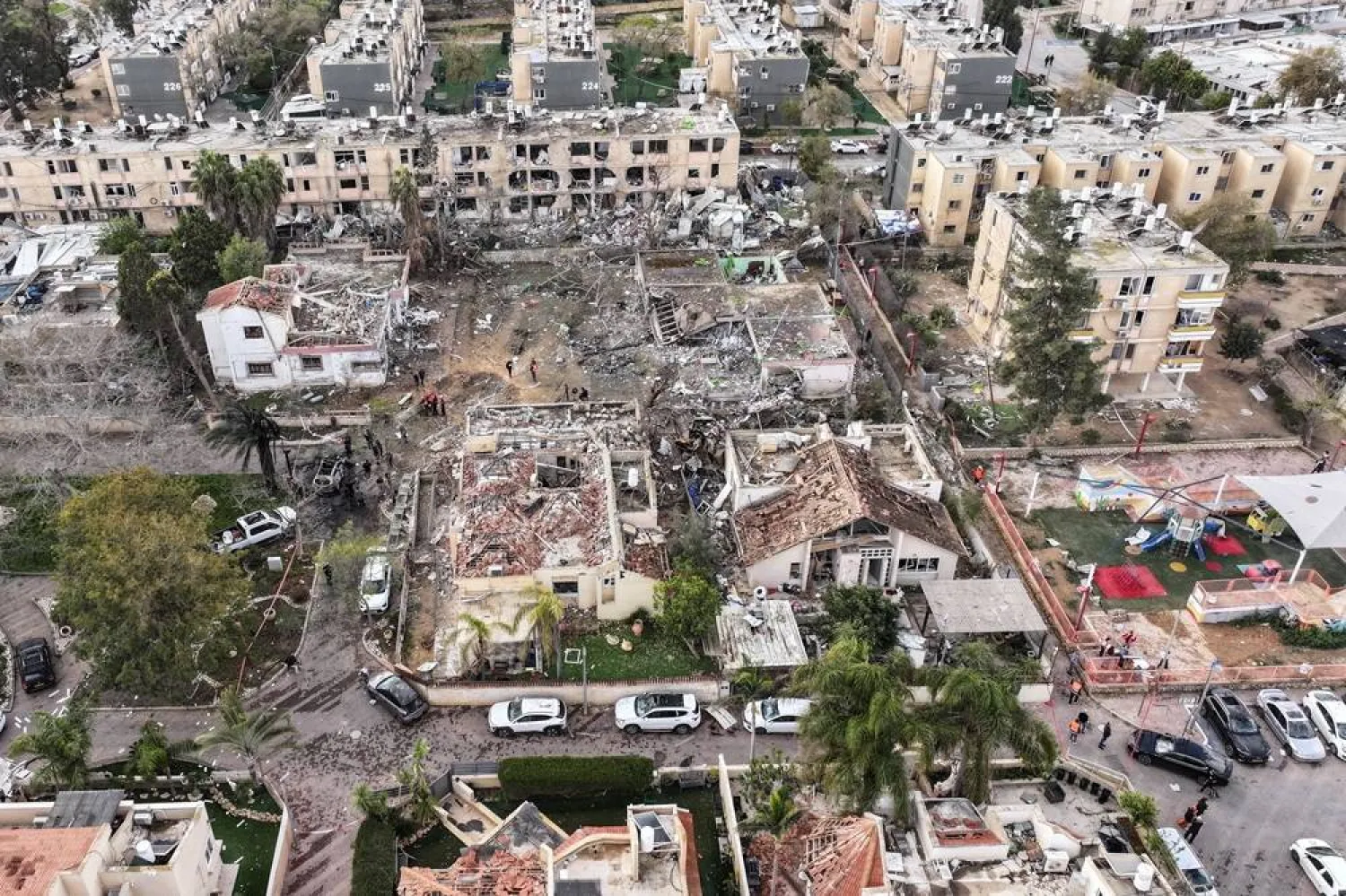
 A drone view shows a damage in a residential neighborhood, following a night of Iranian missile strikes which injured dozens of Israelis, amid the US-Israel conflict with Iran, in Dimona, southern Israel March 22, 2026. (Reuters)
A drone view shows a damage in a residential neighborhood, following a night of Iranian missile strikes which injured dozens of Israelis, amid the US-Israel conflict with Iran, in Dimona, southern Israel March 22, 2026. (Reuters)
TT

‘Point of No Return’ Looming in Middle East War, Warns Red Cross

 A drone view shows a damage in a residential neighborhood, following a night of Iranian missile strikes which injured dozens of Israelis, amid the US-Israel conflict with Iran, in Dimona, southern Israel March 22, 2026. (Reuters)
A drone view shows a damage in a residential neighborhood, following a night of Iranian missile strikes which injured dozens of Israelis, amid the US-Israel conflict with Iran, in Dimona, southern Israel March 22, 2026. (Reuters)

The International Committee of the Red Cross demanded Monday a halt to the "war on essential infrastructure" in the Middle East, warning of potential "irreversible consequences" including harm to nuclear facilities.

"What we have seen in recent days in the Middle East risks reaching a point of no return," ICRC president Mirjana Spoljaric warned in a statement.

"Most alarming is the potential harm to nuclear facilities, whether deliberate or incidental," she said.

Energy infrastructure has been repeatedly hit since the start of the war on February 28, when the United States and Israel began their attacks on Iran. Tehran has responded by striking targets in Israel and Gulf states.

Over the weekend, an Iranian strike hit the southern Israeli town of Dimona, home to a nuclear facility, in what Tehran said was in response to an earlier attack on its nuclear site at Natanz.

"Damage to these sites could trigger irreversible consequences, which is why they are afforded heightened protections under the rules of war," Spoljaric said.

She cautioned that "war on essential infrastructure is war on civilians".

"Deliberate attacks on essential services and civilian infrastructure can amount to war crimes."

Her comments came as US President Donald Trump suddenly backtracked on a threat to "obliterate" Iran's power infrastructure if it did not reopen the strategic Strait of Hormuz.

In response to Trump's initial threat, Iran had threatened to deploy naval mines in the Gulf and target power plants across the region.

On Monday, Trump said he was putting his ultimatum on hold after "very good" talks with unidentified Iranian officials, while Iranian media outlets quoted the foreign ministry in Tehran denying any negotiations and suggesting Trump was angling to bring down energy prices.

"Attacks on essential infrastructure have already punished millions of civilians both near and far from the front lines," Spoljaric said in her statement.

"This pattern, combined with an escalatory rhetoric that disregards the limits imposed by international humanitarian law, normalizes a style of warfare that strips away our shared humanity."




NATO: Ukraine Still Receiving Arms Despite Mideast War

NATO Secretary General Mark Rutte via Reuters/File
TT

NATO: Ukraine Still Receiving Arms Despite Mideast War

NATO Secretary General Mark Rutte via Reuters/File

Ukraine is still getting essential defense equipment despite the war in the Middle East, which is depleting stockpiles in Europe and the United States, NATO Secretary General Mark Rutte said Thursday.

"The good news is that essential equipment into Ukraine continues to flow," he told reporters. That included American-made Patriot missile interceptors, which Ukraine desperately needs, he added, AFP reported.

The PURL program, launched last year, allows Ukraine to receive US equipment financed by European countries.

Some 75 percent of the missiles used by Patriot batteries in Ukraine have been supplied through the program, and 90 percent of the munitions used by other air-defense systems, Rutte added.

Rutte called on European countries to increase their own production capacity.

"They need to produce more extra production lines, extra shifts, opening new factories. The money is there," he said.


Germany FM Says 'Encouraging' if US Speaking Directly to Iran

German Foreign Minister Johann Wadephul. (Reuters: File Photo)
TT

Germany FM Says 'Encouraging' if US Speaking Directly to Iran

German Foreign Minister Johann Wadephul. (Reuters: File Photo)

Germany's foreign minister Thursday said it was encouraging if the United States was talking directly to Iran to end the war in the Middle East, but Washington should make its intentions clear.

"I hear that there are signs that the US is speaking directly to Iran. I think that this is encouraging and this is welcome," Johann Wadephul told reporters before heading into the meeting of G7 foreign ministers outside Paris, AFP reported.

With US Secretary of State Marco Rubio set to join the discussions from Friday, he added: "For the German government it is of great importance to know precisely what our American partners are intending."


US Envoy Witkoff Says Iran is Seeking an Off-ramp

US Special Envoy Steve Witkoff speaks during a cabinet meeting at the White House in Washington, DC, US, March 26, 2026. REUTERS/Evelyn Hockstein
TT

US Envoy Witkoff Says Iran is Seeking an Off-ramp

US Special Envoy Steve Witkoff speaks during a cabinet meeting at the White House in Washington, DC, US, March 26, 2026. REUTERS/Evelyn Hockstein

The United States has sent Iran a "15-point action list" as a basis for negotiations to end the current conflict, US Special Envoy Steve Witkoff said on Thursday, adding that there are signs that Tehran was interested in making a deal.


Witkoff, speaking during a cabinet meeting at the White House, said that the nascent talks could be successful if the Iranians realize there were no good alternatives - a realization Tehran might be coming to, he argued, Reuters reported.


"We will see where things lead, and if we can convince Iran that this is the inflection point with no good alternatives for them other than more death and destruction," Witkoff told reporters.


"We have strong signs that this is a possibility."


Witkoff said Pakistan had been acting as a mediator, confirming statements from Pakistani officials.