


Iran Fires Missiles at Israel after Trump Threatens Weeks of Strikes

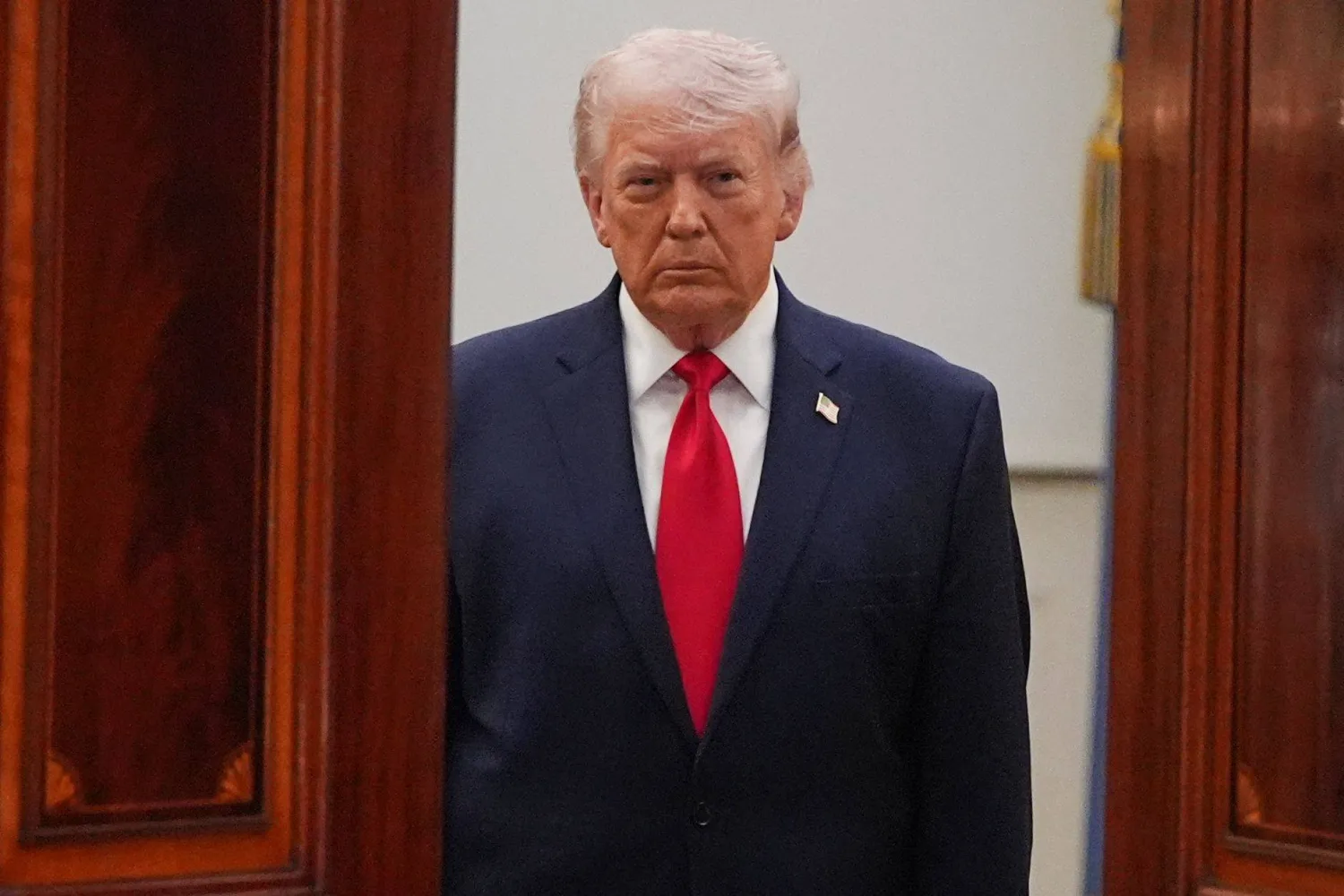
US President Donald Trump arrives to speak at a televised address on the conflict in the Middle East from the Cross Hall of the White House in Washington, DC on April 1, 2026. (Photo by Alex Brandon / POOL / AFP)
TT

Iran Fires Missiles at Israel after Trump Threatens Weeks of Strikes

US President Donald Trump arrives to speak at a televised address on the conflict in the Middle East from the Cross Hall of the White House in Washington, DC on April 1, 2026. (Photo by Alex Brandon / POOL / AFP)

Israel said it came under Iranian missile fire on Thursday after US President Donald Trump threatened to bomb the Iranian republic into the "Stone Ages" with heavy strikes in the next two to three weeks.

In a speech from the White House, Trump sought to reassure war-weary Americans that the military campaign that began on February 28 was coming to an end, vowing "extremely hard" strikes against Iran.

"Thanks to the progress we've made, I can say tonight that we are on track to complete all of America's military objectives shortly, very shortly," Trump said.

The war's "core strategic objectives are nearing completion", he said, warning however that "over the next two to three weeks, we are going to bring them back to the Stone Ages, where they belong".

His address came as Britain was set to host a meeting Thursday with about 35 countries on how to reopen the strategic Strait of Hormuz that Iran has effectively blocked without a deal to end the war.

The US-Israeli strikes on Iran that started the war killed senior officials in the Iranian republic's military forces and government, including supreme leader Ali Khamenei, whose son has since replaced him.

Trump, whose approval rating is sinking over the war, indicated that talks may be possible with Iran's new leadership, which he described as "less radical and much more reasonable" than its predecessor.

He warned that if no agreement with Tehran was struck, Washington had "our eyes on key targets including the country's electric generating plants".

Despite Trump's threats, Israel's military said Iran twice fired missiles at the country after his address, part of four barrages detected within six hours on Thursday.

Iran has dismissed Washington's ceasefire overtures, describing US demands to end the conflict as "maximalist and irrational".

"Messages have been received through intermediaries, including Pakistan, but there is no direct negotiation with the US," said Iranian foreign ministry spokesman Esmaeil Baqaei, quoted by the ISNA news agency on Thursday.

Pro-government Iranians in the capital Tehran were also defiant at the funeral of a Revolutionary Guards naval commander who was killed in an Israeli strike.

"This war has lasted a month. However long it takes, we will continue," said Moussa Nowruzi, a 57-year-old pensioner.

"We will resist until the end."

- Gulf protection -

Trump also assured regional allies Israel and Gulf nations that Washington would protect them from Iranian retaliatory fire, as more attacks were reported across the region on Thursday.

He addressed Israel, Saudi Arabia, Qatar, the UAE, Kuwait and Bahrain -- all battered by Iranian drone and missile attacks -- that the United States "will not let them get hurt or fail in any way, shape or form".

As Israel prepared for the Passover holiday, which began at sunset Wednesday, air raid sirens sounded repeatedly in the Tel Aviv area.

On Thursday, the United Arab Emirates said its air defenses were again responding to missile and drone "threats".

The Revolutionary Guards also confirmed hitting an oil tanker in the Gulf they said belonged to Israel. A British maritime security agency said the vessel was struck off Qatar, reporting damage but no casualties.

In Lebanon, militant group Hezbollah said its fighters launched drones and rockets at northern Israel on Thursday, with the Israeli military's Home Front Command saying air raid sirens were activated across the border.

A day earlier, Israel killed a top Hezbollah commander, two sources told AFP, in a Beirut strike that the Lebanese health ministry said killed seven people.

Authorities in Lebanon say Israeli attacks have killed more than 1,300 people in the country since war erupted between Israel and Iran-backed Hezbollah on March 2.

- Hormuz 'courage' -

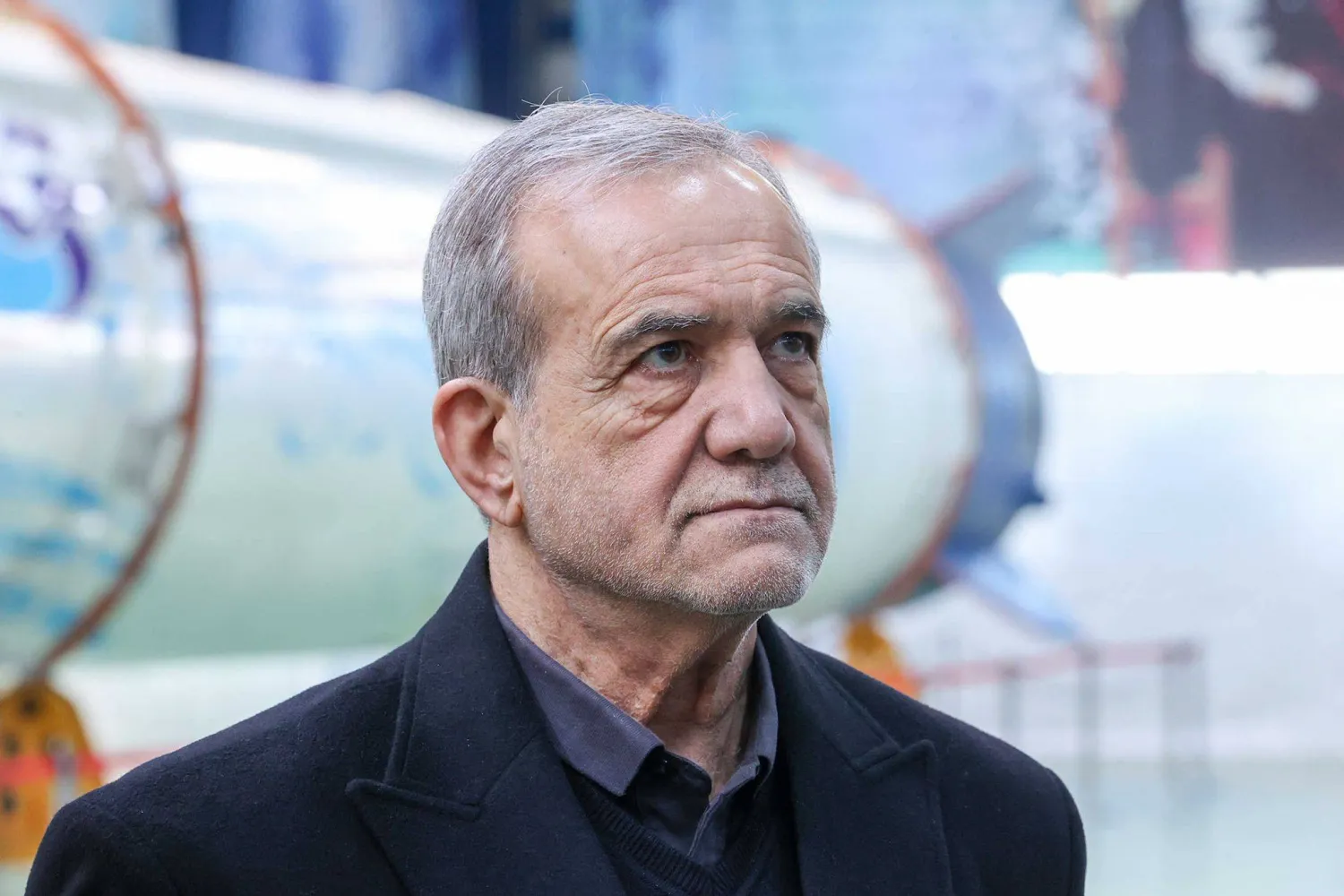
Hours before Trump's address, Iran's President Masoud Pezeshkian asked the American people whether the conflict was truly putting "America First", accusing Washington of war crimes and of being influenced by Israel.

Trump had claimed earlier Wednesday that Iran's president had sought a ceasefire, but said the Iranian republic must first reopen the Strait of Hormuz -- which he said in his address would happen "naturally" once the conflict ended.

In his speech he called for countries that receive oil through the Strait of Hormuz to show "courage" and seize the key waterway.

On Thursday, the British-led virtual meeting of dozens of nations will "assess all viable diplomatic and political measures that we can take to restore freedom of navigation" in the strait, Prime Minister Keir Starmer said.

But Trump's remarks did little to calm energy markets rocked by the waterway's de facto closure, with oil prices surging Thursday. Brent jumped more than four percent to more than $105, while West Texas Intermediate climbed three percent to hit around $103.

One-fifth of global oil normally passes through the Strait of Hormuz.

Iran's Revolutionary Guards vowed Wednesday to keep it shut to the country's "enemies".

After a wave of anti-government demonstrations that crested in Iran in January over economic grievances, some Iranians still privately long for political change, particularly after Trump himself had promised to come to their aid.

"He betrayed the Iranians," said one woman in her 30s, requesting anonymity for security reasons.

Sounding resigned, she added she no longer expects a change of government, but "if they could grant us more freedoms, we could live with that".



Iran War as a New Catalyst...China Secretly Enters Nuclear Arms Race

China asserts that it follows a defensive strategy and is committed to the no-first-use of nuclear weapons (file-Reuters).
TT

Iran War as a New Catalyst...China Secretly Enters Nuclear Arms Race

China asserts that it follows a defensive strategy and is committed to the no-first-use of nuclear weapons (file-Reuters).

When three villagers from China’s Sichuan Province wrote to local officials in 2022 questioning why the government was confiscating their land and evicting them from their homes, they received a brief response: "It is a state secret."

An investigation by CNN revealed that this secret centers on China's plans to significantly expand its nuclear capabilities. More than three years after the citizen evacuations, satellite imagery shows their village has been leveled, replaced by new buildings designed to support some of China’s most critical nuclear weapons production facilities.

CNN reported that the expansion of these sites in Sichuan, observed through satellite imagery and a review of dozens of Chinese government documents, confirms recent allegations by President Donald Trump’s administration that Beijing is conducting its largest nuclear modernization campaign in decades.

President Trump is scheduled to visit Beijing on a historic trip next month, where he is expected to seek a dialogue on an agreement to curb Chinese President Xi Jinping’s nuclear ambitions.

Most Significant New Facilities in Sichuan Province

Among the most prominent of these facilities is a massive, fortified dome built on the banks of the Tongjiang River in less than five years. It appears to still be undergoing outfitting, suggesting it may not yet be operational.

The reinforced dome covers an area of 3,344 square meters (equivalent to 13 tennis courts). It is encased in a concrete and steel structure equipped with radiation monitoring devices and blast-proof doors, with a network of pipes extending from the facility to a building featuring a high ventilation chimney.

According to several experts, these features, along with advanced air-handling equipment, are designed to contain highly radioactive materials, such as uranium and plutonium, within the dome, indicating an expansion of the Chinese nuclear program's production capacity. The facility is also surrounded by three layers of security fencing.

No Sign of Retreat

This development comes at a time of rising international tensions, particularly following the expiration of the latest nuclear arms limitation treaty between the United States and Russia (known as "New START") earlier this year. Trump is seeking to broker a new and improved agreement with Moscow that would also include China.

However, the radical changes witnessed in Sichuan indicate that the Chinese military's nuclear weapons development shows no sign of slowing down, according to the CNN report.

In contrast, China denies the accusations; military spokesperson Jiang Bin emphasized that his country "follows a defensive strategy and is committed to no-first-use of nuclear weapons."

However, experts believe the significant changes on the ground reflect a fundamental shift in the nuclear program. Analyst Decker Eveleth said that this extensive modernization suggests a fundamental restructuring of the technology underpinning the entire system.

Renny Babiarz, Vice President of Analysis and Operations at AllSource Analysis, who reviewed the satellite imagery for CNN, also pointed to the potential development of "new processes and different types of equipment" within these facilities. He said it was clear that there are many changes happening on the ground."

This expansion coincides with directives issued by the Chinese President to accelerate the building of strategic deterrence capabilities amid escalating regional tensions, particularly regarding Taiwan.

Observers believe these moves could lead to a new nuclear arms race more complex than the Cold War era, with China emerging as a major third party. There are also concerns that the United States might overestimate China's capabilities, thereby exacerbating nuclear proliferation.

Jeffrey Lewis, a distinguished scholar in global security at the Middlebury Institute, said some in the US will argue that we need to radically expand our nuclear weapons production capacity to match China..."but we won't be matching what they are doing; we will be matching what we think they are doing. We will be matching our own nightmare. And that is extremely dangerous."

Impact of the Iran War on China’s Nuclear Program

Experts say that the ongoing US-Israeli war on Iran may have strengthened China's resolve to expand its nuclear program.

"If you were Chinese and looked at what is happening, you wouldn't see that disarmament or weakening yourself makes any sense," Lewis said. He added: "One outcome of what the Trump administration is doing in Iran will not be to intimidate or subdue China, but rather to push it to build more nuclear weapons."

Lewis noted that, given these factors, the chances of reaching arms control agreements appear limited, pointing out that China may engage in "formal" dialogues to de-escalate tensions without offering substantial concessions.


India Says Defense Exports Hit 'All-time High' of $4 bn

India said it exported more than $4 billion of defense equipment including missiles, boats and artillery. Dibyangshu SARKAR / AFP
TT

India Says Defense Exports Hit 'All-time High' of $4 bn

India said it exported more than $4 billion of defense equipment including missiles, boats and artillery. Dibyangshu SARKAR / AFP

India's defense exports "skyrocketed" to an all-time high of more than $4 billion in the last fiscal year, as it looks to boost its arms manufacturing sector, the government said Thursday.

The figures mark a rise of more than 60 percent from 2024, the defense ministry said, and provide a shot in the arm for the South Asian country, which is determined to recast itself as a major producer and exporter of weapons, AFP said.

"India is marching ahead towards becoming a global defense manufacturing hub," the ministry quoted Defense Minister Rajnath Singh as saying.

"This big jump... in defense exports reflects the growing global trust in India's indigenous capabilities and advanced manufacturing strength," Singh said, adding that it had hit an "all-time high" in the fiscal year 2025-26 of 38,424 billion rupees ($4.15 billion).

Government defense companies produced nearly 55 percent of the exports, with the rest made by private companies.

"This milestone showcases the power of a collaborative and self-reliant defense ecosystem," Singh said.

India exports defense equipment to more than 100 countries, with the United States, France and Armenia among the top customers, according to the defense ministry.

Shipments range from missiles, boats and artillery to radar systems, rocket launchers and electronic components.

However, the country is still primarily a buyer, not a seller, and remains globally a minor player in exports.

New Delhi earlier this year announced a record $85 billion boost for its defense sector.

But India's arms purchases still make up around eight percent of all imports globally, according to the Stockholm International Peace Research Institute.


Russia Repels Drone Attack on Gas Pipeline to Türkiye, Says Gazprom

File photo: Pipes at the landfall facilities of the Nord Stream 1 gas pipeline are pictured in Lubmin, Germany, March 8, 2022. (Reuters)
TT

Russia Repels Drone Attack on Gas Pipeline to Türkiye, Says Gazprom

File photo: Pipes at the landfall facilities of the Nord Stream 1 gas pipeline are pictured in Lubmin, Germany, March 8, 2022. (Reuters)

Russian forces repelled a drone attack early Thursday on part of the TurkStream gas pipeline connecting Russia and Türkiye, the pipeline's operator Gazprom said in a statement.

"The Russkaya compressor station, which ensures the reliable export of gas via the TurkStream pipeline, came under attack from three aircraft-type unmanned aerial vehicles," Gazprom said. "The attack was repelled and no damage was caused to the Gazprom facility."

The Russkaya compressor station is the starting point of the TurkStream pipeline. Russia has accused Ukraine of targeting it multiple times.