


Japanese National Detained in Iran in January Released on Bail

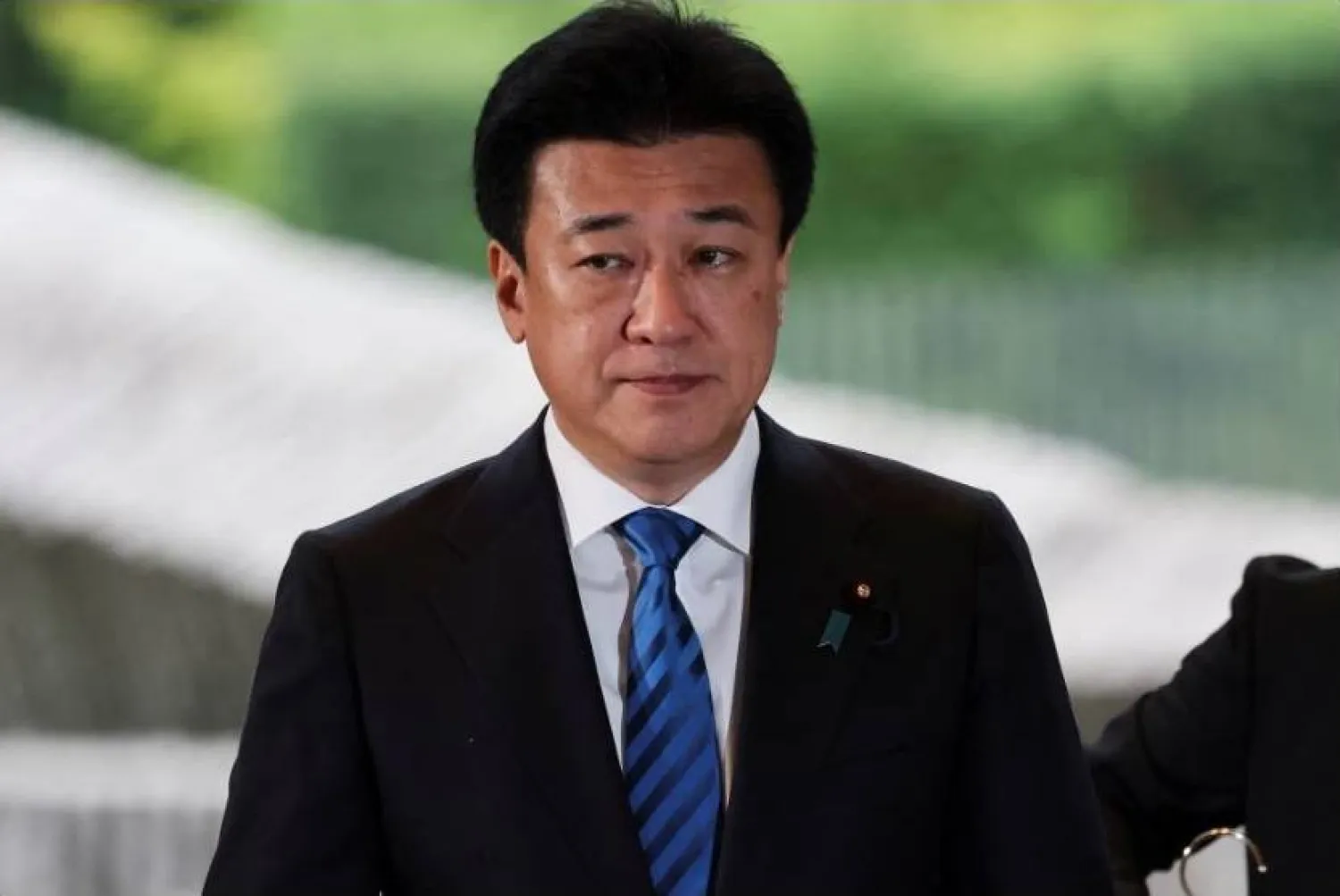
Japanese government spokesman Minoru Kihara (Reuters)
TT

Japanese National Detained in Iran in January Released on Bail

Japanese government spokesman Minoru Kihara (Reuters)

A Japanese national detained in Iran has been released on bail, Japan's top government spokesperson said on Tuesday.

The individual was detained on January 20 and released on bail on Monday, and appears to have ‌no health issues, ‌Chief Cabinet Secretary Minoru ‌Kihara ⁠told a press ⁠briefing without providing further details such as identity or charges, according to Reuters.

In February, Radio Free Europe reported that public broadcaster NHK's Tehran bureau chief ⁠Shinnosuke Kawashima had been arrested ‌in ‌Iran and transferred to a local ‌prison.

At the time, NHK ‌said "there is nothing we can answer at this stage" and that staff safety was a top ‌priority.

Japan's government later confirmed a Japanese national had been ⁠detained ⁠in Iran and that it had been in contact with the person's family and Iranian authorities.

Iran has been under fire since the US and Israel began hostilities against the Middle Eastern country on February 28.



Trump Says Activity Seen at Iran's Pickaxe Mountain, Urges Tehran 'Not to Get Cute'

FILE PHOTO: A satellite view shows tunnel entrances at Pickaxe Mountain, of the Natanz nuclear facility, near Natanz, Iran, June 30, 2026. Vantor/Handout via REUTERS
TT

Trump Says Activity Seen at Iran's Pickaxe Mountain, Urges Tehran 'Not to Get Cute'

FILE PHOTO: A satellite view shows tunnel entrances at Pickaxe Mountain, of the Natanz nuclear facility, near Natanz, Iran, June 30, 2026. Vantor/Handout via REUTERS

President Donald Trump said on Wednesday the United States may hit Iran's Pickaxe Mountain, urging Tehran to be cautious.

"We notice there's a little activity at Pickaxe. I would advise Iran not to get cute because we will have to hit them very hard," Trump said in a speech at the midterm Republican convention.

Pickaxe Mountain, located near Iran's heavily damaged Natanz uranium enrichment facility, is a fortified site with two deeply buried tunnel complexes, Reuters said.

Trump has been ‌threatening strikes ‌on Pickaxe Mountain since at least mid-July.

The rise ‌in ⁠oil and gas ⁠prices due to the US-Israeli war on Iran has become a major issue for Trump and his Republican Party in the lead-up to the midterm US elections in November.

The US and Israel attacked Iran on February 28 and Iran responded with its own strikes on Israel and Gulf states that host US bases. ⁠US-Israeli strikes on Iran and Israeli attacks on ‌Lebanon have killed thousands and ‌displaced millions.

Trump also said he thought the war was going to end immediately ‌after the midterms, alleging Tehran was trying to influence the ‌elections that will determine whether the Republicans retain control of Congress.

Pickaxe Mountain lies 220 km (140 miles) south of Tehran and 2 km from the Natanz complex.

The Natanz site, where two of Iran's uranium enrichment plants ‌were located, was struck in March as part of the US-Israeli military attacks on Iran. ⁠Israel also ⁠hit Natanz during last year's 12-day Israel-Iran war.

The tunnel facility under construction at Pickaxe Mountain was not targeted in either of those wars, according to the Institute for Science and International Security, a US-based think tank focused on nuclear non-proliferation.

Trump has cited weakening Iran's nuclear capabilities as one of his war objectives. Iran does not have nuclear weapons and says its uranium enrichment program is for peaceful purposes. The US is a nuclear power. Israel is widely believed to be the only nuclear-armed country in the Middle East but has not confirmed or denied it publicly.


Netanyahu on Syria Visit Says ‘Very Close’ to Toppling Iran Regime

09 September 2026, Israel, Northern Command: Israeli Prime Minister Benjamin Netanyahu observes operational activity from an Israeli military observation post on Mount Hermon near the Israeli Syrian border. (dpa)
TT

Netanyahu on Syria Visit Says ‘Very Close’ to Toppling Iran Regime

09 September 2026, Israel, Northern Command: Israeli Prime Minister Benjamin Netanyahu observes operational activity from an Israeli military observation post on Mount Hermon near the Israeli Syrian border. (dpa)

Israeli Prime Minister Benjamin Netanyahu said during a visit to Israeli troops in southern Syria on Wednesday that Iran's regime was on the verge of collapse, as fighting in the six-month Middle East war intensifies.

"There is still work to be done -- the main task is to bring down the terror regime in Iran. We are very close to that. We know that the entire axis will ultimately collapse," he said on the Syrian side of Mount Hermon on the Israel-Syria border during a visit with Defense Minister Israel Katz.

In southern Syria, Israeli forces have been stationed in a "security zone" since the fall of longtime ruler Bashar al-Assad in December 2024.

They occupy what was previously a buffer zone patrolled by the United Nations that had separated Israeli and Syrian forces in the Israeli-occupied Golan since 1974.

"We will not allow any terrorist army to establish itself on our border," Netanyahu reiterated on Wednesday.

Katz visited Israeli troops stationed in southern Syria two weeks ago, prompting condemnation from Damascus, which denounced a "flagrant violation of the country's sovereignty and territorial integrity".

Israel has carried out hundreds of strikes in Syria since the fall of Assad and made repeated incursions into Syrian territory.

Officials have also repeatedly vowed to keep troops in the security zone, where Israel is seeking a broader demilitarized area.

Netanyahu's threats against Iran come as Tehran and Washington are locked in a stalemate over the strategic Strait of Hormuz, with both sides trading attacks in the past week, six months into the war that the US and Israel launched against Iran at the end of February.


EU Gives Spain 115 Mn Euros Aid Over Ceuta Crisis

Improvised shelters at a makeshift camp in Trampolin Beach, following recent mass crossings of migrants from Morocco to Ceuta, in Ceuta, Spain, September 7, 2026. (Reuters)
TT

EU Gives Spain 115 Mn Euros Aid Over Ceuta Crisis

Improvised shelters at a makeshift camp in Trampolin Beach, following recent mass crossings of migrants from Morocco to Ceuta, in Ceuta, Spain, September 7, 2026. (Reuters)

The EU on Wednesday said it was granting Spain 115 million euros ($130 million) in emergency aid to help bolster border security and assist returns after the massive migrant rush into the north African exclave.

More than 70,000 migrants crossed into Spanish territory from Morocco on July 30 and 31 in an unprecedented rush that left scores dead, most by drowning as they tried to swim around a breakwater.

"The situation in Ceuta has put pressure on our external borders," said European Commission vice president Henna Virkkunen.

"Our message remains clear: we are committed to combat illegal migration and ensure the swift return of those who remain illegally in Ceuta."

Spain requested assistance from Brussels in late August.

The EU said that the funds would go towards "measures to enhance border surveillance, border protection and security-related infrastructure", such as thermal cameras and floating buoy systems and underwater drones.

"It will also serve to set up facilities for the screening of migrants, as well as to support returns of those who remain illegally in Ceuta," Brussels said.

Most of the migrants who entered Ceuta have returned to Morocco, but thousands have remained in often dire living conditions, increasing tensions in the small city and causing a political storm for the government.

The Ceuta crisis sparked rifts between EU nations, with Spain's left-wing government clashing with Italy's hard-right authorities after Rome ramped up border controls.

Spain's top criminal court on Monday opened an investigation into the deadly rush.