


Extreme Heat Threatens Global Food Systems, UN Agencies Warn

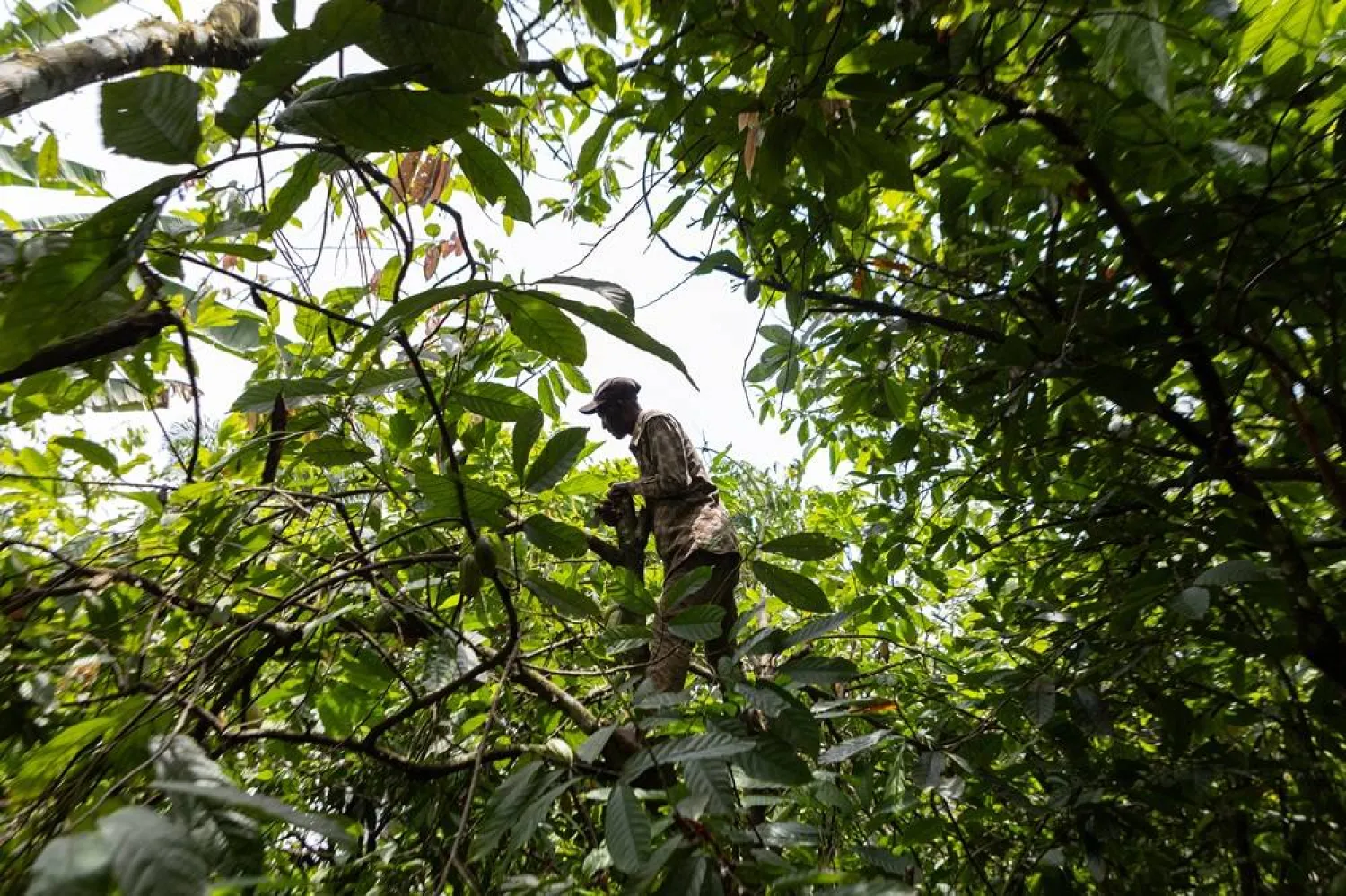
Emmanuel, a worker at the Fasoranti farm, harvests cocoa pods in Akure, Ondo State, Nigeria, 20 April 2026. (EPA)
TT

Extreme Heat Threatens Global Food Systems, UN Agencies Warn

Emmanuel, a worker at the Fasoranti farm, harvests cocoa pods in Akure, Ondo State, Nigeria, 20 April 2026. (EPA)

Extreme heat is pushing global agrifood systems to the brink, threatening the livelihoods and health of more than a billion people, according to a new report by the UN's food and weather agencies.

The United Nations Food and Agriculture Organization (FAO) and the World Meteorological Organization (WMO) said heatwaves are becoming more frequent, intense and prolonged, damaging crops, livestock, fisheries and forests.

"Extreme heat is rewriting the script on what farmers, fishers and foresters can grow and when they can grow. In some cases it is even dictating if they can still work," said Kaveh Zahedi, ‌head of ‌FAO's climate change office.

"At its core, this report ‌is ⁠telling us that ⁠we face a very uncertain future," he told Reuters.

Recent climate datasets show global warming is accelerating, with 2025 ranking among the three hottest years on record, triggering more frequent and severe weather extremes.

Acting as a risk multiplier, extreme heat intensifies droughts, wildfires and pest outbreaks and sharply cuts crop yields once critical temperature thresholds are breached.

RISKS ESCALATE RAPIDLY AS TEMPERATURES PUSH HIGHER

The report said higher temperatures ⁠are shrinking the safety margin that plants, animals and ‌humans rely on to function, with yields for ‌most major crops falling once temperatures exceed about 30 degrees Celsius (86 degrees Fahrenheit).

Zahedi cited ‌Morocco, where six years of drought were followed by record heatwaves. "This led ‌to a fall in cereal yields by over 40%. It decimated the olive and citrus harvest. Basically, those harvests failed," he said.

Marine heatwaves are also becoming more frequent, depleting oxygen levels in water and threatening fish stocks. In 2024, 91% of the world's ‌oceans experienced at least one marine heatwave, the report said.

Risks rise sharply as warming accelerates. The intensity of extreme ⁠heat events is ⁠expected to roughly double at 2 degrees Celsius of warming and quadruple at 3 degrees, compared with 1.5 degrees, the report said.

Zahedi said every one-degree rise in average global temperatures cuts yields of the world's four major crops - maize, rice, soya, and wheat - by about 6%.

The FAO and WMO said piecemeal responses were inadequate and called for better risk governance and early-warning weather systems to help farmers and fishers take preventive action.

"If you can get the data into the farmers' hands, they can adjust when they plant, they can adjust what they plant, they can adjust when they harvest," Zahedi said.

But the report said adaptation alone is not enough, arguing the only lasting solution to the growing threat of extreme heat is ambitious, coordinated action to curb climate change.



Russia, Kazakhstan will Sign Nuclear Power Deal during Putin Trip, Kremlin Says

A Russian flag is displayed at the Russian Embassy in Beijing, China, 18 May 2026. Russian President Vladimir Putin is scheduled to visit China from 19 May to 20 May.  EPA/JESSICA LEE
A Russian flag is displayed at the Russian Embassy in Beijing, China, 18 May 2026. Russian President Vladimir Putin is scheduled to visit China from 19 May to 20 May. EPA/JESSICA LEE
TT

Russia, Kazakhstan will Sign Nuclear Power Deal during Putin Trip, Kremlin Says

A Russian flag is displayed at the Russian Embassy in Beijing, China, 18 May 2026. Russian President Vladimir Putin is scheduled to visit China from 19 May to 20 May.  EPA/JESSICA LEE
A Russian flag is displayed at the Russian Embassy in Beijing, China, 18 May 2026. Russian President Vladimir Putin is scheduled to visit China from 19 May to 20 May. EPA/JESSICA LEE

Russian President Vladimir Putin will oversee the signing of a deal outlining parameters for the construction of a nuclear power plant in Kazakhstan when he visits the country this week, the Kremlin said on Tuesday.

Kazakhstan, an oil- and gas-rich nation of 20.5 million people, has not had any nuclear power generation capacity since 1999, when the BN-350 reactor on the shores of the Caspian Sea was decommissioned. The country voted in a referendum in 2024 in favor of constructing new plants and plans to have 2.4 gigawatts of nuclear capacity by 2035.

Putin will also discuss an increase in transhipment of Russian oil to China via Kazakhstan, Kremlin aide Yury Ushakov told reporters.

KEY AGREEMENTS TO BE SIGNED DURING PUTIN VISIT

Last year, Russia agreed to raise its oil exports to China via Kazakhstan through the Atasu-Alashankou pipeline by 2.5 million tons per year to 12.5 million metric tons. However, the increase has not yet materialised, according to industry sources.

Kazakhstan is one of the world's biggest uranium producers but currently relies mostly on coal for its electricity, supplemented by some hydroelectricity and a growing renewable energy sector. China National Nuclear Corporation (CNNC) also has plans to build a nuclear plant there.

"Key agreements will be signed during (Putin's) visit on the main parameters for building a nuclear power plant and on financing the project through a Russian state export loan," Ushakov said.

Kazakhstan has said Russia would provide 85% of the financing for the plant, which is expected to be commissioned in 2035-2036.


Iran Accuses US of Breaking Truce after New Strikes

A US F-16 fighter jet conducts a patrol near the Strait of Hormuz last month. (CENTCOM)
TT

Iran Accuses US of Breaking Truce after New Strikes

A US F-16 fighter jet conducts a patrol near the Strait of Hormuz last month. (CENTCOM)

Iran accused the United States of breaching their ceasefire Tuesday after overnight US strikes targeting Iranian missile sites and mine-laying boats threatened diplomatic efforts to strike a deal to end the war.

The Brent benchmark oil price jumped up by almost three percent after US Central Command announced the new wave of bombings, and China urged both sides to respect the truce and to resolve their dispute peacefully.

According to the maritime safety monitor UKMTO, a blast damaged a tanker on the waterline off Oman -- although the crew and vessel were reportedly safe after what was described as an "external explosion".

Iranian state media reported overnight blasts in the southern port city of Bandar Abbas, near the Strait of Hormuz, and the country's Revolutionary Guards Corps said its forces had downed a US drone entering its airspace and had fired at an F-35 fighter jet.

"The US terrorist army, continuing its illegal and unjustified actions since the ceasefire ... has, in the past 48 hours, committed a gross violation of the ceasefire in the Hormozgan region," the Iranian foreign ministry said, AFP reported.

It added that Tehran "will not leave any evil unanswered and will not hesitate to defend the Iranian nation," without elaborating.

In a statement marking the start of the Eid al-Adha holiday, Tehran's supreme leader Mojtaba Khamenei declared that Washington was losing its influence in the Middle East and warned countries in the region to stop hosting bases from which the US could launch attacks.

The United States, he said in a written statement, "in addition to no longer having any safe haven in the region for aggression and the establishment of military bases, is moving further and further away from its former position with each passing day".

Tim Hawkins, a spokesman for US Central Command, said: "US forces conducted self-defence strikes in southern Iran today to protect our troops from threats posed by Iranian forces."

- 'We'll see' -

He gave few details of the attacks and said only that the targets included missile launch sites and boats trying to "emplace mines."

Despite the strikes, Secretary of State Marco Rubio said on Tuesday that a deal remained within reach.

But he remained firm on the Strait of Hormuz, the key oil and gas shipping route out which Iran is seeking to control.

"There were some talks going on in Qatar today, so we'll see if we can make progress. I think it's a lot of talking back and forth going on about specific language in the initial document, so it'll take a few days," Rubio told reporters, during a visit to India.

He said the strait was "going to be open one way or the other," adding: "What's happening there is unlawful, it's illegal, it's unsustainable for the world, it's unacceptable."

Tasnim news agency said Tehran's negotiators are seeking the release of frozen assets, with half to be made available once an inital memorandum of understanding is signed.

This came as a top Iranian delegation was in Qatar and Tehran said it was finalizing a 14-point framework for a deal on ending the war, which began with US-Israeli airstrikes on February 28.

"Iran's frozen assets are to be released during the course of the negotiations, and this amount is estimated at $24 billion in accordance with the 14-point memorandum of understanding," Tasnim said.

- Frozen assets -

Iran's top negotiator, parliamentary speaker Mohammad Bagher Ghalibaf, arrived in Qatar on Monday for talks along with Foreign Minister Abbas Araghchi and Central Bank Governor Abdolnaser Hemmati.

Tasnim said Ghalibaf's trip was "aimed at reaching an understanding on the implementation of Iran's demand and the method of accessing $12 billion in the first phase".

In 2023, $6 billion in frozen Iranian funds held in South Korean banks was transferred to Qatar pending the release of five American citizens detained in Iran.

The new strikes threaten the ceasefire that began on April 8 as the US and Iran struggle to reach an accord.

China, Washington's great power rival and a major energy importer, expressed concern.

"We urge the parties concerned to fulfil their ceasefire commitments, resolve disputes through peaceful means... and promote the early restoration of peace," foreign ministry spokeswoman Mao Ning told reporters.

Hopes of an accord took another blow when Israeli Prime Minister Benjamin Netanyahu vowed to "crush" Hezbollah in Lebanon on Monday.

Iran has demanded that any peace accord apply to the fighting in Lebanon as well.

On Tuesday, Israel warned Lebanese civilians to evacuate the southern city of Nabatieh ahead of more planned strikes.


2nd Group of Australian Women linked to ISIS Return from Syria

Australian Federal Police officers patrol Sydney International Airport, in Sydney, Australia, 26 May 2026. EPA/DEAN LEWINS
TT

2nd Group of Australian Women linked to ISIS Return from Syria

Australian Federal Police officers patrol Sydney International Airport, in Sydney, Australia, 26 May 2026. EPA/DEAN LEWINS

A cohort of Australian women and children linked to ISIS has returned home from a Syrian refugee camp, the second such group to arrive back in Australia this month.

Local media reported two women and seven children landed in Melbourne on Tuesday afternoon via Doha. Another flight carrying four women and six children arrived in Sydney in the evening.

According to Reuters, Home Affairs Minister Tony Burke said the government was not assisting their travel and that any who had committed crimes "can expect to face the full force of ⁠the law.”

"These are ⁠people who have made the horrific choice to join a dangerous terrorist organization and to place their children in an unspeakable situation," Burke said in a statement.

The latest arrivals come after four women and nine children returned to Australia earlier this month after more than seven years in a Syrian camp.

Two of the women were arrested at Melbourne Airport and charged with slavery offences, while one in Sydney ⁠was charged with terror-related offences, including allegedly joining ISIS.

New South Wales state police told media waiting at Sydney airport for the latest returnees that none would be arrested. It was unclear whether arrests would be made in Melbourne.

News of the women's return has drawn criticism from political opponents, who say the center-left government failed to stop their travel to Australia. The government has said there were "very serious limits" on preventing citizens from re-entering the country.

One woman from western Sydney was issued a temporary exclusion order by the government, preventing her from returning, public service broadcaster the Australian Broadcasting Corp reported. Her child was not covered by the order, but ⁠decided to stay, ⁠the report added.

Law enforcement and intelligence agencies have prepared for such returns for more than a decade and have plans to monitor those arriving, the government said.

"Any breaches of the law will mean that these people will face the full force of the law to the extent available upon the advice of the security agencies," Prime Minister Anthony Albanese said during parliamentary question time.