
Trump Dispatches Witkoff and Kushner to Pakistan for New Talks with Iran’s Foreign Minister

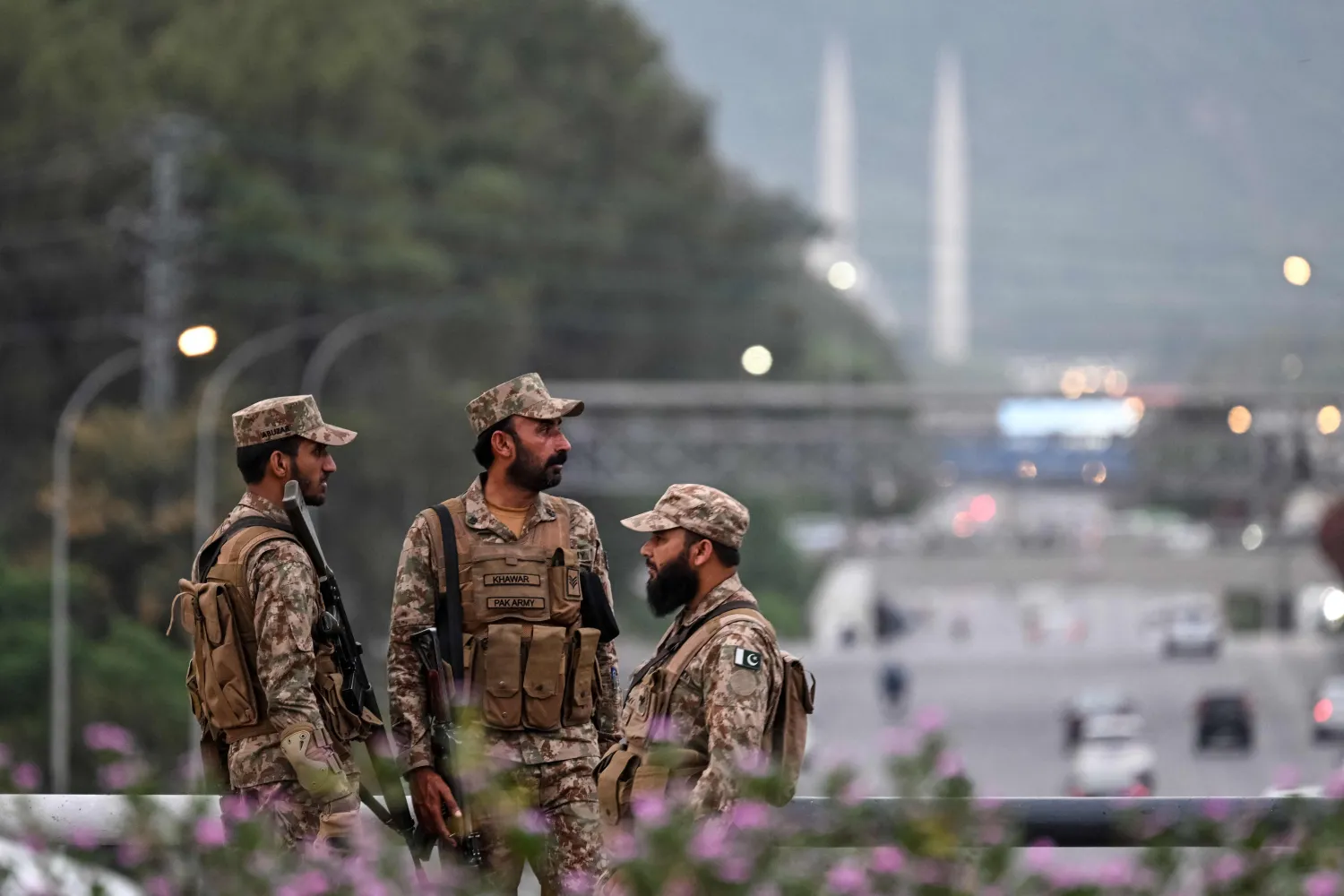
Pakistani soldiers stand guard on a street leading to the Red Zone area after tightened security measures ahead of the expected US-Iran peace talks in Islamabad on April 24, 2026. (AFP)
TT

Trump Dispatches Witkoff and Kushner to Pakistan for New Talks with Iran’s Foreign Minister

Pakistani soldiers stand guard on a street leading to the Red Zone area after tightened security measures ahead of the expected US-Iran peace talks in Islamabad on April 24, 2026. (AFP)

President Donald Trump is sending his envoys Steve Witkoff and Jared Kushner to Pakistan, the White House said Friday, just hours after Iran’s top diplomat headed to the South Asian nation where officials have been trying to get the United States and Iran to convene for a second round of ceasefire negotiations. 

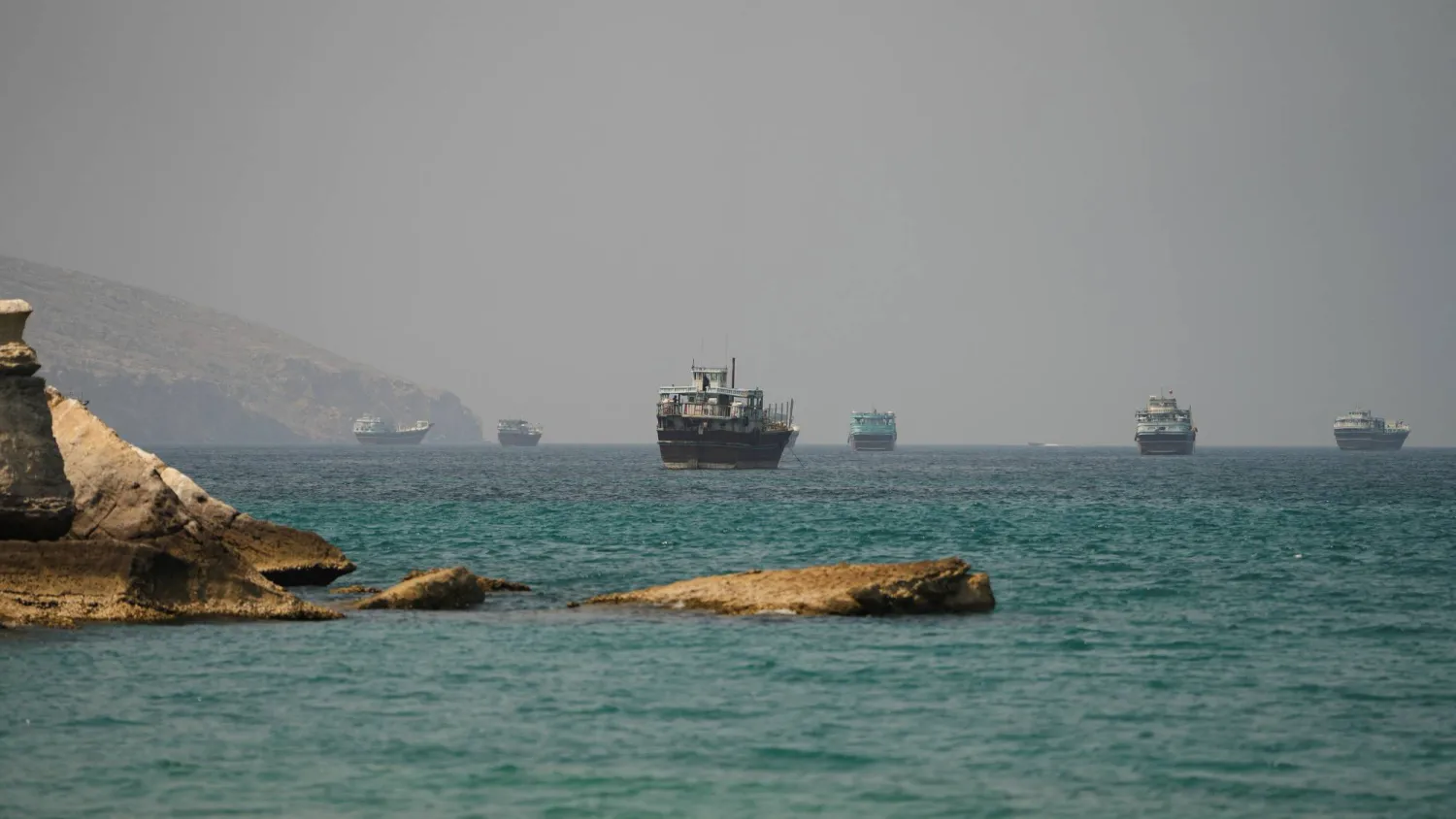
The trip comes as much of the world is on edge over a war that has snarled crucial energy exports through the Strait of Hormuz, clouded the global economic picture and left thousands dead across the Middle East. 

White House press secretary Karoline Leavitt said in an interview on Fox News Channel that the two will have talks with Iranian Foreign Minister Abbas Araghchi on Saturday. 

“We’re hopeful that it will be a productive conversation and hopefully move the ball forward to a deal,” Leavitt said. 

She said Vice President JD Vance would not be traveling but that he remains “deeply involved.” She said he will be in the US, along with Secretary of State Marco Rubio and the president’s national security team, on “standby” to fly to Pakistan “if necessary.” 

Earlier Friday, Araghchi wrote on X that he was on his way to Pakistan, Oman and Russia on a trip focused on “bilateral matters and regional developments.” 

Islamabad has sought to reinject momentum into the negotiations between Iran and the United States, which did not resume this week as had been expected. 

Trump extends the Jones Act waiver for 90 days  

Separately Friday, the White House said President Donald Trump issued a 90-day extension to the Jones Act waiver, making it easier for non-American vessels to transport oil and natural gas. 

Trump first announced a 60-day waiver in March in a move intended to stabilize energy prices and ease oil and gas shipments to the US following the effective closure of the Strait of Hormuz. 

“New data compiled since the initial waiver was issued revealed that significantly more supply was able to reach US ports faster,” the White House post on social media said. 

The price of Brent crude oil, the international standard, retreated on the news, vacillating between $103 a barrel and more than $107 — still early 50% higher than where it was on Feb. 28, when the Iran war began. 

The squeeze on shipments through the strait has rippled through global maritime trade flows, including through the Panama Canal nearly halfway around the world. 

Pakistan forges ahead with diplomatic efforts  

Pakistan has been trying to get US and Iranian officials back to the table after Trump this week announced an indefinite extension of the ceasefire with Iran, honoring Islamabad's request for more time for diplomatic outreach. 

That hasn’t lowered tensions in the strait, a strategic waterway through which a fifth of the world’s oil and natural gas is shipped during peacetime. 

Iran has kept its stranglehold on traffic through the strait, attacking three ships earlier this week, while the US is maintaining a blockade on Iranian ports and Trump has ordered the military to “shoot and kill” small boats that could be placing mines. 

“Iran has an important choice, a chance to make a deal, a good deal, a wise deal,” US Defense Secretary Pete Hegseth told reporters on Friday. He said a second US aircraft carrier will join the blockade in a few days. 

Washington already has three aircraft carriers in the region; the USS George H.W. Bush in the Indian Ocean; the USS Abraham Lincoln in the Arabian Sea; and the USS Gerald R. Ford in the Red Sea. 

It is the first time since 2003 that three American carriers have been operating in the region simultaneously. The force includes 200 aircraft and 15,000 sailors and Marines, US Central Command said. 

A growing toll even as ceasefires hold  

Since the war began, at least 3,375 people have been killed in Iran, and more than 2,490 people in Lebanon, where new fighting between Israel and the Iran-backed Hezbollah group broke out two days after the war started, according to authorities. 

Additionally, 23 people have died in Israel and more than a dozen in Gulf Arab states. Fifteen Israeli soldiers in Lebanon and 13 US service members throughout the region have been killed. 

The UN peacekeeping force in southern Lebanon has also sustained casualties. UNIFIL said Friday that an Indonesian peacekeeper died of wounds sustained in an attack on his base on March 29, raising to six — four Indonesians and two French — the number of force members killed since the war erupted. 

Tensions linger in Lebanon despite extended truce 

The situation in Lebanon remained tense a day after Trump announced Israel and Lebanon had agreed to extend a ceasefire between Israel and Hezbollah by three weeks. Hezbollah has not participated in the diplomacy brokered by Washington. 

Israeli Prime Minister Benjamin Netanyahu, in a video statement released by his office on Friday, hailed “a process to achieve a historic peace between Israel and Lebanon.” 

Earlier, the Israeli army asked residents of the southern Lebanese village of Deir Aames to evacuate, saying Hezbollah was using the village to launch attacks against Israel. 

Israel's military said it downed a drone over Lebanon following the launch of a small surface-to-air missile by Hezbollah. The group, meanwhile, said it shot down an Israeli drone with a surface-to-air missile over the outskirts of the southern port city of Tyre. 


Colombia Enters ‘Final Phase’ of Quake Search as Toll Hits 265

This aerial view shows heavy machinery used by rescuers in the search for survivors amid the rubble of a collapsed building after an earthquake in Pereira, Colombia on August 12, 2026. (AFP)
TT

Colombia Enters ‘Final Phase’ of Quake Search as Toll Hits 265

This aerial view shows heavy machinery used by rescuers in the search for survivors amid the rubble of a collapsed building after an earthquake in Pereira, Colombia on August 12, 2026. (AFP)

Rescuers in Colombia were making last-ditch efforts to locate earthquake survivors early Thursday, as the critical 72-hour window for rescue operations neared its end.

The magnitude 7.4 quake, the strongest to hit Colombia this century, has killed 265 people, injured more than 3,500 and left almost 500 missing, according to local authorities.

In cities such as Cali and Pereira, emergency crews worked through a third night with their bare hands, cranes and sniffer dogs, stopping not to rest but to listen for signs of life.

Thursday morning will mark 72 hours since the quake, a period when survivors are considered most likely to be found alive beneath collapsed buildings.

Cali resident Martha Perez said she felt "helpless" as two relatives were thought to still be trapped under rubble.

"We will hold on to (hope) until the very end," Perez told AFP on Wednesday night.

"As you can see, all of us here -- the entire city of Cali -- are hoping to find more survivors," volunteer rescuer Fernando Loaiza said.

Cali Mayor Alejandro Eder said Wednesday that rescue efforts were "entering the final phase."

Colombia's newly installed president Abelardo de la Espriella has declared the disaster an "economic emergency" and announced three days of national mourning.

"We will do what is necessary," he said in a statement, vowing to "emerge again as a country and as a society."

More than 11,000 dwellings have been destroyed and thousands of families have been rendered homeless, according to official figures.

- Holding onto 'hope' -

In Pereira, crews focused on a collapsed bakery where they believe a street vendor trapped since Monday's earthquake may still be alive beneath the rubble.

Rescuers using equipment that detects vibrations said they had picked up possible signs of life from Pablo Loaiza, prompting anxious relatives to gather near the wreckage.

"They tell us it could be him," said his 16-year-old niece, Sara Loaiza. "My heart is about to burst out of my chest."

Relatives said the trapped man appeared to respond when rescuers asked him to knock twice, then three times from beneath the rubble, drawing applause from those gathered at the scene.

"Every half hour we make everyone be quiet to see if we can find people alive," volunteer rescuer Johana Sanchez told AFP.

"So far, three people have been pulled out alive and three dead."

Many have already spent consecutive nights outdoors, either because their homes were damaged or because they feared aftershocks.

In the town of Roldanillo, Yuliana Mendez picked through the wreckage of the beauty products store where she worked, one of many businesses damaged in the disaster.

"It's like starting over from scratch," she said.

In Pereira's Providencia neighborhood, residents hauled furniture and household items from damaged buildings. Among them was lawyer Ana Paulina Crosthwaite, whose apartment block was left unsafe by the quake.

"We're in a state of shock," she told AFP. "We're not prepared to tell our children that we have to pack whatever we can and start a new life."

Many Colombians have mobilized to help, bringing water, food and supplies to affected neighborhoods, while long lines formed outside blood donation centers.

"It's about wanting to help your community, your city and your country," said blood donor Ferney Cabrera.

The United States announced $15.5 million in emergency aid to Colombia, and the European Union pledged two million euros ($2.3 million).


US Floats Prospect of Joint Strikes on Colombian Armed Groups

 US Defense Secretary Pete Hegseth speaks during a forum of the Americas Counter Cartel Coalition in Panama City on August 12, 2026. (AFP)
US Defense Secretary Pete Hegseth speaks during a forum of the Americas Counter Cartel Coalition in Panama City on August 12, 2026. (AFP)
TT

US Floats Prospect of Joint Strikes on Colombian Armed Groups

 US Defense Secretary Pete Hegseth speaks during a forum of the Americas Counter Cartel Coalition in Panama City on August 12, 2026. (AFP)
US Defense Secretary Pete Hegseth speaks during a forum of the Americas Counter Cartel Coalition in Panama City on August 12, 2026. (AFP)

US Defense Secretary Pete Hegseth floated on Wednesday the possibility of joint strikes on Colombian armed groups, as he welcomed the nation into a military-led counter-narcotics coalition after its conservative president took over last week.

Colombia had authorized "joint military operations to destroy terrorists and terror networks," Hegseth told a gathering of the US-led Americas Counter-Cartel Coalition in Panama.

"Yes," he replied when asked if he had discussed with his Colombian counterpart joint strikes against armed groups such as the National Liberation Army (ELN), which the US designates as a terrorist group, and remnants of the Revolutionary Armed Forces of Colombia.

"Designated terrorist organizations, with partnered governments, will be legitimate targets of the United States government," to include Colombia, Hegseth said when asked if such operations were expected.

President Donald Trump's Latin American policy has expanded dramatically beyond its early focus on the Panama ‌Canal.

More than 200 ‌people have been killed since the launch of US military strikes on suspected drug ‌boats ⁠last September, while a ⁠US-led commando raid in January deposed Nicolas Maduro, the president of Venezuela.

Critics say the US strikes amount to war crimes worthy of the International Criminal Court, but Hegseth blasted the organization and encouraged coalition allies attending the meeting in Panama to withdraw from it.

He compared drug traffickers to al-Qaeda or ISIS terrorists.

Speaking at a hotel in Panama City, Hegseth invoked a revamped Monroe Doctrine, the 19th-century policy asserting US primacy across the Americas that critics associate with decades of US intervention.

He has called it the "Donroe Doctrine" — a play on Trump's name.

"We will defend our hemisphere from external threats," including from ⁠narco-traffickers and foreign malign influence, Hegseth said.

COLOMBIAN CRACKDOWN

Colombian President Abelardo De La Espriella's ‌vows of a security crackdown have been embraced by the Trump administration, which ‌announced plans on Friday to provide $1 billion in US security assistance to his government.

During his swearing-in remarks on Friday, De ‌La Espriella vowed to "definitively eradicate the scourge of illicit crops" and committed to also joining the Shield of the ‌Americas program founded by Trump.

De La Espriella has blamed his predecessor, leftist Gustavo Petro, for an expansion of armed groups.

Speaking alongside Hegseth at the event, Colombia's new Defense Minister Jorge Eduardo Mora, a retired major general, said Colombia could take a critical role in combating narco-traffickers on both its Pacific and Caribbean coasts.

"I think the time has arrived for the narco-terrorist cartels to confront ‌the power and the capabilities of the entire hemisphere, led by the United States," Mora said.

One US official, speaking on condition of anonymity, said the new security ⁠partnership was expected to ⁠surpass the level of cooperation under Plan Colombia, a US-Colombia anti-narcotics initiative launched in the early 2000s.

De La Espriella's election was part of a rightward shift rippling across Latin America.

In Argentina, Bolivia, Chile, Ecuador, Panama and Peru, weak economies and rising crime have reshaped voter priorities, allowing once-fringe hard-right candidates to gain traction by promising crackdowns amid a global rise of right-wing nationalism.

In Panama, Trump's administration won a major victory from the country's Supreme Court in January after voicing concerns about encroachment by China. Hong Kong-based CK Hutchison, through local unit Panama Ports Company, lost the port concessions it had held for nearly three decades.

The Panama Canal handles 5% of global maritime trade, making control of its entrance ports a flashpoint for tension between Washington and Beijing.

Addressing the meeting, Panama President Jose Raul Mulino called drug trafficking the biggest threat facing the region and dismissed concerns that the US-led coalition could infringe on members' sovereignty. He made no mention of China.

Instead, he said the transnational crime groups that traffic drugs and people are the real threats to sovereignty.

"There's never going to be a sustainable peace if this enemy (advances)," Mulino said.


Ukraine Military Aid Surged in June Despite Long-Term Shortages, Says Institute

 This photograph shows smoke rising in the distance following a Russian air attack, in Kyiv on August 12, 2026, amid the Russian invasion of Ukraine. (AFP)
This photograph shows smoke rising in the distance following a Russian air attack, in Kyiv on August 12, 2026, amid the Russian invasion of Ukraine. (AFP)
TT

Ukraine Military Aid Surged in June Despite Long-Term Shortages, Says Institute

 This photograph shows smoke rising in the distance following a Russian air attack, in Kyiv on August 12, 2026, amid the Russian invasion of Ukraine. (AFP)
This photograph shows smoke rising in the distance following a Russian air attack, in Kyiv on August 12, 2026, amid the Russian invasion of Ukraine. (AFP)

Boosted by new EU financing, military aid for Ukraine in June hit its highest level since the United States pulled funding, though long-term support is lagging, Kiel Institute data showed Thursday.

Kyiv was allocated 7.2 billion euros ($8.3 billion) in military aid in June, the highest amount since the 9.04 billion euros received in April 2024. US funding dried up in February 2025.

It is the third-biggest monthly military funding boost from donors since Russia's invasion in February 2022, according to the think tank's Ukraine Support Tracker.

The surge was largely driven by the European Union's new Ukraine Support Loan, which helped European institutions allocate 4.3 billion euros of military aid in May and June.

The 90-billion-euro EU loan was introduced to support Ukraine's budgetary and defense needs in 2026 and 2027.

"The rapid launch of the Ukraine Support Loan sends a positive signal to Ukraine," said Taro Nishikawa, project lead of Kiel's Ukraine Support Tracker.

On top of the loan support, Germany allocated 700 million euros, Denmark 600 million euros, and the Netherlands 500 million euros to support Ukraine's military.

But long-term funding levels remain below those seen before US President Donald Trump pulled the plug.

Before February 2025, donors allocated an average of 3.46 billion euros per month in military aid to Kyiv.

Since then, that figure has fallen to 2.94 billion euros.

Although the United States no longer directly contributes to the Ukraine war effort, its weapons still play a key role.

Europe is increasingly procuring weapons from US defense companies and receiving deliveries from existing US military stockpiles.

"The United States remains a key supplier of systems such as Patriot, for which Europe has only limited alternatives at the moment," said Federico Mellace, lead analyst of the Ukraine Support Tracker.

"In the longer term, the key question will be whether Europe can develop and produce reliable substitutes to key US defense systems to gradually reduce this dependence," he added.