Iran Says US No Longer in Position to ‘Dictate’ Policy to Other Nationshttps://english.aawsat.com/world/5267276-iran-says-us-no-longer-position-%E2%80%98dictate%E2%80%99-policy-other-nations
Iran Says US No Longer in Position to ‘Dictate’ Policy to Other Nations
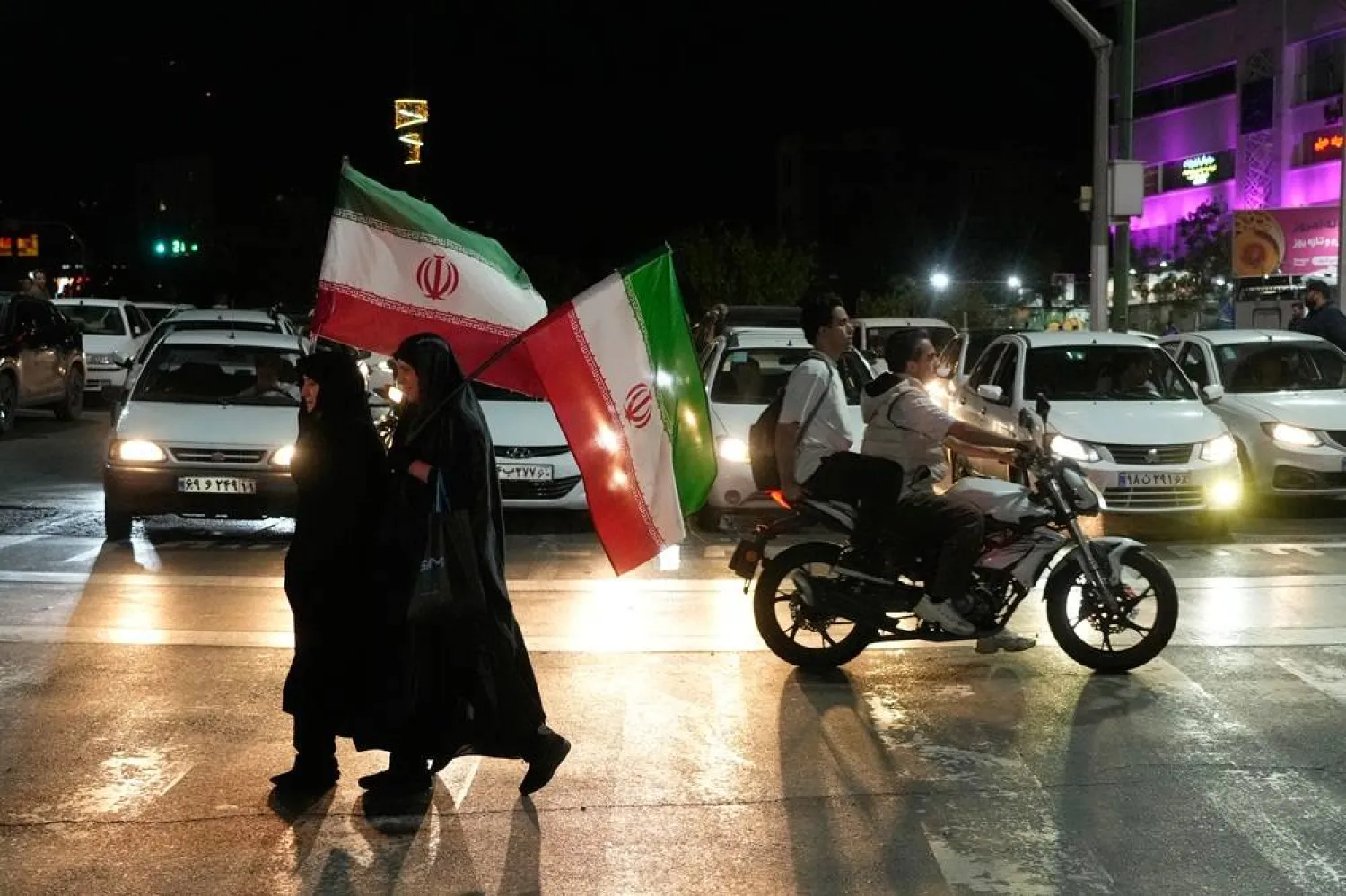
Women carry Iranian flags as they cross an intersection to attend a pro-government gathering in Tehran, Iran, Monday, April 27, 2026. (AP)
TT
TT
Iran Says US No Longer in Position to ‘Dictate’ Policy to Other Nations
Women carry Iranian flags as they cross an intersection to attend a pro-government gathering in Tehran, Iran, Monday, April 27, 2026. (AP)
Iran said on Tuesday that the United States was no longer able to "dictate" what other countries do, as Washington weighed a new proposal from Tehran on unblocking the Strait of Hormuz.
Iran has effectively sealed off the strategic waterway since early in the war with the United States and Israel, sending shockwaves through global energy markets and putting the strait at the center of negotiations to end the conflict.
"The United States is no longer in a position to dictate its policy to independent nations," defense ministry spokesman Reza Talaei-Nik said, according to state TV, adding Washington would "accept that it must abandon its illegal and irrational demands".
While a ceasefire has halted the fighting between Iran, the US and Israel, talks on bringing a permanent conclusion to the conflict have been inconclusive.
The proposal being considered in Washington would reportedly reopen the Strait of Hormuz -- a vital conduit for global oil and gas shipments -- as broader negotiations on the war continue.
Talaei-Nik, speaking ahead of a Shanghai Cooperation Organization defense ministers' meeting, said Iran was also "ready to share its defensive military capabilities with independent countries, especially the member states" of the SCO.
North Korean leader Kim Jong Un visits the country's nuclear material production base and nuclear weapons institute, at an undisclosed location in North Korea, in this photo released by North Korea's official Korean Central News Agency on January 29, 2025. KCNA via REUTERS/File Photo
North Korean leader Kim Jong Un visits the country's nuclear material production base and nuclear weapons institute, at an undisclosed location in North Korea, in this photo released by North Korea's official Korean Central News Agency on January 29, 2025. KCNA via REUTERS/File Photo
North Korea's foreign ministry on Thursday rejected an international statement urging it to halt nuclear tests, with a spokesperson calling it "a grave political provocation against our state" by "hostile forces".
A meeting of ministers from the Friends of the Comprehensive Nuclear-Test-Ban Treaty — a grouping of Australia, Canada, Finland, Germany, Japan and the Netherlands — said any new nuclear test by North Korea would be irresponsible and unacceptable.
The meeting in New York on Tuesday urged Pyongyang to fully comply with all relevant United Nations Security Council resolutions.
The spokesperson for North Korea's foreign ministry described the country as a responsible nuclear-armed state, in a statement carried by state media KCNA, Reuters reported.
In another statement carried by KCNA earlier in the day, North Korea's foreign minister Choe Son Hui said Pyongyang's nuclear weapons status is irreversible.
Choe was responding to a separate meeting on the sidelines of the United Nations General Assembly this week between the United States, South Korea and Japan at which they reaffirmed their commitment to the complete denuclearisation of North Korea.
The Comprehensive Nuclear-Test-Ban Treaty, agreed in 1996, bans "any nuclear weapon test explosion or any other nuclear explosion" anywhere in the world, with the goal of reducing and ultimately eliminating nuclear weapons.
Russian Strikes Kill 8 in Ukraine, Damage Maternity Clinichttps://english.aawsat.com/world/5322018-russian-strikes-kill-8-ukraine-damage-maternity-clinic
A woman walks in front of a house destroyed in a Russian strike on a residential neighbourhood in Kyiv, Ukraine, Thursday, Sept. 24, 2026. (AP Photo/Evgeniy Maloletka)
Russian Strikes Kill 8 in Ukraine, Damage Maternity Clinic
A woman walks in front of a house destroyed in a Russian strike on a residential neighbourhood in Kyiv, Ukraine, Thursday, Sept. 24, 2026. (AP Photo/Evgeniy Maloletka)
Russian drone and missile strikes on Ukraine's capital Kyiv and its northeast killed eight people on Thursday in attacks that included a maternity hospital and a farm, officials said.
Moscow has stepped up its air war in recent months, deploying more of its faster and harder-to-stop drones while Ukraine is short of interceptors to down ballistic missiles.
Two people died in the latest assault on Kyiv, according to President Volodymyr Zelenskiy, who was in New York for the UN General Assembly.
"As people were sleeping, flashes from explosions lit up the sky," Zelenskiy said on Telegram.
"Once again, the main targets of their strike were Kyiv and civilian infrastructure, residential buildings, a maternity hospital, energy infrastructure, and logistics."
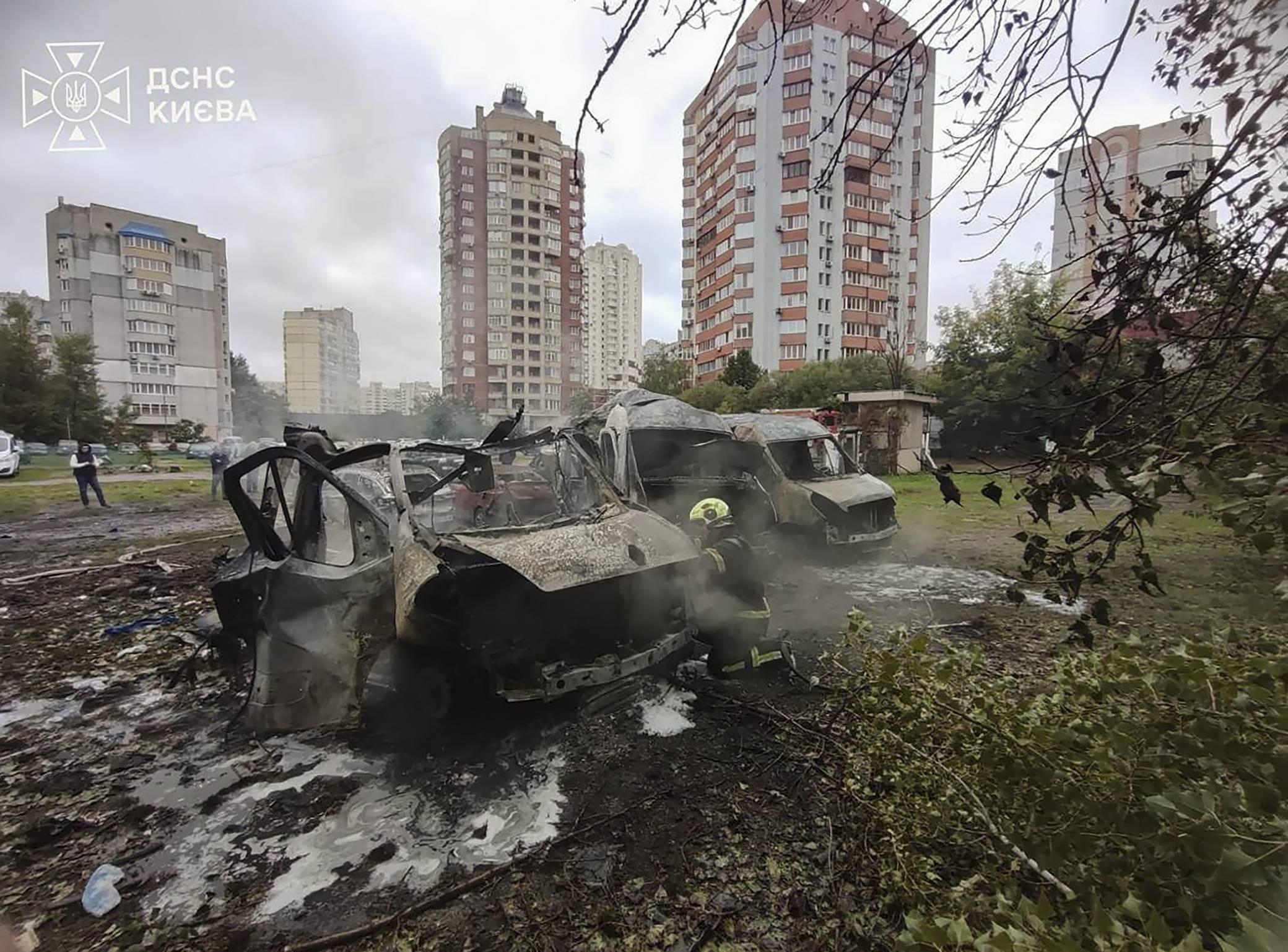
Police said nine homes, a post office, warehouses and dozens of cars were also damaged in Kyiv.
A separate Russian attack on a vegetable storage facility at a farm in a village of the northeastern Kharkiv region killed six people and injured a further 12, prosecutors said.
The overnight barrage around Ukraine included an unspecified number of hypersonic and ballistic missiles, 282 drones and other weapons, Ukraine's air force said.
In Kyiv, eight people were injured as well as the two fatalities, one of whom was in the parking lot of the maternity hospital, Reuters quoted city mayor Vitali Klitschko as saying.
Part of the hospital's facade, windows and doors were damaged, officials said, adding that no patients or medics were injured.
A handout photo made available by the State Emergency Service (SES) shows Ukrainian rescuers working at the site of an overnight Russian attack on a residential area in Kyiv, Ukraine, 24 September 2026, amid the Russian invasion. EPA/STATE EMERGENCY SERVICE / HANDOUT
Authorities in the northwestern region of Rivne said infrastructure was damaged in overnight strikes that continued into Thursday morning, without providing further details. Volyn region bordering Poland also came under attack.
Insufficient pressure on Moscow was allowing it to launch repeated strikes, said Zelenskiy.
"Right now, the United States has the opportunity to respond strongly," he said. "We need ballistic interceptors to protect lives."
Russia's defense ministry said its forces hit Ukrainian defense facilities, logistics and telecoms centers, as well as vessels used by the military.
In the Black Sea port of Odesa, military administration head Serhiy Lysak said overnight Russian strikes damaged a medical facility and shattered windows in nearby houses and a school.
Moldova's President Maia Sandu said four Russian drones crossed into its airspace and at least one exploded, while Romania said a drone also crashed in its territory.
NATO alliance member Poland said it deployed aviation twice on Thursday due to Russian attacks on Ukraine.
An earthquake of 5.4 magnitude rattled cities in southeastern Türkiye on Thursday but there were no immediate reports of damage or injuries, the disaster agency said.
The quake, which occurred at 10:40 am (0740 GMT) was centered just north of the city of Sanliurfa, Türkiye's AFAD disaster agency said, adding "there are currently no reports of adverse effects".
Hasan Silda, governor of Sanliurfa province, said the quake had been felt "intensely", AFP reported.
"According to initial reports, there are no casualties or injuries. There is no destruction. There may be some partial damage to buildings," he told NTV private television.
Türkiye is crisscrossed by several geological fault lines that have previously caused catastrophes in the country.
A massive quake in February 2023 killed at least 53,000 people in southeastern Türkiye and around 7,000 others in Syria, that also caused damage and more than 300 deaths in Sanliurfa.
لم تشترك بعد
انشئ حساباً خاصاً بك لتحصل على أخبار مخصصة لك ولتتمتع بخاصية حفظ المقالات وتتلقى نشراتنا البريدية المتنوعة