


New Zealand Court Rejects Mosque Gunman’s Appeal to Abandon his Guilty Pleas

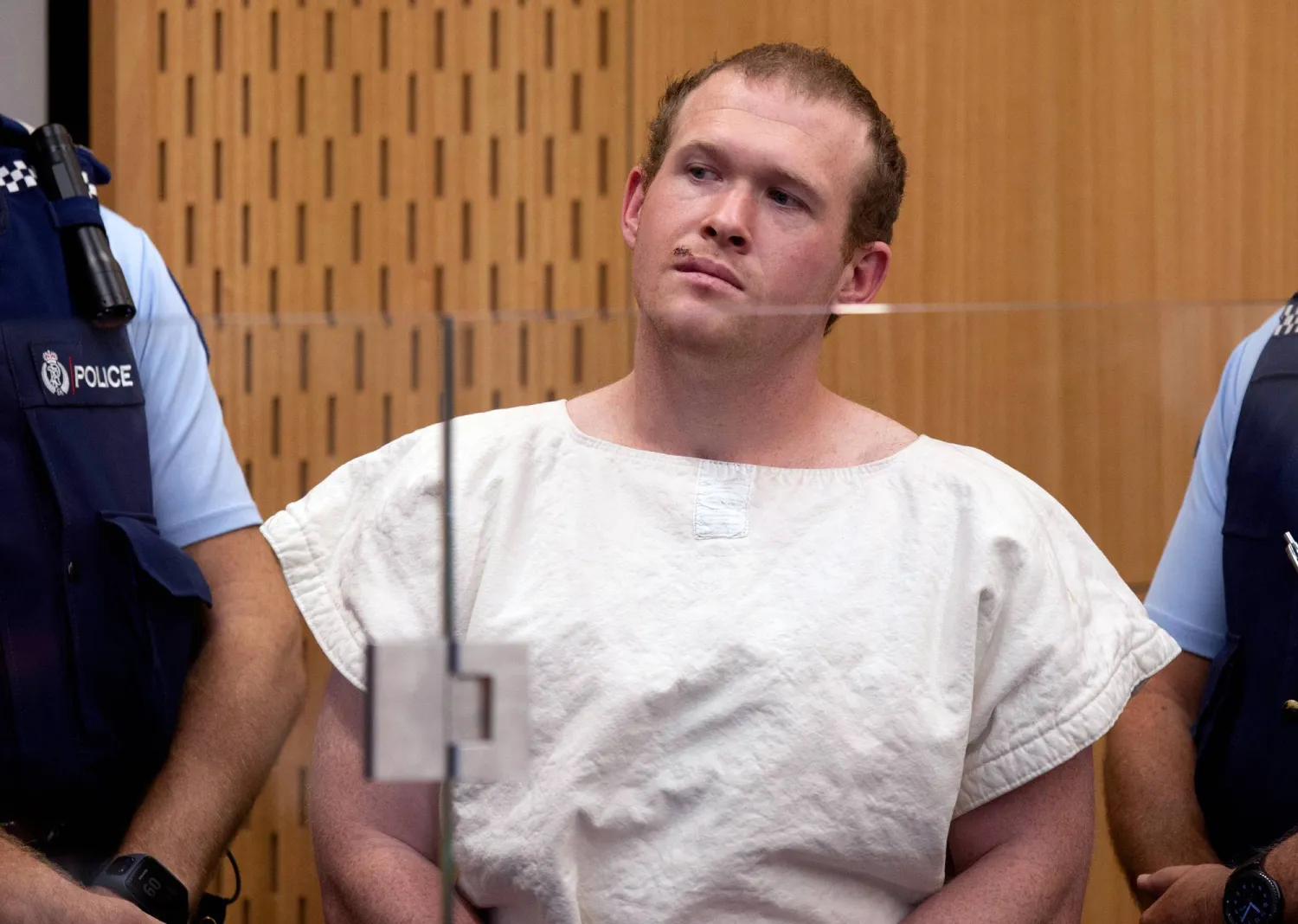
FILE - Brenton Tarrant appears in the Christchurch District Court, in Christchurch, New Zealand, March 16, 2019. (Mark Mitchell/Pool Photo via AP, File)
TT

New Zealand Court Rejects Mosque Gunman’s Appeal to Abandon his Guilty Pleas

FILE - Brenton Tarrant appears in the Christchurch District Court, in Christchurch, New Zealand, March 16, 2019. (Mark Mitchell/Pool Photo via AP, File)

The white supremacist who shot to death 51 Muslims at two mosques in Christchurch, New Zealand, lost an attempt to abandon his guilty pleas at the country’s Court of Appeal on Thursday.

The panel of three judges dismissed Brenton Tarrant’s claim that harsh prison conditions prompted his involuntarily admission to the terrorism, murder and attempted murder charges he faced. The Australian man, who is now 35, murdered 51 worshippers and injured dozens more in March 2019 when he drove to two Christchurch mosques and opened fire with semiautomatic weapons during Friday prayers.

Tarrant’s guilty pleas in March 2020 brought relief to bereaved families and survivors of the attack, who dreaded the prospect of a lengthy trial and feared he would use it to air his hateful views. The failure of his appeal bid — which the court noted was made 505 days after the legal deadline for it to be filed — means such a trial has again been averted.

At the court's five-day hearing in February, the attacker argued his admissions of guilt were provoked by “irrationality” induced by poor mental health, which led him to desert his racist views for a time. The judges concluded, however, that his claims of mental illness were inconsistent and weren’t supported by prison staff, mental health professionals or lawyers who had earlier represented him.

“He was not suffering from a mental impairment or any other form of mental incapacity which rendered him unable to voluntarily change his pleas to guilty,” the judges wrote, according to The Associated Press.

“He endeavored to mislead us about his state of mind in a weak attempt to advance an appeal in circumstances where all other evidence demonstrated that he made an informed and totally rational decision to plead guilty.”
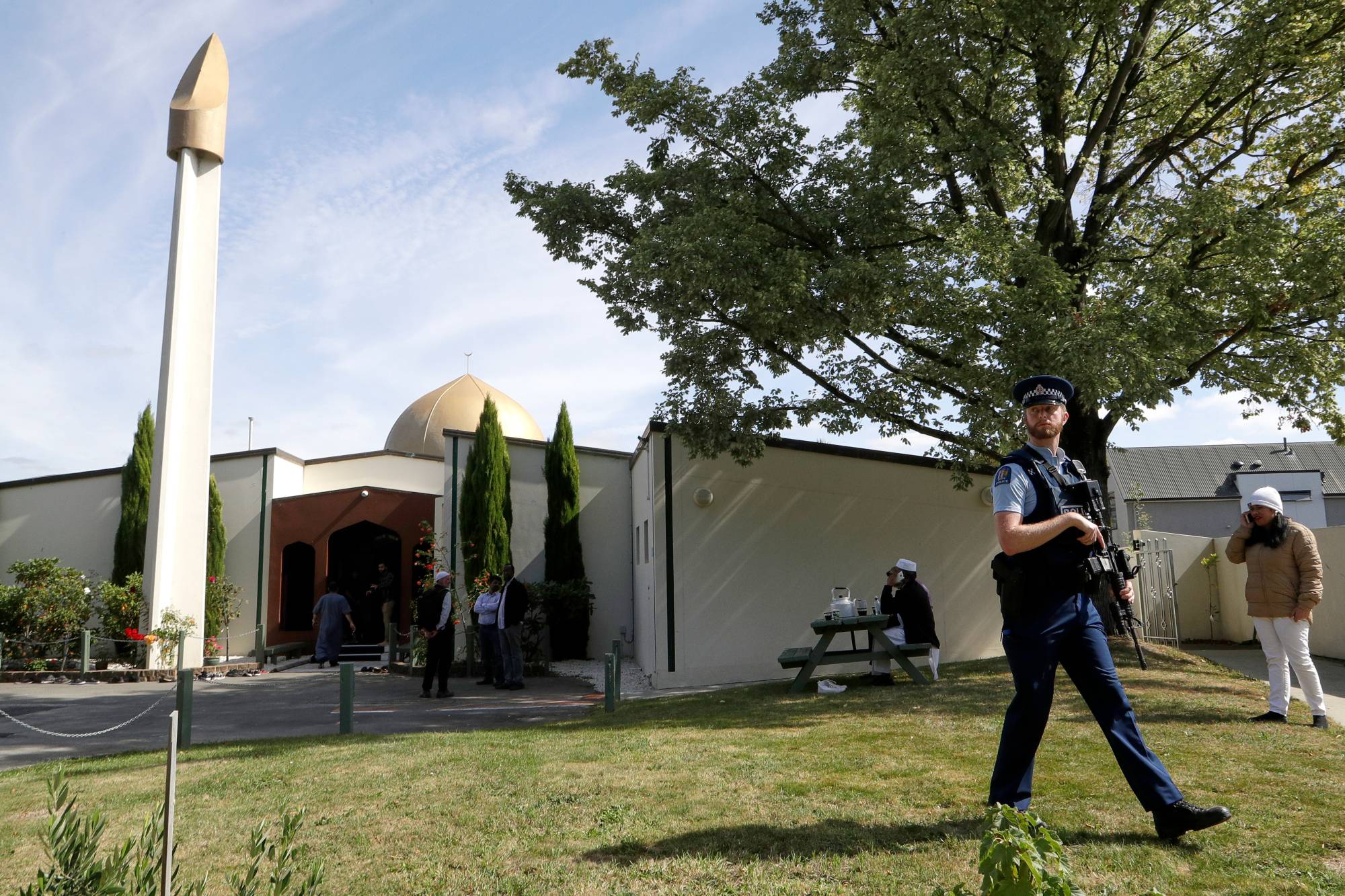
FILE - An armed policeman patrols the grounds at the Al Noor mosque following the previous week's mass shooting in Christchurch, New Zealand, on March 23, 2019. (AP Photo/Mark Baker, File)

The court's ruling also revealed that Tarrant sought to abandon his appeal shortly after making his case at the hearing in February. The judges rejected that bid too, writing that the case was “of significant public interest and should be finally determined.”

They suggested that Tarrant “began to form the opinion that the hearing was not proceeding in his favor, and as a result decided to file a notice of abandonment after the hearing concluded.”

New Zealand law doesn’t require judges to allow an appellant to quit an appeal bid once it’s underway.

He will remain in jail for life Tarrant, who has since fired the lawyers acting for him in February, remains in Auckland Prison, where he was sentenced in August 2020 to spend life in prison without the chance of parole. The judges allowed him to abandon his appeal that sentence, which was scheduled to be heard later in 2026.

The Australian-born man moved to New Zealand in 2017 with a plan to commit a mass shooting. He amassed a cache of weapons and made a reconnaissance trip to the sites of his planned crimes before the attack.

The appeal court judges wrote that Tarrant had accepted the summary of facts presented to him by the police and the sentencing judge and noted that the case against him was “overwhelming.”

Evidence included footage of the attack that the shooter filmed himself and livestreamed on the internet, in which he showed his own face, and a document outlining his racist views that he published online before the attacks under his real name.



Netanyahu's Coalition Alliances with Religious Parties Put His Reelection at Risk

Ultra-Orthodox Jewish men attend a rally against Army recruitment in Jerusalem, June 30, 2024. (AP Photo/Mahmoud Illean)
TT

Netanyahu's Coalition Alliances with Religious Parties Put His Reelection at Risk

Ultra-Orthodox Jewish men attend a rally against Army recruitment in Jerusalem, June 30, 2024. (AP Photo/Mahmoud Illean)

Israeli Prime Minister Benjamin Netanyahu has remained in power for most of the past 17 years due in part to a tight alliance with ultra-Orthodox religious parties.

But that alliance is tearing apart his governing coalition and proving to be another major liability for the long-serving Israeli leader as the country heads to elections later this year. The Oct. 7, 2023, attack — and the inconclusive wars that have followed — are also weighing on him.

After 2 1/2 years of active fighting in multiple countries, much of it involving reservists, many Israelis are tired of a longstanding system that has allowed ultra-Orthodox men to skip military service. That anger has spread to Netanyahu’s own base, The Associated Press said.

The ultra-Orthodox are meanwhile furious at his failure to legalize their exemptions. They withdrew their support for the coalition two weeks ago, leading to an initial vote to dissolve parliament, known as the Knesset, on Wednesday.

That set in motion a process that could move elections up from October to September.

Here’s a closer look.

The clock is ticking Netanyahu is still trying to pass a bill that would legalize the exemptions and fulfill a promise to his religious partners, but that appears to be a long shot given the strident opposition of many within his own coalition.

Deputy Foreign Minister Sharren Haskel, who served for three years in a combat unit and is a vocal supporter of Netanyahu, said she was among at least seven members of the coalition who will not support the draft bill, rendering it impassable.

“The ultra-Orthodox are trying to extort us. It’s immoral. It’s not fair,” said Haskel, who wore her military uniform at the dissolution vote on Wednesday to highlight her opposition and highlight her own service.

Two major ultra-Orthodox parties deserted Netanyahu earlier this month after he told them he did not expect to be able to pass the exemptions bill. That left his coalition without a parliamentary majority, and is one of the main reasons for the bill to dissolve the Knesset.

“He made a promise to his most loyal allies in the coalition, and he could not deliver, he kept postponing,” said Shmuel Rosner, a senior fellow at the Jewish People Policy Institute, a Jerusalem think tank.

Yitzhak Pindrus, a lawmaker from one of the factions, told The Associated Press on Tuesday that it has no plans to return to the coalition.

“We need the draft bill,” he said.

The ultra-Orthodox can make or break Netanyahu's coalition Israel's political landscape is highly fragmented, and no one party has ever won a majority in the 120-member Knesset.

Instead, parties must build alliances to cobble together a majority, which often involves bargaining that gives smaller parties outsized influence.

The ultra-Orthodox currently have 18 seats in the Knesset, a similar number to previous years, but have long been indispensable to Netanyahu. In exchange for his support for government subsidies and the draft exemptions, they have stood by him through regional crises and longstanding corruption allegations.

Netanyahu has long relied on “automatic support” from the ultra-Orthodox, said Gilad Malach, an expert on the ultra-Orthodox at the Israel Democracy Institute, a research group in Jerusalem.

That support helped Netanyahu remain in power through the worst attack in Israel’s history.

The coalition, which also includes ultra-nationalist parties, “was much more stable than I ever imagined,” said Rosner. “Maybe it's because they realized in a new election, they're going to get defeated, and that's why they stuck together.”

Imploding the coalition from within If Netanyahu somehow passes some form of the draft exemption bill, it could dramatically alter the electoral map. It would push large sectors of the population, who have previously supported Netanyahu but are buckling under hundreds of days of reserve duty, to vote for rival parties that promise equal service, Malach said.

Netanyahu appears to stand little chance of remaining prime minister after October's elections without ultra-Orthodox support. And he is probably their only hope of a bill that would avoid mandatory enlistment coming up for discussion in the next government.

But sticking with the ultra-Orthodox risks harming Netanyahu's standing with the broader public, leaving him in a bind as the country heads toward elections.

Why the ultra-Orthodox reject military service Most Jewish men are required to serve nearly three years of military service, followed by years of reserve duty. Jewish women serve two mandatory years.

Each year, roughly 13,000 ultra-Orthodox men reach the conscription age of 18, but less than 10% enlist, according to a parliamentary committee.

Faced with a severe shortages of soldiers, the military is looking to extend the period of mandatory service.

The ultra-Orthodox, who make up roughly 13% of Israeli society and are the fastest growing sector, have traditionally received exemptions if they are studying full-time in religious seminaries. The exemptions date back to the birth of the state in 1948, when a small number of students sought to revive the Jewish scholarship system after it was decimated by the Holocaust.

Those exemptions — and the government stipends many seminary students receive up to the age of 26 — have infuriated many Israelis. Israel is currently maintaining a simultaneous military presence in Gaza, Lebanon, and Syria, in addition to fighting a war with Iran, which has stretched its robust military to the breaking point.

The Supreme Court said the exemptions were illegal in 2017, but repeated extensions and government delay tactics have left them in place.

Among Israel’s Jewish majority, mandatory military service is largely seen as a melting pot and rite of passage. Many in the insular ultra-Orthodox community fear that military service would expose young people to secular influences.


Pakistan Army Chief Due in Iran as Trump Says Talks on 'Borderline'

TOPSHOT - A woman walks past mockups of Iranian missiles along Valiasr Square in Tehran on April 6, 2026.  (Photo by ATTA KENARE / AFP) /
TOPSHOT - A woman walks past mockups of Iranian missiles along Valiasr Square in Tehran on April 6, 2026. (Photo by ATTA KENARE / AFP) /
TT

Pakistan Army Chief Due in Iran as Trump Says Talks on 'Borderline'

TOPSHOT - A woman walks past mockups of Iranian missiles along Valiasr Square in Tehran on April 6, 2026.  (Photo by ATTA KENARE / AFP) /
TOPSHOT - A woman walks past mockups of Iranian missiles along Valiasr Square in Tehran on April 6, 2026. (Photo by ATTA KENARE / AFP) /

Pakistan's army chief was due in Iran Thursday, Iranian media reported, with Islamabad mediating as Iran examines a new US proposal to end the Middle East war.

The reported visit by Field Marshal Asim Munir, a powerful figure with a growing role in Pakistan's foreign relations, comes a day after President Donald Trump warned that negotiations to end the war were on the "borderline" between a deal and renewed strikes.

A ceasefire on April 8 halted the war launched weeks earlier by the US and Israel, but negotiation efforts have so far failed to yield a lasting peace agreement, AFP said.

A war of words has taken the place of open conflict but the impasse continues to weigh on the world economy, leaving everyone from investors to farmers in a painful state of uncertainty.

On Thursday, Iran's ISNA news agency said Munir's visit was aimed at continuing "talks and consultations" with Iranian authorities, without providing details. Other Iranian media carried the same report.

Pakistan hosted in April the only direct negotiations between US and Iranian officials to take place since February 28, the day the war began.

Munir was at the center of the action during that round of talks, greeting both delegations on their arrival and displaying remarkable bonhomie with US Vice President JD Vance.

But the talks ultimately failed, with Iran accusing the US of making "excessive demands".

Since then, the two sides have sent to each other multiple proposals, with the threat of renewed war looming all along.

"It's right on the borderline, believe me," Trump told reporters Wednesday. "If we don't get the right answers, it goes very quickly. We're all ready to go."

He said a deal could come "very quickly" or "in a few days", but warned Tehran would have to provide "100 percent good answers".

- 'Forceful response' -

Tehran's chief negotiator Mohammad Bagher Ghalibaf on Wednesday accused Washington of seeking to restart the war, while warning of a "forceful response" if Iran is attacked.

"The enemy's movements, both overt and clandestine, show that despite economic and political pressure, it has not abandoned its military objectives and is seeking to start a new war," Ghalibaf said.

Iran's foreign ministry spokesman Esmaeil Baqaei said the Iranian republic was examining points received from Washington, while repeating Tehran's demands for the release of its assets frozen abroad and an end to a US naval blockade.

Trump is under political pressure at home as energy costs rise.

The ceasefire halted the fighting but has not reopened the Strait of Hormuz, the vital waterway that normally carries about a fifth of the world's oil and liquefied natural gas.

The future of Hormuz remains a key sticking point in the negotiations, with fears growing that the global economy will feel more pain as pre-war oil stockpiles run down.

Iran imposed the blockade of Hormuz as part of its retaliation in the war, allowing only a trickle of vessels through in recent weeks while introducing a toll system.

Hormuz also carries around a third of global fertilizer shipments, raising concerns of higher food prices and shortages if the closure drags on.

The UN Food and Agriculture Organization said the closure could trigger "a severe global food price crisis" and a "systemic agrifood shock".

Cautious hope rippled through financial markets on Thursday, with crude prices edging up around 0.5 percent. On Wednesday oil had fallen more than five percent, while US stocks rose.

Analysts warned that investors remained wary after weeks of false starts in the negotiations.


US Pressures Palestinian UN Envoy to Drop General Assembly Vice Presidency Bid

Palestinian Permanent Representative to the United Nations, Riyad Mansour, speaking at the UN General Assembly (UN)
TT

US Pressures Palestinian UN Envoy to Drop General Assembly Vice Presidency Bid

Palestinian Permanent Representative to the United Nations, Riyad Mansour, speaking at the UN General Assembly (UN)

President Donald Trump's administration threatened to revoke the visas of the Palestinian delegation to the United Nations if the Palestinian ambassador refuses to end his candidacy for the vice presidency of the UN General Assembly, according to an internal State Department cable seen by Reuters.

In a cable dated Wednesday, US diplomats in its embassy in Jerusalem are instructed to deliver the message that Palestinian ambassador to the UN Riyad Mansour's general assembly bid "fuels tensions", risks to undermine Trump's Gaza peace plan and would therefore face consequences from Washington if it went ahead.

"To be clear, we will hold the PA responsible if the Palestinian delegation does not withdraw its ⁠VPGA candidacy," the cable, ⁠marked sensitive but unclassified, said, referring to the Palestinian Authority which exercises limited self-rule in the West Bank.

Among the talking points provided in the cable to US diplomats, the State Department's September 2025 decision to waive visa sanctions for Palestinian officials assigned to the Palestinian UN mission in New York was noted.

"It would be unfortunate to have to revisit any available options," the cable, which was first reported by NPR, said.

The Palestinian mission at UN did not ⁠immediately respond to a request for comment.

"We take seriously our obligations under the UN Headquarters Agreement," a State Department spokesperson said. "Due to visa record confidentiality, we have no comment on Department actions with respect to specific cases."

Trump's plan for Gaza, shattered after more than two years of war, has been held up by a refusal by Hamas to lay down their weapons and by continued Israeli attacks in Gaza that have undermined an October ceasefire.

Israeli forces still occupy more than half of Gaza's territory, where they have demolished most remaining buildings and ordered all residents out.

Mansour had already withdrawn his candidacy for the presidency of the General Assembly as a result of US lobbying in February, the cable said, but added ⁠that if elected ⁠to the lower-profile vice presidency, he could still get to preside over General Assembly sessions.

"Therefore, there is still a risk that the Palestinians could preside over GA sessions during UNGA81 unless they withdraw from the race," the cable said, referring to the UN General Assembly's 81st annual high-level week due to be convened in September.

"In a worst-case scenario, the next PGA might assist the Palestinians in presiding over high-profile sessions related to the Middle East or during UNGA81 high-level week," it said.

The election of the UN General Assembly president and the 16 delegations that will serve as vice presidents will be held on June 2.

The Palestinian Authority, which represents the Palestinian people at the United Nations, where the delegation is officially known as the State of Palestine, is not a full member and has no vote in the 193-member General Assembly.

They are an observer state, holding the same status as the Holy See (Vatican).