


Iran’s Supreme Leader Vows to Protect Nuclear and Missile Capabilities

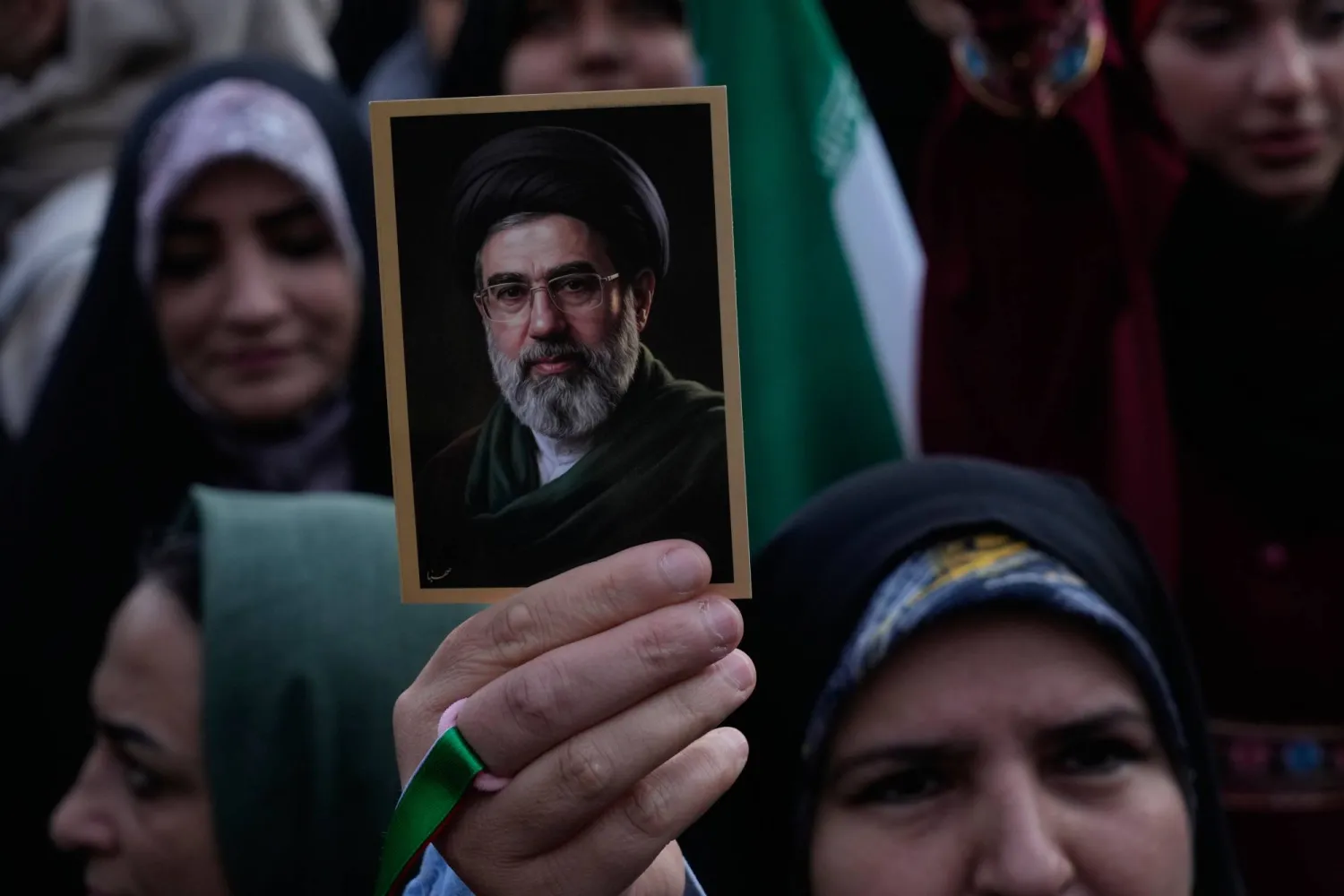
A woman holds up a picture of the Iranian Supreme Leader Mojtaba Khamenei during a state-organized rally in Tehran, Iran, Wednesday, April 29, 2026. (AP)
TT

Iran’s Supreme Leader Vows to Protect Nuclear and Missile Capabilities

A woman holds up a picture of the Iranian Supreme Leader Mojtaba Khamenei during a state-organized rally in Tehran, Iran, Wednesday, April 29, 2026. (AP)

Iran’s supreme leader defiantly vowed Thursday to protect the country’s nuclear and missile capabilities, which US President Donald Trump has sought to curtail through airstrikes and as part of a wider deal to cement the war’s shaky ceasefire.

In a statement read by a state television anchor, Mojtaba Khamenei said the only place Americans belonged in the Gulf is “at the bottom of its waters" and that a “new chapter” was being written in the region's history.

Khamenei has not been seen in public since taking over as supreme leader following the killing of his father in the war’s opening airstrikes.

His remarks come as Iran's economy is reeling and its oil industry is being squeezed by a US Navy blockade halting its tankers from getting out to sea. The world economy is also under pressure as Iran maintains its chokehold on the Strait of Hormuz, through which a fifth of all crude oil is transported. On Thursday, the global benchmark for oil, Brent crude, traded as high as $126 a barrel.

That shock to oil supplies and prices is putting pressure on Trump, who is floating a new plan to reopen the critical passageway used by the Gulf to export their oil and gas.

Under the plan, the US would continue its blockade on Iranian ports, while coordinating with allies to impose higher costs on Iran’s attempts to subvert the free flow of energy, according to a senior administration official, who spoke on condition of anonymity because they were not authorized to comment publicly.

In a cable sent Tuesday, the US State Department instructed American diplomats around the world — except those in Belarus, China, Cuba and Russia — to seek their host government’s support for the Trump administration's call for assistance in establishing a “maritime freedom construct” that would ensure free and unimpeded access to shipping through the strait.

“This commitment reflects broad international consensus on the need for coordinated action to counter Iranian maritime provocations and ensure navigational rights and freedoms in the Strait of Hormuz,” said the cable, a copy of which was obtained by The Associated Press on Thursday.

The initiative, being led by the State Department and the Pentagon’s Central Command, “is a fundamentally defensive response to protect the rights of all countries to navigate international waters freely and safely and to hold Iran accountable for its aggressive and illegal actions to impede the free flow of commerce,” the cable said.

At the same time, Trump has also floated possible changes to US troop presence in allied countries in Europe. The day after the president announced his administration was conducting a review on potentially reducing the US troop presence in Germany, he was asked by a reporter whether he’d weigh pulling US forces out of Italy and Spain — which have sparred with the United States over use of bases for Iran-related operations.

“Why shouldn’t I,” Trump answered. “Italy has not been of any help to us, and Spain has been horrible, absolutely horrible.”

Ceasefire shaken as strait remains shut

The US blockade, which as of Thursday has turned back some 44 commercial vessels, according to US Central Command, is designed to prevent Iran from selling its oil, depriving it of crucial revenue while also potentially creating a situation where Tehran has to shut off production because it has nowhere to store oil.

A recent Iranian proposal would push negotiations on the country’s nuclear program to a later date. Trump said one of the major reasons he went to war was to deny Iran the ability to develop nuclear weapons. Iran has long maintained its program is peaceful, though it enriched uranium at near-weapons-grade levels of 60%.

Pakistan on Thursday said it was still facilitating indirect talks between the US and Iran aimed at easing tensions, but that Islamabad would also welcome direct communication between the two sides, even by phone.

“If the two parties can engage in real-time conversations, that could ease the sticking points,” said Ministry of Foreign Affairs spokesperson Tahir Andrabi at a weekly news briefing. He declined to share details of any Iranian or US proposals.

Khamenei's remarks signaled that nuclear issues and Iran's ballistic missile program wouldn't be traded away.

“Ninety million proud and honorable Iranians inside and outside the country regard all of Iran’s identity-based, spiritual, human, scientific, industrial and technological capacities — from nanotechnology and biotechnology to nuclear and missile capabilities — as national,” Khamenei said.

Khamenei referred to America as the “Great Satan,” a long-hurled insult by Iranian leaders toward the US since the 1979 revolution.

Khamenei signals strait will remain shut

In his remarks, Khamenei seemed to signal Iran would maintain its control over the waterway, which sits in the territorial waters of Iran and Oman. Iran had been charging some ships reportedly $2 million apiece to travel through the strait.

He said that Iran's control of the Strait of Hormuz will make the Gulf more secure, and that Tehran's “legal rules and new management” of the strait will benefit all the region’s nations.

However, the world considered the strait an international waterway, open to all without paying tolls. Gulf Arab nations have decried Iran's control of the strait as akin to piracy.

Crackdown intensifies in Iran

Iran announced Thursday it hanged a 21-year-old man over charges stemming from the nationwide protests in January, the judiciary’s Mizan news agency reported.

The agency identified the executed man as Sasan Azadvar, from Isfahan. It said he was hanged for the crime of “effectively cooperating with the enemy by attacking police officers” during the protests.

Activists and rights groups say a crackdown on dissent, including a wave of executions, has further intensified since the US-Israel war with Iran.

UN Human Rights Chief Volker Turk said on Wednesday at least 21 people have been executed since the start of the war.

Iran routinely holds closed-door trials in which defendants are unable to challenge the accusations they face, rights groups say, warning that several other people remain at risk of execution.

Fighting continues in southern Lebanon

Despite a ceasefire between Israel and Lebanon-based, Iran-backed Hezbollah, the group has continued to claim attacks on Israeli troops in southern Lebanon. Israel's military said one of its soldiers was killed in battle there Thursday, raising the troop casualties to 17 since the Iran war started.

Air raid sirens sounded multiple times in border communities in northern Israel on Thursday, too. The Israeli military said it struck military structures used by Hezbollah, and the Lebanese Health Ministry said 9 were killed in strikes, including women and children.

Late on Thursday, the foreign ministry of United Arab Emirates — which has come under attack by Iran during war — announced a travel ban for its citizens covering Iran, Lebanon and Iraq, and urged those already in those countries to return home.



Trump to Make First Flight on Qatar-Gifted Jet This Week

(FILES) In this February 15, 2025 a Qatari Boeing 747 sits on the tarmac of Palm Beach International airport after US President Donald Trump toured the aircraft on February 15, 2025. (Photo by ROBERTO SCHMIDT / AFP)
TT

Trump to Make First Flight on Qatar-Gifted Jet This Week

(FILES) In this February 15, 2025 a Qatari Boeing 747 sits on the tarmac of Palm Beach International airport after US President Donald Trump toured the aircraft on February 15, 2025. (Photo by ROBERTO SCHMIDT / AFP)

US President Donald Trump will make his first flight on a new Air Force One plane gifted by Qatar later this week, the White House said Monday.

Trump will take the jet on Wednesday to North Dakota for an event marking the 250th anniversary of US independence, a White House official told AFP.

As he unveiled the plane earlier this month, Trump praised the Gulf emirate for being “so nice and providing” the modified Boeing 747, which previously served Qatar's head of state.

Trump has been obsessed since his first term with replacing the aging jets that serve as Air Force One, and he hand-picked the new plane's red, white and blue livery.

But critics have raised a host of ethical, constitutional and security concerns about the gifting of an aircraft worth hundreds of millions of dollars by a foreign power like Qatar.

The US Constitution prohibits presidents and other officeholders from receiving “any present, Emolument, Office, or Title, of any kind whatever, from any King, Prince, or foreign State” unless approved by Congress.

Trump's administration has said the plane is a direct gift to the US Department of Defense -- while stoking further concern by saying the plane would eventually be donated to Trump's presidential library.

The Qatari-gifted plane is meant to be a stopgap until US planemaker Boeing delivers two new 747-8 aircraft to serve as the presidential jet in a program plagued by delays and cost overruns.


Türkiye Must Be ‘Included’ in Europe Security Structures, Says Erdogan

Turkish President Recep Tayyip Erdogan speaks during the opening ceremony of Antalya Diplomacy Forum in Antalya, Türkiye, April 17, 2026. (Reuters)
TT

Türkiye Must Be ‘Included’ in Europe Security Structures, Says Erdogan

Turkish President Recep Tayyip Erdogan speaks during the opening ceremony of Antalya Diplomacy Forum in Antalya, Türkiye, April 17, 2026. (Reuters)

Türkiye must be included in all of Europe's defense structures and defence trade restrictions between NATO members must be removed, President Recep Tayyip Erdogan said Monday ahead of a key NATO summit.

His remarks come as Europe revamps its defenses to counter Russia and the risk of a US pullback from NATO, which is to hold a summit in the Turkish capital Ankara on July 7-8.

"Türkiye's indispensable contributions to European security are sometimes overlooked," Erdogan told parliamentary delegates from all 32 NATO member states in Istanbul. He said Türkiye wanted "to participate in all defense and security initiatives" on the continent.

At issue is Türkiye's access to the European Union's 150-billion-euro ($176-billion) Security Action for Europe (SAFE) initiative, intended to strengthen European defense capabilities.

"We expect your support, lawmakers, for Türkiye's inclusion in the defense and security initiatives announced by the European Union," Erdogan told them.

Within SAFE, firms from non-EU countries such as Türkiye, Britain and the United States can only supply up to 35 percent of the component costs of weaponry funded by the scheme.

If Türkiye wants its companies to be able to tap a bigger part of the funds Ankara needs to sign a security partnership with the EU and then negotiate special access with Brussels -- a process that would require approval from all 27 EU members. Greece has threatened to block such a move.

"Under SAFE, any third country can participate in a defense project up to a level of 35 percent. Any negotiations with a view to potentially increasing or lifting this 35 per cent cap ... would require a bilateral agreement," said Thomas Regnier, a European Commission spokesperson.

"For now, this is not an agreement we have concluded with Türkiye."

- 'Remove the obstacles' -

Erdogan also urged NATO to remove all barriers blocking defense industry trade between alliance members.

"If we want to overcome the challenges we face, we need to remove obstacles to defense industry trade while ensuring a balanced and fair burden-sharing among allies," he said.

Türkiye has the second-biggest army of the alliance after the United States and a burgeoning defense industry which has gone from strength to strength fueled by bilateral defense deals.

But its defense industry has been hit by US sanctions imposed over Ankara's purchase of an S-400 Russian surface-to-air missile defense system. Washington also booted Türkiye out of its F-35 program, in a move that has soured relations between the NATO allies.

Although Washington has expressed a desire to draw a line under the dispute, lifting the sanctions requires Congressional approval. Observers say there is little chance the showdown would be resolved before the summit.

US President Donald Trump has however pledged to give Erdogan something that would make him "very happy" when he flies in next week for the NATO gathering.

Analysts said it was likely to be a delivery of several dozen US-made F110 engines Türkiye needs for its fifth-generation KAAN fighter jets that are under development. Delivery of the engines had been blocked since the imposition of the US sanctions.


Trump Says Iran Requested Meeting to be Held in Doha Tuesday

US and Iran flags are seen in this illustration taken June 18, 2025. REUTERS/Dado Ruvic/Illustration/File Photo
TT

Trump Says Iran Requested Meeting to be Held in Doha Tuesday

US and Iran flags are seen in this illustration taken June 18, 2025. REUTERS/Dado Ruvic/Illustration/File Photo

US President Donald Trump said that Iran has requested a meeting that will be held in the Gulf state of Qatar on Tuesday, despite an earlier denial from Tehran that talks were planned.

"IRAN HAS REQUESTED A MEETING. IT WILL TAKE PLACE TOMORROW IN DOHA!" Trump posted on his Truth Social platform on Monday.

Shortly afterwards, White House spokesperson Karoline Leavitt said US negotiators Jared Kushner and Steve Witkoff would be "flying to Doha for high level meetings this week".

Iran's foreign ministry earlier on Monday denied reports that Iranian and American technical teams will meet this week to discuss the implementation of the deal to end the Middle East war.

Uncertainty over the talks followed renewed tit-for-tat attacks between the United States and Iran in recent days despite an April ceasefire and a memorandum of understanding, brokered by Pakistan and Qatar, aimed at permanently ending the war.

A diplomat with knowledge of the talks confirmed to AFP on Monday that officials from the US and Iran are to meet in Doha to discuss the accord.

"Technical teams working on the implementation of the MoU are scheduled to meet in Doha in the coming days," the diplomat said on condition of anonymity to discuss the sensitive talks.

The diplomat added "communications channels created to de-escalate any incidents are in place," following strikes between the US and Iran.