


Trump Says He’s ‘Not Satisfied’ with Iran’s Latest Proposal to End War with US

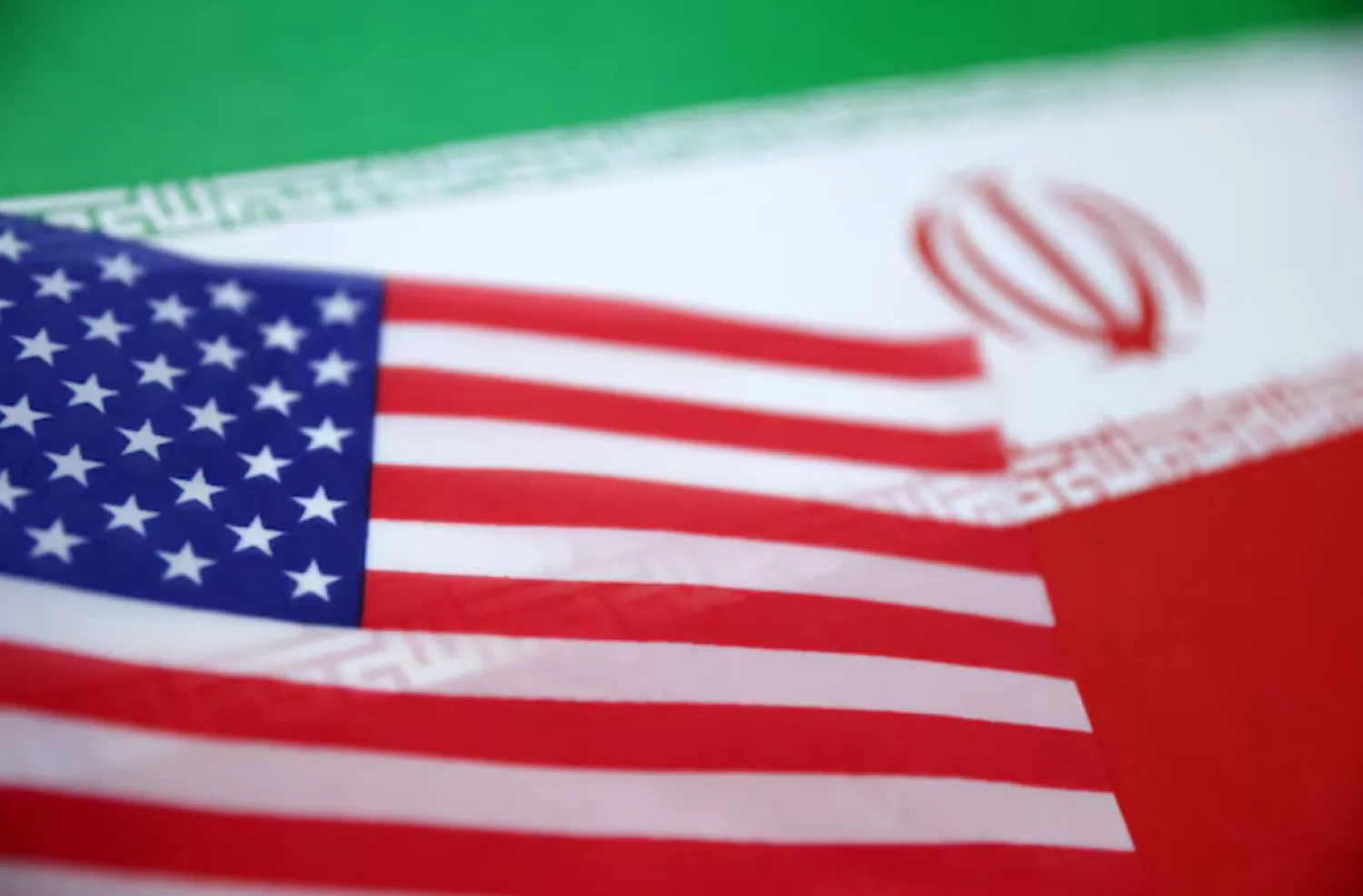
US and Iran flags are seen in this illustration taken June 18, 2025. REUTERS/Dado Ruvic/Illustration/File Photo
TT

Trump Says He’s ‘Not Satisfied’ with Iran’s Latest Proposal to End War with US

US and Iran flags are seen in this illustration taken June 18, 2025. REUTERS/Dado Ruvic/Illustration/File Photo

President Donald Trump said on Friday that he’s “not satisfied” with Iran’s latest proposal in negotiations to end war between the countries. 

“They want to make a deal, I’m not satisfied with it, so we’ll see what happens,” Trump told reporters Friday at the White House. 

Trump did not elaborate on what he sees as the proposal’s shortcomings. 

The president said negotiations have continued by phone after he called off his envoys’ trip to Pakistan last week. He expressed frustration with Iran’s leadership, which he described as fractured. 

“It’s a very disjointed leadership,” he said. “They all want to make a deal, but they’re all messed up.” 

Iran had handed over its latest proposal for negotiations with the United States to mediators in Pakistan, Iran's state-run IRNA news agency reported Friday. 

There was no word on what details are included in the plan submitted late Thursday, according to the report. 

A shaky three-week ceasefire between the US and Iran appears to be still holding though both countries have traded accusations of violations. 

While the ceasefire has largely halted fighting in Iran, the US and Iran are locked in a standoff over the Strait of Hormuz, through which a fifth of the world’s traded oil and gas passes in peacetime. A US Navy blockade stopping Iran's tankers from getting out to sea has Iran’s economy reeling. The world economy is also under pressure as Iran maintains its chokehold on the strait. 

Trump this week floated a new plan to reopen the critical passageway used by the Gulf countries to export their oil and gas. 

Iran’s Foreign Minister Abbas Araghchi held a flurry of calls on Friday with many of his regional counterparts, including from Saudi Arabia, Türkiye, Egypt, Qatar, Iraq and Azerbaijan, to brief them on his country’s latest initiatives to end the war, according to his social media. 

European Union foreign policy chief Kaja Kallas also spoke over phone Friday with Araghchi. They discussed ongoing diplomatic efforts to reopen the Strait of Hormuz and long-term security arrangements, Kallas’ office said in a statement. Kallas also has been in contact with the EU's Gulf partners. 

White House spokesperson Anna Kelly said in a statement: “President Trump has been clear that Iran can never possess a nuclear weapon, and negotiations continue to ensure the short- and long-term national security of the United States.” 

Earlier this week, Trump told Axios that he had rejected Iran’s proposal to reopen the strait in exchange for the US Navy lifting its blockade of Iranian ports. 

The Iranian proposal would have pushed negotiations on the country’s nuclear program to a later date, two regional officials said earlier this week. The officials with knowledge of the proposal spoke on condition of anonymity to discuss closed-door negotiations between Iranian and Pakistani officials. 

One of the major reasons Trump has said he went to war was to deny Iran the ability to develop nuclear weapons. 

Since the war began on Feb. 28, at least 3,375 people have been killed in Iran, and more than 2,600 people in Lebanon, where new fighting between Israel and the Iran-backed group Hezbollah broke out two days after the war started, according to authorities. 

Additionally, 24 people have died in Israel and more than 20 in Gulf Arab states. Seventeen Israeli soldiers in Lebanon and 13 US service members throughout the region have been killed. 


Iran Media: Tehran Has 'Not Yet' Taken Final Decision on US Peace Deal

Iranians drive past a billboard featuring Iran's national flag at Enqelab Square in Tehran, Iran, 14 June 2026. EPA/ABEDIN TAHERKENAREH
TT

Iran Media: Tehran Has 'Not Yet' Taken Final Decision on US Peace Deal

Iranians drive past a billboard featuring Iran's national flag at Enqelab Square in Tehran, Iran, 14 June 2026. EPA/ABEDIN TAHERKENAREH

Iran's Fars news agency said on Sunday that Tehran has not made a final decision on signing the agreement under discussion with the United States to end the Middle East war.

"Iran has not yet taken or announced its final decision concerning the memorandum of understanding proposed during negotiations," reported Fars, which is close to Iranian conservative circles, citing "a well-informed source close to the Iranian negotiating team.”

The prospective agreement has faced opposition from hardline Iranian figures, who argue that it does not serve Iran's interests and would deprive Tehran of leverage over the strategic Strait of Hormuz.

US President Donald Trump and mediator Pakistan said on Saturday an initial deal to end the war in the Middle East would be signed on Sunday.

Pakistani Prime Minister Shehbaz Sharif said the two sides had agreed on a framework for a peace deal and that Islamabad was preparing for an electronic signing on Sunday, to be followed by technical-level talks next week.

Trump also said in a social media post that the deal with Iran was scheduled to be signed on Sunday and that the Strait of Hormuz, a vital artery for global oil supplies which Iran has blocked, would be immediately "open to all" after it was signed.


Taiwan’s Spy Agency Launches Webpage for Chinese Nationals to Report Tips

FILE PHOTO: Chinese and Taiwanese flags are seen in this illustration, August 6, 2022. REUTERS/Dado Ruvic/Illustration/File Photo
TT

Taiwan’s Spy Agency Launches Webpage for Chinese Nationals to Report Tips

FILE PHOTO: Chinese and Taiwanese flags are seen in this illustration, August 6, 2022. REUTERS/Dado Ruvic/Illustration/File Photo

Taiwan’s intelligence agency said on Sunday it is establishing an information-reporting channel for Chinese nationals to offer tips securely, at a time when tensions between Beijing and the self-ruled island remain elevated.

In a statement, Taiwan’s National Security Bureau said they are launching a webpage that will act as a secure channel for Chinese nationals to provide intelligence-related information, saying that an increasing number of people have recently approached relevant agencies in Taiwan wishing to “provide various types of information.”

“In recent years, China’s economy has faced mounting difficulties, while political control has remained tight,” The Associated Press quoted the statement as saying. “Coupled with a growing range of social and livelihood-related problems, these conditions have fueled public discontent.”

Taiwan officials said the move was made in reference to practices adopted by intelligence agencies in the US, the UK and Israel.

Last year, the CIA released Mandarin-language videos on social media inviting disgruntled Chinese officials to contact them and share information.

China had earlier said it launched an online platform to encourage reporting of “Taiwan independence” activities, aiming at holding “separatists” accountable.

China and Taiwan split in 1949 as a result of a civil war. For decades, China has seen Taiwan as its own territory and said the island must come under its control, even under the use of force if necessary.

When US President Donald Trump visited Beijing in mid-May for a summit with Chinese leader Xi Jinping, he was warned by Xi that their two countries could clash over Taiwan — if the issue was not properly handled.

China has held major military exercises near the island. On Wednesday, Taiwan’s military fired rockets in China’s direction from mobile launchers in a demonstration of how it could attempt to repel a Chinese attack.


Report: Iran Sealed Uranium Cache with Mines

Satellite imagery shows an overview of a tunnel complex carved into rocky terrain near a developed facility area in Isfahan, Iran, on November 11, 2025. Maxar/DigitalGlobe/Getty Images
TT

Report: Iran Sealed Uranium Cache with Mines

Satellite imagery shows an overview of a tunnel complex carved into rocky terrain near a developed facility area in Isfahan, Iran, on November 11, 2025. Maxar/DigitalGlobe/Getty Images

In recent weeks, Iran has dramatically escalated efforts to seal off its cache of near bomb-grade uranium, deliberately collapsing tunnels and booby-trapping entrances with explosive mines, five sources familiar with US intelligence told CNN on Saturday.

Getting to the roughly half-a-ton of highly-enriched uranium is now far more difficult, dangerous and time-consuming than it already was just a month ago, when President Donald Trump was publicly signaling that he might order the US military to seize it, the sources said.

The new fortifications by the Iranians add an additional layer of complexity to the Trump administration’s proposed deal with Tehran to remove and destroy its uranium, and the move raises questions about who will take on the dangerous task of digging it out.

Trump has repeatedly stated that securing the material is a priority for the US in the ongoing negotiations to end the war and re-open the Strait of Hormuz, which Iran has effectively closed.

And according to a senior administration official who briefed reporters Friday, the two sides are inching closer to a deal that would require Iran to turn its enriched uranium over to the US. It would be destroyed on site and then taken out of the country, according to that official.

But US and Iranian officials have offered conflicting accounts of the tentative deal, and its precise terms remain unclear. The purported text of a draft deal leaked to a semi-official Iranian news agency Friday, triggering an angry outburst from Trump on social media.

Difficult and Dangerous Mission

Even for the Iranians themselves, several of the sources said, removing the enriched material would now be difficult and dangerous. It would require heavy excavation equipment and de-mining efforts — which are difficult and risky.

“If this reporting is true, it would definitely complicate ... retriev[ing] the HEU,” said Scott Roecker, who headed the National Nuclear Security Administration’s Office of Nuclear Material Removal from 2017 to 2021.

It could also offer an opportunity for Iran to obfuscate its compliance efforts.

If negotiators “require that Iran bring the entire stockpile to a central location for verification and ultimately to remove or downblend the material,” that would place the onus on Tehran to access and “provide the full inventory” of enriched uranium, Roecker said.

But, “in this scenario, I would worry that Iran would claim that some portion of the HEU was irretrievable,” Roecker said. “We wouldn’t have full confidence that Iran couldn’t retain access to it at some point in the future.”

The international community believes most of the stockpile is in collapsed tunnels at the Isfahan nuclear complex in central Iran, with some additional material held at other sites.

In mid-May, the military was prepared to conduct an operation to seize the nuclear material that was ultimately deemed to be too high-risk, CNN has previously reported
But in the time since then, Iran has only further fortified the sites where its highly enriched uranium is believed to be buried underground.

Protection of Nuclear Material

Trump has previously acknowledged the dangerous nature of retrieving the uranium by force, and he expressed skepticism in a May appearance on Fox News that the Iranians would ever be capable of accessing and retrieving the buried nuclear material without detection from US intelligence.

“We know exactly what’s happening,” Trump told Fox host Sean Hannity of the site. “Nobody’s even gotten close to it.”

But by publicly discussing the uranium as a possible target, two of the sources noted, the president may have provided Iran with the impetus to better defend its own assets.

Now, even if the agreement between Tehran and Washington is signed in the coming week, additional technical negotiations to hammer out the details on the future of Iran’s nuclear program are expected.

Removing the uranium from the country would likely require the deployment of a specialized mobile uranium facility organized under the National Nuclear Security Administration at Oak Ridge National Laboratory, Tennessee.

But even the world’s top nuclear removal experts would need significant time to complete their task — Trump told reporters earlier this month that removal would take at least two weeks to complete.
