
Trump Says Ceasefire Is on ‘Life Support’ After Rejecting Iran’s Latest Offer

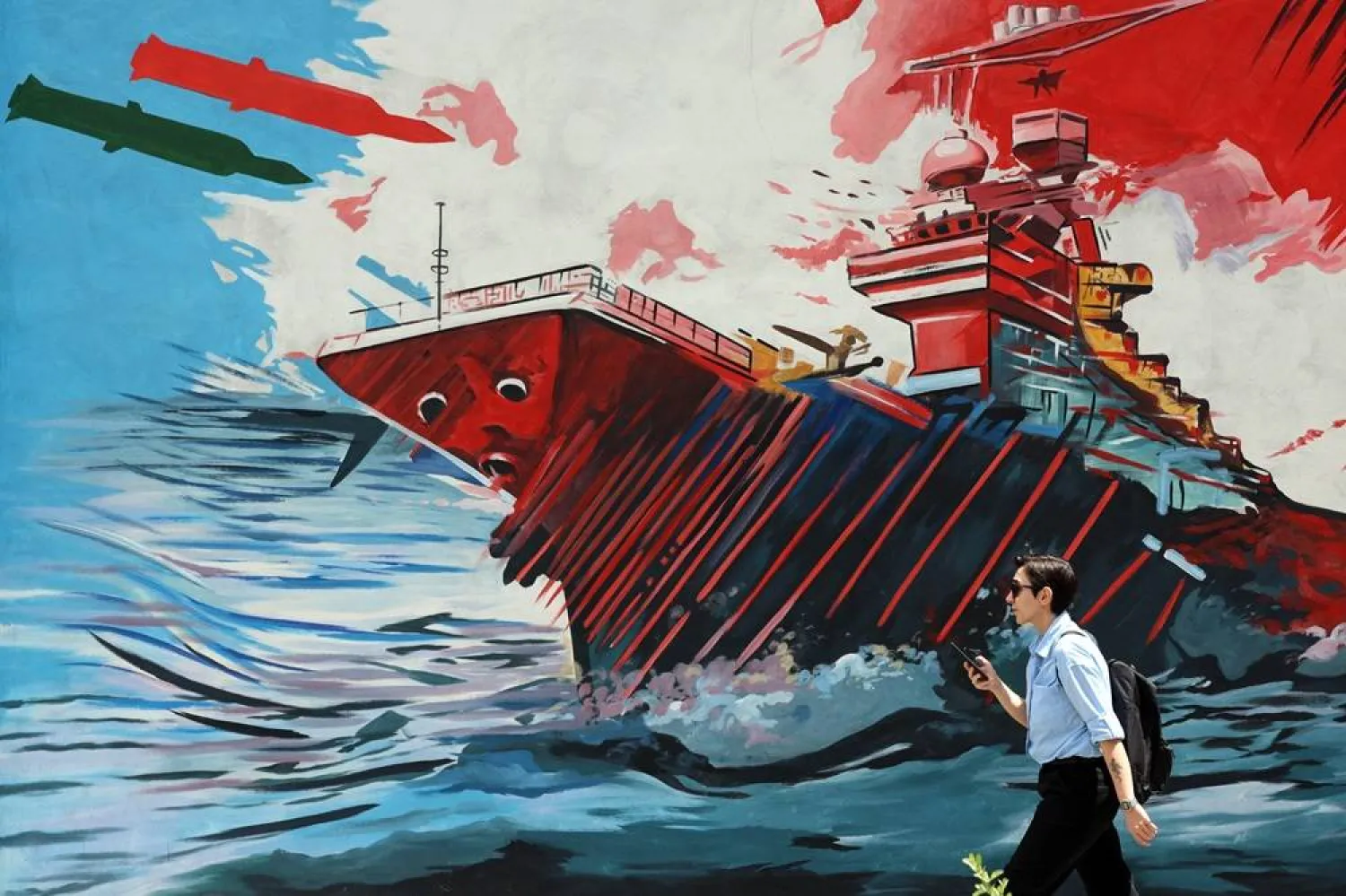
An Iranian walks next to a anti-US and Israel mural in a street in Tehran, Iran, 08 May 2026. (EPA)
TT

Trump Says Ceasefire Is on ‘Life Support’ After Rejecting Iran’s Latest Offer

An Iranian walks next to a anti-US and Israel mural in a street in Tehran, Iran, 08 May 2026. (EPA)

US President Donald Trump on Monday said the Iran ceasefire is on “life support” after he rejected the country’s latest proposal for not including a nuclear concession. 

Asked if the ceasefire was still in place, Trump said he’d say it’s “unbelievably weak” and on “life support.” 

“I would call it the weakest right now after reading that piece of garbage they sent us,” Trump said during an unrelated appearance in the Oval Office. “I didn’t even finish reading it.” 

Iran and the United States were at an impasse again Monday over how to end their war while their ceasefire grew increasingly shaky, with the two sides exchanging fire in recent days, ships and Gulf states being targeted, and fighting flaring between Israel and the Lebanese group Hezbollah. 

The volatility could tip the Middle East back into open warfare and prolong the worldwide energy crisis sparked by the conflict, with Iran’s chokehold on the Strait of Hormuz and America’s blockade of Iranian ports still in place.  

Trump is expected to use a trip this week to China to urge Chinese President Xi Jinping to pressure Iran into making concessions and end the limbo. Beijing is the biggest buyer of Tehran’s sanctioned crude oil, giving it leverage. 

But getting to any deal likely remains tough work. Iran insists it wants to see the American blockade end and sanctions lifted before beginning negotiations over its stockpile of highly enriched uranium. The US — and Israel — want that material removed since it could be used to eventually build a bomb, should Iran choose to do so. Tehran insists its program is peaceful, but it has enriched uranium beyond the levels needed for civilian power generation. 

Israel insists enriched uranium must be taken out of Iran  

Trump said Sunday that Iran’s response to his latest proposal was “TOTALLY UNACCEPTABLE!” Ending the US blockade before discussing Iran’s nuclear program would eliminate a major point of leverage. 

In the meantime, the standoff over the strait, a key transit point for the world's oil and natural gas exports, has sent fuel prices skyrocketing and rattled world markets. 

Israeli Prime Minister Benjamin Netanyahu, who launched the war with Trump on Feb. 28, insisted that the conflict was “not over,” telling CBS’ “60 Minutes” in an interview that aired Sunday that a critical goal is getting the nuclear material out of Iran.  

If that can't be accomplished with negotiations, Netanyahu said that Israel and the US agree “we can reengage them militarily.” 

Netanyahu also said the current Iranian government's "days are numbered — but it could take a lot of days.” 

The US and Israel have killed dozens of high-ranking Iranian officials, including the country’s supreme leader in the opening salvos of the war, and the conflict has inflicted heavy damage to Iran’s economy, but its theocracy maintains its grip on power. 

Iran and the US blame each other for the impasse 

Trump quickly rejected a new Iranian proposal sent Sunday to him via Pakistan. In it, Iran demanded war reparations from the US, full Iranian sovereignty over the Strait of Hormuz, an end to sanctions and the release of its seized assets abroad, Iranian state television reported. 

Iran also called for an immediate end to the war, including the fighting between Israel and Hezbollah, which have repeatedly exchanged fire though technically in a ceasefire. That conflict has seen Israeli strikes in Lebanon, its occupation of Lebanese territory and deadly Hezbollah attacks, including one that killed another Israeli soldier, the Israeli military said Monday. 

"We did not demand any concessions — the only thing we demanded was Iran’s legitimate rights," Iranian Foreign Ministry spokesman Esmail Baghaei said Monday. “The American side still insists on its one-sided views and unreasonable demands.” 

Iran did, however, offer to dilute part of its highly enriched uranium and transport the rest to a third country, and called for 30-day negotiations to finalize details, two regional officials involved in the negotiations told The Associated Press. The officials spoke on condition of anonymity to discuss the sensitive diplomacy taking place. 

Russian President Vladimir Putin has offered to take the uranium from Iran. 

Russia runs Iran's sole nuclear power plant at Bushehr and also took some of Iran's uranium stockpile in Tehran's 2015 nuclear deal with world powers, which the US later withdrew from under the first Trump administration. 

Asked Monday about Putin's comments, Baghaei said: "At the current stage, our focus is on ending the war." 

Iran continues with its executions  

Meanwhile, Iran executed another man it accused of spying for both the CIA and Israel's Mossad intelligence service. Iran's state-run IRNA news agency identified the prisoner as Erfan Shakourzadeh, saying he had worked on satellite communications and relayed classified information to those intelligence services. 

Iran has carried out a string of executions since nationwide protests swept the country in January. 

Activist groups have long accused Iran of carrying out closed-door trials during which defendants are unable to fully defend themselves.  

Iran's judiciary chief has repeatedly said that Tehran would increase the speed with which it carried out hangings to fight back against its enemies at home and abroad. 


UK Sanctions 12 Iran-Linked People, Entities

An Iranian man walks past an anti-US and anti-Israel mural painted on a wall, in the capital Tehran on May 10, 2026. (AFP)
TT

UK Sanctions 12 Iran-Linked People, Entities

An Iranian man walks past an anti-US and anti-Israel mural painted on a wall, in the capital Tehran on May 10, 2026. (AFP)

Britain on Monday slapped sanctions on a dozen Iran-linked individuals and entities accused of involvement in "hostile activities" by Tehran targeting the UK or other countries.

Updating its official sanctions list, the Foreign Office in London imposed the UK travel bans and asset freezes on nine people, two shadow banking exchange houses and the allegedly criminal Zindashti network.

The UK government had already sanctioned its alleged leader, Naji Ibrahim Sharifi-Zindashti, in 2024 alongside the United States, labelling him the head of international drug and trafficking cartel.

The European Union sanctioned his network last year, with London, Washington and Brussels all claiming it is connected to Iran's Ministry of Intelligence and Security and accusing it of conducting assassination and kidnapping operations against Tehran's critics.

The latest UK curbs follow a string of attacks over recent months against the Jewish community in Britain, and repeated warnings from officials that hostile states are intent on using proxies for such purposes.

Zindashti's nephew, Turkish national Ekrem Abdulkerym Oztunc, was among the nine people sanctioned Monday by Britain.

London also targeted five members of the Zarringhalam family -- Farhad, Fazlolah, Mansour, Nasser and Pouria -- said to have helped finance efforts to "destabilize" the UK.

Mansour, Nasser and Fazlolah Zarringhalam were sanctioned by the US last year for their involvement in Iran's "shadow banking" network.

The US Treasury said the trio had "collectively laundered billions of dollars" for Iran through a network of front companies in the United Arab Emirates and Hong Kong.

London also added Berelian Exchange and GCM Exchange, two US-sanctioned Iran-based exchange houses linked to them, to its sanctions list.

Iranians Nihat Abdul Kadir Asan and Reza Hamidiravari, and Azerbaijani national Namiq Salifov, were the other three individuals hit with the British travel bans and asset freezes.


Tens of Millions Risk Hunger as Hormuz Standoff Blocks Fertilizer, UN Official Says

An aerial view shows Jerry Fuerstenau planting a farm field on May 06, 2026 near West Bend, Iowa. (Getty Images/AFP)
TT

Tens of Millions Risk Hunger as Hormuz Standoff Blocks Fertilizer, UN Official Says

An aerial view shows Jerry Fuerstenau planting a farm field on May 06, 2026 near West Bend, Iowa. (Getty Images/AFP)

Tens of millions of people could face hunger and starvation if fertilizers are not soon allowed through the Strait of Hormuz, the head of a UN task force aimed at averting a looming humanitarian crisis told AFP on Monday.

Iran has had the strategic waterway -- through which a third of the world's fertilizers normally pass -- in a chokehold for months in retaliation for the war launched by the United States and Israel on February 28, disrupting a trade critical for farmers around the world in a race against the end of planting seasons.

"We have a few weeks ahead of us to prevent what will likely be a massive humanitarian crisis," Jorge Moreira da Silva, executive director of the United Nations Office for Project Services (UNOPS) and leader of the task force, told AFP in an interview in Paris.

"We may witness a crisis that will force 45 million more people into hunger and starvation."

The UN secretary general created the task force in March to spearhead a mechanism to allow fertilizers and related raw materials such as ammonia, sulphur and urea through the strait.

For weeks, Moreira da Silva has been working to convince the belligerent parties to allow even a few ships through, and has met with "more than 100 countries" to rally UN member state support around the mechanism.

While the ultimate hope is for a "lasting peace" deal in the region and "freedom of navigation for all commodities" through the strait, "the problem is the planting season can't wait", Moreira da Silva said, with some ending in African nations within weeks.

Global focus has been on the economic impacts of the throttled oil and gas trade, but the United Nations has been sounding the alarm of the threat the blockade poses to the world's food security, with countries in Africa and Asia likely to be particularly hard hit.

- 'Political will' -

Moreira da Silva said the United Nations could have the mechanism up and running in seven days but even if the strait were to reopen now, it would take three to four months to return to normality.

"It's just a matter of time. If we don't stop the origin of the crisis soon, we will have to deal with the consequences through humanitarian aid."

While food prices have not exploded yet, Moreira da Silva said, there has been a "massive increase" in fertilizer costs, which experts say would likely lead to a drop in agriculture productivity and send food prices soaring.

Moreira da Silva said moving just an average of five vessels a day of fertilizers and related raw materials through the strait would head off the crisis for farmers.

What's missing, he said, is "the political will".

"We can't procrastinate on what is possible to do, and what is urgent to do -- which is let the fertilizers cross the strait and, through that, minimize the risk of massive food insecurity at the global level."


‘Utter Rubbish’ Says Erdogan Rival as Spying Trial Opens

Former Istanbul Mayor Ekrem Imamoglu of the main opposition Republican People's Party (CHP) addresses supporters on the eve of the municipal elections, Istanbul, Türkiye, March 30, 2024. (AFP)
TT

‘Utter Rubbish’ Says Erdogan Rival as Spying Trial Opens

Former Istanbul Mayor Ekrem Imamoglu of the main opposition Republican People's Party (CHP) addresses supporters on the eve of the municipal elections, Istanbul, Türkiye, March 30, 2024. (AFP)

"It's all utter rubbish," Istanbul's jailed mayor Ekrem Imamoglu told an Istanbul court of the spying charges against him at a new trial on Monday, his words conveyed by lawyers and journalists.

"This indictment is a complete travesty of justice," said the 54-year-old, waving a copy of the indictment as the latest case against him opened at a court linked to the prison where he has been held for more than a year.

His remarks were posted on X by the MLSA rights group that is observing the trial.

Imamoglu was arrested and jailed as part of a graft probe in March last year, although the charges against him -- which include allegations of espionage and terror ties -- have continued to pile up.

"I will not defend myself against such an absurd charge as espionage," said Imamoglu, who is widely seen as one of the only politicians capable of defeating President Recep Tayyip Erdogan at the ballot box.

His arrest came just days before the main opposition CHP named him as its candidate for the next presidential race, due by mid-2028.

According to the indictment, Imamoglu and three other suspects -- one a journalist -- are accused of sharing the details of millions of Istanbul residents with foreign intelligence services in an alleged crime of "political espionage".

"If there is espionage, let the MIT (intelligence service) and all relevant intelligence units come forward and show the nation a single piece of concrete evidence," he said, according to supporters observing the trial.

"The indictment is 159 pages long. All of it is utter rubbish! ... Shame on you, Mr. President, members of the jury," he told the presiding judge, saying he had not read "a single page" of the charges against him, and would not do so.

Imamoglu was elected mayor of Türkiye's largest city in 2019, and re-elected in 2024 when the CHP won a huge victory over Erdogan's ruling AKP in the local elections.

"Is it a crime to win the election in Istanbul, or to have a say in our country's politics, starting with Istanbul, Mr. President?" he asked.

"Who will call this a case of espionage? This is a political case, Mr. President, brought by those who are afraid of facing me at the ballot box."

The espionage charges were brought against him in October, with the trial running in parallel to a sweeping graft case which opened on March 9 in which prosecutors want him jailed for 2,430 years.