


Rubio Offers Cubans ‘New Path’ in Special Video Address

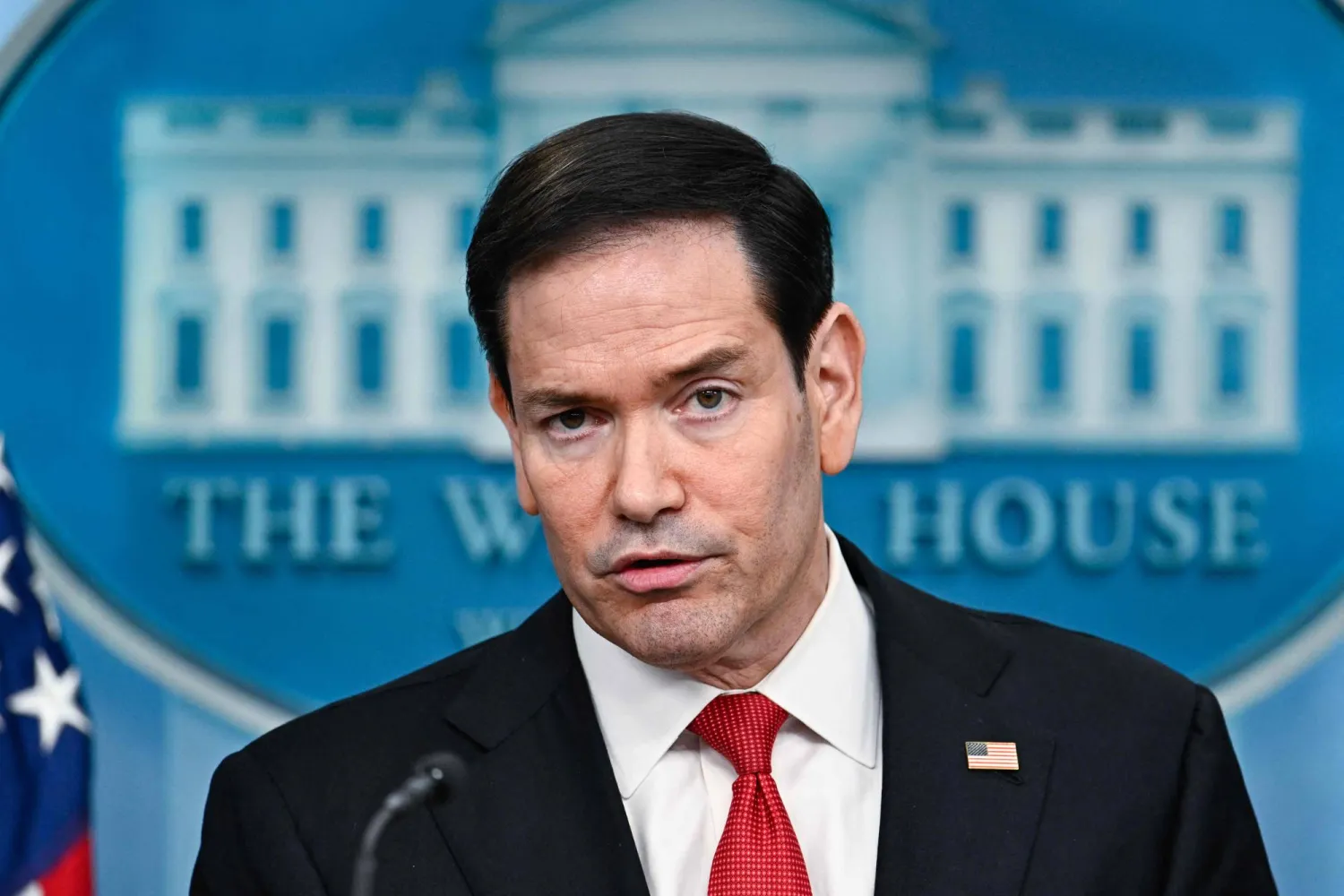
US Secretary of State Marco Rubio speaks during a press briefing in the Brady Briefing Room of the White House in Washington, DC, on May 5, 2026. (AFP)
TT

Rubio Offers Cubans ‘New Path’ in Special Video Address

US Secretary of State Marco Rubio speaks during a press briefing in the Brady Briefing Room of the White House in Washington, DC, on May 5, 2026. (AFP)

US Secretary of State Marco Rubio offered Cubans a "new path" in a special video address Wednesday hours before Washington was expected to criminally indict the island's influential former leader Raul Castro.

Addressing the Cuban people directly in Spanish, Rubio accused the country's communist leadership of theft, corruption and oppression.

"President (Donald) Trump is offering a new path between the US and a new Cuba," said Rubio, the son of Cuban immigrants.

"A new Cuba where you have a real opportunity to choose who governs your country and vote to replace them if they are not doing a good job."

Tensions between Washington and Havana have spiked in recent months since US forces ousted Cuba's regional ally Venezuelan president Nicolas Maduro in a military raid and then imposed a painful energy blockade on the already economically struggling island nation.

Trump has repeatedly signaled that the Cuban government could be next to fall, and earlier this month even said Washington would be "taking over" the Caribbean island, about 90 miles (145 km) from Florida, "almost immediately."

"In the US, we are ready to open a new chapter in the relationship between our people and our countries," Rubio said, according to an official English translation of his speech released by the State Department. "And, currently, the only thing standing in the way of a better future are those who control your country."

In his speech on the day when the Cuban community in the United States marks the island's independence, Rubio accused Gaesa, the military-backed conglomerate estimated to control 70 percent of the Cuban economy, of enriching the elites at the expense of ordinary citizens.

"A 'state within the state' that is accountable to no one and hoards the profits from its businesses for the benefit of a small elite," Rubio charged. "And the only role played by the so-called 'government' is to demand that you continue making 'sacrifices' and repressing anyone who dares to complain."

The US Justice Department was expected on Wednesday to announce criminal charges against 94-year-old Raul Castro, who succeeded his brother Fidel as president of Cuba and oversaw a historic 2015 rapprochement with the United States under Barack Obama that Trump later reversed.

According to US media reports, the indictment would focus on the 1996 downing of two civilian planes manned by anti-Castro pilots, that killed four people, and sent bilateral relations plummeting.

Four US Congress members expressed hope that the indictments will see justice served.

"We have a different President now, a president who is not willing to look the other way," Mario Diaz-Balart of Florida told reporters during a press conference. "We expect that today justice has finally arrived."

Representative Nicole Malliotakis of New York added: "This a Communist regime that has brutally killed, tortured its people, and much of it was work of Raul Castro himself."

"We hope this will be a turning point for the Cuban people," she said.

While Cuban Americans on Wednesday marked Cuba's independence, the Cuban government emphasizes different dates in its historical narrative, particularly the victory of Fidel Castro's revolution on January 1, 1959.

"Intervention, interference, dispossession, frustration: that is what May 20th signifies in Cuba's history," Cuban President Miguel Diaz-Canel said in a post on X, referring to the Platt Amendment, an addendum to Cuba's pre-communist constitution that allowed Washington to intervene militarily in Cuba.



Rubio Says US Will Not Accept Iranian Tolls on Hormuz

 Vessels at the Strait of Hormuz, as seen from Musandam, Oman, June 22, 2026. (Reuters)
Vessels at the Strait of Hormuz, as seen from Musandam, Oman, June 22, 2026. (Reuters)
TT

Rubio Says US Will Not Accept Iranian Tolls on Hormuz

 Vessels at the Strait of Hormuz, as seen from Musandam, Oman, June 22, 2026. (Reuters)
Vessels at the Strait of Hormuz, as seen from Musandam, Oman, June 22, 2026. (Reuters)

Washington's top diplomat insisted Tuesday that the US would not accept any attempt to impose tolls or fees on Strait of Hormuz, the key waterway where the UN said it would begin evacuating thousands of sailors stranded by the Middle East war 

The US and Iran have signed a preliminary deal to halt the war, and concluded a first round of talks in Switzerland as part of a 60-day negotiation period to settle outstanding issues like sanctions relief and the fate of Tehran's nuclear program. 

An Iranian blockade that began early in the conflict choked off maritime traffic through the Hormuz strait -- sending global oil prices surging -- but crossings have begun to rise again since the US-Iran deal was inked. 

Iran has repeatedly maintained it will retain control over the waterway, including on Tuesday, when it and Oman said in a joint statement that they would study the administration of the trade route and the costs to be charged for services provided, insisting on their sovereignty over the strait. 

But US Secretary of State Marco Rubio, kicking off a regional tour, reiterated Washington's position that such an arrangement would be unacceptable. 

"It's an international waterway. No country is allowed to charge tolls or fees on an international waterway," he said from Abu Dhabi, adding that he believed "all the countries in this region would agree". 

Tehran's top negotiator, Mohammad Bagher Ghalibaf, had earlier insisted the Strait of Hormuz "will never return" to the pre-war status quo, despite the foes agreeing to set up communication lines to keep it open. 

- Muscat meeting - 

Oman and Iran agreed on Tuesday to press on with discussions about the future administration of navigation in the Strait of Hormuz. 

In a joint statement issued after talks in Muscat, they said a joint working group involving their foreign ministries ‌would be ‌formed to continue the discussions and ‌that they ⁠would consult other ⁠littoral states and relevant parties.  

The move appears to implement a provision of the memorandum of understanding signed last week that calls for Iran to hold talks with Oman and other states on the future management of ⁠navigation and maritime services in the strait, ‌a vital waterway ‌for global oil supplies.  

The agreement was announced following a ‌visit by Speaker Ghalibaf and Foreign Minister Abbas Araqchi, who met Oman's Sultan Haitham bin Tariq and held talks with Omani Foreign Minister Badr Albusaidi.  

In the statement, Oman and ‌Iran, the two states bordering the strait, reaffirmed their commitment to ensuring ⁠safe ⁠passage through the waterway in accordance with international law while underlining sovereignty over their territorial waters.  

Since the start of the US-Israeli war against Iran in February, the strait has been largely closed to commercial shipping. The United States blockaded Iranian ports after Iran started effectively blocking the strait.  

Oman and Iran reaffirmed their commitment to the strait being a secure and open route for international navigation and to promoting maritime safety, freedom of navigation and regional stability. 

The head of the UN's International Maritime Organization, meanwhile, said it would begin evacuating more than 11,000 sailors stranded by the Hormuz blockade in cooperation with Iran, Oman and the United States, adding it had "secured the necessary safety guarantees". 

Traffic through the strait on Monday reached the highest level since the start of the war, according to two maritime tracking platforms, representing just over 40 percent of the normal peacetime level of about 120 vessels per day. 


Tehran Gets Three-Day Holiday for Ali Khamenei Funeral

An Iranian man walks past a banner depicting slain supreme leader Ali Khamenei at Valiasr Square in Tehran on June 15, 2026. (AFP)
TT

Tehran Gets Three-Day Holiday for Ali Khamenei Funeral

An Iranian man walks past a banner depicting slain supreme leader Ali Khamenei at Valiasr Square in Tehran on June 15, 2026. (AFP)

Iran announced Tuesday three days of public holidays in the capital Tehran for late supreme leader Ali Khamenei's funeral ceremonies, state television reported.

"The farewell ceremony and prayers for the martyred leader's body will be held on Saturday and Sunday, July 4th and 5th, in Tehran's Grand Mosalla, and the funeral will be held on Monday, July 6th, and Tehran province will be off for these three days," Iranian Revolutionary Guards Corps (IRGC) commander Hassan Hassanzadeh, in charge of the ceremonies, was quoted as saying.

Earlier, state media said Tehran would be on holiday on July 4 and 5, while the rest of the country will join it on July 6.

Tehran authorities expect an attendance of around 20 million.

The northern city of Qom will also host a tribute on July 7.

Ali Khamenei will be laid to rest on July 9 in the northeastern city of Mashhad, his birthplace.

These two cities will also observe public holidays.

Neighboring Iraq has scheduled ceremonies for July 8.

The funeral was originally planned for March but was postponed due to the war in the Middle East, which was triggered by the US-Israeli attacks in February that killed Khamenei.

Ali Khamenei's son Mojtaba succeeded his father as supreme leader in early March, becoming the third person to hold the position since the regime was established in 1979.

Mojtaba Khamenei was wounded in the bombing that killed his father and other officials. He has not been seen in public since his appointment and communicates solely through official statements.


China’s Newest Aircraft Carrier Sails Through the Taiwan Strait

In this photo released by Xinhua News Agency, China's third conventionally powered aircraft carrier, the Fujian, conducts a maiden sea trial on May 7, 2024. (Ding Ziyu/Xinhua via AP, File)
TT

China’s Newest Aircraft Carrier Sails Through the Taiwan Strait

In this photo released by Xinhua News Agency, China's third conventionally powered aircraft carrier, the Fujian, conducts a maiden sea trial on May 7, 2024. (Ding Ziyu/Xinhua via AP, File)

China’s newest and most powerful of its three aircraft carriers sailed through the Taiwan Strait on Tuesday, the Taiwanese defense ministry said, a day after Taiwan began a five-day military exercise on responding to a Chinese attack.

The Fujian carrier first sailed through the narrow body of water separating China and Taiwan in a trial run last September. It later transited the strait for the first time as a fully commissioned military vessel in December.

China claims the self-governed island as part of its territory and has not ruled out the use of force to bring it under Beijing's control. China regularly sends navy vessels and war planes towards Taiwan in military exercises that have become more frequent in recent years to where they now occur almost daily.

Taiwan on Monday kicked off its own five-day exercise to support its response in case of a possible Chinese military invasion.

The US Navy sends warships through the strait periodically, as do some of its allies, in a warning to Beijing against any attempt to use force to establish its claim to the island.

The Fujian was commissioned in November 2025. It is world’s largest nonnuclear-powered warship, according to the US Naval Institute, and is considered more advanced than China's other two carriers, the Shandong and the Liaoning.