




Iran's top negotiator and its foreign minister were in Doha for talks with Qatar's prime minister on a potential deal with the US to end the three-month-old war, an official briefed on the visit said on Monday, after Washington and Tehran played down hopes for an imminent breakthrough.
US Secretary of State Marco Rubio told reporters in New Delhi earlier that the US would give diplomacy every chance to succeed before considering whether to deal with Iran in "another way".
There was a "pretty solid thing on the table in terms of their ability to open up the strait (of Hormuz), get the strait open, enter into a very real, significant, time-limited negotiation on the nuclear matter, and hopefully we can pull it off," Rubio said.
In a lengthy post on Truth Social on Monday, US President Donald Trump said talks with Iran were going "nicely", but warned of fresh attacks if they failed. It "will only be a Great Deal for all, or no Deal at all," he wrote.
Iran's foreign ministry spokesperson Esmaeil Baghaei said in a briefing that conclusions had been reached on many topics but that did not mean the sides were close to agreement.
The official briefed on the Iranians' Doha visit told Reuters the discussions focused primarily on the Strait of Hormuz and Iran's stockpile of highly enriched uranium while Iran's central bank governor attended to discuss the potential release of frozen Iranian funds as part of a final deal.
Baghaei said earlier that nuclear issues would only be negotiated on if the framework accord is agreed first.
Trump has said his key aim in the war is to prevent Iran from developing a nuclear weapon with its highly enriched uranium. Tehran has consistently denied it has plans to do that.
The two sides remain at odds on several other issues, such as Israel's war in Lebanon with the Iranian-backed Hezbollah and Tehran's demands for the lifting of sanctions and the release of tens of billions of dollars of Iranian oil revenues frozen in foreign banks.
As efforts to reach a deal continued, Iran said it had downed a "hostile" stealth drone using a new air defense system, Iranian news agencies reported, without saying where it had come from.
"This is a sign from us that no more stealth drones can penetrate the skies of the Gulf," Fars quoted unnamed officials as saying.
IRAN DEAL STICKING POINTS
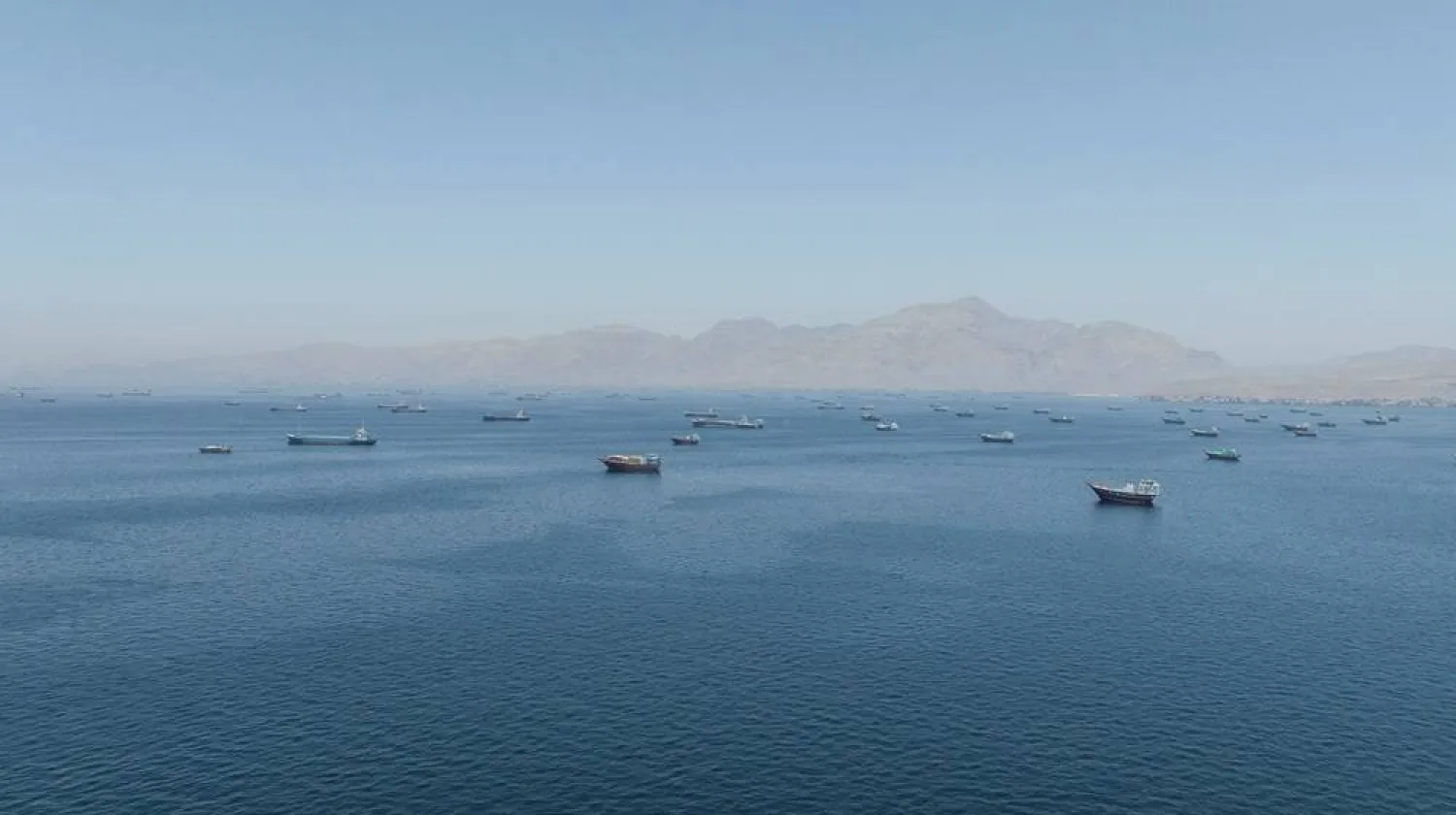
Baghaei said the potential Iran deal contained no specific details on management of the Strait of Hormuz, through which about a fifth of the world's oil and liquefied gas usually flows.
Iran will not charge tolls for ships to pass through but there will be a cost for services offered such as navigation and steps to protect the environment, he said, under a protocol to be agreed with Oman, which lies on the opposite shore of the waterway.
Since the US and Israel first launched strikes on Iran on February 28, only a handful of vessels have been passing through the Strait of Hormuz compared with 125 to 140 daily previously.
Iran's state TV said on Monday that 32 vessels and five oil tankers passed through the strait in the past 24 hours with the authorization of Iran's Revolutionary Guards naval forces.
The standoff has caused a spike in oil prices and driven up the costs of fuel, fertilizer and food. On Monday, oil prices fell more than 4% to two-week lows amid optimism that a deal might come soon.
Trump, whose approval ratings have been hit by the impact on US energy prices, and who has faced congressional efforts to curb his war powers, has repeatedly played up the prospect of a deal to end the war.
Separately, two sources said Israeli Prime Minister Benjamin Netanyahu has told his confidants that Israel now has little ability to influence Trump's decision-making over the conflict.


