


Norway Aid Group: Sudan, DR Congo Top World's Most Neglected Crises

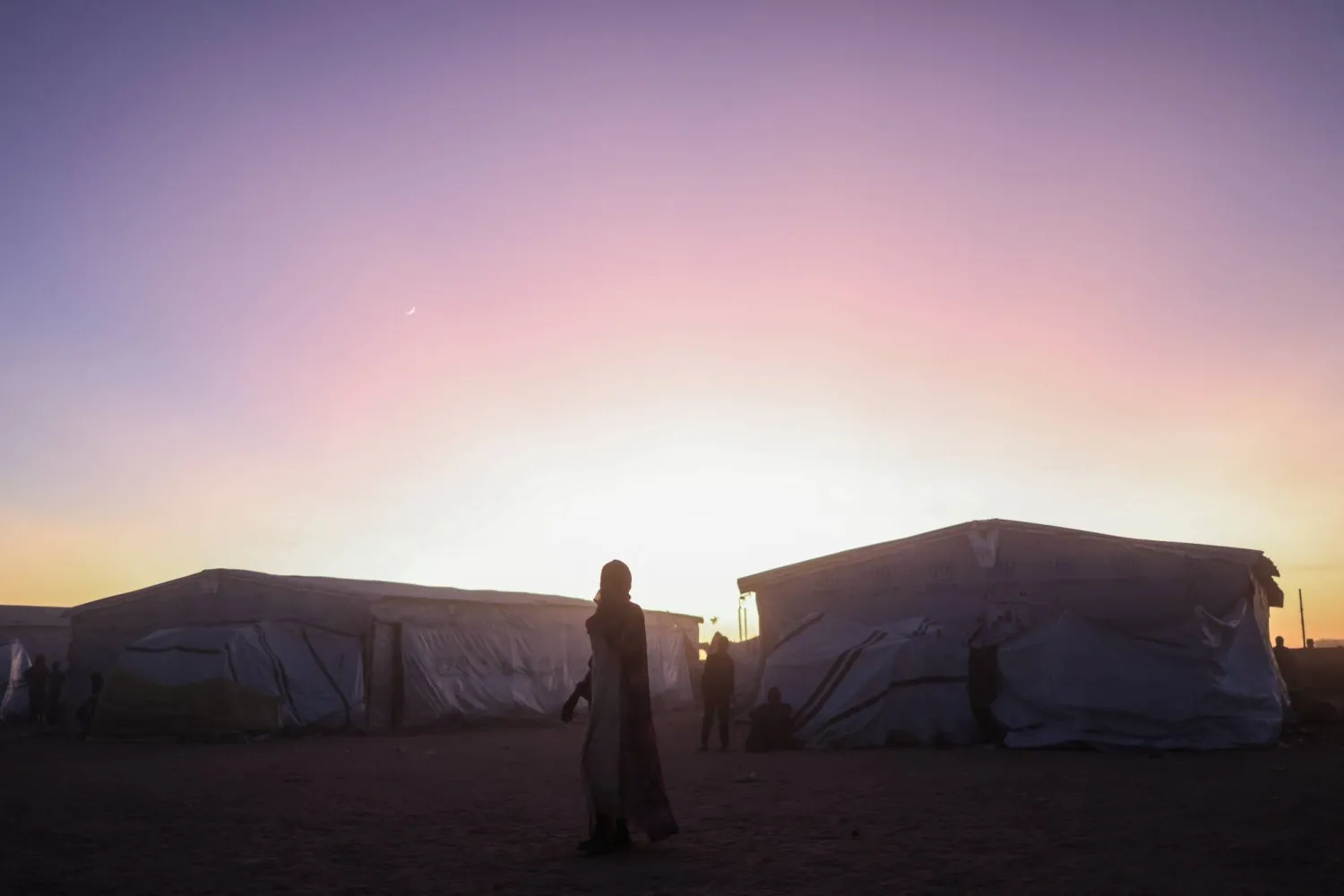
Sudanese refugees from Al-Fashir, displaced by ongoing conflict in Sudan, gather at sunset at the Tine transit camp in eastern Chad, November 23, 2025. REUTERS/Amr Abdallah Dalsh
TT

Norway Aid Group: Sudan, DR Congo Top World's Most Neglected Crises

Sudanese refugees from Al-Fashir, displaced by ongoing conflict in Sudan, gather at sunset at the Tine transit camp in eastern Chad, November 23, 2025. REUTERS/Amr Abdallah Dalsh

Sudan, the Democratic Republic of Congo and Colombia top the list of the world's most neglected displacement crises, the Norwegian Refugee Council aid group said on Thursday.

Sudan, which since 2023 has been ravaged by a bloody conflict between two rival generals competing for power, has more than nine million internally displaced people, the prominent aid organization said in a statement.

A further four million Sudanese have fled to neighboring countries and nearly 19.5 million people there are also suffering from hunger, the NRC said.

"It is incomprehensible that a displacement crisis of similar proportions to the crises in Syria and Ukraine at their peak can continue to worsen almost unnoticed," NRC chief Jan Egeland said.

"Countries have become much more inward-looking, more nationalist.

Rearmament is now an absolute priority because we have to ensure our own security in Europe. There is Putin threatening us, and so on," Egeland said in comments to the NRK broadcaster.

"But people then forget that there will be pandemics, migratory movements, and enormous loss of human life if we don't invest in hope on other continents."

"Africa is just across the Mediterranean, where we go on holiday. And if the continent collapses, we will also suffer the consequences."
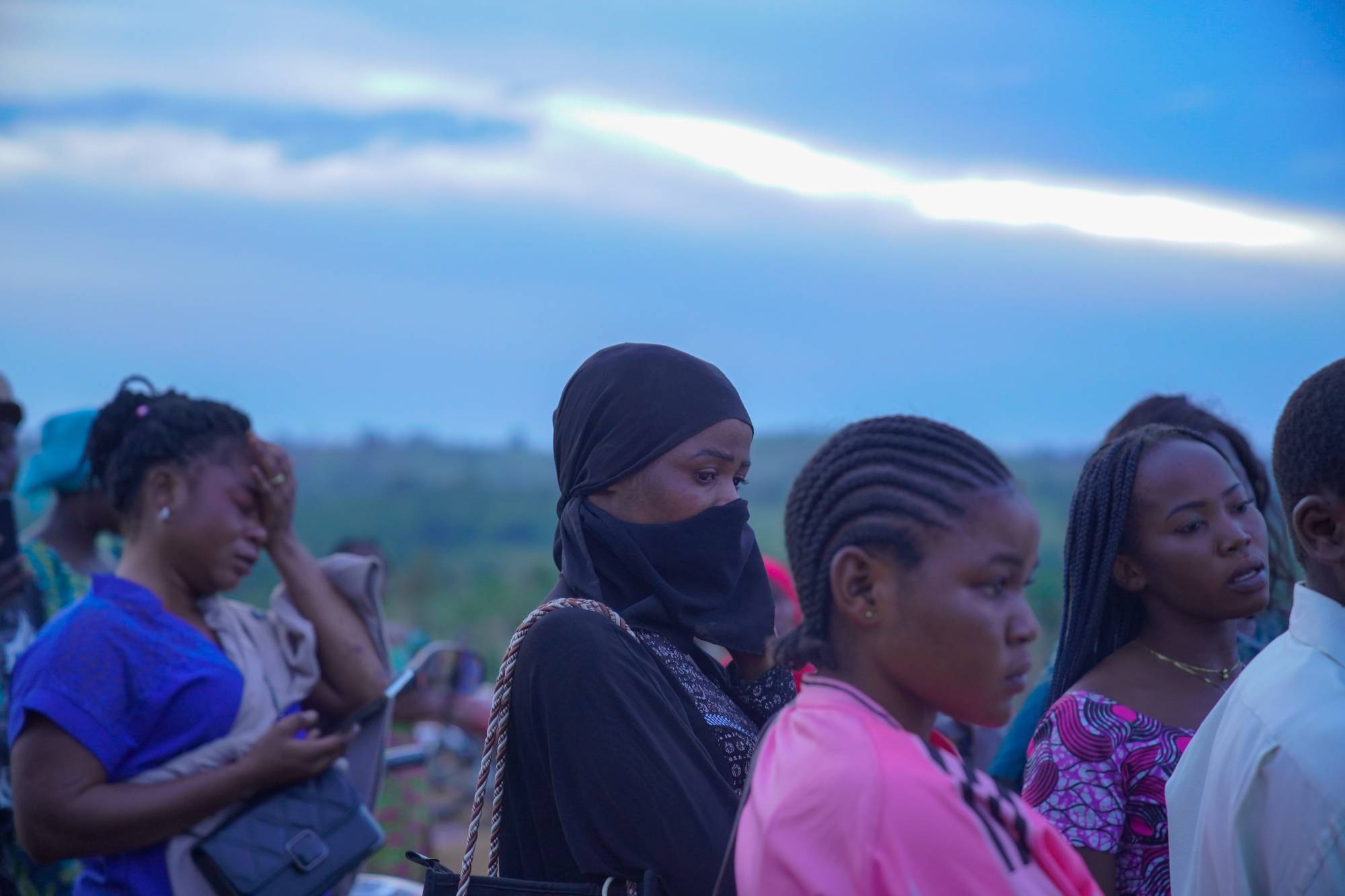
Relatives mourn during the funeral of a person who died of Ebola in Bunia, Ituri Province, Democratic Republic of the Congo, 03 June 2026. EPA/DIEUDONNE DIROLE

The Democratic Republic of Congo, where an Ebola epidemic has added turmoil to the east of the country ravaged by decades of conflict, appears on NRC's list for the 10th year in a row.

In 2025, only 27.4 percent of the funding needed for DR Congo has been secured, leaving more than 21 million people in need, according to the NRC.

"This is a testament to the world's failure to respond to crises that are not regarded as strategically important for rich countries," Egeland said in the NRC statement.

"Millions of people are being abandoned because we have chosen not to act, not because we cannot."

The NGO's list is based on three criteria: lack of humanitarian funding, lack of media coverage, and lack of political will within the international community.

Several African countries -- Burkina Faso, Cameroon, Central African Republic, Mali and Nigeria -- have featured on NRC's list six or more times, pointing to "a systemic pattern of deliberate neglect", NRC said.

The 10 most neglected crises for 2025 are Sudan, the Democratic Republic of Congo, Colombia, Yemen, Afghanistan, Honduras, Ecuador, Cameroon, Nigeria and Mozambique, spanning three continents and tens of millions of people.



US Treasury Issues $1 Coin with Trump’s Face on It

The US Mint has started producing a new $1 coin featuring President Donald Trump's image. (AP Graphic/Treasury Department, File)
TT

US Treasury Issues $1 Coin with Trump’s Face on It

The US Mint has started producing a new $1 coin featuring President Donald Trump's image. (AP Graphic/Treasury Department, File)

The US Treasury on Wednesday issued $1 coins featuring the face of President Donald Trump, the latest move in an unprecedented campaign by the Republican billionaire to put his personal stamp on national institutions.

The coins were minted to mark the 250th anniversary of the founding of the United States celebrated this year.

A roll of 25 $1 coins was available for sale for $61 -- a mark-up of 144 percent -- with a 100-coin bag available for $154.50.

When the Treasury announced the plan it was unclear if the coins would have monetary value or would be purely commemorative, but on Wednesday the US Mint said the coins were "also in circulation."

The move to put Trump's countenance on a coin with monetary value runs counter to federal law that says no living president may appear on US currency.

Trump has aggressively defied precedent and legal challenges in his push to remake US institutions in his second term, putting his name on the Kennedy Center for the Arts and demolishing the East Wing of the White House to make room for a new ballroom, among other moves.

The new coin features Trump's face on one side, with the words "Liberty" and "In God We Trust." It also features the dates 1776-2026, marking 250 years of US independence.

The other side of the coin features a version of the US presidential seal, depicting an eagle clutching arrows and an olive branch while covered by a shield that says "250."

This is just the latest in Trump's campaign to put his face and name on US currency.

In May, Treasury Secretary Scott Bessent said his department was pursuing a plan to issue a new $250 bill with Trump's face on it.

He conceded that the move would require Congress to change the law barring living persons from appearing on currency.

The US Treasury did not immediately respond to a request for comment on whether the new $1 coin violates that law.

In March, the Treasury announced that US paper money would soon bear Trump's signature -- another first for a sitting US president.


Türkiye’s Relations with Russia, China Don’t Mean Turning Its Back on the West, Erdogan Says

Turkish President Recep Tayyip Erdogan meets with Russian President Vladimir Putin on the sidelines of the Shanghai Cooperation Organization (SCO) summit in Bishkek, Kyrgyzstan, September 1, 2026. (Murat Cetinmuhurdar/Turkish Presidential Press Office/Handout via Reuters)
TT

Türkiye’s Relations with Russia, China Don’t Mean Turning Its Back on the West, Erdogan Says

Turkish President Recep Tayyip Erdogan meets with Russian President Vladimir Putin on the sidelines of the Shanghai Cooperation Organization (SCO) summit in Bishkek, Kyrgyzstan, September 1, 2026. (Murat Cetinmuhurdar/Turkish Presidential Press Office/Handout via Reuters)

Türkiye is not backing away from the West as it seeks deeper ties with the East, Turkish President Recep Tayyip Erdogan said Wednesday as he headed back from a Shanghai Cooperation Organization summit.

The conference in Kyrgyzstan saw Erdogan hold a one-on-one meeting with Russian President Vladimir Putin at which they discussed further nuclear cooperation.

In comments made to journalists aboard the presidential plane, Erdogan reiterated Türkiye’s goal of becoming a full member of the Shanghai Cooperation Organization, or SCO, whose ten current members include Russia, China, India and Iran.

“I would also like to particularly emphasize that Türkiye’s membership perspective in the organization does not mean a break from a bloc or turning our backs on the West,” the president said.

Turning to the war in Ukraine, during which Ankara has maintained friendly relations with both Moscow and Kyiv, Erdogan said it was his and Putin’s “expectation ... that the war between Russia and Ukraine ends peacefully as soon as possible.”

He also underlined the importance of maritime security in the Black Sea, where civilian shipping has come under increasing attack.

“There is a need for a mechanism that will permanently ensure the safety of commercial maritime transport in the Black Sea,” Erdogan said, adding that it would be “beneficial” to prevent a “resurgence of the grain crisis.”

Türkiye brokered a grain deal in 2022 that opened Ukrainian ports and allowed the movement of Russian food and fertilizer. The agreement, which Putin pulled out of a year later, was vital for global food supplies, especially in Africa, the Middle East and Asia.

The SCO, founded in 2001, also includes Kazakhstan, Kyrgyzstan, Tajikistan, Uzbekistan, Pakistan and Belarus. The growing bloc has been billed as a counterweight to US global influence, although its goals and programs remain vague.


Apple Changes Lake Ontario Name to ‘Lake America’ for US Users of Its Maps, Following Trump’s Order

 The Toronto, Ontario skyline is seen across Lake Ontario from Fort Niagara State Park, Tuesday, Aug. 25, 2026, in Youngstown, NY. (AP)
The Toronto, Ontario skyline is seen across Lake Ontario from Fort Niagara State Park, Tuesday, Aug. 25, 2026, in Youngstown, NY. (AP)
TT

Apple Changes Lake Ontario Name to ‘Lake America’ for US Users of Its Maps, Following Trump’s Order

 The Toronto, Ontario skyline is seen across Lake Ontario from Fort Niagara State Park, Tuesday, Aug. 25, 2026, in Youngstown, NY. (AP)
The Toronto, Ontario skyline is seen across Lake Ontario from Fort Niagara State Park, Tuesday, Aug. 25, 2026, in Youngstown, NY. (AP)

Apple has relabeled Lake Ontario to “Lake America” for US users of its Maps app, following competitor Google days after President Donald Trump ordered a new name for the body of water amid his escalating trade war with Canada.

As of Wednesday morning, Apple Maps displayed “Lake America” for US users looking at the lake that sits between the state of New York and Canada’s Ontario province. Users outside of the US still saw the Lake Ontario name.

Apple did not immediately respond to a request for comment on Wednesday. Earlier this week, Interior Secretary Doug Burgum told Fox that Trump had reached out to the company “directly” about the change.

The president declared the new “Lake America” name last week, marking one of the latest provocations during his trade war with Canada that is now hiking tariffs on both sides of the border. His executive order on Friday directed the Interior Department to update the lake’s name in the US geographic naming service.

Google Maps rolled out the change over the weekend, citing Trump's order and its already-established practice of using names assigned by the US Geographic Names Information System (or GNIS).

“People using Maps in the US will see ‘Lake America,’ those in Canada will continue to see ‘Lake Ontario,’ and those outside of the US and Canada will see both names,” Google said in a brief statement on Saturday, reiterating that such updates “follow our long-standing policy for bodies of water with names that vary from country to country.”

Trump cannot force Canada to also change the name of Lake Ontario. And America’s northern neighbors quickly panned the idea.

“It’s Lake Ontario to Canadians and the rest of the world. Now and forever," Ontario Premier Doug Ford wrote on social media Friday.

Canadian Prime Minister Mark Carney also rejected the move last week, invoking the lake’s Indigenous roots and noting that the name predates both the Canadian Confederation and US Declaration of Independence. The name Lake Ontario comes from the Huron Indigenous people’s word “oniatarí:io,” which means “lake of shining waters.”

This isn’t the first time Trump has moved to rename water spanning beyond US borders. Last year, Trump ordered that the Gulf of Mexico be renamed the Gulf of America and both Apple and Google later updated the name on their maps in the US.

But not all map providers have followed suit. MapQuest, in particular, has declared it won't be changing Lake Ontario's label and gave users the option to name the lake “whatever you want" through a separate online tool. Both the Lake Ontario and Gulf of Mexico names still appear as default on its platform.