


Drone Boat Rescued Two US Aviators After Their Army Helicopter Went Down Near Hormuz Strait

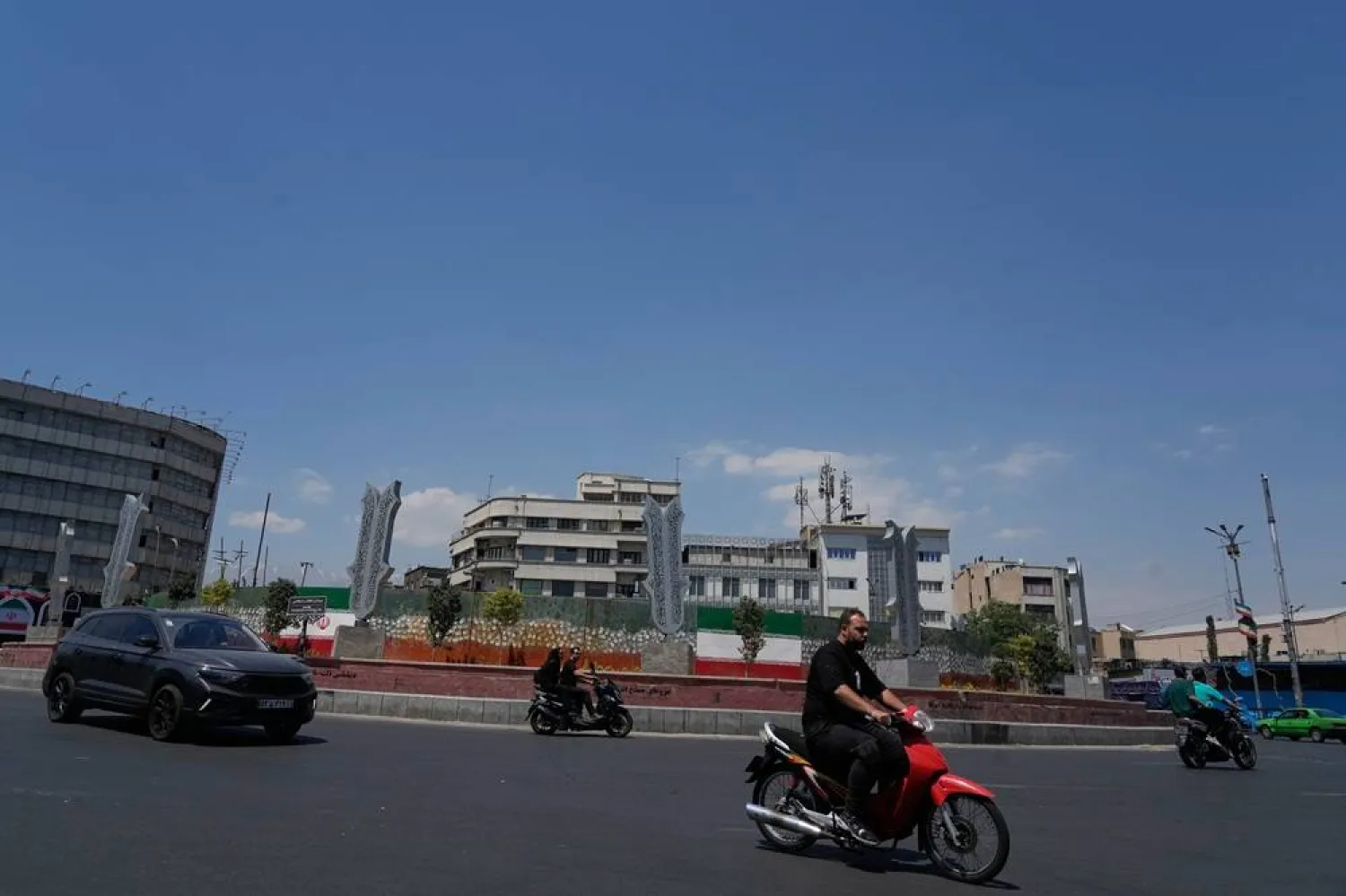
 Vehicles drive at a square in Tehran, Iran, Monday, June 8, 2026. (AP)
Vehicles drive at a square in Tehran, Iran, Monday, June 8, 2026. (AP)
TT

Drone Boat Rescued Two US Aviators After Their Army Helicopter Went Down Near Hormuz Strait

 Vehicles drive at a square in Tehran, Iran, Monday, June 8, 2026. (AP)
Vehicles drive at a square in Tehran, Iran, Monday, June 8, 2026. (AP)

A drone boat rescued the crew of a US Army attack helicopter that crashed early Tuesday near the Strait of Hormuz, the strategic waterway that Iran has effectively closed during the war, a US military official said. 

A 24-foot unmanned boat located the two aviators and brought them to shore after they spent about two hours in the water, said Capt. Tim Hawkins, a spokesman for US Central Command. 

Military officials have not said what caused the Apache helicopter to go down. A military news release on the incident said it was under investigation. 

The crash occurred with the Middle East still reeling after Iran and Israel exchanged fire the previous day in the biggest blow yet to the straining ceasefire in the Iran war. Iranian state television reported Tuesday the Israeli attacks killed at least two members of the country’s air defense units. 

Since the US and Israel began striking Iran on Feb. 28, the war has shaken the global economy, driven up energy prices around the world and made many basics, including food, more expensive. Officials have been unable to turn the April ceasefire into a deal to permanently end the conflict, particularly as Israel intensifies and expands its military campaign in Lebanon against the Iranian-backed Hezbollah group. 

US President Donald Trump acknowledged the crash while speaking to journalists at John F. Kennedy International Airport in New York after watching the NBA Finals on Monday night. 

“The pilots are fine. Yeah,” Trump said. “Nobody injured. We are going to issue a report tomorrow. But the pilots are fine.” 

The crash happened about 3:30 a.m. local time Tuesday off the coast of Oman while the helicopter was on a patrol, the US military's Central Command said. 

AH-64 Apache helicopters have been a key asset for the American military as it enforces a blockade on Iranian crude oil shipments and tankers, seeking to pressure Tehran into a deal. The helicopters have also been used by the United Arab Emirates to shoot down Iranian drones. 

The New York Times first reported on the crash. 

Trump insists an Iran deal is coming  

Trump also expressed renewed optimism over negotiations with Iran. 

“We have a good chance” of signing a deal in “two or three days," Trump said. But he didn’t provide any details on why there was reason for new optimism. In the two months since the US and Iran agreed to an initial ceasefire, Trump has repeatedly predicted that a deal is near. 

“We’re very close to having a very, very good, strong, powerful deal,” the president said. “If we go and bomb — which we could do very easily if we want, and we spend another two or three weeks bombing — they’ll have nothing left whatsoever. But you won’t have the strait open for months.” 

He added: “If we do the bombing, you know, a lot of people are going to be killed. Who wants to do that? I don’t.” 

Mediators, led predominantly by Pakistan, have been trying for weeks to get a deal across the line. However, both Iran and the US have taken hard-line positions. 

The US wants to see Iran give up its stockpile of highly enriched uranium, which is believed to be entombed in the aftermath of American airstrikes that happened during the 12-day war in 2025. But Iran is refusing that and demanding relief from sanctions. It also wants the release of frozen assets even before a final agreement is in place, something rejected by Trump. 

Before Trump’s comments on negotiations, Iranian parliament Speaker Mohammad Bagher Qalibaf said Monday that Trump’s remarks so far on a possible deal “contradicted the agreed-upon sections," showing that the US is "neither seeking a ceasefire nor dialogue.” 

The continued fighting between Israel and Hezbollah is still a top Iranian priority as well. Lebanon’s army chief, Gen. Rodolphe Haykal, traveled to Pakistan on Tuesday. There, he met Pakistan’s army chief, Field Marshal Asim Munir, who has been a key figure in the Iran-US talks. 

Haykal's visit comes as Lebanon's government takes an increasingly hard line on Hezbollah but remains unable to disarm the group. Hezbollah thanked Iran on Tuesday for attacking Israel “in defense of our Lebanese people,” suggesting that Lebanon's government should take this opportunity to improve relations with Tehran. 


Bill Gates Tells Lawmakers Meeting Epstein Was a ‘Grave Error in Judgment’ in Closed-Door Hearing

 Bill Gates, co-founder of Microsoft, arrives on Capitol Hill for a closed-door interview with the House Oversight Committee investigating convicted sex offender Jeffrey Epstein, in Washington, Wednesday, June 10, 2026. (AP)
Bill Gates, co-founder of Microsoft, arrives on Capitol Hill for a closed-door interview with the House Oversight Committee investigating convicted sex offender Jeffrey Epstein, in Washington, Wednesday, June 10, 2026. (AP)
TT

Bill Gates Tells Lawmakers Meeting Epstein Was a ‘Grave Error in Judgment’ in Closed-Door Hearing

 Bill Gates, co-founder of Microsoft, arrives on Capitol Hill for a closed-door interview with the House Oversight Committee investigating convicted sex offender Jeffrey Epstein, in Washington, Wednesday, June 10, 2026. (AP)
Bill Gates, co-founder of Microsoft, arrives on Capitol Hill for a closed-door interview with the House Oversight Committee investigating convicted sex offender Jeffrey Epstein, in Washington, Wednesday, June 10, 2026. (AP)

Bill Gates said Wednesday that he made a “grave error in judgment" by ever meeting with Jeffrey Epstein as the Microsoft co-founder faced questions behind closed doors from lawmakers about his relationship with the disgraced financier.

In an opening statement provided to The Associated Press, Gates said he “should never have met with Epstein in the first place,” but that he “never witnessed nor had any indication that Epstein was engaged in ongoing criminal conduct.”

The tech billionaire became the latest powerful figure linked to Epstein to testify before the House Oversight Committee. As Gates arrived at the Capitol, he noted that he was there voluntarily and said he hoped his testimony would be useful.

“I hope my testimony is helpful to the work, the important work, of the committee, to find justice for the victims,” he said.

The committee chairman, Republican US Rep. James Comer, formally requested that Gates testify after he appeared multiple times in a trove of documents released by the Justice Department as part of its Epstein probe. Before the interview on Wednesday, Comer told reporters that “no one’s accusing Bill Gates of any wrongdoing.”

“This is about the survivors" of Epstein and his confidant Ghislaine Maxwell. "This is about trying to figure out how the government failed,” Comer said.

Gates said he was introduced to Epstein through people involved in his professional and philanthropic work and was drawn in by Epstein’s claims that he could help raise billions of dollars for global health initiatives. Gates says he ended the relationship in 2014 after concluding Epstein could not deliver on those promises.

Gates added that he never went to Epstein's island or his other infamous properties.

“I have never victimized anyone. While he may have sought to foster a personal relationship, I was never interested in that and never reciprocated,” Gates said.

The remarks come as lawmakers review documents detailing Gates’ interactions with Epstein. Included in the files are calendar entries for meetings between Gates and Epstein, email correspondence between the two about philanthropic projects and photos of Gates at events that Epstein also attended.

Their relationship began in 2011, three years after Epstein pleaded guilty in Florida to soliciting prostitution from a minor, and continued until at least late 2014, according to the documents.

Gates, who chairs the Gates Foundation, has not been accused of wrongdoing in connection with Epstein and has repeatedly denied any knowledge of Epstein’s abuse of girls. He has said the two met only to discuss philanthropy and previously described the relationship as “a huge mistake.”

Both Gates and his ex-wife, Melinda French Gates, have said his association with Epstein created tension in their marriage.

The foundation acknowledged in February that a small number of employees had met with Epstein based on his “claims that he could mobilize significant philanthropic resources for global health.” They never created a charitable fund together, and the foundation made no payments to Epstein.

Epstein was federally indicted in July 2019 on charges of sex trafficking of minors and conspiracy to commit sex trafficking of minors. The Justice Department alleged that Epstein formed a vast network of girls, some as young as 14, for him to sexually abuse between 2002 and 2005. He died by suicide in a New York jail cell in 2019 while awaiting trial.

The files released by the Justice Department read like a who’s who of powerful men across tech, finance, politics and other industries. All have denied involvement in Epstein’s crimes, but some maintained or formed friendships with him even after his history of sexual abuse came to light.

At another closed-door deposition in February, former President Bill Clinton faced more than six hours of questioning from lawmakers about his association with Epstein more than two decades ago. Epstein visited the White House several times during Clinton’s presidency, and Clinton flew occasionally on Epstein's private jet.

The former Democratic president said he saw no signs of Epstein’s sexual abuse and stopped associating with him long before Epstein's 2008 guilty plea. Clinton has not been accused of any wrongdoing in connection with Epstein.


UN Chief Warns of Risk of Return to ‘Full War’ in Middle East

UN Secretary General Antonio Guterres speaks during a United Nations Security Council meeting on the Middle East, at UN Headquarters in New York, on June 10, 2026. (AFP)
TT

UN Chief Warns of Risk of Return to ‘Full War’ in Middle East

UN Secretary General Antonio Guterres speaks during a United Nations Security Council meeting on the Middle East, at UN Headquarters in New York, on June 10, 2026. (AFP)

United Nations chief Antonio Guterres warned Wednesday of the risk of return to "full war" in the Middle East after Iran and the United States traded strikes.

His intervention came after Iran and the United States once again traded fire following the downing of an American helicopter, further straining a ceasefire that took effect in April but has been marked by sporadic flare-ups of violence.

"We should not minimize the risks of a lesser fire becoming full fire, or in another word -- full war," Secretary-General Guterres said at a meeting of the UN Security Council devoted to the situation in the Middle East.

The UN rights chief echoed Guterres, saying he was "horrified by the fact that we see escalation upon escalation."

"We have, I mean, we're always very relieved when ceasefires are announced, but ceasefires need to be respected in full. International law needs to be respected in full," said the UN High Commissioner for Human Rights Volker Turk in Geneva.

The war, which began with US-Israeli strikes on Iran, threw the region into chaos and rattled global markets before the shaky truce began.

Iran said it attacked Jordan and Bahrain on Wednesday after US forces carried out strikes on the country in retaliation for the downing of a helicopter.


Pentagon’s Hegseth Warns Cuba That Arms Procurement Could Invite Confrontation

US Defense Secretary Pete Hegseth delivers a speech at the US cemetery to commemorate the 82nd anniversary of the D-Day landings, in Colleville-sur-Mer, Normandy, France, Saturday, June 6, 2026. (AP)
TT

Pentagon’s Hegseth Warns Cuba That Arms Procurement Could Invite Confrontation

US Defense Secretary Pete Hegseth delivers a speech at the US cemetery to commemorate the 82nd anniversary of the D-Day landings, in Colleville-sur-Mer, Normandy, France, Saturday, June 6, 2026. (AP)

US Defense Secretary Pete Hegseth warned the government of Cuba on Wednesday against seeking weapons that could strike the US homeland or the US naval base at ‌Guantanamo Bay, ‌saying it would invite ‌a ⁠confrontation Havana would ⁠not endure.

Hegseth, speaking to US troops during a visit to the US base, said still he held out hope ⁠for a positive ‌relationship with ‌Cuba.

“It would be unwise of ‌the government of Cuba ‌to try to procure or get access to the types of weapons that ‌could reach this base or the American homeland,” Hegseth ⁠said, ⁠without offering specifics on weaponry.

“They would be inviting the kind of confrontation not only do they not want but they could not stand. No country on Earth can match the capabilities of the United States of America.”
