


Israeli Firm BlackCore Suspected of Meddling in New York and Scotland Votes, France Says

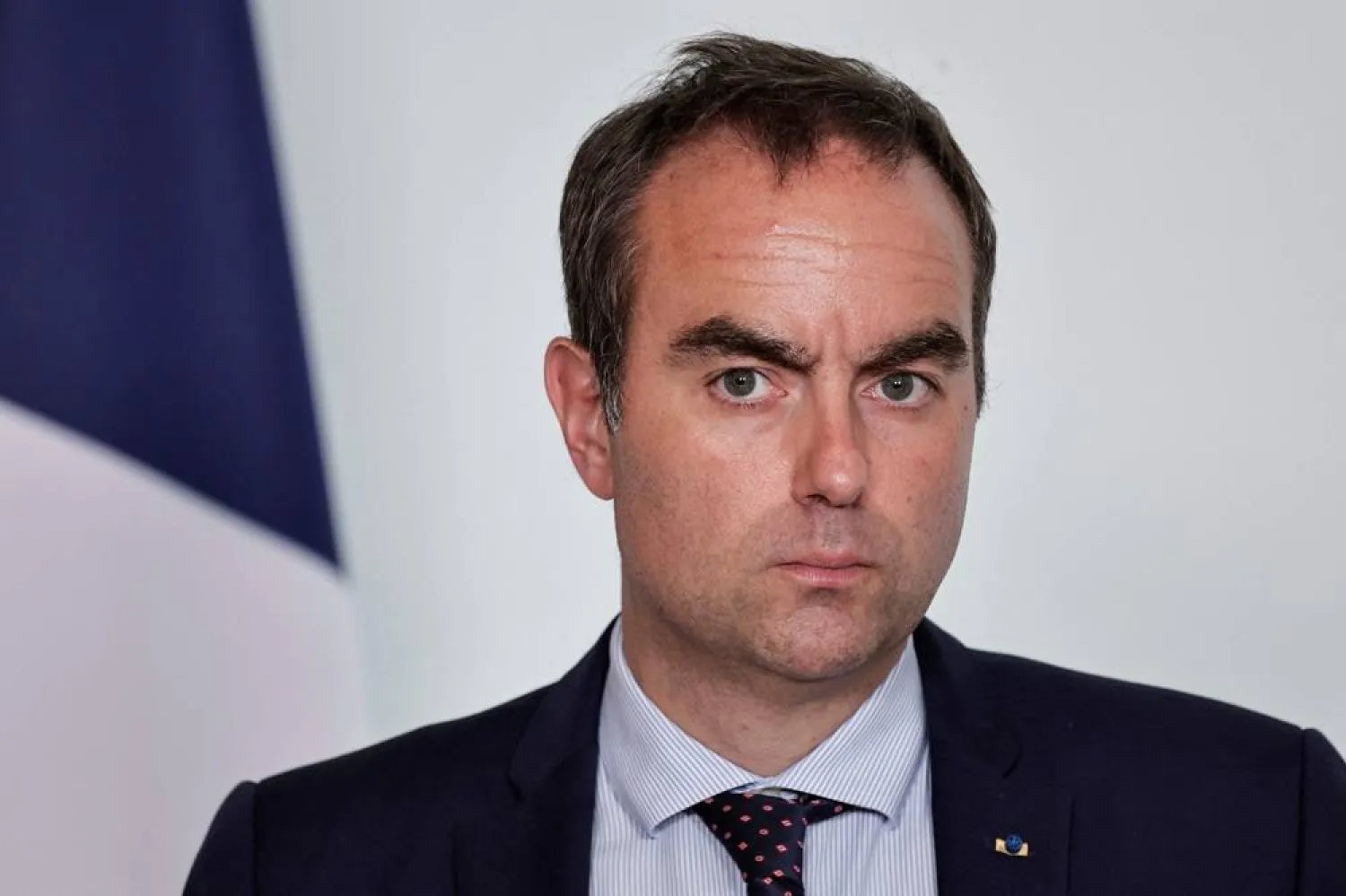
France's Prime Minister Sebastien Lecornu looks on during a press conference following a meeting with several political parties and security institutions representatives on safeguarding democratic debates against foreign interference after Paris prosecutors opened in May a probe to investigate whether an Israeli company interfered in local French elections, at the Matignon Hotel in Paris on June 11, 2026. (AFP)
TT

Israeli Firm BlackCore Suspected of Meddling in New York and Scotland Votes, France Says

France's Prime Minister Sebastien Lecornu looks on during a press conference following a meeting with several political parties and security institutions representatives on safeguarding democratic debates against foreign interference after Paris prosecutors opened in May a probe to investigate whether an Israeli company interfered in local French elections, at the Matignon Hotel in Paris on June 11, 2026. (AFP)

Israeli firm BlackCore, suspected of interfering in France's local elections in March, is also suspected of meddling in elections in New York City and Scotland, and operating in Angola and Togo, France's disinformation detection service, Viginum, said on Thursday.

Last month, Reuters revealed that French authorities suspected BlackCore was behind an online smear campaign targeting three mayoral candidates from the hard-left, pro-Palestine France Unbowed party (LFI) in the local elections.

At a press conference on Thursday alongside French Prime Minister Sebastien Lecornu, Viginum chief Marc-Antoine Brillant said technical work had led them to BlackCore. Viginum subsequently presented a detailed report on BlackCore's alleged actions around the world.

"This modus operandi was not limited to municipal elections in France," he ‌said. "It also appears ‌to have been used to carry out foreign digital interference operations in other ‌countries or ⁠regions, such ⁠as Angola, Togo, the elections in Scotland, and the 2025 municipal election in New York."

However, Brillant said it was still unclear who had commissioned BlackCore to meddle in France.

"Our investigations did not make it possible to identify the sponsor or sponsors, if indeed they exist, behind this foreign digital interference," he said.

Lecornu said the French government had asked Israel for explanations of BlackCore's actions, but also for help in trying to find out who may have been behind the smear campaign.

"I do not doubt for a single instant that if a French private group, from French soil ⁠moreover, had engaged in foreign digital interference in Israel, they would have done the ‌same to its ambassador on site," Lecornu said.

Israel's embassy in Paris ‌confirmed that France had reached out, saying it was waiting to receive details from the French probe to conduct its own.

"Israel ‌has of course no intention to interfere in the French political process, be it at the national ‌or municipal level," it said in a statement.

NEW YORK AND SCOTTISH ELECTIONS ALSO TARGETED

Brillant did not explicitly mention who was targeted in last year's New York City election, which was won by Zohran Mamdani. His victory thrilled many younger Jewish progressives but spooked more traditional pro-Israel New Yorkers with his outspoken support for the Palestinian cause.

Mamdani's team did not immediately respond to ‌a request for comment. Neither did New York City and New York state officials.

The New York Police Department and the US cyber defense agency CISA did ⁠not immediately return emails seeking ⁠comment. The FBI declined comment.

In a subsequent report, Viginum said it had detected BlackCore-linked accounts targeting John Swinney, the first minister of Scotland.

Swinney has described the situation in Gaza as a "man-made humanitarian catastrophe", saying a genocide may be unfolding, citing civilian casualties, widespread destruction and statements by Israeli officials.

"These reports of bad actors attempting to interfere in the Scottish Parliament elections are deeply concerning," Swinney said in an email.

He called on the British government, "which has responsibility for national security", to make "dealing with hostile state online interference a far higher priority."

An email seeking comment from Scottish election officials was not immediately returned.

The governments of Angola and Togo also did not immediately respond to requests for comment.

Before scrubbing its online presence following enquiries from Reuters, BlackCore described itself as "an elite influence, cyber, and technology company built for the modern sera of information warfare."

It said it provided governments and political campaigns with "cutting-edge strategies, advanced tools, and robust security to shape narratives."

It has not responded to repeated requests for comment.


Report: Pakistan’s Munir Spoke to Trump Ahead of Tehran Visit

Pakistan's army chief Asim Munir. (Reuters file)
TT

Report: Pakistan’s Munir Spoke to Trump Ahead of Tehran Visit

Pakistan's army chief Asim Munir. (Reuters file)

Pakistan's army chief Asim Munir spoke with US President Donald Trump last week, according to three Pakistani sources, days before Munir was expected to hold talks in the Iranian capital Tehran on Monday.

The call, which has not been previously reported, came as the US threatened to roll out major economic sanctions targeting Iran and its trade partners.

The White House Office of the Press Secretary did not immediately respond to a request for comment. It was unclear what Munir and Trump ‌discussed.

Pakistan's military ‌confirmed the visit on Monday, saying ‌it was "part ⁠of Pakistan’s efforts ⁠to promote regional peace and stability." Iranian officials had confirmed the visit on Sunday, saying it was focused on security and peace.

Trump last week warned of economic consequences against any country that provided "any type of lifeline to Iran" as he seeks to isolate the country. Iran in turn vowed ⁠to shut down all oil exports from the ‌Gulf.

Pakistan, which has played ‌a key mediating role between the US and Iran this year, has ‌remained a trading partner of Iran throughout the recent ‌fighting.

Munir was expected to meet with people close to Iran's Supreme Leader Mojtaba Khamenei on Monday, one Pakistani source said.

Pakistan's earlier mediation efforts between the US and Iran resulted in an interim peace agreement signed in June. But the Islamabad Memorandum quickly faltered, amid new fighting between Iran and the US that has threatened to spiral into a wider regional conflict in recent weeks.

"There is a trust deficit on both sides," a third Pakistani source said about the US and Iran, adding that Munir's aim was to mitigate the lack of mutual trust on Monday.


Iran Says France's Move to Expel Two Iranian Diplomats 'Illegal'

Iranian Foreign Ministry spokesperson Esmaeil Baqaei (Archive photo – MEHR)
TT

Iran Says France's Move to Expel Two Iranian Diplomats 'Illegal'

Iranian Foreign Ministry spokesperson Esmaeil Baqaei (Archive photo – MEHR)

Iran's foreign ministry said on Monday that France's decision to expel two Iranian diplomats in response to Tehran's ban on two French diplomats was "illegal".

"The action that France took is an illegal action in response to Iran's legal action, and is in no way helpful to bilateral relations," ministry spokesman Esmaeil Baqaei said at a weekly press conference.

Last week, Baqaei said two French diplomats who were briefly arrested in Iran in July over "interference" in Iran's internal affairs "would not be permitted to return".

French Foreign Minister Jean-Noel Barrot responded by saying that two Iranian diplomats in France would be expelled "in the coming days".

Barrot said the French move was a consequence of "intolerable" treatment of the French diplomats, who were briefly detained last month in Tehran.

He said the pair had been targeted by Iranian officials "in flagrant violation of diplomatic immunity".

They had also suffered "an extremely serious act of intimidation" at the hands of Iran's security service, he added.

Baqaei had previously said Paris should apologize for the actions of the French diplomats, which he said had violated the Vienna Convention.


Iran’s Currency Hits New Record Low as US Prepares to Announce More Sanctions

People walk in the Grand Bazaar in Tehran, Iran, August 23, 2026. Majid Asgaripour/WANA (West Asia News Agency) via Reuters
TT

Iran’s Currency Hits New Record Low as US Prepares to Announce More Sanctions

People walk in the Grand Bazaar in Tehran, Iran, August 23, 2026. Majid Asgaripour/WANA (West Asia News Agency) via Reuters

Iran’s currency hit a new record low Monday as Washington prepared to announce new sanctions it said would be an “economic D-Day” and would add further pressure on an economy already battered by previous sanctions and a US naval blockade.

The rial dropped to 2.02 million to the US dollar as trading opened on informal currency markets. Iran’s official Central Bank rate stood at around 1.5 million rial to the dollar, but the informal rate is what most Iranians pay.

The currency had already been under pressure before the US and Israel attacked Iran on Feb. 28, with double-digit inflation and negative growth, but has been hitting new record lows as nearly six months of war have taken an even greater toll.

Still, US President Donald Trump has been unable to win concessions from Iran, which continues to keep a firm grip on shipping through the Strait of Hormuz, the key waterway through which a fifth of the world’s traded oil transited freely before the war began.

Iranian attacks and threats have severely hampered that traffic during the war.
