


US, Iran Have Agreed to Wording of a Deal to End Their War, Pakistan PM Says

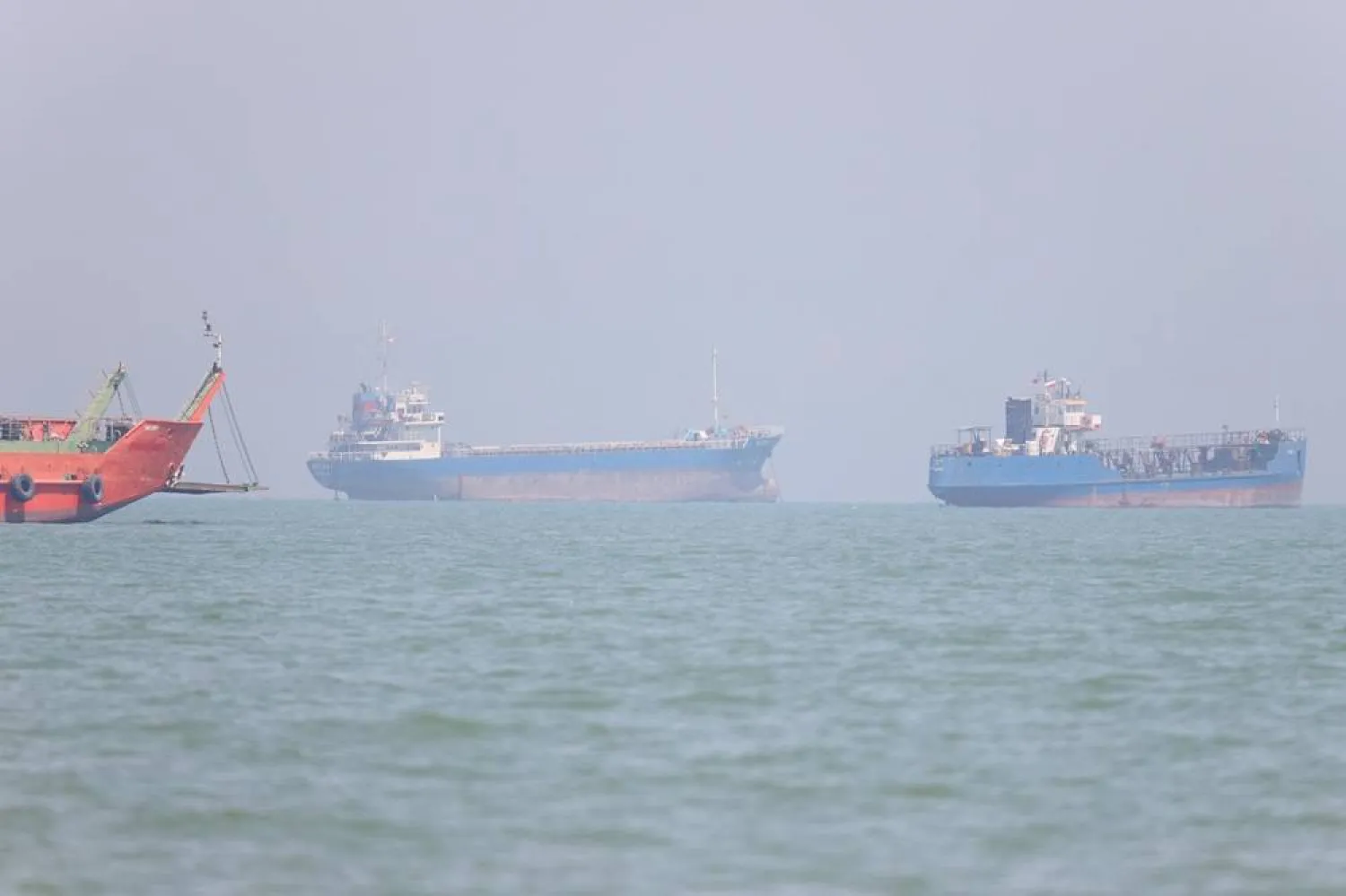
Vessels in the Strait of Hormuz near the beach of Bandar Abbas, Iran, June 11, 2026. Amirhosein Khorgooi/ISNA/WANA (West Asia News Agency) via Reuters
TT

US, Iran Have Agreed to Wording of a Deal to End Their War, Pakistan PM Says

Vessels in the Strait of Hormuz near the beach of Bandar Abbas, Iran, June 11, 2026. Amirhosein Khorgooi/ISNA/WANA (West Asia News Agency) via Reuters

Pakistan’s prime minister said Friday the United States and Iran have agreed to wording of an agreement aimed at ending their war in the Middle East and that mediators were working with both sides to finalize a deal.

Prime Minister Shehbaz Sharif said the US and Iran have reached a “final, agreed upon text.” He said Pakistan, which has taken the lead in mediation efforts, was working with the warring countries on next steps.

“Peace has never been this close as it is now,” Sharif said in a post on X.

The apparent breakthrough in negotiations comes after Iran exchanged fire with the US and Israel over three days this week, threatening to return the Middle East to full-scale war.

Iranian Foreign Minister Abbas Araghchi said Friday an agreement “has never been closer” in post on X. US President Donald Trump, who has said multiple times in recent weeks that the countries were on the cusp of a deal, shared Araghchi's post on his own social media.

The war launched by the US and Israel on Feb. 28 has rattled the Middle East and virtually shut down oil and natural gas shipments from the Persian Gulf. A fragile ceasefire has been in place since April 7.

Iranian official says nuclear details will follow an agreement to end the war Araghchi told Iranian state TV on Friday that both sides were working toward signing an initial agreement declaring an end to the war. He said terms dealing with Iran’s nuclear program would be finalized in the following 60 days as they negotiate a final deal.

He said the initial agreement would end the war “on all fronts, including Lebanon.” Israel has been fighting the Iranian-allied Hezbollah in Lebanon since early March. Israel is not a party to the negotiations between the US and Iran, and its leaders have said they don't plan to withdraw from Lebanon.

A senior US administration official, who briefed reporters on condition of anonymity under ground rules set by the White House, said Friday that the emerging agreement would reopen the Strait of Hormuz and begin the process of destroying or removing Tehran’s highly enriched uranium.

The official said the 60-day period after both sides sign the deal would be used to work out technical details for removing Iran’s enriched uranium. The official did not detail who the US envisions taking charge of removing the uranium, which is believed to entombed under three nuclear sites that were battered by US strikes last year.

The official said a deal was 80% to 85% done and that the US side believes “most of the people who have authority” in the Iranian government want to sign onto the deal “but not everybody.”

Three regional officials said the emerging deal is also expected to include the phased lifting of sanctions on Iran and the release of frozen Iranian assets. The officials spoke on condition of anonymity because of the sensitivity of the negotiations.

Underscoring the fragility of the negotiations, Trump on Friday lashed out at Iranian officials on social media and said: “They better get their act together, and FAST!” That was before he shared Araghchi's post declaring a deal was close.

Officials say a deal could be signed in the coming days

Iran's nuclear program has been a key point of division. The US and Israel fear it could lead to an atomic weapon — a main reason their leaders cited for going to war. Tehran has insisted its nuclear efforts are for peaceful purposes.

Also critical is Iran’s effective closure of the Strait of Hormuz, a vital shipping lane for oil and natural gas. Disruption of transit through the strait has crimped global energy supplies, driven up fuel prices and made food and other basics more expensive well beyond the region.

The US has responded since mid-April with a naval blockade of Iranian ports to choke off Iran’s own oil exports.

The regional officials said they expect a signing ceremony for the agreement in the coming days after officials in Washington and Tehran approve it.

Trump on Thursday claimed significant progress in the negotiations, just hours after he threatened to escalate attacks and seize Iran’s oil industry.

Esmail Baghaei, a spokesperson for Iran’s Foreign Ministry, said on state television that mediators were active and the text of a deal was “mostly finalized.”

There was no immediate comment Friday from Pakistan’s Foreign Ministry, which has been leading efforts to mediate a deal between the US and Iran. Foreign Ministry spokesperson Tahir Andrabi had said Thursday that Pakistan remained involved in negotiations.

Israel expects Trump to advocate for its interests

Israeli Prime Minister Benjamin Netanyahu has said Israel is not a party to the deal being negotiated. He said in a statement Friday that he and Trump were in “full agreement” that Iran must not have nuclear weapons.

Israeli Defense Minister Israel Katz said in a separate statement that Israel also expects Trump to uphold key Israeli interests, including weakening Iran's missile program and proxy network.

Katz warned that Israel could still act independently toward Iran and that the country would not pull out of the zones it is occupying in Lebanon, Syria and Gaza, nor would it withdraw from the northern refugee camps of the Israeli-occupied West Bank.

The deal was largely being brokered by Pakistan, led by its army chief Field Marshal Asim Munir, the regional officials said, with backing from Saudi Arabia, Türkiye, Egypt, and Qatar.



Ukraine Backers to Vow Major Support at NATO Summit

A rescue worker stands in a residential building damaged following a Russian air attack on the Ukrainian capital of Kyiv on July 3, 2026, amid the Russian invasion in Ukraine. (AFP)
TT

Ukraine Backers to Vow Major Support at NATO Summit

A rescue worker stands in a residential building damaged following a Russian air attack on the Ukrainian capital of Kyiv on July 3, 2026, amid the Russian invasion in Ukraine. (AFP)

NATO's European members and Canada will pledge to give Ukraine 70 billion euros ($80 billion) in military aid both this year and next at the alliance's summit in Ankara next week, diplomats said Friday.

The vow -- to be contained in a final summit declaration -- includes 30 billion euros each year from an EU loan and funds already committed by individual countries, diplomats said.

The largely symbolic move is aimed at showing US President Donald Trump that allies have fully taken over the financing of Ukraine's fight against Russia as he has stopped Washington's support.

And it is meant to demonstrate to Ukraine's President Volodymyr Zelensky -- who will attend the summit -- that backing remains steadfast as his country appears to be turning the tide in the war.

Diplomats say that the financing from the European Union loan and the pledges they have made already mean they are on course to reach the 70 billion euros in each year.

Germany -- now the largest backer of Ukraine -- had pushed to have the commitment put in writing as it seeks to drive other European countries to do more.

Officials said that there was some pushback from Italy over putting the pledge in black and white, but that it was eventually approved Friday by ambassadors at NATO.

Zelensky is to attend a dinner of NATO leaders on Tuesday but will not be part of the main summit the day after as the alliance keeps him on the sidelines.

Officials do not want to make Ukraine too prominent an issue for fear of upsetting Trump as his efforts to end the war have hit a wall.

But the US leader appeared to signal he could be warming to Ukraine at a G7 meeting last month and other leaders may seek to build on any perceived momentum.

- Iran statement -

The declaration -- much like the summit itself -- has been kept short to minimize the chances of a bust-up with Trump.

The NATO gathering in Türkiye comes after the US leader lashed out at European countries over their response to his war on Iran.

Diplomats said the declaration will state that Iran should never have a nuclear weapon and call on Tehran to "respect freedom of navigation" in the Strait of Hormuz.

A number of European countries have moved naval assets close to the strait to help keep it open once conditions allow.

But there will be no mention of a potential European or NATO mission in the statement as the situation remains volatile despite a fragile ceasefire deal.

Allies will be hoping to use the summit to convince Trump that they are making good on a pledge made last year to boost defense-related spending to five percent of GDP by 2035.

Diplomats said the declaration will call for a "stronger Europe in a stronger NATO" as Washington presses its allies to take responsibility for their own defenses.

Trump signaled on Thursday that he was still upset at the pace of Europe's spending -- saying it was "ridiculous" for the United States to continue its "one sided" relationship to NATO.


Germany Held Urgent Talks with Chinese Envoy over Report of China Training Russian Soldiers

The German national flag flies in Berlin, Germany, April 5, 2022. REUTERS/Lisi Niesner
TT

Germany Held Urgent Talks with Chinese Envoy over Report of China Training Russian Soldiers

The German national flag flies in Berlin, Germany, April 5, 2022. REUTERS/Lisi Niesner

Germany requested urgent talks with the Chinese ambassador over reports that China is training Russian soldiers, a foreign ministry spokesperson said on Friday, confirming a report by the Spiegel media outlet.

It comes two days after Reuters reported that China covertly trained Russian forces last year with the personal approval of Russian President Vladimir Putin's defence minister.

The Chinese Embassy could not be reached for comment on Friday but previously called the allegations unfounded.

"Anything that enables Russia to continue its war of aggression against Ukraine also threatens our security," a German foreign ministry source said. "Consequently, China’s decisive and growing support for Russia’s brutal war of aggression directly impacts our security."


Iran’s Slain Leader Khamenei Laid in State in Tehran for Week of Mass Funeral Events

A woman walks at the Imam Khomeini Grand Mosalla on the day International delegates participate in a farewell ceremony for Iran's late Supreme Leader Ali Khamenei, who was killed on February 28 during Israeli and US airstrikes on Iran, in Tehran, Iran July 3, 2026. (Reuters)
TT

Iran’s Slain Leader Khamenei Laid in State in Tehran for Week of Mass Funeral Events

A woman walks at the Imam Khomeini Grand Mosalla on the day International delegates participate in a farewell ceremony for Iran's late Supreme Leader Ali Khamenei, who was killed on February 28 during Israeli and US airstrikes on Iran, in Tehran, Iran July 3, 2026. (Reuters)

The body of Iran's slain Supreme Leader Ali Khamenei was lying in state in a vast hall in Tehran on Friday as clerics, officials, foreign dignitaries and other mourners paid their respects after his 37-year rule.

Iran is staging a week of mass funeral processions for Khamenei — killed in February by US and Israeli airstrikes at the start of a four-month war — in a show of public devotion to the country's theocratic state and revolutionary fire.

Khamenei's body was expected to be taken to Qom, Najaf and Karbala, the great Shiite centers of Iran and Iraq, before being laid to rest on Thursday in Mashhad, home to the country's holiest shrine.

His coffin was unveiled late on Thursday to a throng of sobbing supporters, swaying and beating their heads in time to a sung lament as flowers were thrown from the bier into the crowd. On Friday the coffin — and those of family members killed with him — was laid in state in the great prayer hall built to honor his predecessor, Khomeini.

The funeral comes at a critical moment for Iran, where the clerical rulers backed by the Iranian Revolutionary Guard Corps are riding high from surviving what they saw as ‌an existential war against their ‌greatest and most powerful foes.

But nearly five decades after the 1979 revolution, and for all the official proclamations of ‌national ⁠unity in the ⁠run-up to Khamenei's funeral, the country has rarely been so internally fractured.

Support for the clerical leadership is paper thin, analysts say, and the new Supreme Leader, Khamenei's son Mojtaba Khamenei, has not been seen in public since being wounded in the strike that killed his father.

Years of crippling sanctions have paralyzed the economy as accelerating bouts of mass nationwide protests have been put down by security forces with increasing force, culminating in the killing of thousands of demonstrators in January.

Those deep problems have been brushed aside this week, with the authorities mounting a display of state power and mass support, mobilizing what they hope will be millions of mourners to take part in the funeral.

Tehran streets were tightly controlled, with military and police vehicles lining the major roads and police and members of the black-shirted volunteer Basij paramilitary force patrolling on motorbikes. Iran warned the United States and Israel against any attacks during ⁠the funeral.

After the coffins arrived on Friday, borne high across the upraised hands of a waiting crowd, they were laid ‌in the prayer hall on a white, stepped, dais before a high, intricately tiled, arched recess, flanked by ‌national and black mourning flags.

Delegations, including from Lebanon, Iraq and Yemen, home to the strongest proxies in Iran's network of regional power, followed each other into ‌the hall to stand before the coffins.

Representatives from Russia and China were expected to attend. Iraqi President Abdul Latif Rashid, Armenian Prime Minister Nikol Pashinyan and Pakistani Interior Minister Syed Mohsin Naqvi arrived in Tehran for the funeral.

Families of Hezbollah leader Hassan Nasrallah and senior commander Imad Mughniyeh, close Lebanese allies of Iran killed in Israeli strikes, attended the ceremony.

In central Tehran overnight, a crowd stood sobbing and chanting, led by a Basij member, as others handed out posters of the late Khamenei.

"God willing, only by avenging his blood, demanding justice for it, and ensuring that our leader's blood is not left unavenged, can this sorrow of the people be somewhat alleviated," said Mobina Razaaghi, an 18-year-old student from Isfahan, attending the funeral events with classmates.

Killed alongside Khamenei, and displayed in coffins next to his, were his daughter, son-in-law and baby granddaughter, as well as the wife of his son Mojtaba.

Burials are meant to be conducted within a day of death in Islam, but because of the risks of holding a big funeral during the war it was postponed until after last month's interim truce deal was agreed.

Hotels are offering 50% discounts, schools, mosques and sports halls have been prepared to house mourners, and bus and rail networks are being diverted to serve the main events.

After what authorities are billing as a massive procession in central Tehran on Monday, the remains will be taken to the seminary city of Qom for ceremonies on Tuesday.

Ceremonies will then be held in Iraq's shrine cities of Najaf and Karbala on Wednesday with prominent attendees from Iran's regional network of proxies.

He will be buried on Thursday, after another procession, in Mashhad.