


Documents: US Military to Build War-ready Stockpile in Australia

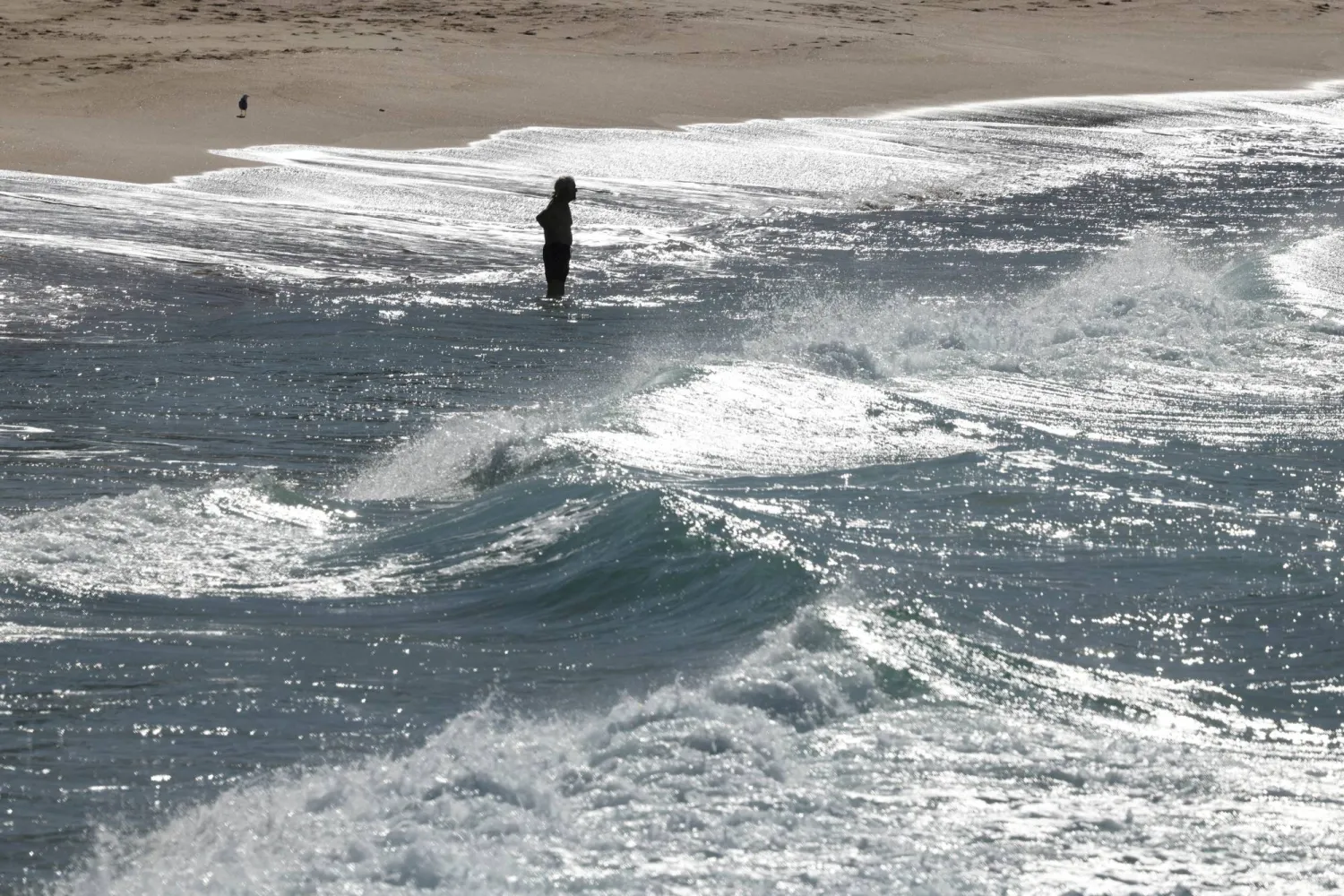
A swimmer stands at the water’s edge at Coogee Beach in the days following a shark attack on Saturday, in Sydney, Australia, June 16, 2026. REUTERS/Hollie Adams.
TT

Documents: US Military to Build War-ready Stockpile in Australia

A swimmer stands at the water’s edge at Coogee Beach in the days following a shark attack on Saturday, in Sydney, Australia, June 16, 2026. REUTERS/Hollie Adams.

The US military is planning a permanent war-ready weapons stockpile for its Marine Corps on Australia's southeast coast beyond the range of most Chinese missiles, tender documents show and officials confirmed to AFP.

The development of the stockpile, a first for the Marine Corps in Australia, comes as the United States is keen to leverage the continent's strategic location in the South Pacific to counter China's rapid military build-up, analysts said.

The US Marines Corps began global prepositioning of military supplies during the Cold War -- using floating stores on ships and caves in Norway where weapons, ammunition and vehicles to sustain thousands of troops are kept.

The first land stockpile in the Asia-Pacific is expected to open this year in the Philippines, close to potential flashpoints in the South China Sea.

Documents published by the US Navy this month show advanced planning for an even larger Australian stockpile, with $30 million allocated to build warehouses and offices in southeastern Victoria state for "critical forward provisioning.”

The Australian stockpile, expected to reach full capacity by 2028, will be kept in Melbourne before being moved to US warehouses to be constructed next year at an Australian military base at Bandiana in rural Victoria, tender documents show.

Australia does not permit foreign military bases on its soil, a sensitive issue in a country that has a security alliance with the United States and is hosting an increasing variety of US forces on rotation at Australian defense bases.

The US Navy is engaging a global defense contractor to employ around 110 engineers, mechanics, material and safety specialists to manage the Australian stockpile, which includes "crew-served weapons", the documents show.

"Marine Corps activities in Australia support integrated global sustainment by maintaining ready-for-issue equipment and supplies for operations and exercises across the Indo-Pacific," a US Marine Corps Forces Pacific spokesperson told AFP.

The spokesperson declined to comment on contract details or force planning assumptions but said Marines equipment is kept at "high readiness.”

Contracting arrangements and the operation of the facility would be made in close coordination with Australia's Department of Defense.

"These activities improve responsiveness, strengthen interoperability with allies and partners, and support a range of missions across the Indo-Pacific," the spokesperson said, using an alternative description for the Asia-Pacific region.

US Army trucks were left at the Bandiana base in 2023 after an Australian war game involving US troops held every two years. The Marines stockpile at Bandiana, approved last July, is separate.

"Marine Corps and Army equipment programs are designed to support their respective service requirements and are managed under separate authorities and processes," the Marines spokesperson said.

Australia's Department of Defense did not respond immediately to a request for comment.

- Beyond China's missiles? -

The Pentagon has asked Congress for $500 million next year to improve prepositioning of equipment and fuel across the Asia-Pacific to deter China.

Around 2,000 US Marines conduct exercises for six months of the year on the opposite coast of Australia in the northern city of Darwin.

A report from the Lowy Institute think tank this week warned that China has the capability to strike northern Australia with ballistic missiles deployed from its South China Sea outposts.

Its director of international security, Sam Roggeveen, told AFP that was likely a "relevant consideration" in placing a stockpile in Australia's southeast.

"Once these facilities are operational, they would be obvious targets for China," he said.

The growth of US forces and equipment in Australia is "a major change to Australian policy that ties Australia much more closely to America's strategic objectives in the region", Roggeveen said.

Australian National University professor of international security John Blaxland said the country's location is being seen with "a growing sense of significance" given concerns over the vulnerability of the US military base on Guam.

"With competition for influence in the Indo-Pacific having reached the highest level in over a generation, it is not surprising that the US Marines might look to Australia to enable such storage," he said.

"Barring a massive increase in Australian defense expenditure, for which there is little political appetite, facilitating greater US investment in Australian real estate is widely considered to be the most prudent approach to take."



Türkiye Issues 'Genocide' Warrant for Israel's Netanyahu

FILED - 16 March 2023, Berlin: FILE PHOTO - Israeli Prime Minister Benjamin Netanyahu speaks during a press conference. Photo: Kay Nietfeld/dpa
TT

Türkiye Issues 'Genocide' Warrant for Israel's Netanyahu

FILED - 16 March 2023, Berlin: FILE PHOTO - Israeli Prime Minister Benjamin Netanyahu speaks during a press conference. Photo: Kay Nietfeld/dpa

Türkiye has sought an international arrest warrant for Israel's Prime Minister Benjamin Netanyahu accusing him of "genocide" linked to Israel's interception of an aid flotilla for Gaza, the justice minister announced Friday.

Türkiye has become a virulent critic of Israel's war in Gaza, sparked by the Hamas October 7, 2023 attacks on Israel. President Recep Tayyip Erdogan has frequently accused Netanyahu of "genocide".

Israel's interception of the flotilla carrying some 430 activists in May sparked an international outcry. France, Italy and Australia have also launched judicial proceedings.

Türkiye's Justice Minister Akin Gurlek said on X that his ministry had asked the interior ministry to issue interpol red notice alerts for Netanyahu and another Israeli, named as Afek Moskovitch.

"As part of the judicial proceedings concerning the attack in international waters on the Flotilla activists (...) and in accordance with the arrest warrants issued on July 14, 2026, against Benjamin Netanyahu and Afek Moskovitch for 'genocide,' the ministry of justice has requested that the ministry of the interior issue red notices for their international arrest," the minister stated.

Netanyahu and Moskovitch are being prosecuted for "crimes against humanity, genocide, aggravated deprivation of liberty, 'intentional assault and battery,' torture, destruction of property, aggravated looting, and hijacking of transport vehicles," the ministry said.

About 50 vessels were in the Global Sumud Flotilla that left Türkiye in May heading for the besieged Palestinian territory. The activists were detained in the Mediterranean by the Israeli military and then taken to an Israeli prison before being expelled.

Israel's far right National Security Minister Itamar Ben Gvir caused his own outcry by releasing a video showing himself taunting some of flotilla activists who were on their knees with their hands tied behind their backs.


Myanmar Military Strike Kills 14 People at a Buddhist Monastery

Police stand guard as they wait for protests against coup in Yangon, Myanmar February 4, 2021. REUTERS/Stringer
TT

Myanmar Military Strike Kills 14 People at a Buddhist Monastery

Police stand guard as they wait for protests against coup in Yangon, Myanmar February 4, 2021. REUTERS/Stringer

An airstrike Friday by Myanmar’s military on a Buddhist monastery in Myanmar’s central Sagaing region killed 14 people who were taking part in a week-long meditation retreat, an opposition group and a resident said.

The attack is the latest in a series of frequent and deadly aerial strikes targeting armed pro-democracy forces and ethnic armed groups in the country. The strikes often cause civilian casualties.

The attack occurred Friday at 9 a.m. in Swel Le Oh village in Myaung township, about 75 kilometers (45 miles) west of Mandalay, the country’s second-largest city, according to Nway Oo, a spokesperson for the Civil Defence and Security Organization of Myaung Township, or CDSOM.

Nway Oo said 14 people, including three women, were killed and 20 others were wounded when a jet fighter dropped a bomb in the compound of the village’s monastery.

A villager who spoke on condition of anonymity also confirmed the death toll to The Associated Press. The villager said the jet fighter dropped two bombs 15 minutes apart, with the second bomb damaging a house near the monastery where more than 100 people were on a week-long retreat during Buddhist Lent.

The villager, who lost a relative in the airstrike, said that people fled to a nearby community after burying bodies of the victims.

Associated Press


Iran Vows 'Devastating' Response to US Threat to Cut off its Economic Lifelines

US and Iran flags are seen in this illustration taken June 18, 2025. REUTERS/Dado Ruvic/Illustration/File Photo
TT

Iran Vows 'Devastating' Response to US Threat to Cut off its Economic Lifelines

US and Iran flags are seen in this illustration taken June 18, 2025. REUTERS/Dado Ruvic/Illustration/File Photo

Iran said on Friday that its response to any new US threats would be "devastating" after Washington pledged to impose the toughest financial penalties in history with the aim of toppling the Iranian leadership.

Washington prepared for sanctions that US Treasury chief Scott Bessent said he would detail on Monday. President Donald Trump earlier warned of economic consequences against any country that provided "any type of lifeline to Iran."

The chief of staff of Iran's Armed Forces, Major General Ali Abdollahi, said the Islamic Republic's reaction would be broad and decisive.

"With preparedness across land, sea, air, air defense and cyberspace, Iran's armed forces will respond to the enemy's new threats with crushing, punishing and devastating responses," Abdollahi was quoted as saying by Iranian media.

The US and Iran have twice announced ceasefire deals, in April and June, aiming to restore the free flow of ships through Hormuz on a path towards ending the nearly six-month-old conflict, but both quickly crumbled.

Bessent told CNBC he would "talk about exactly what we're going to do" on Iran at a press conference on Monday.

"We are going to collapse this regime. It is time for our allies and the rest of the world to make a decision," he said, describing a naval blockade reimposed on Iran in July and the "toughest sanctions in history" as a "one-two punch".

Iran has weathered near-continuous economic sanctions for nearly 50 years, since the Islamic Revolution of 1979, but its people are suffering high inflation, a weakening currency and energy shortages along with damaged infrastructure.

Some Iranians interviewed by Reuters have said more economic punishment could increase hardship, weaken the clerical establishment and prompt unrest, although there has been no sign of that since a deadly crackdown on protests in January.

Before Bessent spoke, Iran's foreign ministry said US sanctions would not "create even the slightest hesitation in Iranians’ determination to safeguard Iran’s independence, dignity and national sovereignty."