US Push to Get Iran Talks Started Hits an Early Bump Due to Intense Fighting in Lebanon

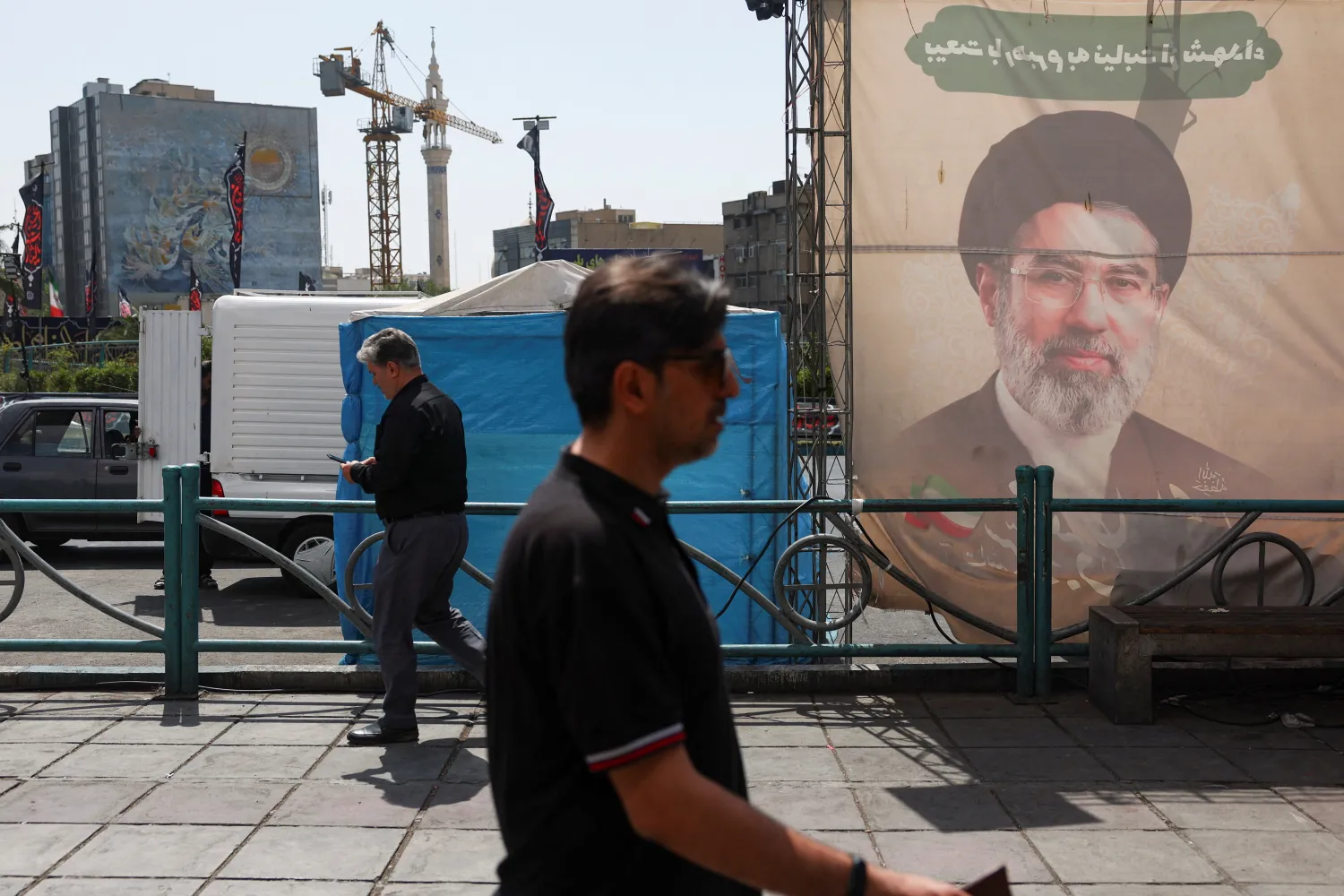
People walk past a banner with a picture of Iran's Supreme Leader, Mojtaba Khamenei, in Tehran, Iran, June 17, 2026. Majid Asgaripour/WANA (West Asia News Agency) via REUTERS
TT

US Push to Get Iran Talks Started Hits an Early Bump Due to Intense Fighting in Lebanon

People walk past a banner with a picture of Iran's Supreme Leader, Mojtaba Khamenei, in Tehran, Iran, June 17, 2026. Majid Asgaripour/WANA (West Asia News Agency) via REUTERS

The American push to quickly begin high-stakes talks with Iran hit a snag Friday, just days after the signing of an agreement that opens a two-month window for negotiations on Tehran's nuclear program and returning oil traffic through the Strait of Hormuz to prewar levels. 

Iranian officials did not travel as planned to Switzerland, insisting that Israeli strikes on Iranian-backed Hezbollah in Lebanon must stop before the talks can take place, according to three regional officials and a person familiar with the matter. They were not authorized to publicly discuss the ongoing mediation to try to get the talks rescheduled and spoke on condition of anonymity. 

The situation was fluid as Israel and Hezbollah agreed on Friday to renew their ceasefire, according to a US official and regional officials. It remains to be seen whether that could help put the US-Iran talks back on track. 

In Washington, President Donald Trump lashed out once again in the midst of the intensified fighting in Lebanon and the stalled nuclear talks. 

“We didn’t meet out of desperation, Iran did,” Trump wrote in a social media post Friday. “They are FINISHED! We’ll play out the 60 days. They get no money, not ten cents!” 

Vance was ready for Swiss talks Trump's vice president, JD Vance, had been prepared to make an overnight flight to meet with his Iranian counterparts at a mountainside resort in the tiny Swiss village of Obbürgen and begin the technical talks. 

Vance's staff and a small group of journalists had gathered at Joint Base Andrews outside Washington in anticipation of the trip. Dozens of White House officials, advance staffers and more media were already in Switzerland. 

Then the trip was called off — abruptly and for the time being. 

A White House statement said Vance, tapped by Trump to lead the negotiations, decided to postpone his travel. It made no mention of the escalating violence in Lebanon. 

“The logistics of these negotiations have never been simple or predictable,” the statement said. 

But, according to officials, the Iranians made clear to the White House that they had balked at starting the talks with Vance because of the Israeli action in Lebanon. 

Fighting in southern Lebanon intensifies  

The fighting had intensified with at least 18 killed by Israeli airstrikes, while four Israeli soldiers were killed in southern Lebanon, officials said. 

Israeli Prime Minister Benjamin Netanyahu said Thursday that Israel’s military would stay in a “security zone” of southern Lebanon as long as “Israel’s security needs require it.” 

Israel and Hezbollah are not parties to the US-Iran agreement. 

Iran insists Israel must withdraw from the large swath of southern Lebanon it is occupying, but the wording of the interim deal does not explicitly require that and only ensures Lebanon’s “territorial integrity.” 

Hours before postponing his trip, Vance gave some indication of the state of flux when he told reporters at a White House briefing that he was uncertain if the talks were going to happen this weekend. 

“We think these technical negotiations start sometime this weekend," Vance said. "That’s still the plan. But that could change.” 

Soon after Vance spoke to reporters, Iran's supreme leader, Mojtaba Khamenei, endorsed direct negotiations with the United States. His terse statement, read by state media, appeared to signal to the Iranian leadership that it could move forward with a first round of talks. 

“It is obvious that the face-to-face negotiations that will be held in the future will not mean accepting the enemy’s opinion,” Khamenei said. 

The messaging seemed to give Khamenei, who was badly wounded in the US strike on Feb. 28 that killed his father, some maneuverability.  

Hard-liners in the Iranian government, including Khamenei’s father, long opposed direct talks with the White House, especially after Trump, during his first term, pulled out of the 2015 nuclear deal negotiated by Democratic President Barack Obama's administration. 

The meeting was initially supposed to be a signing ceremony  

Vance was initially expected to go to Switzerland to sign the agreement at a formal ceremony. Instead, Trump signed the document Wednesday during a glitzy dinner at the Palace of Versailles with French President Emmanuel Macron. Iran's president, Masoud Pezeshkian, separately signed the agreement. 

It says Iran’s stockpile of highly enriched uranium, which is believed to be buried under rubble left by US military strikes last year targeting Tehran’s key nuclear sites, must at minimum be diluted under international supervision. 

It also says Iran shall not procure or develop nuclear weapons — a commitment Tehran has made previously. Other commitments remain to be worked out. 

Iran believes it's in a strong negotiating position Iranians would be going into the talks with a measure of confidence after effectively shutting down the strait, causing global economic reverberations, said Rosemary Kelanic, director of the Middle East Program at Defense Priorities in Washington. 

She said the US is now “essentially trying to negotiate our way back to the prewar status quo." 

Neil Quilliam, an associate fellow with the Middle East and North Africa Program at Chatham House think tank, said the “buoyant” Iranian leadership feels it has the upper hand. The endorsement of the talks by the Iranian supreme leader “sends a very strong signal domestically: ’We’re now on an equal footing with the US.'” 

”‘Trump has gone from calling for regime change on Feb. 28 to this: Now they’re going to sit down with us directly and talk about these big issues,'” Quilliam said of the Iranians' thinking. “So it’s intended more for the domestic audience, and telling them: ‘We are firmly in control of this. There can be no protests, no revolution: We are a new regime and we’re staying put.’” 

Vance has to negotiate through political division  

For Vance, a likely 2028 presidential contender, how the negotiations play out could have enormous ramifications for his political fortunes. 

Vance's skepticism of foreign wars was a core part of his political identity during his political rise, which included election as a US senator. Now he finds himself the chief defender of negotiating an endgame to Trump's conflict that Democrats have largely derided as a foolish gambit.  

Some hawkish Republicans are aghast that Trump is getting behind a settlement that could put billions of dollars into Iran's coffers. 

US Sen. Roger Wicker, chairman of the Senate Armed Services Committee, said aspects of the deal are “completely out of step” with Trump's goals. 

Trump fiercely criticized Obama for the 2015 nuclear agreement, which Trump argued failed to stop Tehran from advancing toward a weapon and funneled billions of dollars to the country. The Republican president exited the US from the deal in 2018. 

Trump has pushed back against comparisons to that earlier agreement, saying he had “negotiated from strength” after a major military campaign while asserting that Obama was paying the Iranians off and not receiving acquiescence. 

Wicker, R-Miss., was particularly concerned about the $300 billion fund for the reconstruction and economic development of Iran mentioned in the 14-point agreement. Trump and Vance have said no US taxpayer money would go to such a fund and it would not come without concessions and reforms by Tehran. 


Iran FM Says No Negotiations Since ‘Shock’ of US Midterms

25 September 2026, US, Bronx: Iranian Foreign Minister Abbas Araghchi delivers a statement during a press conference at Security Council encounter at UN Headquarters in New York. (dpa)
TT

Iran FM Says No Negotiations Since ‘Shock’ of US Midterms

25 September 2026, US, Bronx: Iranian Foreign Minister Abbas Araghchi delivers a statement during a press conference at Security Council encounter at UN Headquarters in New York. (dpa)

Iranian Foreign Minister Abbas Araghchi said on Sunday that mediators striving for a peace deal between the US and Iran had not travelled at all since the "shock" of the US midterm elections.

"We now have to see how long it will take for them to digest these results, in order to determine how we are going to move forward," the top Iranian diplomat told state TV following the elections in which the Republican Party of US President Donald Trump suffered heavy losses.

Various regional powers, including Qatar and Pakistan, have been trying for months without success to bring a definitive halt to the war launched by the United States and Israel in late February.

Outright fighting has largely subsided, but Iran continues in its efforts to blockade the Strait of Hormuz, vital to global energy supplies, while the US Navy maintains its own counterblockade of Iranian ports.

"For the past few days, there has been no more travel (by mediators), and the reason for this is the shock that the election results in the United States have caused to everyone."

He said it would "take some time before the atmosphere is favorable for the resumption of mediator travel" and called for patience.

Earlier, Aragchi posted on X: "American voters have made their choice. Time for the White House to make its own."

He called on Washington to accept previously articulated Iranian demands or "choose war, and see our alert and battle-hardened warriors rain down hell".

In September, Iran proposed a seven-day plan to reopen the strait, with demands including ending the war on all fronts, unfreezing Iranian assets, lifting oil sanctions and ending its counter-blockade of Iranian ports.

It later proposed doing so in just two days, an offer Araghchi repeated in his X post on Sunday.


Trump Says He Is Highly Unlikely to Order Iran Strikes if Talks Progress

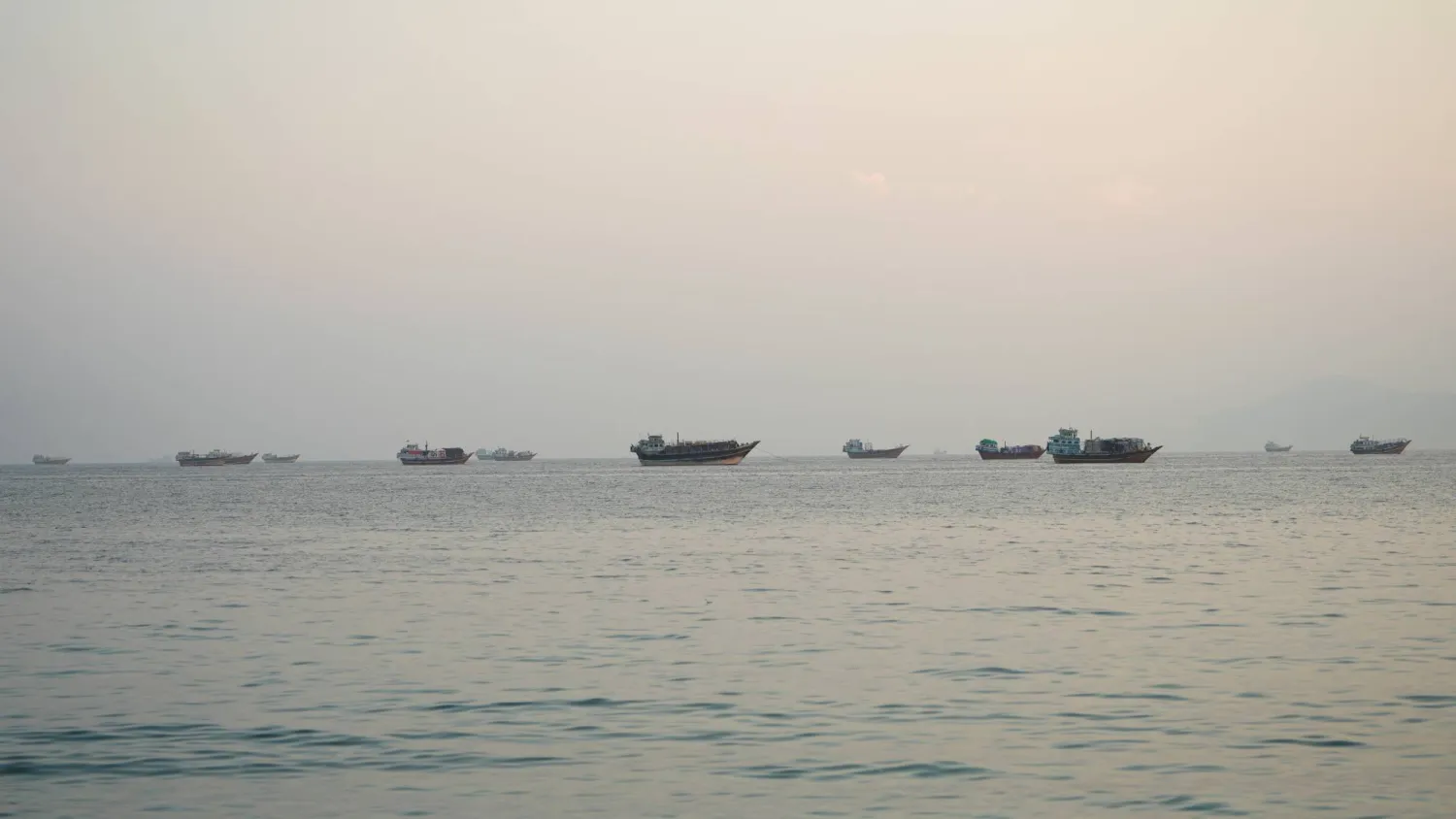
 Vessels at the Strait of Hormuz, as seen from Musandam, Oman, November 3, 2026. (Reuters)
Vessels at the Strait of Hormuz, as seen from Musandam, Oman, November 3, 2026. (Reuters)
TT

Trump Says He Is Highly Unlikely to Order Iran Strikes if Talks Progress

 Vessels at the Strait of Hormuz, as seen from Musandam, Oman, November 3, 2026. (Reuters)
Vessels at the Strait of Hormuz, as seen from Musandam, Oman, November 3, 2026. (Reuters)

US President Donald Trump on Sunday said he was highly unlikely to order fresh attacks on Iran as long as talks to end the conflict progress, even as both countries reported that shipping had been hit in or near the Strait of Hormuz. 

"It depends on whether or not they sign a very strong agreement," Trump told CNN in a phone interview. "The answer is, highly unlikely it's going to be necessary." 

CNN did not specify exactly what it had asked Trump, who also said that if strikes resume, the US has identified potential infrastructure targets, including 38 bridges "that we can knock down in literally one hour." 

Trump had hinted at renewing major attacks on Iran after last week's US midterm elections, but there has been no sign of a large-scale US military operation. Iran has said it would respond by striking US and Israeli targets. 

Iranian media suggested that explosions in southern Iran on Saturday were related to Iranian military activities ‌rather than US strikes. 

Iran's state ‌television said officials had not confirmed any missile strikes on Iranian territory following blasts heard ‌in several ⁠areas, including on ⁠Qeshm Island in the strait. 

Both the US and Iran have continued strikes on vessels in the Strait of Hormuz, however, restricting exports of energy and other commodities vital to the world economy. 

Iran's state television said the evening explosions might be related to Iranian military activity in the waterway, where Iran said two vessels had hit mines and a third had caught fire. 

The US said its air force had disabled a vessel in the Gulf of Oman beyond the strait. 

Tasnim news agency said two missiles had struck Qeshm Island, with no official information on possible damage. Neither Iran nor the US has commented on that report. Washington said on November 2 that it had struck the island in a limited defensive measure against ⁠Iranians using surface-to-air missiles against US assets. 

COMMERCIAL VESSEL, OIL TANKERS HIT 

Since the US and Israel began ‌attacks on Iran in February, Tehran has sought the upper hand by hitting vessels ‌in the Strait of Hormuz to block Gulf energy exports, while US forces began blockading movements to and from Iranian ports in April. 

The US military ‌said on Saturday evening that its air force had fired at the stern of a commercial vessel in the Gulf of Oman, ‌disabling it as it tried to get through the blockade. 

Iran's Revolutionary Guards Navy said two oil tankers had caught fire after hitting mines while attempting to pass through an "unauthorized route" in the Strait of Hormuz. A third tanker had also suffered an explosion and caught fire, the semi-official Fars news agency reported later. 

Reuters was not able to confirm any of the reported strikes. 

Monitors from the United Kingdom Maritime Trade Operations said a bulk carrier and military ‌forces were involved in an incident in the Gulf of Oman, approximately 18 nautical miles east of the United Arab Emirates' city of Khor Fakkan, with damage unknown. It was unclear if ⁠it was related to the reported US ⁠attack. 

Qatar, which has been mediating in talks to try to end the conflict that has shaken the world economy, on Saturday denied reports that the US and Iran had failed to reach a deal. 

The Qatari prime minister had affirmed that both sides were continuing to work toward an agreement, it said. 

Iran has submitted a nuclear proposal to Washington through Qatar, a senior Iranian official told Reuters on Thursday, saying the US was reviewing it but discussions would depend on Washington first meeting Tehran's seven demands. 

These include sanctions relief, access to frozen assets and war reparations, while Washington insists nuclear issues must feature in initial talks. 

On Saturday, the US military said it was launching a task force to crack down on the movement of advanced weapons and other sanctioned material to Iran via its land borders and the Caspian Sea — part of economic measures to try to pressure Tehran. 

The Revolutionary Guards dismissed the plan as "wordplay," saying it would not work because Tehran had made preparations and communicated closely with its neighbors. 


Trump Says Elections Were ‘Giant Step Back in History' for US

 US President Donald Trump speaks to members of the media at President Donald J. Trump International Airport in Palm Beach, Florida, US, November 6, 2026. (Reuters)
US President Donald Trump speaks to members of the media at President Donald J. Trump International Airport in Palm Beach, Florida, US, November 6, 2026. (Reuters)
TT

Trump Says Elections Were ‘Giant Step Back in History' for US

 US President Donald Trump speaks to members of the media at President Donald J. Trump International Airport in Palm Beach, Florida, US, November 6, 2026. (Reuters)
US President Donald Trump speaks to members of the media at President Donald J. Trump International Airport in Palm Beach, Florida, US, November 6, 2026. (Reuters)

President Donald Trump vowed Sunday to bounce back stronger from a massive midterm elections loss that he called a "giant step back in history" for the United States.

Democrats captured both chambers of Congress in last Tuesday's midterms that dealt historic losses for Trump's Republican Party in states they had dominated for decades.

"America took a giant step back in History with the results of the last Election," Trump said in a post on Truth Social, saying that the stock market that had grown during his tenure took a loss after the vote.

"But have no fear, we will be back, BIGGER AND STRONGER THAN EVER BEFORE!"

While Republican lawmakers have been licking their wounds over the setback, Trump has sounded defiant and on Friday appointed hardline advisor Stephen Miller as his new chief of staff, signaling a bare-knuckle fightback.

Democrats have pledged to hold the Trump administration to account and fight "every step of the way" against Miller, architect of Trump's tough immigration policy.