Rubio Says US Will Not Accept Iranian Tolls on Hormuz

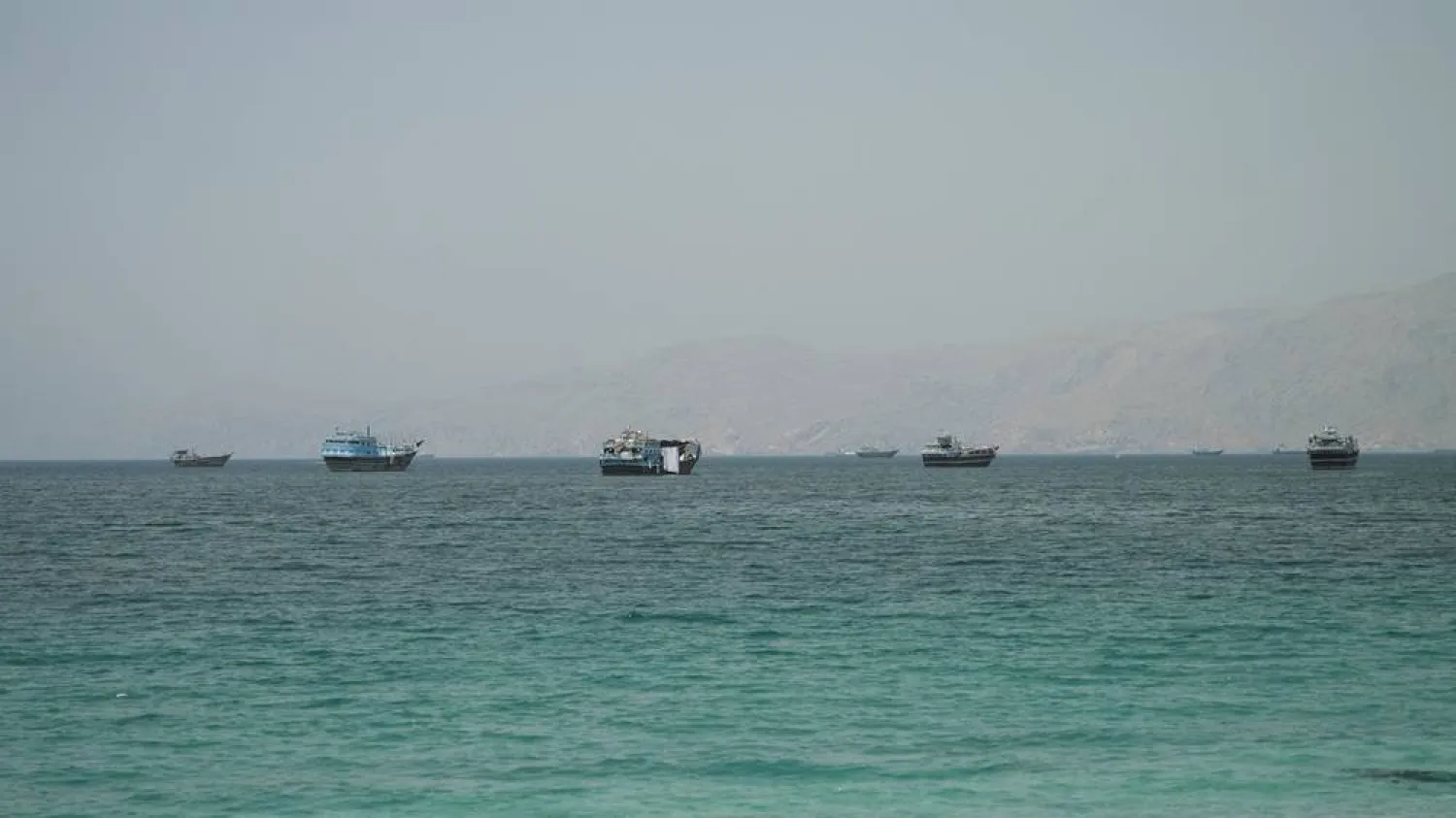
 Vessels at the Strait of Hormuz, as seen from Musandam, Oman, June 22, 2026. (Reuters)
Vessels at the Strait of Hormuz, as seen from Musandam, Oman, June 22, 2026. (Reuters)
TT

Rubio Says US Will Not Accept Iranian Tolls on Hormuz

 Vessels at the Strait of Hormuz, as seen from Musandam, Oman, June 22, 2026. (Reuters)
Vessels at the Strait of Hormuz, as seen from Musandam, Oman, June 22, 2026. (Reuters)

Washington's top diplomat insisted Tuesday that the US would not accept any attempt to impose tolls or fees on Strait of Hormuz, the key waterway where the UN said it would begin evacuating thousands of sailors stranded by the Middle East war 

The US and Iran have signed a preliminary deal to halt the war, and concluded a first round of talks in Switzerland as part of a 60-day negotiation period to settle outstanding issues like sanctions relief and the fate of Tehran's nuclear program. 

An Iranian blockade that began early in the conflict choked off maritime traffic through the Hormuz strait -- sending global oil prices surging -- but crossings have begun to rise again since the US-Iran deal was inked. 

Iran has repeatedly maintained it will retain control over the waterway, including on Tuesday, when it and Oman said in a joint statement that they would study the administration of the trade route and the costs to be charged for services provided, insisting on their sovereignty over the strait. 

But US Secretary of State Marco Rubio, kicking off a regional tour, reiterated Washington's position that such an arrangement would be unacceptable. 

"It's an international waterway. No country is allowed to charge tolls or fees on an international waterway," he said from Abu Dhabi, adding that he believed "all the countries in this region would agree". 

Tehran's top negotiator, Mohammad Bagher Ghalibaf, had earlier insisted the Strait of Hormuz "will never return" to the pre-war status quo, despite the foes agreeing to set up communication lines to keep it open. 

- Muscat meeting - 

Oman and Iran agreed on Tuesday to press on with discussions about the future administration of navigation in the Strait of Hormuz. 

In a joint statement issued after talks in Muscat, they said a joint working group involving their foreign ministries ‌would be ‌formed to continue the discussions and ‌that they ⁠would consult other ⁠littoral states and relevant parties.  

The move appears to implement a provision of the memorandum of understanding signed last week that calls for Iran to hold talks with Oman and other states on the future management of ⁠navigation and maritime services in the strait, ‌a vital waterway ‌for global oil supplies.  

The agreement was announced following a ‌visit by Speaker Ghalibaf and Foreign Minister Abbas Araqchi, who met Oman's Sultan Haitham bin Tariq and held talks with Omani Foreign Minister Badr Albusaidi.  

In the statement, Oman and ‌Iran, the two states bordering the strait, reaffirmed their commitment to ensuring ⁠safe ⁠passage through the waterway in accordance with international law while underlining sovereignty over their territorial waters.  

Since the start of the US-Israeli war against Iran in February, the strait has been largely closed to commercial shipping. The United States blockaded Iranian ports after Iran started effectively blocking the strait.  

Oman and Iran reaffirmed their commitment to the strait being a secure and open route for international navigation and to promoting maritime safety, freedom of navigation and regional stability. 

The head of the UN's International Maritime Organization, meanwhile, said it would begin evacuating more than 11,000 sailors stranded by the Hormuz blockade in cooperation with Iran, Oman and the United States, adding it had "secured the necessary safety guarantees". 

Traffic through the strait on Monday reached the highest level since the start of the war, according to two maritime tracking platforms, representing just over 40 percent of the normal peacetime level of about 120 vessels per day. 


‘Stay Home!’: Tourists Find Themselves in a France Convulsed by Protests

 A car burns at Republique square during a protest against rising living costs, joining students' grievances, in Paris, Saturday, Oct. 17, 2026. (AP)
A car burns at Republique square during a protest against rising living costs, joining students' grievances, in Paris, Saturday, Oct. 17, 2026. (AP)
TT

‘Stay Home!’: Tourists Find Themselves in a France Convulsed by Protests

 A car burns at Republique square during a protest against rising living costs, joining students' grievances, in Paris, Saturday, Oct. 17, 2026. (AP)
A car burns at Republique square during a protest against rising living costs, joining students' grievances, in Paris, Saturday, Oct. 17, 2026. (AP)

Upon arriving at a blockaded and closed Louvre after a more than 20-hour plane journey from Australia, Anne Boland had advice for tourists planning to visit Paris.

"Stay home!" the 73-year-old pensioner told AFP on Monday outside the world's most visited museum, after a weekend of unrest that rocked some of the French capital's most iconic streets and squares.

She was one of thousands of visitors scrambling to navigate the City of Light as marches, traffic delays and wafting tear gas snarl the capital's 14-billion-euro ($16-billion) tourism industry.

A small group of protesters was blocking the entrance to the Louvre's famous glass pyramid, following days of mass protests that also spilled into some of the worst street violence France has seen in recent years.

Cycling through the city the day before, expecting charming Haussmann buildings, mansard roofs and corner cafes, Peter, a Dutch tourist, found himself touring a "war zone".

"It was terrible -- debris from fires everywhere, glass on the pavement," the 63-year-old, who declined to give his last name, said.

Some shrugged off the disruptions. But almost all seemed caught off guard upon arriving at the Louvre, their plans suddenly cancelled.

Turned away, many resorted to selfies and photos in front of the former palace.

Roughly half a million people turned out across France on Saturday to denounce the surging cost of living, a culmination of earlier protests led by high school students demanding better conditions at their schools.

The Yellow Vests movement, which organized the weekend's rallies, has called for more protests this coming Saturday, as the government mulls partial, targeted curfews.

- 'A disaster' -

The closure of the Louvre meant just one more detour for Anne and her husband Pat Boland, also 73, whose airline lost their luggage during the voyage.

"It's just a disaster," said Pat with a laugh.

"We were here at this exact spot seven years ago, and the queues were too long," said Anne.

Having visited the museum twice, she's yet to go inside.

"We don't want to get involved. We want to stand back and get away from them," Pat said of the protests.

"But we don't want to go against them either," Anne hastened to add, noting a trend of cost-of-living protests cropping up across the world recently, including in Ireland and Australia.

At the weekend, taxi drivers at Charles de Gaulle international airport warned arriving passengers that they might not be able to make it to their destination if protesters blocked their routes.

A headline in a newspaper in Wales, in the UK, wondered if France would be safe for families to visit for the upcoming school holiday, and the US embassy called on its nationals to exercise caution.

But many in the city carried on in typical Parisian style: a video broadcast by America's CBS news showed a couple drinking on a city terrace, unfazed by a nearby fire in the road.

"We haven't seen anything concerning," said Glenda Manna, 62, a university professor in town from the United States.

But as the protests capture the attention of news channels -- and politicians -- around the world, there are incessant messages from family members back home pleading with them to "tell me you're safe," added her mother, Dorothy Hill, 82.


Iran Says US Responsible for ‘Insecurity’ in Hormuz Strait

 Iranian Foreign Minister Abbas Araghchi, right, and Russian Foreign Minister Sergei Lavrov shake hands after their meeting at Iran's Foreign Ministry in Tehran, Iran, Monday, Oct. 19, 2026. (AP)
Iranian Foreign Minister Abbas Araghchi, right, and Russian Foreign Minister Sergei Lavrov shake hands after their meeting at Iran's Foreign Ministry in Tehran, Iran, Monday, Oct. 19, 2026. (AP)
TT

Iran Says US Responsible for ‘Insecurity’ in Hormuz Strait

 Iranian Foreign Minister Abbas Araghchi, right, and Russian Foreign Minister Sergei Lavrov shake hands after their meeting at Iran's Foreign Ministry in Tehran, Iran, Monday, Oct. 19, 2026. (AP)
Iranian Foreign Minister Abbas Araghchi, right, and Russian Foreign Minister Sergei Lavrov shake hands after their meeting at Iran's Foreign Ministry in Tehran, Iran, Monday, Oct. 19, 2026. (AP)

Iran's top diplomat on Monday accused the United States of being responsible for the "insecurity" in the Strait of Hormuz, which has been at the heart of the conflict between the foes.

"The war imposed by the United States and the Zionist regime (Israel), combined with the economic blockade, constitutes the principal source of insecurity in our region," said Iranian Foreign Minister Abbas Araghchi, having previously referred to "the Gulf and the Strait of Hormuz".

He was speaking during a joint press conference with his Russian counterpart Sergei Lavrov, who arrived in Tehran earlier Monday, in his first visit since the outbreak of the Middle East war as Moscow seeks to play a mediating role.

Iranian foreign ministry spokesman Esmaeil Baqaei said on Sunday that the trip would focus on "regional and international developments".

Lavrov was scheduled to meet Iranian President Masoud Pezeshkian and hold talks with his counterpart Abbas Araghchi, according to the Russian foreign ministry.

The veteran diplomat has said Moscow's efforts are "aimed at preventing the return of a large-scale war", with talks stalled between Tehran and Washington.

His visit comes after Russian President Vladimir Putin told Pezeshkian in early October that Moscow was prepared to contribute to mediation efforts.

Russia and Iran, two of the most heavily sanctioned nations in the world, maintain close ties. Their military and economic cooperation has only increased since the Russian invasion of Ukraine in 2022.

The Middle East war began in February with US-Israeli strikes on Iran. Despite a ceasefire in April, followed by a US-Iran memorandum of understanding in June, hostilities in and around the Strait of Hormuz have not stopped.

Iran claims control over the strategic waterway -- through which one-fifth of the world's hydrocarbons pass in normal times -- and regularly targets vessels that cross without its authorization.

In response, Washington has been maintaining a naval counter-blockade on Iranian ports.

The Russian foreign ministry said discussions during Lavrov's visit were expected to focus on "ways to resolve the acute international crisis triggered by the unlawful aggression of the US and Israel against Iran".

The ministry said the war had been a blow to stability and security "not only in the near and Middle East, but also on a global scale".


Carney Says Cause of Fire at Alberta Military Base Still Unknown

 Canadian Prime Minister Mark Carney speaks about the incident at CFB Wainwright as he rises in the House of Commons in Ottawa, Monday, Oct. 19, 2026. (Adrian Wyld/The Canadian Press via AP)
Canadian Prime Minister Mark Carney speaks about the incident at CFB Wainwright as he rises in the House of Commons in Ottawa, Monday, Oct. 19, 2026. (Adrian Wyld/The Canadian Press via AP)
TT

Carney Says Cause of Fire at Alberta Military Base Still Unknown

 Canadian Prime Minister Mark Carney speaks about the incident at CFB Wainwright as he rises in the House of Commons in Ottawa, Monday, Oct. 19, 2026. (Adrian Wyld/The Canadian Press via AP)
Canadian Prime Minister Mark Carney speaks about the incident at CFB Wainwright as he rises in the House of Commons in Ottawa, Monday, Oct. 19, 2026. (Adrian Wyld/The Canadian Press via AP)

Canada’s ‌Prime Minister Mark Carney said Monday the cause of a fire that killed at least four military members and injured dozens of others in Alberta on Saturday is still not known.

In an address to Parliament, Carney said soldiers and reserve members ‌were conducting ‌live-fire exercises at ‌an ⁠army base in Wainwright ⁠while a fire was burning in the training area.

“Driven by ferocious winds, the fire jumped nearly a kilometer in less than a minute to ⁠where soldiers were gathered,” Carney ‌said.

He ‌added 50 investigators are currently on the ‌ground, from the army and ‌the Royal Canadian Mounted Police, to determine how the disaster happened.

"This loss touches every corner of ‌the nation," Carney said.

Officials said 39 people remain hospitalized, with ⁠19 ⁠people in critical condition. The soldiers and reserve members were preparing to deploy to Latvia, where Canadian forces have their largest international military operation.

The incident comes as Albertans vote Monday in a referendum about whether residents want to pursue a legally binding vote on seceding from Canada.