
The Prussian military strategist Carl von Clausewitz famously likened war to a chameleon: once unleashed, it develops a momentum of its own. You may start a war, but after the first shot is fired, it begins to dictate events. Its dynamics often outpace the decision-making of political and military leaders alike. As Winston Churchill observed, once war begins, statesmen cease to be masters of events and instead become their servants. The consequences it generates are frequently unforeseen and impossible to control.
History offers abundant proof. Germany entered World War I believing the conflict would be brief and that Paris would quickly fall. Instead, the war lasted more than four years, cost Germany 2.1 million soldiers, and ended with the humiliating Treaty of Versailles. Imperial Russia believed in 1905 that it could expand eastward to secure access to warm-water ports, only to suffer a devastating naval defeat by Japan. That defeat became one of the factors that ultimately contributed to the fall of Tsar Nicholas II during the Bolshevik Revolution of 1917.
Japan, in turn, concluded that as the first Asian power to defeat a major Western state, it could impose its dominance across its region. The result was the attack on Pearl Harbor in 1941, which drew the United States into World War II and ultimately led Washington to use nuclear weapons against Japan.
More recently, Russian President Vladimir Putin appeared to believe that his 2022 “special military operation” in Ukraine would last no more than ten days and that Ukrainian people would welcome Russian troops with flowers. Reality proved otherwise. The war continues. Russia has exhausted much of its military machine, suffered nearly one million casualties — dead and wounded — and damaged both its reputation and its prestige. It has also lost much of its ability to dominate its traditional Near Abroad, long regarded as Russia’s historical sphere of influence. Perhaps the greatest strategic loss has been its transformation from an independent great power into a “junior” player alongside a rising China. Analysts estimate the overall economic cost of Putin’s war between $2.4 trillion and $2.5 trillion.
Israel’s 1982 invasion of Lebanon likewise achieved its immediate objective of expelling and militarily defeating the Palestine Liberation Organization (PLO). Yet Israel was ultimately confronted by another actor: Hezbollah. Iran subsequently developed the “Unity of the Arenas” strategy through a classic Hub-and-Spoke relationship, seeking to surround Israel, establish a deterrence network against it, and gradually wear it down. Within that framework, Tehran’s principal proxy in Gaza drew Iran itself into a war that began on October 7, 2023, and continues today. Even if a future US-Iran agreement is reached, the conflict may well persist, albeit through different methods and instruments.
Last February, the United States and Israel appeared to believe that a swift aerial strike against Iran could fundamentally alter both Iran’s domestic balance of power and the regional strategic equation. Instead, both encountered the classic law of unintended consequences. Their primary objective was to eliminate what they feared was Iran’s path toward acquiring a nuclear weapon through its stockpile of enriched uranium. Yet the conflict revealed another strategic reality: the Strait of Hormuz itself represents an economic equivalent of an atomic bomb for the global economy.
The World’s Strategic Chokepoints
More than one hundred maritime straits exist worldwide, but only a handful occupy a position of exceptional strategic importance.
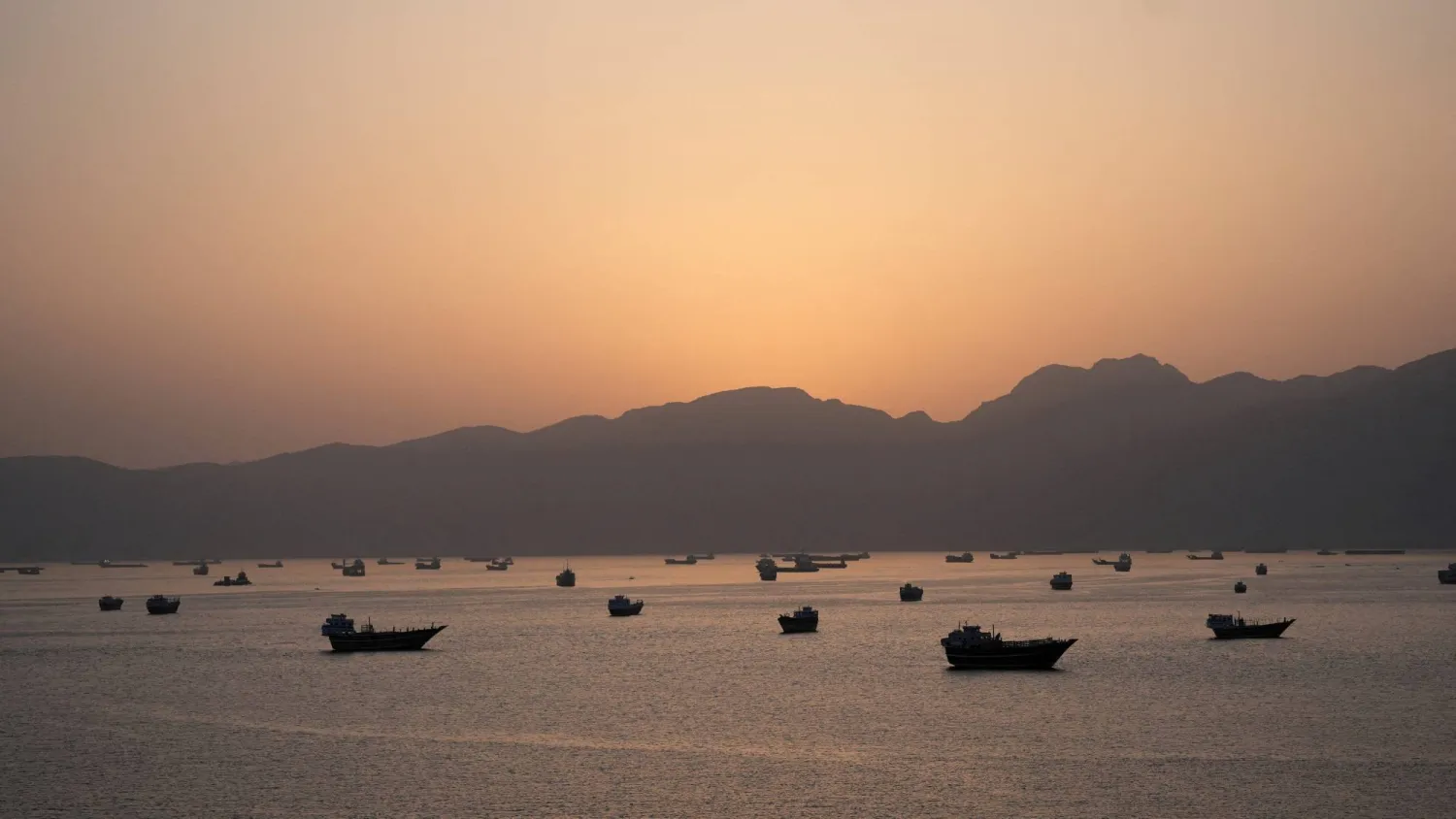
Foremost among them is the Strait of Hormuz, through which roughly 20 percent of the world’s oil supply — about 20 million barrels per day — passes, in addition to petrochemicals and Qatar’s helium exports, an increasingly important resource for advanced industries, including artificial intelligence. At present, no alternative maritime route exists for shipping Gulf exports to international markets.
The Bab el-Mandeb Strait connects the Red Sea to the Indian Ocean. Nearly eight million barrels of oil pass through it each day, while approximately 12 percent of global trade depends on this waterway.
The Suez Canal forms the shortest maritime link between Europe and Asia and functions as a natural extension of Bab el-Mandeb: if one is blocked, so is the other. The canal generates roughly $4 billion annually for Egypt. Its nationalization by President Gamal Abdel Nasser triggered the 1956 Suez Crisis.
The Strait of Malacca carries more than 60 percent of China’s trade and the bulk of its imported energy. Because the United States dominates the surrounding maritime environment, Chinese strategists have long referred to this vulnerability as the “Malacca Dilemma.” The strait is equally indispensable to Japan, an island nation comprising more than 14,000 islands, and formed part of Imperial Japan’s strategic sphere before World War II.
The Panama Canal, linking the Atlantic and Pacific Oceans as well as America’s eastern and western seaboards, reflected the maritime vision of US naval strategist Alfred Thayer Mahan, whose thinking strongly influenced President Theodore Roosevelt.
Finally, the Bosporus and Dardanelles provide the only maritime outlet to the Black Sea. Around 5 percent of global oil shipments transit these waterways, which are essential not only for Russia but also for Romania, Ukraine, Bulgaria, and Kazakhstan, whose oil exports reach world markets through Russia and the Black Sea.
Taken together, these maritime passages are the arteries of global commerce and energy. Control over them confers strategic influence even without overwhelming naval power. As geopolitical scholar Robert D. Kaplan has argued, the Strait of Malacca is likely to become one of the principal geopolitical theaters of the twenty-first century. Bab el-Mandeb remains Europe’s shortest and least expensive gateway to the Indian Ocean because of its integration with the Suez Canal. Yet the world’s primary strategic center of gravity remains the Strait of Hormuz, for which no true maritime substitute currently exists.
France’s national security strategy illustrates the enduring significance of these chokepoints. Paris sees itself as both a continental and maritime power. In addition to its Atlantic and Mediterranean coastlines, France possesses overseas territories that provide access to every major ocean: French Polynesia and New Caledonia in the Pacific; Mayotte and Réunion in the Indian Ocean; and Guadeloupe and Martinique in the Caribbean. Within this global geography, the deployment of the aircraft carrier Charles de Gaulle near the Strait of Hormuz — officially to support future mine-clearing operations once hostilities cease — together with France’s broader naval presence in the Gulf, reflects a long-term strategy of protecting the world’s vital sea lanes.
Adapting to a New Strategic Reality
The latest regional war has once again demonstrated that the Strait of Hormuz constitutes the strategic center of gravity for the Gulf. Political geographer Saul Bernard Cohen described this region as a geopolitical “shatterbelt” — an area where the interests of great powers intersect and compete continuously, generating chronic instability.
Events since the late 1970s support that assessment. The 1979 Iranian Revolution overthrew the Shah, prompting President Jimmy Carter to announce the Carter Doctrine in 1980, declaring that the United States would use military force if necessary to defend its interests in the Gulf. This was followed by the Iran-Iraq War, the US-led coalition that liberated Kuwait in 1991 after Saddam Hussein’s invasion, the 2003 US invasion that toppled Saddam’s regime, and today’s confrontation involving Iran, the United States, and Israel.
These successive conflicts have disrupted the region’s states’ plans to transform their territory and waters from a geopolitical shatterbelt into a global commercial hub linking East and West. The latest war has undoubtedly complicated those plans. It therefore becomes imperative not only to absorb the shock but also to create strategic alternatives — particularly where the Strait of Hormuz is concerned.
For years, Hormuz represented Iran’s strongest negotiating card in its dealings with Washington. The reopening of the strait became the clearest indication that the latest war had ended. Yet the conflict also demonstrated the urgent need for countries of the region to strengthen their national security while simultaneously developing alternatives that would protect both their energy exports and their broader vision of transforming the Gulf from a geopolitical fault line into a regional hub.
If Hormuz has indeed been Iran’s most valuable strategic card, then the recent crisis also illustrates a timeless principle: once a card is played on the battlefield to improve one’s position at the negotiating table, it inevitably loses some of its strategic value. The strait will reopen, and countries of the region will continue using it. But they will almost certainly accelerate efforts to create alternative export routes because the region’s strategic balance will not return to what it once was. Preparing for worst-case scenarios while continuing to pursue ambitious long-term development strategies has become a strategic necessity.
Accordingly, Gulf energy projects are increasingly focused on diversifying export routes and reducing dependence on vulnerable maritime chokepoints by expanding overland transport corridors and linking major maritime basins. Among the most ambitious proposals is reviving the “Four Seas” vision, connecting the Arabian Gulf, the Caspian Sea, the Black Sea, and the Mediterranean through integrated pipeline networks capable of delivering energy securely to global markets, particularly Europe.
Iraq is pursuing greater logistical flexibility through multiple export options, including studying the revival of a strategic pipeline linking its southern oil fields to Saudi Arabia’s pipeline network. Baghdad also continues to explore restoring the Kirkuk-Baniyas pipeline while maintaining coordination over exports through the Kirkuk-Ceyhan pipeline to Türkiye, thereby expanding its geographical options.
The United Arab Emirates is working to increase the capacity of the pipeline to the Fujairah terminal to as much as three million barrels per day, allowing more exports to bypass the Strait of Hormuz. At the same time, Saudi Arabia and Türkiye seek to revive regional railway links — including the historic Hejaz Railway — connecting the Arabian Peninsula with Türkiye through Jordan and Syria and ultimately extending toward Europe.
The world is entering an exceptionally dangerous period of strategic uncertainty. The balance of power is shifting in unpredictable ways, threatening stability across multiple regions. In such a world, the traditional nation-state is gradually losing ground while non-state actors assume greater influence. Small disruptors, despite their limited capabilities, have become capable of frustrating the strategies of great powers. Even nuclear weapons no longer guarantee deterrence against adversaries that do not possess them. It is a world that has yet to determine what the next international order will look like, or where the new balance of power will ultimately settle.