


More People Rescued, Thousands Still Missing after Venezuela Quakes

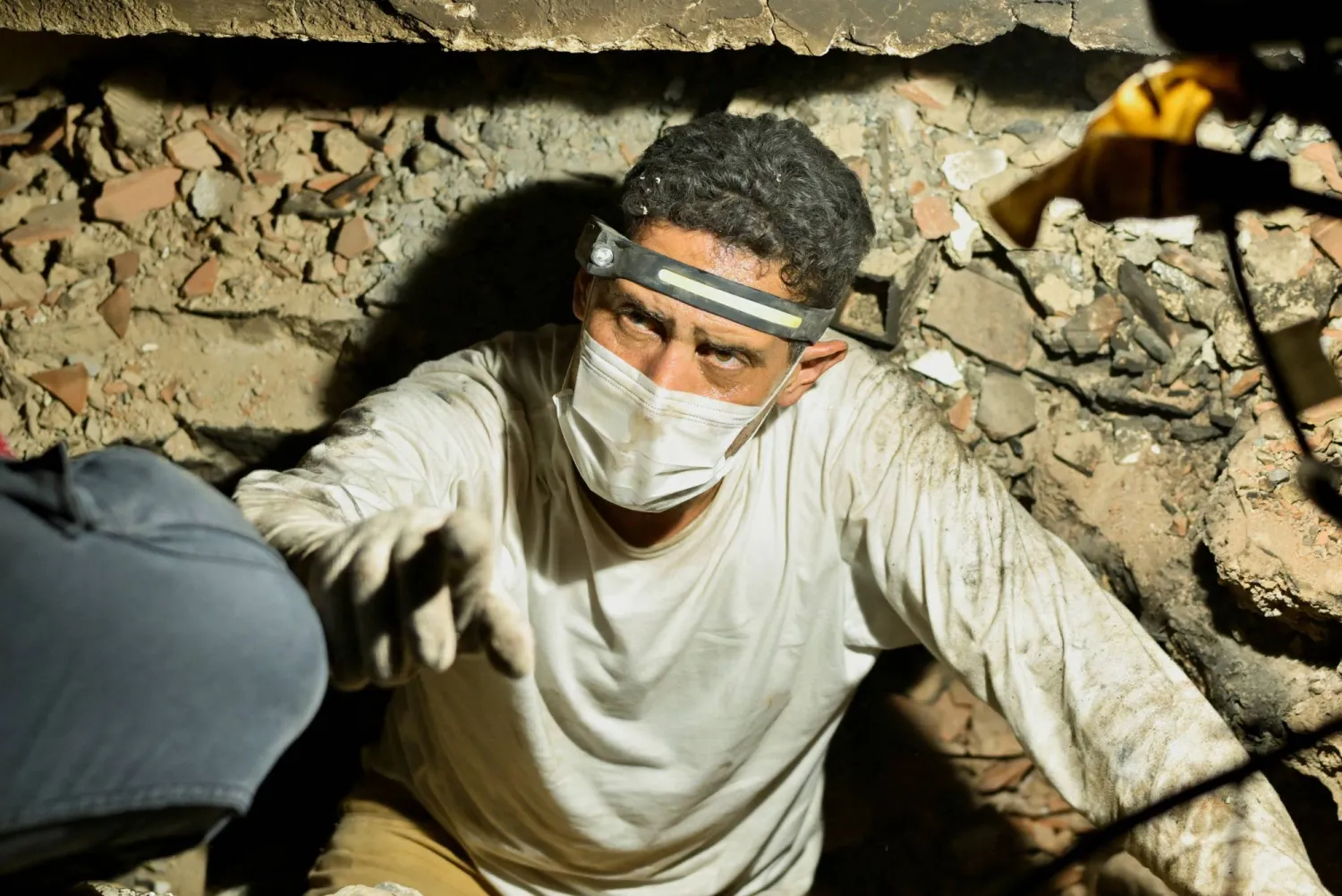
A rescuer looks on as rescue operations continue after earthquakes hit the country, in La Guaira, Venezuela, June 27, 2026. REUTERS/Maxwell Briceno
TT

More People Rescued, Thousands Still Missing after Venezuela Quakes

A rescuer looks on as rescue operations continue after earthquakes hit the country, in La Guaira, Venezuela, June 27, 2026. REUTERS/Maxwell Briceno

Thirty-three people have been rescued so far this weekend after Venezuela's devastating twin earthquakes, the country's interim president said, including several children, while tens of thousands remained unaccounted for with time for finding additional survivors running short.

The death toll from Wednesday's twin earthquakes rose above 1,400 as of Saturday as foreign rescue teams poured into coastal La Guaira, the hardest-hit state.

Families and volunteers spent days pulling survivors and bodies from the rubble before the arrival of the more than 1,600 foreign rescue workers, often complaining of scant heavy equipment and a limited official presence, as hundreds of aftershocks deepened damage and kept residents on edge.

The government - headed by interim President Delcy Rodriguez since her predecessor was removed by the US in a January raid - had thanked civilian volunteers ferrying aid to La Guaira, but then heavily tightened access to the road, saying traffic was preventing efficient movement of emergency vehicles and that only accredited people could use the roadway.

Although the government has given a figure of hundreds missing or trapped, just under 50,000 people were listed as unaccounted for on a website promoted by the country's political opposition on Sunday.

The figure is ⁠a slight decline ⁠from Saturday, when 55,000 people were marked as missing.

The US Geological Survey estimated more than 10,000 deaths were possible from the magnitude 7.2 and 7.5 quakes, which would place them among Latin America's deadliest of the last century.
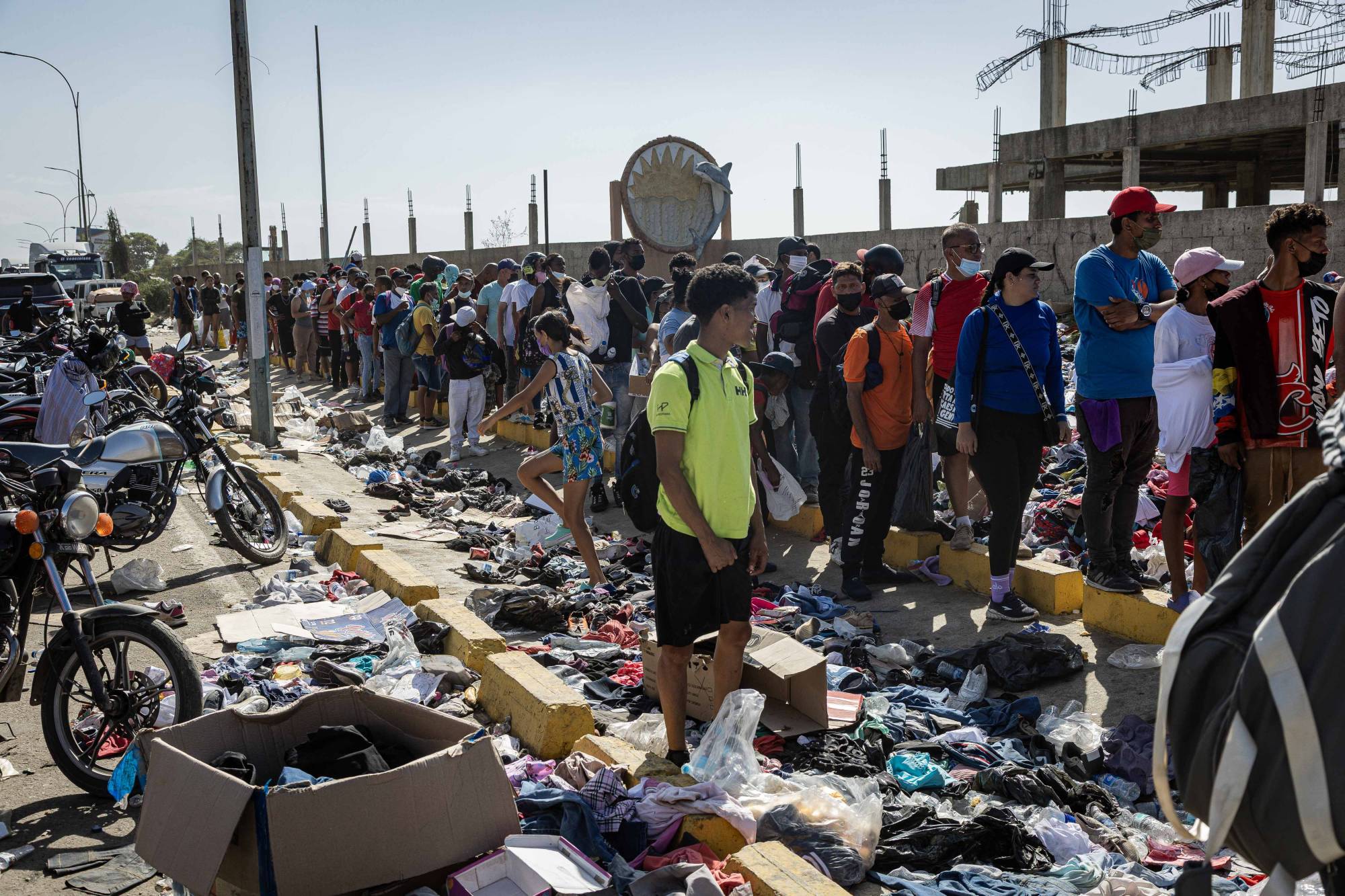
People line up to receive donations in La Guaira, Venezuela, 27 June 2026. EPA/Henry Chirinos

The clock is ticking for rescuing people still living amid the rubble.

"There exists a window of roughly three days, 72 hours, where the probability afterwards decreases that you can save people alive," Sebastian Eugster, the leader of the Swiss rescue team, told Reuters on Saturday.

The 80-strong team had found multiple people alive in the rubble thanks to alerts from their eight search dogs, but had not been able to pull them out in time to save them, he added.

Saturday evening marked 72 hours since the quakes.

The Swiss ⁠team will jointly define with other teams and local authorities when rescue operations will end, Eugster said, but will remain on the ground to help with other aid work.

The US State Department hailed the rescue of an infant by US rescue crews on Saturday, posting a video on X showing helmet-clad rescuers removing the blanket-wrapped and wailing child from the rubble.
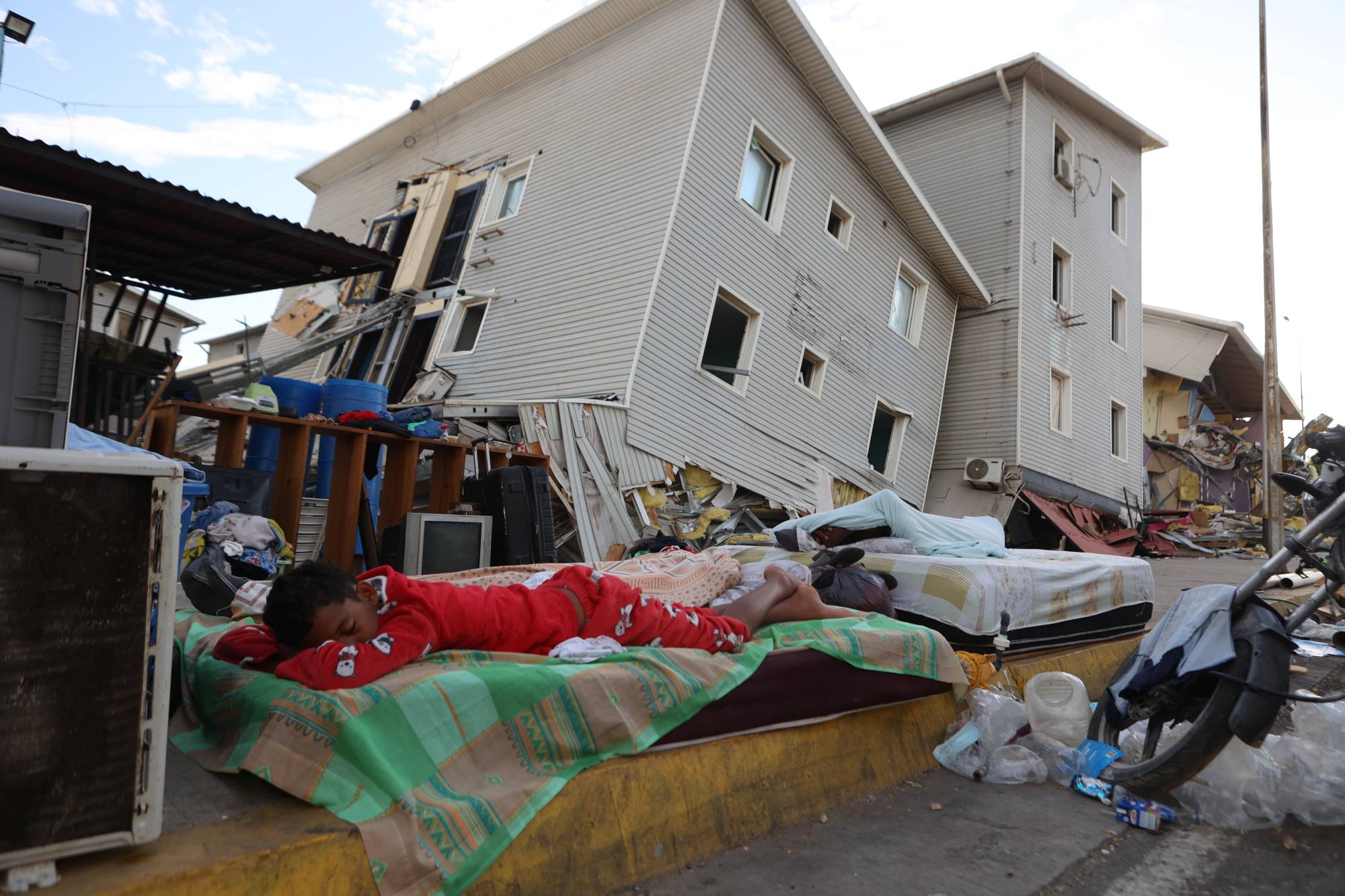
A boy sleeps outside earthquake-damaged homes in Catia La Mar, Venezuela, Sunday, June 28, 2026. (AP Photo/Pedro Mattey)

A Colombian rescue team saved an 11-year-old boy, Moises, who had been trapped some 3 meters (10 feet) deep in rubble, after identifying his location with a scanner, Reuters TV reported.

He was removed on a stretcher with a broken arm, his eyes covered by cloth to protect them from the shock of daylight. His mother and sister were killed.

Mexican rescuers working at a collapsed building in the town of Caraballeda rescued another 11-year-old boy, Rodriguez posted on X late on Saturday, showing crews carrying a small figure on a stretcher out of the rubble.

"In these hours each life is hope for Venezuela," Rodriguez said, as the government also shared a video of a young man being removed from ruins by rescuers.

The government also posted videos of Rodriguez meeting with international rescuers, where she gave the figure of people saved ⁠on Saturday.

The government has also said ⁠more than 3,000 people were injured and a similar figure was living in shelters.

In Caraballeda on Saturday, US rescuers worked alongside remaining civilian volunteers, some of whom were searching for their own family members.

Rescuers had originally spray-painted the rubble with the name of the apartment building that used to stand there. By Saturday evening they had marked debris with coding indicating they believed no living person remained in the ruins.

Pope Leo on Sunday told worshippers gathered for the Angelus prayer in Rome that he wanted "to express my closeness to the Venezuelan sisters and brothers affected by the recent earthquakes" and expressed gratitude to rescue workers.

European Union foreign policy chief Kaja Kallas said on X that the EU had mobilized 5 million euros ($5.9 million) in emergency assistance and that its Copernicus satellite system is helping map the damage and direct assistance to the areas most in need.

A senior US official said on Saturday that a funding package worth hundreds of millions of dollars is expected to be announced within the next day or so, in addition to $150 million that the Trump administration had already committed.

The disaster could have political consequences for Rodriguez, who has portrayed herself as an agent of change even though she served as vice president under predecessor Nicolas Maduro.

Power throughout the region was gradually returning. Venezuela's power grid, crippled by years of underinvestment and economic sanctions, regularly experiences problems, leading to daily, hours-long blackouts in some regions.



Denmark Aims to Send Rejected Migrants to ‘Return Hubs’ by 2027

Denmark's then Defense Minister Morten Bodskov speaks ahead of a NATO Defense Ministers meeting in Brussels, Belgium, February 16, 2022. (Reuters)
TT

Denmark Aims to Send Rejected Migrants to ‘Return Hubs’ by 2027

Denmark's then Defense Minister Morten Bodskov speaks ahead of a NATO Defense Ministers meeting in Brussels, Belgium, February 16, 2022. (Reuters)

Denmark said Friday it was ready to send rejected asylum seekers to 'return hubs' as of 2027, as it hosted talks with four EU countries on the creation of migrant detention centers outside Europe.

"On the Danish side, we expect to be ready to send the first foreigners to a partner country by the end of next year," Danish Migrations Minister Morten Bodskov said in a statement.

He was meeting with his German, Dutch, Austrian and Greek counterparts on Friday in Copenhagen on the creation of deportation centers outside the European Union.

"This is an important step towards a more efficient asylum and migration system," Bodskov said.

"We do not accept that foreigners staying illegally in Denmark should be rewarded because of our difficulties in returning them."

In June, the European Parliament approved tougher migration rules granting authorities much broader detention powers, and allowing for the creation of 'return hubs'.

The idea has been severely criticized by human rights groups.

The partner country or countries have not been disclosed, but Uganda and Rwanda in particular are seen as possibilities.

Britain abandoned a scheme to deport undocumented migrants to Rwanda, while Italian-run facilities to process migrants in Albania have faced legal challenges and a slow uptake.


Cyprus Ferry Toll Rises to 12 as Two More Bodies Found

Motor boats take part in a search operation for people missing two days after a ferry disaster off the coast of Cyprus, near the port of Kyrenia in the Turkish-occupied northern part of Cyprus, Tuesday, Sept. 1, 2026. (AP)
TT

Cyprus Ferry Toll Rises to 12 as Two More Bodies Found

Motor boats take part in a search operation for people missing two days after a ferry disaster off the coast of Cyprus, near the port of Kyrenia in the Turkish-occupied northern part of Cyprus, Tuesday, Sept. 1, 2026. (AP)

The death toll from a ferry accident off northern Cyprus rose to 12 on Friday after rescuers found the bodies of two women, with another 16 people still missing, officials said.

The FiloJet ferry was carrying 267 people when it capsized shortly after departing from Kyrenia port on the northern shore of the divided island around midday on Sunday.

Rescuers managed to pull 239 people to safety, giving an initial count of eight dead and 20 missing with officials saying they believed they had gone down with the ship.

Round-the-clock rescue efforts have since recovered the bodies of four more victims, the latest two on Friday morning, raising the toll to 12, according to authorities in the Turkish Republic of Northern Cyprus (TRNC), which is only recognized by Ankara.

"The bodies of two more people have been recovered," TRNC prime minister Unal Ustel wrote on X, indicating both were women.

"Search operations are continuing 24/7 in order to reach our 16 missing people," he said as a team of specialist divers and naval drones probed the wreckage which is lying at a depth of 514 meters (1,686 feet).

Since Wednesday morning, two specialist Turkish naval vessels equipped with underwater drones have been working to find the remaining victims.

Before the latest bodies were found, officials said the eight dead were all Turkish nationals, indicating that 18 of the 20 missing were also Turkish while the last two were from northern Cyprus.

They have not given any further details about the nationalities of the two four bodies recovered since Wednesday night.

So far, investigators have been unable to retrieve the ferry's voyage data recorder (VDR) -- its "black box" -- which should give a clearer indication of what led to the ferry capsizing.

The ferry's captain and eight others were remanded in custody on Monday on charges of negligent homicide, and returned to the court in Kyrenia -- Girne in Turkish -- for a second hearing on Thursday.

At that hearing, police investigators said the catastrophe could have been avoided had the captain reduced speed and carefully turned back to port when the ferry started taking on water, media reports said.


Davutoglu Investigated for ‘Insulting’ Turkish President

Davutoglu speaks in the Turkish parliament. (File photo - Future Party on X)
TT

Davutoglu Investigated for ‘Insulting’ Turkish President

Davutoglu speaks in the Turkish parliament. (File photo - Future Party on X)

The Ankara Chief Public Prosecutor’s Office has opened an investigation into former Turkish Prime Minister and Foreign Minister Ahmet Davutoglu on suspicion of insulting President Recep Tayyip Erdogan.

The prosecutor’s office said Thursday it launched the investigation on its own initiative under Article 299/1 of the Turkish Penal Code over remarks deemed insulting to the president that circulated on social media.

An old video resurfaced Wednesday showing Davutoglu speaking with villagers while he was leader of the opposition Future Party, which announced on July 30 that it would dissolve and withdraw from politics. Insulting the president is punishable by up to four years in prison under Turkish law.

In the video, Davutoglu criticized Erdogan without naming him.

“Unlike the ministers who came after me, I did not earn a single penny illicitly,” he said. “I told them not to make illicit gains, but they did. They added billions to their billions, amassed ill-gotten gains and enriched their entourage.”

He added: “He appointed his son-in-law [Berat Albayrak, former energy and natural resources minister and treasury and finance minister] as a minister, enriched his relatives and handed Türkiye over to five contractors.”

A political science academic known as “the professor” within the ruling Justice and Development Party (AKP), Davutoglu served as an adviser to former President Abdullah Gul and later to Erdogan when he was prime minister before becoming foreign minister.

He succeeded Erdogan as AKP leader after Erdogan was elected president in 2014, when Türkiye’s parliamentary system barred presidents from belonging to political parties. Davutoglu resigned as party leader in 2016 amid differences with Erdogan over the management of the party and country.

He left the AKP in 2019 as their differences deepened and founded the Future Party. On July 30, he unexpectedly announced plans to dissolve it and withdraw from party politics, citing Türkiye’s “corrupt political climate.”

Davutoglu said the decision was “not a surrender or an abandonment of politics,” but an attempt to maintain an “ethical distance” from the political sphere.

He criticized Türkiye’s presidential system, citing a weakened separation of powers and ineffective checks and balances, and identified corruption, lack of merit, polarization and declining trust in the judiciary among the country’s main problems.

Davutoglu also warned that anger over authoritarianism, corruption, income inequality, restrictions and violations of the law could produce a “retaliatory counter-government” as polarization spreads from politics into society.

The Future Party was formally dissolved at a general congress on August 22. Political circles in Ankara said Davutoglu’s decision followed failed merger talks with the right-wing New Welfare and Felicity parties.