
Iran’s Slain Leader Khamenei Laid in State in Tehran for Week of Mass Funeral Events

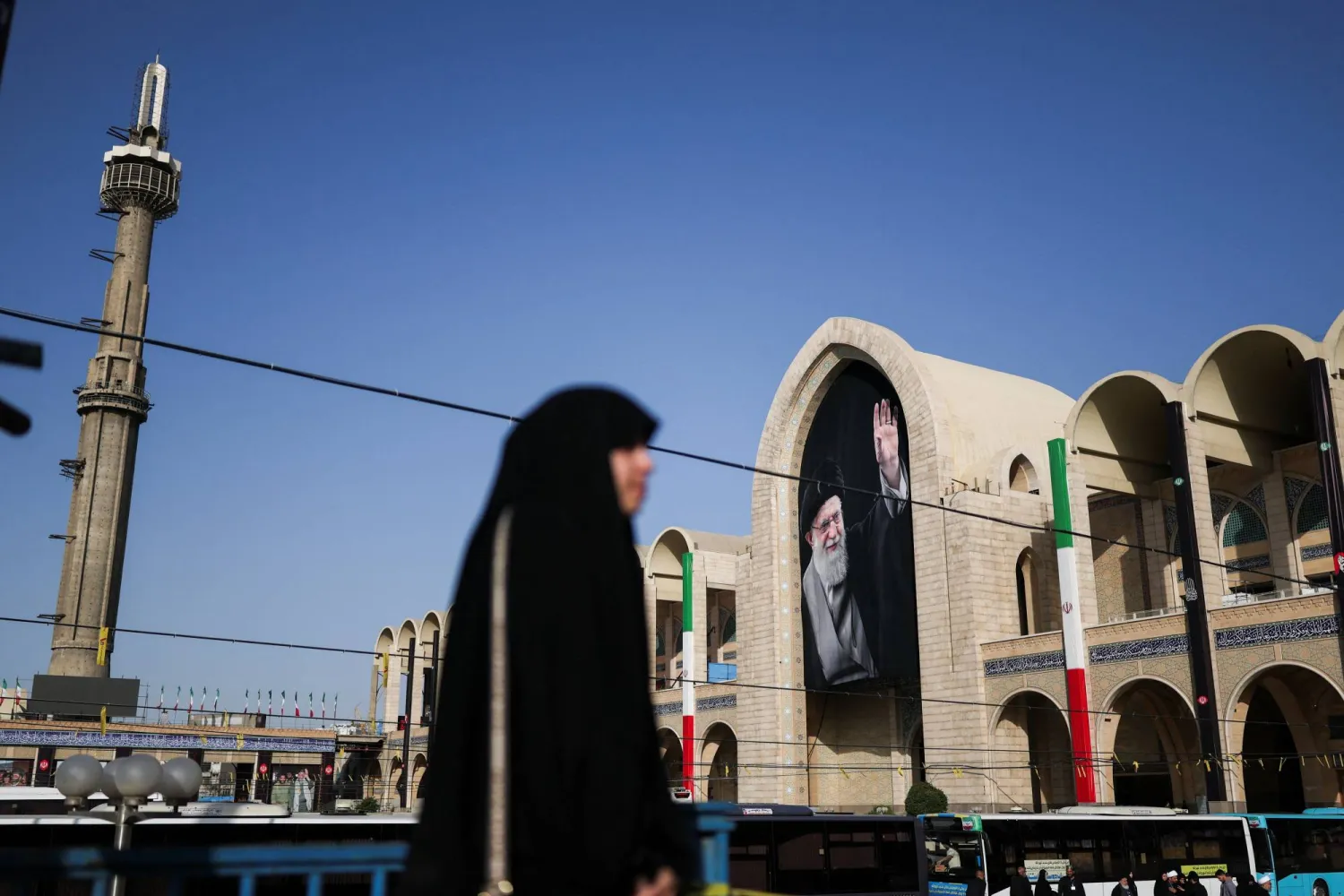
A woman walks at the Imam Khomeini Grand Mosalla on the day International delegates participate in a farewell ceremony for Iran's late Supreme Leader Ali Khamenei, who was killed on February 28 during Israeli and US airstrikes on Iran, in Tehran, Iran July 3, 2026. (Reuters)
TT

Iran’s Slain Leader Khamenei Laid in State in Tehran for Week of Mass Funeral Events

A woman walks at the Imam Khomeini Grand Mosalla on the day International delegates participate in a farewell ceremony for Iran's late Supreme Leader Ali Khamenei, who was killed on February 28 during Israeli and US airstrikes on Iran, in Tehran, Iran July 3, 2026. (Reuters)

The body of Iran's slain Supreme Leader Ali Khamenei was lying in state in a vast hall in Tehran on Friday as clerics, officials, foreign dignitaries and other mourners paid their respects after his 37-year rule.

Iran is staging a week of mass funeral processions for Khamenei — killed in February by US and Israeli airstrikes at the start of a four-month war — in a show of public devotion to the country's theocratic state and revolutionary fire.

Khamenei's body was expected to be taken to Qom, Najaf and Karbala, the great Shiite centers of Iran and Iraq, before being laid to rest on Thursday in Mashhad, home to the country's holiest shrine.

His coffin was unveiled late on Thursday to a throng of sobbing supporters, swaying and beating their heads in time to a sung lament as flowers were thrown from the bier into the crowd. On Friday the coffin — and those of family members killed with him — was laid in state in the great prayer hall built to honor his predecessor, Khomeini.

The funeral comes at a critical moment for Iran, where the clerical rulers backed by the Iranian Revolutionary Guard Corps are riding high from surviving what they saw as ‌an existential war against their ‌greatest and most powerful foes.

But nearly five decades after the 1979 revolution, and for all the official proclamations of ‌national ⁠unity in the ⁠run-up to Khamenei's funeral, the country has rarely been so internally fractured.

Support for the clerical leadership is paper thin, analysts say, and the new Supreme Leader, Khamenei's son Mojtaba Khamenei, has not been seen in public since being wounded in the strike that killed his father.

Years of crippling sanctions have paralyzed the economy as accelerating bouts of mass nationwide protests have been put down by security forces with increasing force, culminating in the killing of thousands of demonstrators in January.

Those deep problems have been brushed aside this week, with the authorities mounting a display of state power and mass support, mobilizing what they hope will be millions of mourners to take part in the funeral.

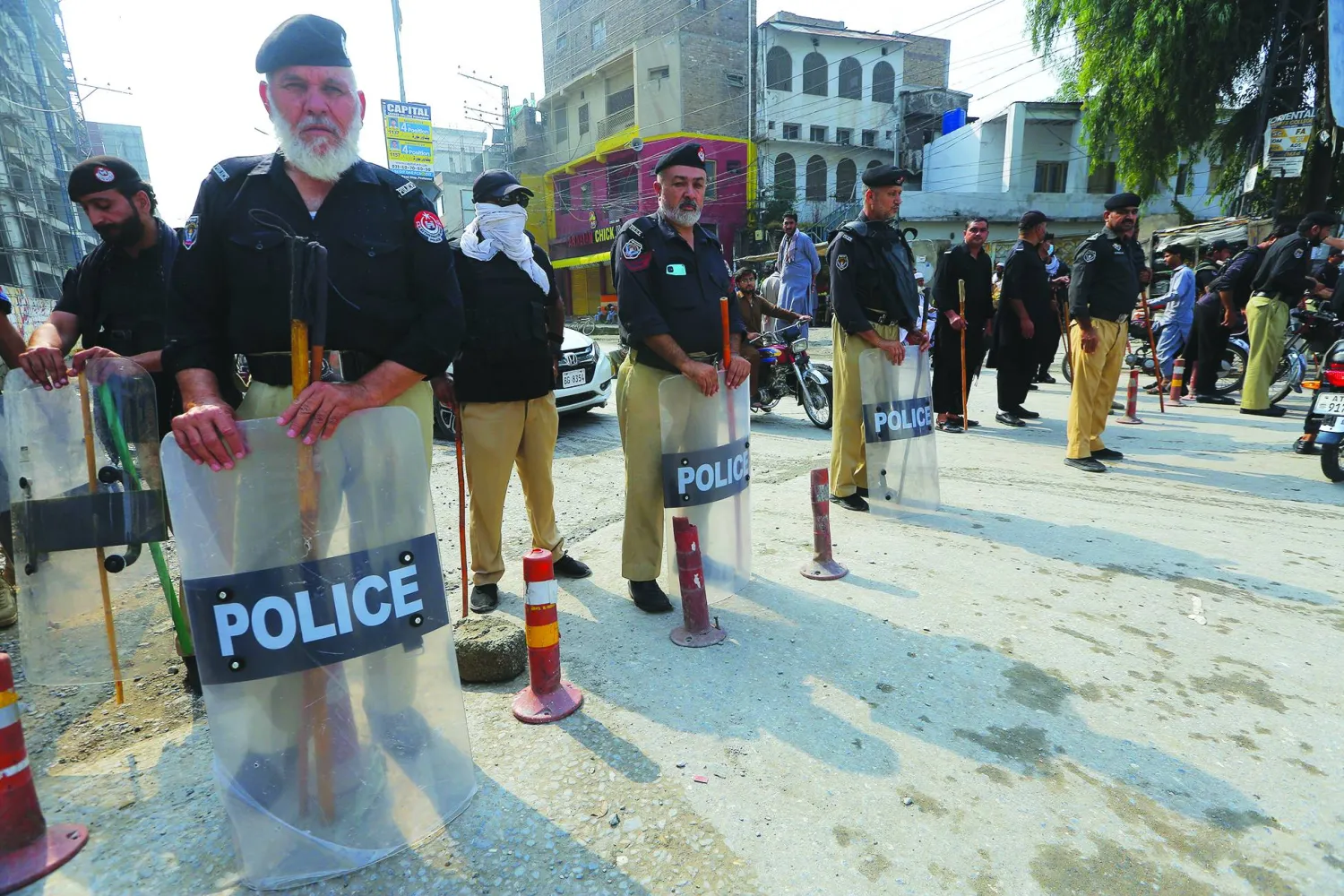
Tehran streets were tightly controlled, with military and police vehicles lining the major roads and police and members of the black-shirted volunteer Basij paramilitary force patrolling on motorbikes. Iran warned the United States and Israel against any attacks during ⁠the funeral.

After the coffins arrived on Friday, borne high across the upraised hands of a waiting crowd, they were laid ‌in the prayer hall on a white, stepped, dais before a high, intricately tiled, arched recess, flanked by ‌national and black mourning flags.

Delegations, including from Lebanon, Iraq and Yemen, home to the strongest proxies in Iran's network of regional power, followed each other into ‌the hall to stand before the coffins.

Representatives from Russia and China were expected to attend. Iraqi President Abdul Latif Rashid, Armenian Prime Minister Nikol Pashinyan and Pakistani Interior Minister Syed Mohsin Naqvi arrived in Tehran for the funeral.

Families of Hezbollah leader Hassan Nasrallah and senior commander Imad Mughniyeh, close Lebanese allies of Iran killed in Israeli strikes, attended the ceremony.

In central Tehran overnight, a crowd stood sobbing and chanting, led by a Basij member, as others handed out posters of the late Khamenei.

"God willing, only by avenging his blood, demanding justice for it, and ensuring that our leader's blood is not left unavenged, can this sorrow of the people be somewhat alleviated," said Mobina Razaaghi, an 18-year-old student from Isfahan, attending the funeral events with classmates.

Killed alongside Khamenei, and displayed in coffins next to his, were his daughter, son-in-law and baby granddaughter, as well as the wife of his son Mojtaba.

Burials are meant to be conducted within a day of death in Islam, but because of the risks of holding a big funeral during the war it was postponed until after last month's interim truce deal was agreed.

Hotels are offering 50% discounts, schools, mosques and sports halls have been prepared to house mourners, and bus and rail networks are being diverted to serve the main events.

After what authorities are billing as a massive procession in central Tehran on Monday, the remains will be taken to the seminary city of Qom for ceremonies on Tuesday.

Ceremonies will then be held in Iraq's shrine cities of Najaf and Karbala on Wednesday with prominent attendees from Iran's regional network of proxies.

He will be buried on Thursday, after another procession, in Mashhad.


Return to US-Iran Hostilities Is Huge Setback for Civilians, UN Rights Chief Says

An aircraft prepares to land aboard the USS George H.W. Bush, at an unknown location, released July 14, 2026, in this still image taken from a handout video. US Central Command (CENTCOM)/Handout via Reuters
TT

Return to US-Iran Hostilities Is Huge Setback for Civilians, UN Rights Chief Says

An aircraft prepares to land aboard the USS George H.W. Bush, at an unknown location, released July 14, 2026, in this still image taken from a handout video. US Central Command (CENTCOM)/Handout via Reuters

The United Nations human rights chief said on Tuesday the resumption of hostilities between the United States and ‌Iran was ‌a huge ‌setback ⁠for civilians in ⁠the region, and he urged restraint.

"The return to wider hostilities in the ⁠Middle East ‌between the ‌US and Iran ‌is a huge ‌setback for civilians in the region and beyond. It undermines ‌peace efforts and deepens instability, with grave ⁠risks ⁠for human rights across the entire region," the UN high commissioner for human rights Volker Turk said in a statement.

Iran fired missiles at Jordan and Bahrain on Tuesday after the United States launched a five-hour attack on Iranian targets, stepping up a battle for control of the Strait of Hormuz that has pushed up oil prices to four-week highs.

US forces carried out waves of attacks for the third night in a row after Tehran said it had closed the strait, prompting US President Donald Trump to reinstate a blockade of Iranian shipping.

Iran hit back by attacking a Jordan with ballistic missiles while Bahrain said it had fended off an Iranian aerial attack. Jordan said it had shot down four ballistic missiles and explosions were heard in Manama, Bahrain's capital.

The worsening attacks have increased doubts that a memorandum of understanding signed last month will lead to a permanent halt in the war, which has disrupted global energy supplies and raised fears of a rise in inflation globally.


Netanyahu Says Israel Will Deliver ‘Decisive Blow’ if Iran Attacks

Israeli Prime Minister Benjamin Netanyahu looks on during a ceremony marking the 50th anniversary of Operation Entebbe at the President's Residence in Jerusalem, July 12, 2026. (Reuters)
TT

Netanyahu Says Israel Will Deliver ‘Decisive Blow’ if Iran Attacks

Israeli Prime Minister Benjamin Netanyahu looks on during a ceremony marking the 50th anniversary of Operation Entebbe at the President's Residence in Jerusalem, July 12, 2026. (Reuters)

Israeli Prime Minister Benjamin Netanyahu vowed Tuesday to strike powerfully against Iran if it staged a new attack on his country.

"I will say it to the leaders of Iran: Do not count on things remaining quiet if you attack us," Netanyahu said at a conference in Dimona.

The southern town hosts a facility officially dedicated to nuclear research but is widely believed to house Israel's undeclared nuclear arsenal.

"The days are over when someone strikes us and we don't hit back with a decisive blow," Netanyahu added.

He said the strikes would be more powerful than the ones carried out jointly with key ally the United States earlier this year.

"Do not count on a rerun," Netanyahu said, referring to the previous attacks on Iran, according to a video released by his office.

"Because it will not be a rerun, and that was already powerful enough. This will be a different event, much more powerful."

Netanyahu's threat came amid new US strikes on Iran and as US President Donald Trump vowed to reimpose a blockade on Iranian ports.

US strikes on Tuesday also hit the Iranian port city of Bushehr, which hosts Tehran's only civilian nuclear plant.

In retaliation to US strikes that began three days ago, Iran has launched missiles targeting US allies in the region.


Trump Steps Back from Proposal for Hormuz Fees

 A vessel at the Strait of Hormuz, as seen from Musandam,Oman, July 14, 2026. (Reuters)
A vessel at the Strait of Hormuz, as seen from Musandam,Oman, July 14, 2026. (Reuters)
TT

Trump Steps Back from Proposal for Hormuz Fees

 A vessel at the Strait of Hormuz, as seen from Musandam,Oman, July 14, 2026. (Reuters)
A vessel at the Strait of Hormuz, as seen from Musandam,Oman, July 14, 2026. (Reuters)

US President Donald Trump stepped back from a proposal to charge a 20% fee to guard the Strait of Hormuz as part of the conflict with Iran, saying on Tuesday he would instead seek investment deals in the region.

US forces had carried out waves of attacks for ‌the third night ‌in a row after Tehran said it had ‌closed ⁠the strait, prompting Trump ⁠on Monday to reinstate a blockade of Iranian shipping and propose the fee.

But just a little under five hours before the fee had been due to come into effect at 2000 GMT, Trump said the strait was open to all shipping traffic except that of Iran.

Oil futures prices pared their ‌gains after the post after rising earlier on Tuesday.

The worsening attacks had increased doubts that a memorandum of understanding signed last month would lead to a permanent halt in the war, which has disrupted global energy supplies ‌and raised fears of a rise in inflation globally.

Iran had hit back by attacking ⁠Jordan with ballistic missiles while Bahrain said it had fended off an Iranian aerial attack. Jordan said it had shot down four ballistic missiles and explosions were heard in Manama, Bahrain's capital.

Before the war, about a fifth of global oil and gas traffic passed through Hormuz daily. If the US were to impose a 20% fee, it could generate around $240 million a day.

The UN shipping agency said it opposed any fees for straits used in international navigation and that there was no legal basis for introducing mandatory tolls on strait transits.