Austrian Court Convicts Ex-intelligence Chief in Syria's Raqqa of Torture

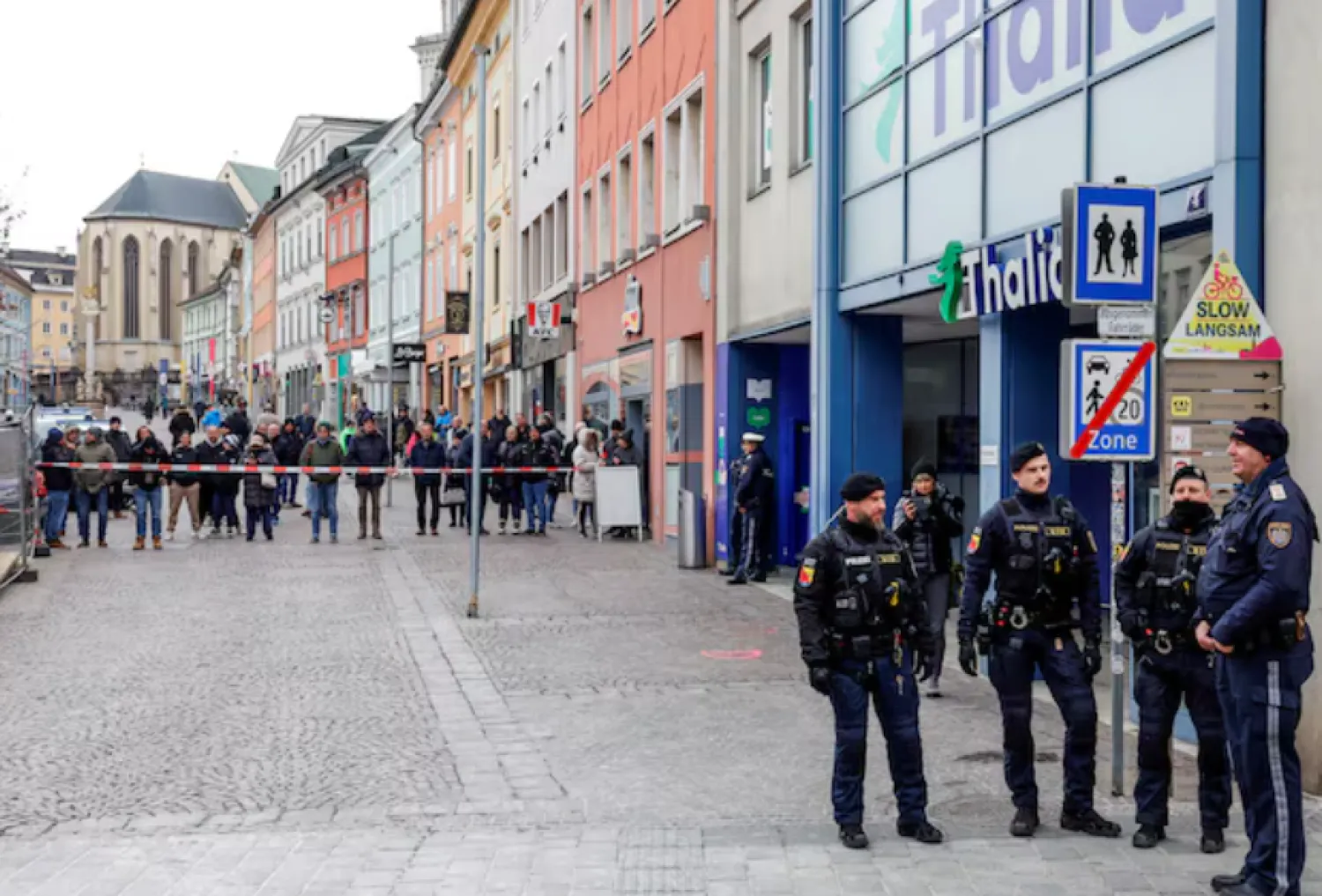
Police officers stand guard in the town of Villach, Austria February 16, 2025. REUTERS/Borut Zivulovic/File Photo
TT

Austrian Court Convicts Ex-intelligence Chief in Syria's Raqqa of Torture

Police officers stand guard in the town of Villach, Austria February 16, 2025. REUTERS/Borut Zivulovic/File Photo

An Austrian court on Monday convicted a former Syrian intelligence chief in the city of Raqqa of offences including torture and sexual assault over the mistreatment of opponents of then-leader Bashar al-Assad more than a decade ago, Reuters reported.

The court in Vienna sentenced the primary defendant, identified as Khaled al-H, to eight years in prison after more than a dozen victims testified they were beaten, electrocuted or doused in hot and cold water while he was head of the General Intelligence Directorate in Raqqa from 2011 to 2013.


Britain Sanctions Russian Scientists Behind Chemical Attacks

Russian opposition leader Alexei Navalny died from poisoning in a Siberian prison camp in 2024 © KAREN MINASYAN / AFP
TT

Britain Sanctions Russian Scientists Behind Chemical Attacks

Russian opposition leader Alexei Navalny died from poisoning in a Siberian prison camp in 2024 © KAREN MINASYAN / AFP

Britain on Monday unveiled sanctions against seven Russian scientists and two research labs said to have helped develop chemical weapons used in two attacks.

The sanctions target those involved in developing the Novichok nerve agent used in a 2018 attack on a former Russian spy hiding in England and a chemical believed to have fatally poisoned Russian opposition activist Alexei Navalny in Siberia in 2024.

"These new measures directly hit two leading scientific research centres and key individuals involved in the development and production of toxic chemicals," the UK foreign ministry said in a statement.

Russian agents have been accused of poisoning of former Russian spy Sergei Skripal and his daughter in the southern city of Salisbury in March 2018 using the Soviet-developed nerve agent Novichok, AFP reported.

The Salisbury attack, the first offensive use of chemical weapons in Europe since World War II, caused an international outcry and prompted a mass expulsion of Russian diplomats by Western nations.

The Skripals survived, but a British woman died later after her partner picked up a discarded perfume bottle believed to have been used to carry the Novichok.

Navalny, an anti-corruption campaigner who rallied hundreds of thousands to the streets in protest at the Russian leadership, was President Vladimir Putin's fiercest domestic opponent for years.

He died in an Arctic prison colony in February 2024 while serving a 19-year sentence.

"Russia's repeated use of chemical weapons is a sickening violation of international law and a direct threat to global security," British Foreign Secretary Yvette Cooper said.

The institutions hit were SC Signal, a Russian state scientific research institute and GNIII VM, the country's Scientific Research and Testing Institute for Military Medicine.

The individuals who were sanctioned included directors and technical specialists at the two research institutes, according to the foreign ministry.

The announcement came ahead of this week's NATO summit in Ankara, which opens on Tuesday and is set to focus on the Ukraine war.

The Foreign Office said Britain has now sanctioned over 3,400 individuals and organisations amid Moscow's war in Ukraine.


Trump to Meet Leaders of Ukraine, Syria alongside NATO Summit

US President Donald Trump speaks during the Salute to America 250 celebration on the National Mall in Washington, DC, USA, 04 July 2026. EPA/JIM LO SCALZO / POOL
TT

Trump to Meet Leaders of Ukraine, Syria alongside NATO Summit

US President Donald Trump speaks during the Salute to America 250 celebration on the National Mall in Washington, DC, USA, 04 July 2026. EPA/JIM LO SCALZO / POOL

US President Donald Trump will meet with Ukrainian President Volodymyr Zelenskiy while in Türkiye this week for the NATO summit to make a renewed push to end the war in Ukraine, a senior US official said on Sunday.

Trump is scheduled to arrive at the summit on Tuesday. His first meeting will be with summit host, Turkish President Tayyip Erdogan. Trump will also meet Syrian President Ahmed al-Sharaa and hold a press conference, the White House said, Reuters reported.

A senior US official who briefed reporters on condition of anonymity about the trip said Trump will meet with Zelenskiy on Wednesday to discuss "how we can end the war."

"The battlefield has clearly frozen over the last couple of months and neither side is making a lot of progress," the official said. "The president feels a real sense of urgency to try to bring this to a stop."

Trump will also urge NATO allies to increase their defense spending, the official said.


Jolted by Ebola, Countries Try Again to Finish Pandemic Treaty

Posters for Ebola prevention are displayed at the hospital in Mongbwalu, Ituri, Democratic Republic of Congo, 26 June 2026. (EPA)
TT

Jolted by Ebola, Countries Try Again to Finish Pandemic Treaty

Posters for Ebola prevention are displayed at the hospital in Mongbwalu, Ituri, Democratic Republic of Congo, 26 June 2026. (EPA)

WHO member states kicked off one more attempt at finalizing the missing piece of the pandemic treaty on Monday, with the Ebola outbreak injecting a fresh sense of urgency.

Wealthy countries and developing nations are at loggerheads in talks at the World Health Organization's headquarters over how the pandemic agreement, adopted last year, will work in practice.

Though the treaty was agreed in May 2025, how its key mechanism would operate was left out to get the deal over the line.

The agreement's Pathogen Access and Benefit-Sharing (PABS) system deals with sharing access to pathogens with pandemic potential, then sharing benefits derived from them such as vaccines, tests and treatments.

It was meant to be finalized long before May 2026, but progress has been agonizingly slow.

Negotiations have often gone late into the night, producing miniscule advances and leaving diplomats drained -- especially those from small countries with only a handful of staff in Geneva covering every branch of the UN.

This two-week session until July 17 is the seventh such round of talks.

WHO chief Tedros Adhanom Ghebreyesus urged countries to grasp the nettle.

"You could have given up," saying "that we will never agree", Tedros told countries as the talks opened.

However, "you said we don't agree yet, but we believe we can."

"Please keep the destination in sight," urged the UN health agency's director-general.

"A future in which pathogen samples and information move quickly, without needless delay; and in which the benefits that come from them reach the people who need them most, fairly and in time."

- 'Danger can emerge from anywhere' -

The Ebola outbreak in the Democratic Republic of Congo, declared in mid-May, is a reminder that the next pandemic threat could spring up from anywhere, Tedros said.

There have been 1,528 confirmed cases, including 492 confirmed deaths, in DR Congo, and the outbreak has spilled over into neighboring Uganda.

"Ebola may not be the next pandemic. But it is a reminder, a painful one, that the threat never truly goes away," said Tedros.

The deadly hantavirus outbreak on a cruise ship, declared over on Thursday, also shows "danger can emerge from anywhere, at any time, in ways we don't always expect".

The outbreak on the MV Hondius, sailing the Atlantic Ocean, led to a global health alert affecting 33 countries and territories.

"Every month that this annex remains unfinished is a month the world stays less prepared than it could be. It is people -- real people, real families -- left less safe than they deserve to be," said Tedros.

The pandemic agreement was struck after more than three years of negotiations sparked by the shock of Covid-19.

The accord aims to prevent a repeat of the disjointed international response that surrounded the coronavirus crisis, by improving global coordination, surveillance and access to vaccines.

Only once the PABS annex is complete will countries be able to start ratifying the treaty.