


Trump Declares Iran Blockade Back, Says US Will Charge Hormuz Fees

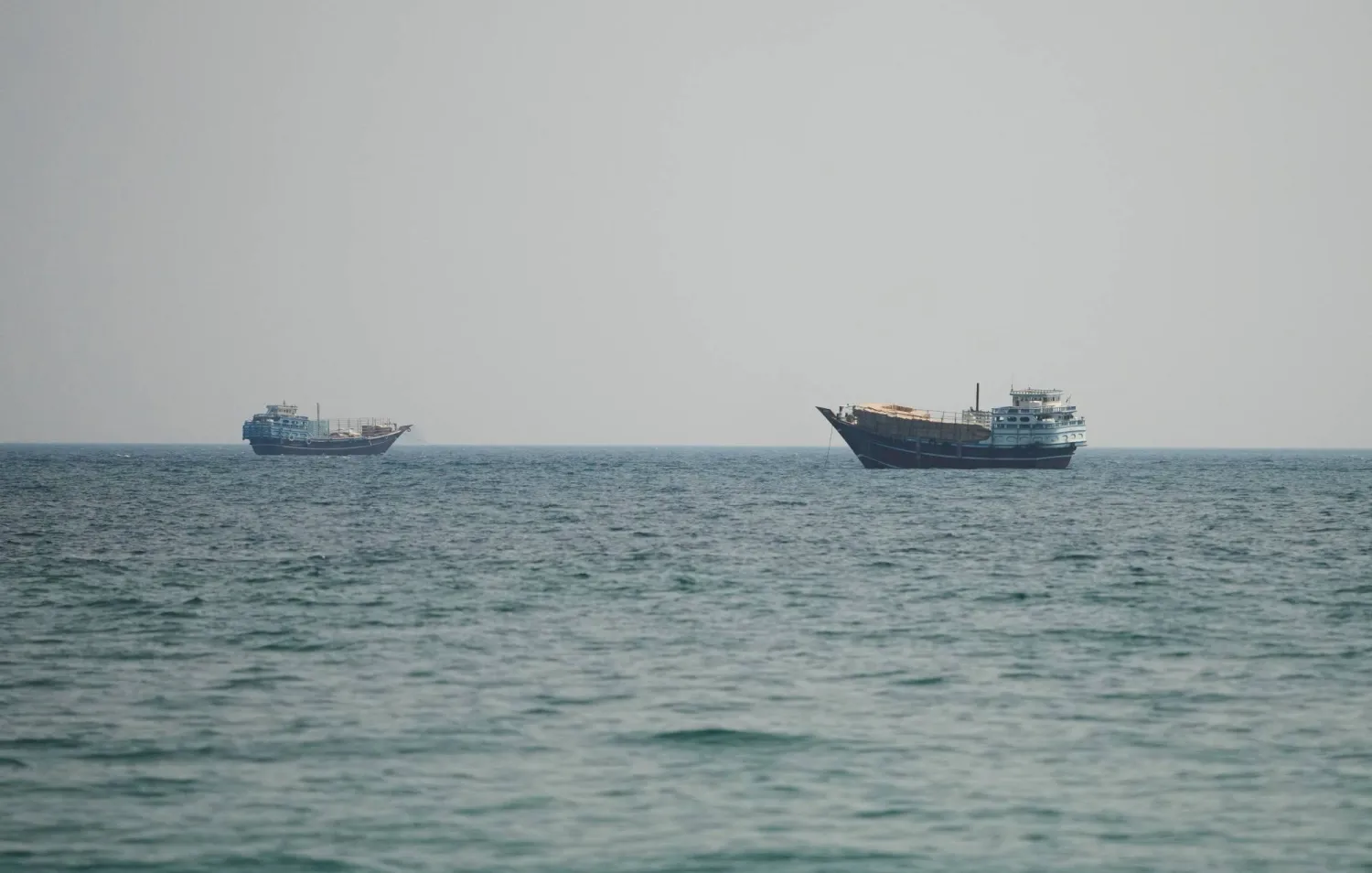
Vessels at the Strait of Hormuz, as seen from Musandam,Oman, July 12, 2026. REUTERS/Stringer
TT

Trump Declares Iran Blockade Back, Says US Will Charge Hormuz Fees

Vessels at the Strait of Hormuz, as seen from Musandam,Oman, July 12, 2026. REUTERS/Stringer

President Donald Trump declared the return of a US naval blockade on Iranian ports on Monday, saying Washington would impose hefty fees on ships transiting the Strait of Hormuz as fighting once again flared over the vital waterway. 

Iran's military command, however, insisted it would not allow the US to "interfere" in the key conduit for oil and gas. 

The competing claims came as the two sides traded attacks of a scale unseen since an April ceasefire. The US military said it hit dozens of targets on Monday, while Iran's Revolutionary Guards announced new strikes in response on Bahrain, Jordan, Kuwait and Oman. 

The Strait of Hormuz was not an issue before the United States and Israel began their war with Iran in February, and passage through it was free, but Tehran subsequently blocked the waterway and now sees it as essential leverage over Washington. 

The US has vehemently opposed Tehran's desire to charge tolls in the strait, which international law generally forbids, but on Monday, Trump flipped the script and declared that Washington itself would collect fees. 

In a post on his Truth Social site, Trump declared that the US would be "known as 'THE GUARDIAN OF THE HORMUZ STRAIT'," and "be reimbursed, at the rate of 20% on all cargo shipped, for any and all costs necessary to do the job of providing safety and security to this very volatile section of the World". 

While Iran's ports would again be blockaded, he said, "all other countries will have fair and open use of the strait". 

The spokesman for Iran's Khatam Al-Anbiya military command, however, insisted that Tehran "under no circumstances will allow... the United States to interfere in the management" of the strategic waterway. 

- 'In crisis' - 

Despite last week declaring the ceasefire with Iran over, Trump has said negotiations aimed at finding a permanent settlement would continue. 

He told Fox News that there were hours of talks on Sunday, but accused Iranian negotiators of going back on what they had agreed. 

Iran's foreign ministry spokesman Esmaeil Baqaei said earlier on Monday that the June memorandum of understanding that formed the basis for the negotiations and lifted the US blockade was "in crisis". 

The previous blockade, in place from April to June, cut off Iranian oil exports and threatened a damaging shutdown of the industry. 

Baqaei said Iran would ignore its obligations under the deal if the US did the same, but nonetheless added that Tehran was continuing talks with mediators from Qatar, Pakistan and Oman in an effort to prevent further escalation. 

The past week's hostilities have centered on the critical energy trade route, which Iran's Guards say is "closed". 

On Monday, spokesman for the Guards Hossein Mohebi accused the US of endangering global oil and gas supplies by interfering in the strait, saying it "must be held accountable" while insisting on Tehran's sovereignty over Hormuz. 

Amid the fighting, mediators have been trying to salvage a diplomatic resolution to the war. 

Pakistan, a key intermediary in negotiations, expressed "deep concern at escalation in regional tensions", according to its foreign office. 

But analyst Bader Al-Saif said the escalating attacks would merely delay a permanent agreement. 

"Both sides want to end the impasse on their own terms, and they are increasingly finding it difficult to do so. Hence, the return to and increase in the scale of attacks," said Al-Saif, an associate fellow at Chatham House. 

"That only prolongs what will eventually happen: a negotiated settlement." 

- 'Heinous attacks' - 

Iranian state media reported deaths in the latest US strikes, which it said targeted large areas across the south and west. 

At least 25 people have been killed in Iran since hostilities resumed on Wednesday, according to an AFP tally based on Iranian announcements. 

Iran's Revolutionary Guards said they had struck Jordan, Bahrain and Kuwait, state media reported on Monday. 

Air raid alerts sounded in Bahrain, while Kuwait's army said the country's forces were intercepting "hostile aerial targets" on Monday. 

Jordan's army said it had intercepted four Iranian missiles. 

Bahrain's military accused Iran of committing "heinous attacks with missiles and drones that target civilians", adding it had shot down a number of Iranian projectiles Monday morning. 


North Korea Preparing Further Russia Troop Deployments, No Sign Move Imminent, Seoul Says

FILE - Russian President Vladimir Putin, left, and North Korea's leader Kim Jong Un examine a launch pad of Soyuz rockets during their meeting at the Vostochny cosmodrome outside the city of Tsiolkovsky, about 200 kilometers from the city of Blagoveshchensk in the far eastern Amur region, Russia, on Wednesday, Sept. 13, 2023. (Mikhail Metzel, Sputnik, Kremlin Pool Photo via AP, File)
TT

North Korea Preparing Further Russia Troop Deployments, No Sign Move Imminent, Seoul Says

FILE - Russian President Vladimir Putin, left, and North Korea's leader Kim Jong Un examine a launch pad of Soyuz rockets during their meeting at the Vostochny cosmodrome outside the city of Tsiolkovsky, about 200 kilometers from the city of Blagoveshchensk in the far eastern Amur region, Russia, on Wednesday, Sept. 13, 2023. (Mikhail Metzel, Sputnik, Kremlin Pool Photo via AP, File)

South Korea's Defense Ministry said North Korea was continuing preparations for an additional troop deployment to Russia, but had detected no signs that such a deployment was imminent, according to a South Korean lawmaker's office.

The assessment came ‌after North ‌Korea's Kim Yo Jong, sister of leader Kim ‌Jong ⁠Un, last week ⁠denied Ukrainian President Volodymyr Zelenskiy's claim that Pyongyang planned to send up to 50,000 more troops to Russia to fight for its ally, Reuters said.

South Korea's Defense Ministry said in a statement to lawmaker Yu Yong-weon that North Korea had continued to supply Russia with weapons systems, including short-range ballistic missiles, according to Yu's office.

North ⁠Korea is estimated to have supplied Russia with ‌more than 15 million rounds of ‌artillery ammunition, measured in 152-millimetre shell equivalents, it said.

The lawmaker's office, ‌citing a South Korean Defense Intelligence Agency assessment, said North ‌Korean missiles used in the war may have improved in accuracy through battlefield data, alongside Russian technical advice and component support.

The ministry also said the development of some North Korean ballistic missiles and multiple rocket ‌launchers assessed as being intended for use in a conflict with South Korea was nearing completion, the ⁠lawmaker's office ⁠said.

The ministry added that North Korea's Hwasong-12 intermediate-range ballistic missile, capable of reaching the US territory of Guam, was being prepared for operational deployment, according to Yu's office.

North Korea's intercontinental ballistic missiles have the flight capability to reach the US mainland, the ministry said, but key technologies, including warhead re-entry, have not been verified because all test launches have been conducted on lofted trajectories.

North Korea and Russia have deepened military cooperation since Moscow's invasion of Ukraine in 2022, with Pyongyang supplying artillery ammunition and missiles since 2023 and deploying troops from 2024, according to South Korean, Ukrainian and Western assessments.

Moscow and Pyongyang have previously denied arms transfers.


US Vows 'Economic D-Day' as Iran Threatens to Halt all Oil Exports

Image published by the Iranian Parliament's website from Sunday's meeting of the Foreign Policy and National Security Committee.
TT

US Vows 'Economic D-Day' as Iran Threatens to Halt all Oil Exports

Image published by the Iranian Parliament's website from Sunday's meeting of the Foreign Policy and National Security Committee.

The US threatened Iran with what it called "the greatest financial offensive ever marshalled" as it prepared to roll out economic sanctions on Monday that target Iran's trade partners.

Iran in turn vowed to shut down all oil exports from the Gulf "if the economic war continues." US Treasury Secretary Scott Bessent will hold a press conference at 1 p.m. EDT (1700 GMT) on Monday amid promises to reveal even more severe measures on a country that has endured near-continuous economic sanctions since the Iranian Revolution of 1979, Reuters said.

"At dawn begins an economic D-Day — the single greatest financial offensive ever marshalled against an adversary," Bessent wrote in an opinion piece published in the Financial Times on Sunday.

The warring nations have not conducted military strikes against each other for weeks, ‌but they also ‌have not engaged in meaningful talks to end the six-month-old conflict.

Thousands of people ‌have ⁠died, most of ⁠them in Iran and Lebanon, since the US and Israel began strikes on February 28, degrading much of Iran's conventional military capacity and inflicting economic pain while killing Iranian Supreme Leader Ali Khamenei.

But Iran has preserved enough missile and drone capability to attack its Gulf neighbors and threaten oil tankers in the Strait of Hormuz, bringing shipping in the key waterway to a near standstill and pressuring world fuel prices.

The exact state of Iran's nuclear program, which the Americans and Israelis aim to wipe out, remains unknown. Without detailing specific measures, Bessent signaled the US would target "fearful nations" that practice "appeasement" ⁠by engaging with Iran's economy and financial system.

"They would do well to consider ‌the consequences of sustaining it," he wrote in the Financial Times. Iran ‌has been bracing for the sanctions for days, issuing a series of strongly worded statements hinting at a major military response.

Mohsen ‌Rezaei, secretary of Iran's Supreme National Security Council, on Sunday suggested economic retaliation.

Rezaei wrote in a social media post that if the economic war continues, “not ‌a single drop of oil will be exported”, neither through the Strait of Hormuz nor from anywhere in the Arabian Gulf . "Iran will regard any country’s participation in or support for America’s economic war against the Iranian people as an act of war." Bessent previously urged China to cooperate with the US, noting China historically has received half ‌of its oil imports from the Gulf region. A spokesperson for China's embassy in Washington responded with a statement that "sanctions and pressure do not help resolve the problem," ⁠while calling for diplomacy.

Iran's economy ⁠was already under pressure from international sanctions before the US and Israeli attacks destroyed parts of its infrastructure. Though Tehran remains outwardly defiant, Iranian officials have warned that further economic punishment could increase hardships, reignite unrest and further erode the Iranian Republic's legitimacy.

Iran entered the war with high inflation, a weakening currency, energy shortages, sanctions and deep structural weaknesses, and must now contend with damaged infrastructure, disrupted trade, lost production and the cost of rebuilding.

In the absence of official face-to-face talks between the US and Iran, which were last conducted in June in Switzerland, other nations including Qatar, Pakistan and Türkiye have attempted to promote diplomacy. Iran said Pakistan's army chief, Asim Munir, will visit Tehran on Monday as part of efforts to restore peace and security in the region, but gave few details.

Pakistan has been mediating in the conflict and a Pakistani government source said Munir would touch on recent developments including the US threat of new sanctions. US-Israeli strikes on Iran and Israeli attacks on Lebanon during the war have killed thousands and displaced millions. The US reported 18 military personnel killed and more than 750 wounded.


US: Pro-Palestinian Protesters Sentenced over Blocking Golden Gate Bridge Traffic in 2024

The Golden Gate Bridge during sunrise seen from Marin Headlands viewpoint in Marin County, California, US October 5, 2024. REUTERS/Manuel Orbegozo/File Photo
TT

US: Pro-Palestinian Protesters Sentenced over Blocking Golden Gate Bridge Traffic in 2024

The Golden Gate Bridge during sunrise seen from Marin Headlands viewpoint in Marin County, California, US October 5, 2024. REUTERS/Manuel Orbegozo/File Photo

Seven protesters who blocked traffic on the Golden Gate Bridge in a 2024 pro-Palestinian protest against Israel's assault on Gaza have been sentenced to 30 days, with credit for time already served.

They were convicted in July of misdemeanor charges by a San Francisco jury that remained deadlocked on the more serious charge of felony conspiracy.

Defense attorneys said demonstrators acted out of a moral responsibility to oppose the devastation from Israeli strikes on Gaza and Washington's support for its ally.

San Francisco District Attorney Brooke Jenkins said the protest caused ⁠a safety risk ⁠for those stuck in traffic and there should be consequences when laws are broken.

"Throughout history, civil disobedience has mostly involved accepting legal consequences," Superior Court Judge Teresa Caffese was quoted as saying by KQED.

"In that spirit, those who blocked the bridge and disrupted the lives of hundreds of ⁠commuters should be treated respectfully, but should also be prepared to accept the consequences of their actions."

The sentences included half the time in county jail while the remaining days can be served at a work release program operated by the San Francisco Sheriff's Office. There will be four days' credit for previous time already served. The sentencing also included six months of probation, and fines and restitution of over $1,000, Reuters reported.

The defendants will remain free while the case is appealed, SFGate ⁠reported.

Defense ⁠attorneys argued that protesters resorted to blocking the bridge after writing letters and appealing to congressional representatives produced no result.

The jury convicted the seven protesters on misdemeanor counts including false imprisonment, obstruction of thoroughfare, unlawful assembly and in one defendant's case refusal to disperse.

The jury did not reach a verdict on the most serious charge of felony conspiracy, an agreement between two or more people to commit a crime coupled with an overt act, which could have had a sentence of up to 15 years. Prosecutors said they will not retry the charges.
