

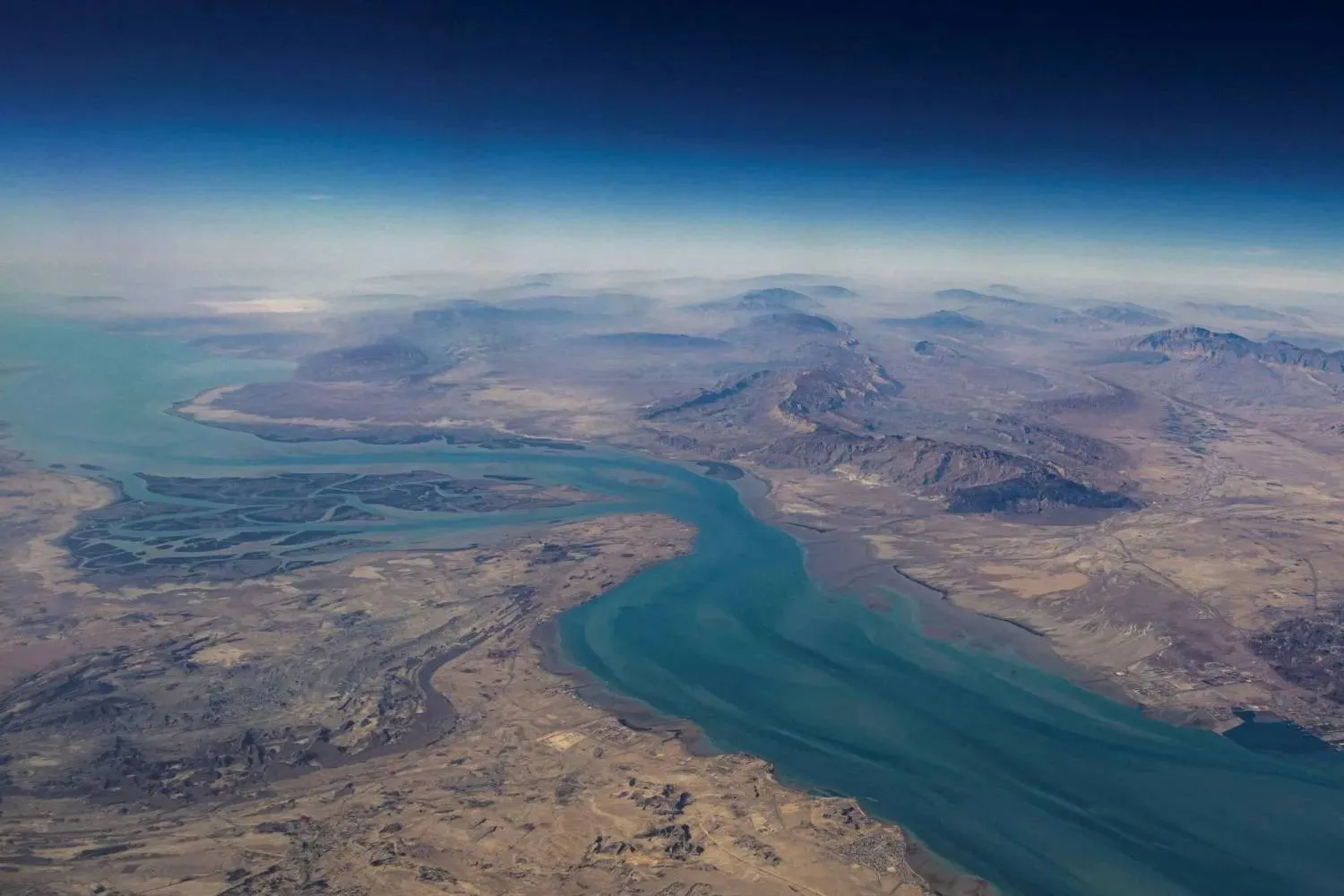

Why Greater Tunb Matters Near the Strait of Hormuz

An aerial view of Iran’s Qeshm Island near the Strait of Hormuz (Reuters)
TT

Why Greater Tunb Matters Near the Strait of Hormuz

An aerial view of Iran’s Qeshm Island near the Strait of Hormuz (Reuters)

US strikes on Greater Tunb on Wednesday thrust one of the most sensitive points at the entrance to the Strait of Hormuz back into the center of the confrontation, after US Central Command said it hit coastal defense systems, storage sites and cruise missile launchers in a 90-minute assault.

CENTCOM said the strikes were aimed at reducing Iran’s ability to attack commercial vessels in the strait.

Greater Tunb, one of three Emirati islands occupied by Iran since 1971, hosts a military airfield, Iranian Revolutionary Guard Corps Navy bases, garrisons and missile assets used to monitor nearby shipping lanes.

Former IRGC Navy commander Alireza Tangsiri had called the island vital to Iran’s control of the strait because it sits between the main inbound and outbound shipping routes.

Tangsiri, who was killed in an airstrike in Bandar Abbas on March 26, said in an earlier state television interview that losing Greater Tunb would mean losing control of transit routes through the Strait of Hormuz.

Its location, he said, gave Iranian forces the ability to monitor maritime traffic and shape its movement.

Tangsiri also tied Abu Musa and Sirri islands to Iran’s gas fields and Gulf trade, warning that the loss of Abu Musa could lead to the loss of Sirri and its military positions, gas fields and trade routes.

He had overseen the expansion of IRGC bases across the islands, including the military airfield on Greater Tunb and facilities on Sirri.

Islands and shipping lanes

Greater Tunb is part of a chain that includes Abu Musa, Lesser Tunb, Qeshm, Larak, Hormuz and Sirri. Studies have described the islands as forming Iran’s “defensive arc” around the strait.

Iranian officials have likened them to “unsinkable aircraft carriers” because they host anti-ship missiles, surveillance posts and naval bases.

Greater Tunb’s importance also lies in its proximity to the two main shipping lanes.

Tehran says vessels must follow routes and schedules set by Iranian authorities and secure prior approval. Washington is pressing for a southern route along the Omani coast that would fall outside Iranian control.

The routes have become a central point of dispute since the Islamabad memorandum of understanding on June 17.

Iran interprets its fifth provision as granting Tehran a role in regulating passage. The United States says the Strait of Hormuz is an international waterway that cannot be subjected to unilateral permits or fees.

Greater Tunb is a forward military outpost in Iran’s network of control over the strait.

The strikes were aimed at disabling coastal defense and missile sites that could be used against vessels and weakening Iran’s ability to impose its rules on shipping.



Netanyahu Says Iran 'Tried to Kill' One of his Sons

Benjamin Netanyahu alongside his son Yair (AP file photo)
TT

Netanyahu Says Iran 'Tried to Kill' One of his Sons

Benjamin Netanyahu alongside his son Yair (AP file photo)

Israeli Prime Minister Benjamin Netanyahu said Monday that Iran had attempted to assassinate one of his two sons, without offering further details.

"Something incredible happened: Iran targeted one of my sons. Iran tried to kill one of my sons," Netanyahu said during a phone interview with Israel's Channel 14.

The claim came during a discussion about reports that the Shin Bet domestic security agency had declined to provide a security detail for Gadi Eisenkot, the former army chief who is running neck and neck with Netanyahu ahead of elections on October 27.

Netanyahu voiced support for around-the-clock protection for Eisenkot, saying it was "not a luxury".

"Without that, (the Iranians) will succeed," AFP quoted him as saying.

Netanyahu has two sons and a daughter. It remains unclear which of his sons was allegedly targeted.

His elder son, Yair, 35, has spent extended periods in Miami since early 2024, reportedly under Shin Bet protection.

His stay in the United States has attracted controversy in Israel over the cost to taxpayers of providing security, while some residents in south Florida have expressed concern that his presence could make the area a target for attacks by Israel's enemies.

Shortly after Netanyahu's remarks became public on Monday, prominent Israeli journalist Amit Segal wrote on his Telegram channel that the alleged assassination attempt had been known for "months" but was subject to a gag order.

Israel killed Iranian supreme leader Ali Khamenei in the opening salvo of US-Israeli strikes on February 28, along with some of his family members.

His son Mojtaba, one of Khamenei's six children, was named the new supreme leader a week later.

In a message read out on his behalf on state TV, Mojtaba Khamenei said that in addition to his father, he had lost his wife, his sister, her child and his brother-in-law.

Mojtaba Khamenei has not been seen in public since his appointment, and was reportedly wounded in the same strikes that killed his father.

In another message attributed to him and published on the occasion of funeral ceremonies for his father, the new leader pledged to "avenge the blood" of Ali Khamenei.


US Launches ‘Economic Onslaught’ Against Iran’s Financial Connections

WASHINGTON, DC - AUGUST 24: US Treasury Secretary Scott Bessent announces a new set of sanctions against Iran in the Cash Room at the Treasury Department on August 24, 2026 in Washington, DC. Chip Somodevilla/Getty Images/AFP
TT

US Launches ‘Economic Onslaught’ Against Iran’s Financial Connections

WASHINGTON, DC - AUGUST 24: US Treasury Secretary Scott Bessent announces a new set of sanctions against Iran in the Cash Room at the Treasury Department on August 24, 2026 in Washington, DC. Chip Somodevilla/Getty Images/AFP

US Treasury Secretary Scott Bessent unveiled Monday what he described as an "economic D-Day" that aims to give a final warning to countries to sever their business ties with Iran or risk having key companies and entities cut off from the dollar-based financial system.

"We are launching an economic onslaught against Iran’s financial connections around ⁠the globe. Our ⁠objective is to sever every economic lifeline that sustains this tyrannical regime until Tehran stands alone," Bessent said.

He added that it’s “no longer acceptable to operate in the gray spaces” of the conflict.

He did not name what countries could face potential secondary sanctions from the United States.

“Let there be no ambiguity as to the position of the United States,” Bessent told a news conference. “An economic engagement of any kind with this murderous regime will expose those responsible to the full reach of American power.”

The US Treasury Department has mapped the networks, facilitators, and financial channels that Iran uses to smuggle oil and evade sanctions and said that Washington would be working with US partners to target any source of Iran's "illicit revenue."

The department said it has issued determinations against five sectors -- digital assets, technology, gold, ⁠aviation and shipping -- that the Iranian government is using to prop up its economy. The Treasury has also imposed sanctions on nearly 60 entities, individuals and vessels.

US President Donald Trump's war with Iran, which has pushed energy prices higher worldwide, is about to hit its six-month mark. While heavy fighting has ‌subsided, diplomatic efforts to end the war have stalled and oil and raw material shipping through the Strait of Hormuz ⁠remains blocked, ⁠keeping energy prices elevated.


Trump Says Iran 'Collapsing' Ahead of Sanctions Announcement

Motorcyclists pass a billboard depicting US President Donald Trump with hands around his neck beneath the words "Revenge is inevitable" in Tehran, Iran, Monday, Aug. 24, 2026. (AP Photo/Vahid Salemi)
TT

Trump Says Iran 'Collapsing' Ahead of Sanctions Announcement

Motorcyclists pass a billboard depicting US President Donald Trump with hands around his neck beneath the words "Revenge is inevitable" in Tehran, Iran, Monday, Aug. 24, 2026. (AP Photo/Vahid Salemi)

President Donald Trump said Monday that Iran is "collapsing" hours before the US government was set to announce details of what it says will be crushing sanctions against Tehran.

"IRAN IS COMPLETELY COLLAPSING!!!" Trump posted in his trademark all-caps style on his social media platform Truth Social.

“President Trump decimated Iran’s economy to a point where the rial has never been weaker and inflation has rarely been higher,” US Treasury Secretary Scott Bessent wrote Sunday in an opinion piece in the Financial Times.

“The regime’s final refuge now lies in the self-deception of fearful nations that still believe accommodating aggression can secure a durable peace.”