


US War Against Iran Enters a New Phase

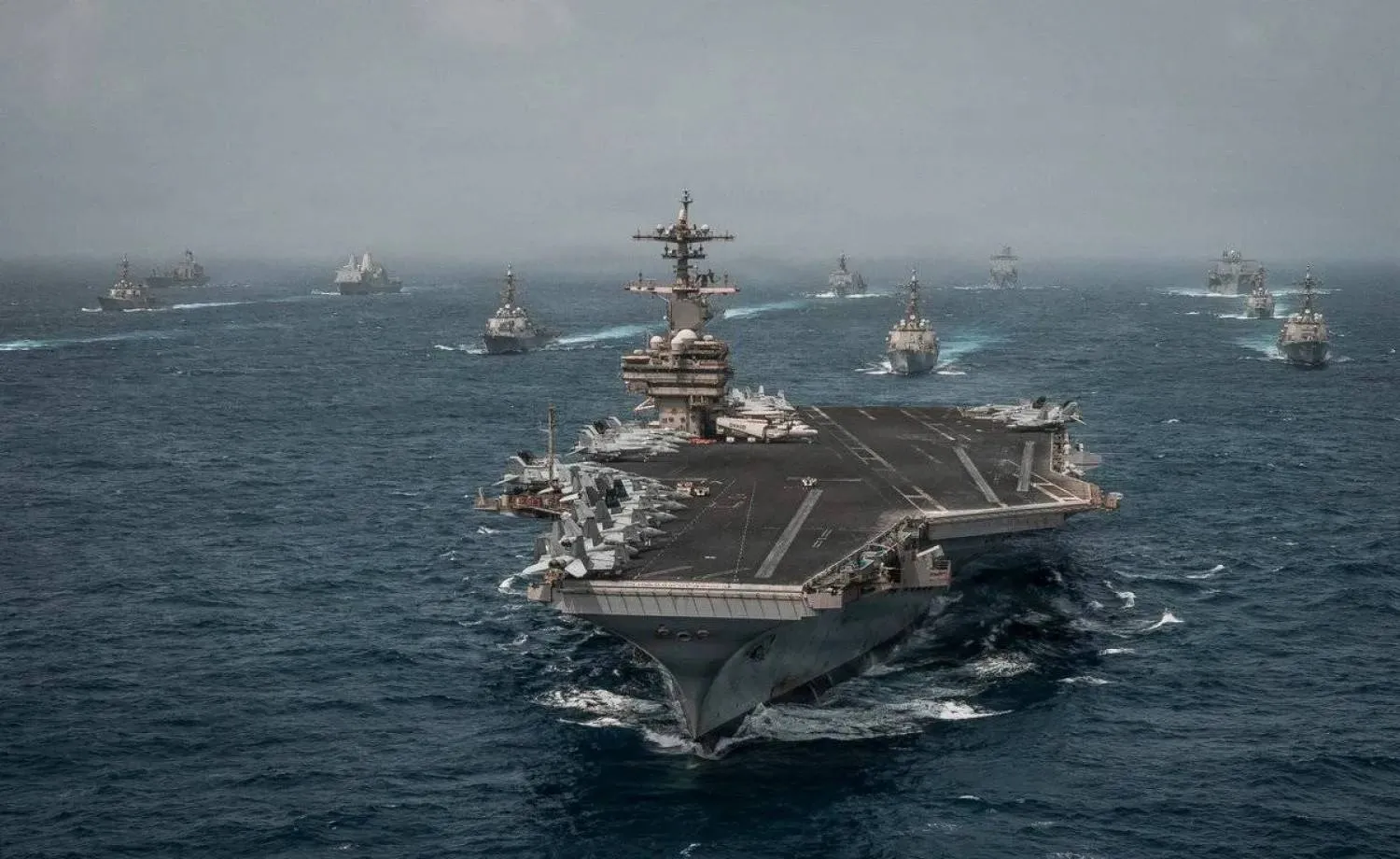
The US deploys two aircraft carriers and more than 20 US Navy warships across the Middle East (CENTCOM)
TT

US War Against Iran Enters a New Phase

The US deploys two aircraft carriers and more than 20 US Navy warships across the Middle East (CENTCOM)

By: Julian E. BarnesEric Schmitt and David E. Sanger


The Trump administration has lurched back into a war against Iran that had never really ended.

When the war started more than four months ago, US forces targeted Iranian military bases, missile launchers, ships and naval facilities. Israel, fighting alongside the United States, hit leadership targets, hoping to bring down Iran’s hard-line government.

Their record of success has been mixed, at best. Israel killed the supreme leader, Ali Khamenei, but the leaders who succeeded him were even more hard-line. US forces struck thousands of targets, but did not destroy Iran’s ability to control the Strait of Hormuz, the waterway through which about 20% of the world’s oil typically flows.

For roughly 90 days beginning in April, an on-again-off-again cease-fire prevailed. And then it was over.

The United States now appears to be entering Round 2 of its military campaign. This round has a new focus — but not necessarily a clearer strategy.

Iran’s ability to control the strait, despite the pummeling its navy took, is by far the most important lesson of the first phase of the war. So it is no surprise that the Trump administration is focused on trying to loosen Iran’s grip on it.

Last Tuesday, in retaliation for attacks on tankers, Trump ordered airstrikes on dozens of targets in Iran, including coastal radars, anti-ship missile launchers and a fleet of small Iranian attack boats.

After a short lull, the United States hit 140 military targets in the first of three consecutive days of heavy bombing this week.

US forces carried out new rounds of attacks on Iran throughout Tuesday and resumed a naval blockade of Iranian ports, a strategy that showed some success in the earlier phase.

The strikes are intended to open the waterway to shipping. The purpose of the naval blockade is to put economic pressure on Iran by choking off its trade and to flex American military might.

Trump was quick to declare success.

“The Strait of Hormuz is open to ALL Ship traffic except for Iran — and that is because of their lying, violent, malicious leadership, which is taking them down the path of TOTAL DESTRUCTION,” Trump wrote on Truth Social on Tuesday morning.

But exactly what the US military will do to enforce the blockade, and how far it will go to exert control of the strait, is not clear.

Round 1 of the war came at a high cost. Tehran has estimated that at least 3,500 Iranians have died in the war, including 175 at an elementary school.

Thirteen US service members have been killed. And the war has cost tens of billions of dollars already, and the new round could drive those financial costs up substantially.

A critical question for the next phase is whether Trump will consider an operation to take Kharg Island, a key export hub for Iran’s oil in the northern Arabian Gulf.

Trump publicly mused about ordering the Marines to take control of the island during the first phase of the war, but ultimately abandoned those plans for fear of high US casualties.

Such an operation would be a far bigger escalation than Trump has undertaken so far. But it would be difficult, and lives could be lost in either taking or holding the island.

The United States continues to have a fearsome arsenal in the region, including two aircraft carriers, and dozens of carrier- and land-based attack and surveillance planes.

“There are currently more than 20 US Navy warships and hundreds of military aircraft operating across the Middle East,” Central Command said in a statement announcing the resumption of the blockade. “American forces remain vigilant, lethal, and ready.”

In the strikes last week, US forces hit more than 170 Iranian military targets. In three consecutive days of heavy bombing this week, the United States has hit 140 military targets.

Analysts said the Trump administration was sending a pointed message to the government in Tehran that the United States was willing to broaden its mission again and hit sites that have both military and civilian uses.

But senior US officials said the real focus of the current phase is undoubtedly the strait.

So far, Trump had not ordered resumption of such an all-out conflict, in part because that could prompt Iran to target not only US military bases in the region, but also energy infrastructure in those nations.

Attacks on those facilities could send oil and natural gas prices skyrocketing even higher.

Senior officials said the goal of the new military campaign is to force Iran to allow tankers and other commercial cargo ships to pass freely through the strait, and ultimately to return to the bargaining table to resume nascent talks on more difficult, long-term issues like the fate of Iran’s highly enriched uranium.

Administration officials acknowledge that the military strategy is not without risks. Iran has shown it has an asymmetric advantage. Iranian forces do not have to hit every ship passing through the strait, or sink any of them. They only have to cause enough damage and issue enough threats to scare shipping companies and insurers.

This week, Iranian missiles struck two crude oil carriers that were transiting the southern part of the strait. The attack killed an Indian crew member. Another tanker, carrying liquefied natural gas, was also hit and caught fire near the Omani coast.

Senior US officials said time remains on the American side as Iran’s economy collapses.

During the uneasy peace, Iran was able to get many of its tankers out, and to empty storage tanks that were overflowing with oil.

The resumed blockade will cause that oil to back up once more, and the money Iran has made from its oil exports will begin to dry up.

But the real question is: Can Iran’s hard-line leadership outlast Trump’s anxiety over rising oil prices?


*The New York Times


Visiting Iraq, Iran’s Parliament Speaker Hails ‘New Order’ in the Region

 Iran's Parliament Speaker Mohammad Bagher Ghalibaf (C) speaks during a press conference at the site where Qassem Soleimani, commander of the Quds Force of Iran's Revolutionary Guards Corps (IRGC), was killed by a US airstrike in 2020, near the airport, upon his arrival in Baghdad on August 19, 2026. (AFP)
Iran's Parliament Speaker Mohammad Bagher Ghalibaf (C) speaks during a press conference at the site where Qassem Soleimani, commander of the Quds Force of Iran's Revolutionary Guards Corps (IRGC), was killed by a US airstrike in 2020, near the airport, upon his arrival in Baghdad on August 19, 2026. (AFP)
TT

Visiting Iraq, Iran’s Parliament Speaker Hails ‘New Order’ in the Region

 Iran's Parliament Speaker Mohammad Bagher Ghalibaf (C) speaks during a press conference at the site where Qassem Soleimani, commander of the Quds Force of Iran's Revolutionary Guards Corps (IRGC), was killed by a US airstrike in 2020, near the airport, upon his arrival in Baghdad on August 19, 2026. (AFP)
Iran's Parliament Speaker Mohammad Bagher Ghalibaf (C) speaks during a press conference at the site where Qassem Soleimani, commander of the Quds Force of Iran's Revolutionary Guards Corps (IRGC), was killed by a US airstrike in 2020, near the airport, upon his arrival in Baghdad on August 19, 2026. (AFP)

Iran's parliament speaker Mohammad Bagher Ghalibaf on Wednesday stressed the importance of strengthening the "new order" in the region, on the first stop in a three-day visit to Iraq.

Ghalibaf's trip comes at a time when Iraq is facing American pressure to disarm factions close to Tehran, which wields significant political influence in Iraq.

Prime Minister Ali al-Zaidi, who took office three months ago with US backing, has pledged to restrict weapons to the control of the state.

Speaking from the site near Baghdad airport where Iranian Revolutionary Guards Quds Force commander general Qassem Soleimani was killed in a 2020 US strike, Ghalibaf said: "Our trip to Iraq today is aimed at strengthening the new order in the region and accelerating the strengthening of cooperation between all countries in the region without foreign interference."

"Resistance in Iraq is... one of the elements of this country's power. Today, resistance has gone beyond the borders of Iran and Iraq... and has become global," he added.

Ghalibaf is scheduled to meet al-Zaidi later on Wednesday and then hold a meeting with the Coordination Framework, the largest bloc in parliament, made up of Shiite parties with varying degrees of proximity to Tehran.

Iraq has been pulled into the Middle East war, with pro-Iran factions have launching attacks on US interests, which Washington has responded to with deadly strikes. Iran has also shelled positions belonging to Iranian Kurdish opposition groups.

Iraq is facing mounting challenges in maintaining a balance between Iran and the United States, and since the US invasion in 2003 it has been an arena of rivalry between the two powers.

Al-Zaidi has given the armed factions -- some of which belong to the Iran’s so-called “Axis of Resistance” -- until September 30 to hand over their weapons to the state, coinciding with the scheduled end of the mission of the US-led coalition against the ISIS group.

Some of the most powerful factions, however, and those closest to Iran, refuse to cooperate.

On Thursday, Ghalibaf will head to the city of Karbala where he will take part in ceremonies marking 40 days since the funeral of former Iranian supreme leader Ali Khamenei, who was killed in US-Israeli strikes on February 28.


North Korea Leader’s Sister Says ‘Unaware’ of Reported Kim-Trump Communication

Kim Yo Jong, the sister of North Korea's leader Kim Jong Un, speaks at the National Emergency Prevention General Meeting in Pyongyang, North Korea. (KCNA via KNS/AFP via Getty Images file)
TT

North Korea Leader’s Sister Says ‘Unaware’ of Reported Kim-Trump Communication

Kim Yo Jong, the sister of North Korea's leader Kim Jong Un, speaks at the National Emergency Prevention General Meeting in Pyongyang, North Korea. (KCNA via KNS/AFP via Getty Images file)

The powerful sister of Kim Jong Un said Wednesday she was "unaware" of reported communication between her brother and Donald Trump, after the US president hinted at contact with the North Korean leader, but said ties between the two remained "excellent".

Kim Yo Jong's statement came hours after Washington and Seoul announced their annual exercises would end about a week earlier than planned following an order from Trump to scale them back.

Trump said on Sunday that he had told the Pentagon to curtail the annual Ulchi Freedom Shield exercises -- a day before they started -- citing his "good relationship" with North Korean leader Kim Jong Un.

Asked on Monday whether Kim had responded to his requests for a conversation, Trump said: "Yeah, he has."

But Kim's sister, Kim Yo Jong, said Wednesday she was unaware of any such contact between her brother and Trump.

"Regarding the recent news from Washington about communication between the leaders of North Korea and the United States, I am completely unaware of it," she said in a statement.

"It is likely the only matter concerning our top leadership's foreign policy that I am unaware of."

Kim Yo Jong nevertheless said her brother still had "good memories and feelings" about Trump and that the relationship between the two leaders remains "excellent".

Earlier Wednesday, Seoul's military said the drills would wrap up on Friday, not on August 27 as originally planned.

"We have decided to adjust the UFS exercise period to run from the 17th to the 21st," South Korea's Joint Chiefs of Staff said in a statement.

The decision was made "at the suggestion of the US side", it added.

The Pentagon said the "substantially reduced" drills would "preserve essential readiness and... (cause) no degradation to US training objectives".

The exercises are designed to prepare for a possible attack by North Korea.

They were understood to consist of two phases: the first, focused on defending against potential North Korean threats, was due to run until Friday; and the second, focused on a counteroffensive, from August 24 to 27.

The second phase is now understood to have been scrapped.

Kim Yo Jong, however, dismissed the reduction, saying: "We do not consider it worth commenting on and find it completely uninteresting."

She said reducing the scale or duration of the exercise did not change their "provocative and aggressive" character.

Nuclear-armed North Korea has long voiced outrage at the exercises, considering them dress rehearsals for an invasion.

Wednesday's early morning commentary by the state-run Korean Central News Agency said they pose "the most immediate and open threat" to North Korea and "regional security".

That commentary did not mention Trump's order or his desire to resume talks with Kim, with whom he has hinted at being in contact.

- 'Much safer' -

In the initial announcement on his Truth Social platform, Trump described the drills as unfriendly towards a country that had been respectful to him.

South Korea's Foreign Minister Cho Hyun told lawmakers on Wednesday that Seoul had not been informed in advance of Trump's plan to downsize them.

"Neither our government nor US government officials knew in advance what President Trump revealed via Truth Social," Cho said.

Trump has insisted that he is making the situation "much safer" through his ties with Kim.

"There has been persistent speculation that Washington could seek renewed talks with Pyongyang ahead of the November US midterm elections," Yang Moo-jin, former president of the University of North Korean Studies, told AFP.

"For Trump, a meeting with... Kim Jong Un could offer a chance to secure a foreign-policy legacy."

The Wall Street Journal reported on Tuesday, citing unnamed US officials, that Trump is pushing aides to set up a meeting with Kim as soon as this autumn.

"Reducing exercises could have a positive impact on the possibility of US-North Korea dialogue," Park Won-gon, a professor at Ewha Womans University, told AFP.

"The suspension of joint exercises has always been a prerequisite for North Korea to engage in dialogue with the US," he added.

Trump and Kim met three times in his first spell in the White House, but they have not held talks during his second term.

The United States stations about 28,500 troops in South Korea to bolster the country's defenses, a legacy of the 1950-53 Korean War that ended with an armistice rather than a peace treaty.

Trump has repeatedly criticized longstanding US alliances, casting doubt on Washington's commitment to security in East Asia and alarming regional partners.


Brazilian Police Say at Least 23 Killed in Minibus and Truck Crash

An ambulance arrives at the 28 de Agosto, in Manaus, Brazil, April 16, 2020. REUTERS/Bruno Kelly
TT

Brazilian Police Say at Least 23 Killed in Minibus and Truck Crash

An ambulance arrives at the 28 de Agosto, in Manaus, Brazil, April 16, 2020. REUTERS/Bruno Kelly

A minibus and a truck collided head-on in the southern Brazilian state of Parana, killing at least 23 people and injuring five others early Wednesday, police said. 

Both vehicles were traveling in opposite directions, authorities said. Preliminary evidence suggests that the truck, which wasn’t carrying any cargo, crossed into incoming traffic and collided with the minibus at around 3:30 a.m., Brazil’s traffic police said. 

The crash happened on a highway near Ipiranga, a city of 14,000 residents in central Parana state and 560 kilometers (350 miles) south of Sao Paulo. 

The minibus passengers included healthcare workers, patients and a few family members, authorities said. The death toll included 21 adults and two children. 

Emergency teams and local police were still working at the site hours later.  

Footage from TV Globo shows the truck parked on grass on the side of the road and the crushed minibus, with shattered glass and belongings of the passengers strewn on the ground.
