


Trump Accuses China of 2020 Election Interference, Contradicting US Intel

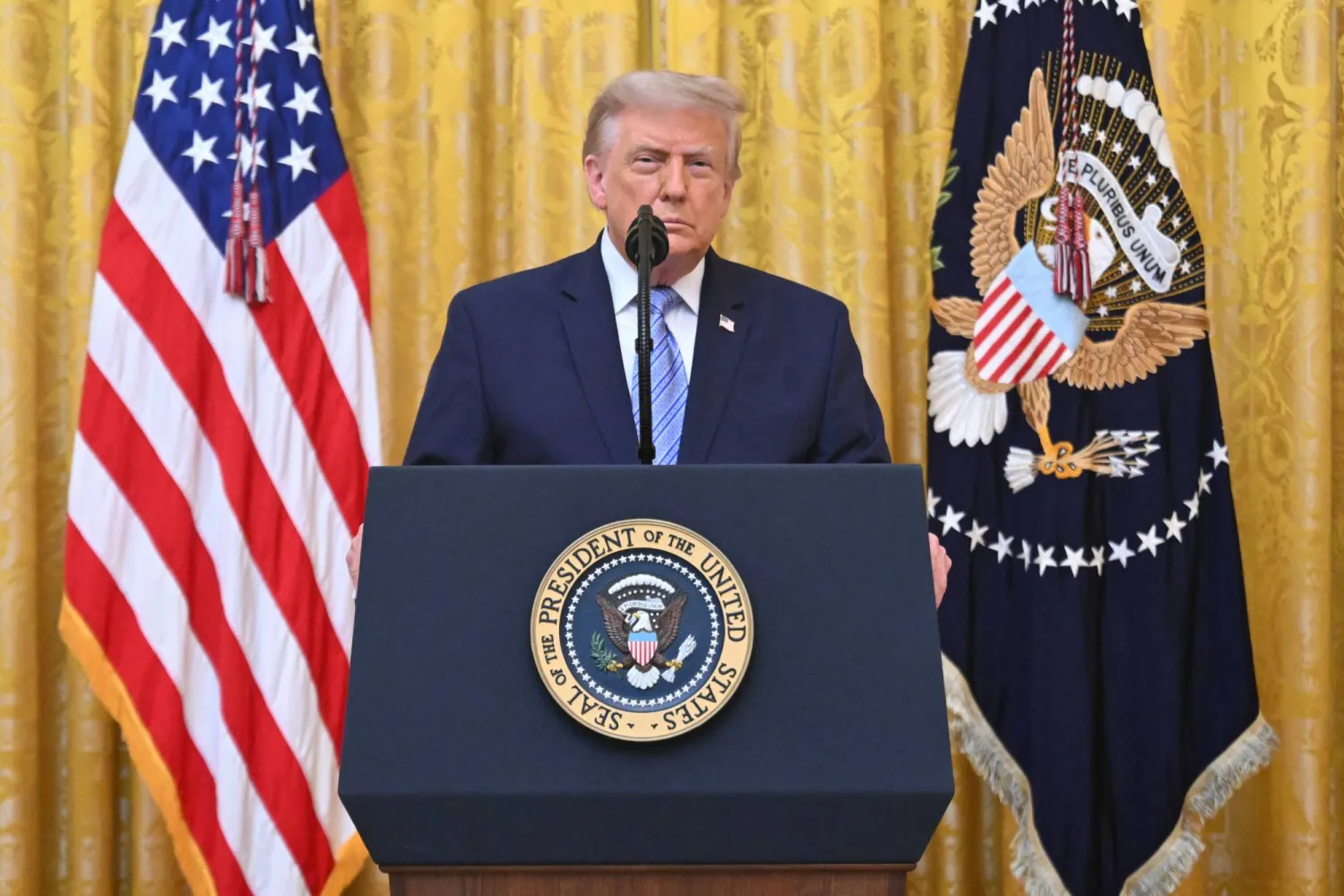
President Donald Trump speaks in the East Room of the White House, Thursday, July 16, 2026, in Washington. (Saul Loeb/Pool via AP)
TT

Trump Accuses China of 2020 Election Interference, Contradicting US Intel

President Donald Trump speaks in the East Room of the White House, Thursday, July 16, 2026, in Washington. (Saul Loeb/Pool via AP)

US President Donald Trump declassified documents on Thursday that he asserted showed Chinese interference in US elections, reviving his long-running attacks on election security despite a US intelligence assessment that found no evidence Beijing affected the 2020 vote that he lost.

The 25-minute prime-time address underscored Trump's effort to make election security a central political issue ahead of November's midterm elections, when his fellow Republicans will be defending their slender congressional majorities.

Trump used his remarks to again press Republicans in Congress to pass legislation imposing new voter identification and citizenship requirements, despite longstanding findings that voter fraud in US elections is rare. The bill has stalled in the Senate amid fierce Democratic opposition.

TRUMP ASSERTS 'SHOCKING VULNERABILITIES'

Trump said the declassified material would reveal "shocking vulnerabilities in our election infrastructure." But many appeared to show the opposite, or were not related to US election infrastructure at all.

The speech came at a challenging political moment for Trump and Republicans, with his approval rating weighed down by the unpopular Iran war and high energy prices.

Trump briefly mentioned the war at the outset, saying the US was "winning big," while listing a series of domestic accomplishments, including tax cuts and his immigration crackdown, before turning to election security.

The president said he was declassifying sensitive information that showed China had illicitly acquired 220 million US voter files, including names, addresses and other data.

He asserted ‌that members of the ‌US intelligence community deliberately suppressed information about the extent of China's activities.

An unclassified 2021 US intelligence assessment found no indications any ‌foreign actor ⁠attempted to or ⁠succeeded in altering "any technical aspect" of the 2020 presidential election vote, including voter registrations, ballots, tabulations or results.

That assessment was conducted under John Ratcliffe, then Trump's director of national intelligence and now his CIA director.

The report also found China had pursued an effort dating to at least 2008 to collect information on US voters, public opinion, political parties, candidates and top government officials, likely aiming to use the material to predict election results.

Two people familiar with the matter said the US voter data obtained by China was not confidential – voter files are routinely purchased by political consultants – and could not be manipulated.

Ahead of Trump's speech, some White House officials expressed concern that disclosing the China information could be misleading, sources told Reuters.

Trump's harsh language about China risked rocking a relationship that has steadied following last year's costly trade war. Trump hopes to meet with Chinese President Xi Jinping in September about improving trade relations.

China's Foreign Ministry did not immediately respond to a request for comment on ⁠the speech. Before the address, Liu Chang, spokesperson for the Chinese embassy in Washington, said: "China has never and will never ‌interfere in the presidential elections of the US."

FAMILIAR CLAIMS GOING BACK YEARS

Trump has spent years raising doubts about ‌electoral outcomes, falsely asserting that his 2020 loss to Democrat Joe Biden was rigged. He has also advanced other false claims, including that mail-in balloting is rife with fraud, voting machines are untrustworthy and ‌non-citizen voting is widespread.

Numerous courts and vote recounts found no evidence of large-scale fraud in the 2020 election.

Nevertheless, Trump's campaign has gained traction with his supporters. A Reuters/Ipsos ‌poll in April found 63% of Republicans believe Trump's claim that the 2020 election was stolen, a share that has remained largely unchanged in recent years despite the absence of evidence.

Trump said on Thursday that his administration had uncovered evidence of more than 275,000 non-citizens registered to vote in just four states, but it was not clear how many had actually voted.

In some previous cases, systems intended to verify citizenship status have mistakenly flagged some naturalized US citizens as non-citizens. Studies have found that non-citizens casting actual ballots is exceedingly uncommon.

POLITICAL HEADWINDS

While Trump cast US elections as highly vulnerable, he did not provide evidence of any actual votes in 2020 that were altered or manipulated.

Two of the three major US television networks and CNN decided not to broadcast the speech on their primary platforms, eschewing a practice typically reserved for major addresses on issues of national import.

Trump again urged Republican lawmakers to advance a bill, the SAVE America Act, that would require photo ID to vote and proof of US citizenship to register and would significantly curtail mail-in voting. Democrats and voting-rights advocates say the legislation is intended to suppress legitimate votes.

The bill has passed the Republican-controlled US House of Representatives several times with a simple majority, but it does not have the 60 votes to overcome a Democratic filibuster in the Republican-controlled Senate.

Some Republican leaders have urged Trump to focus on issues that matter most to Americans, including high living costs, rather than focus on the 2020 vote.

Democrats need to flip only three Republican seats to take a majority in the 435-seat US House. They face an uphill battle to win control of the 100-seat Senate with critical races unfolding in Republican-leaning states.



Tehran Races to Curb Inflation, Stem Rial’s Slide

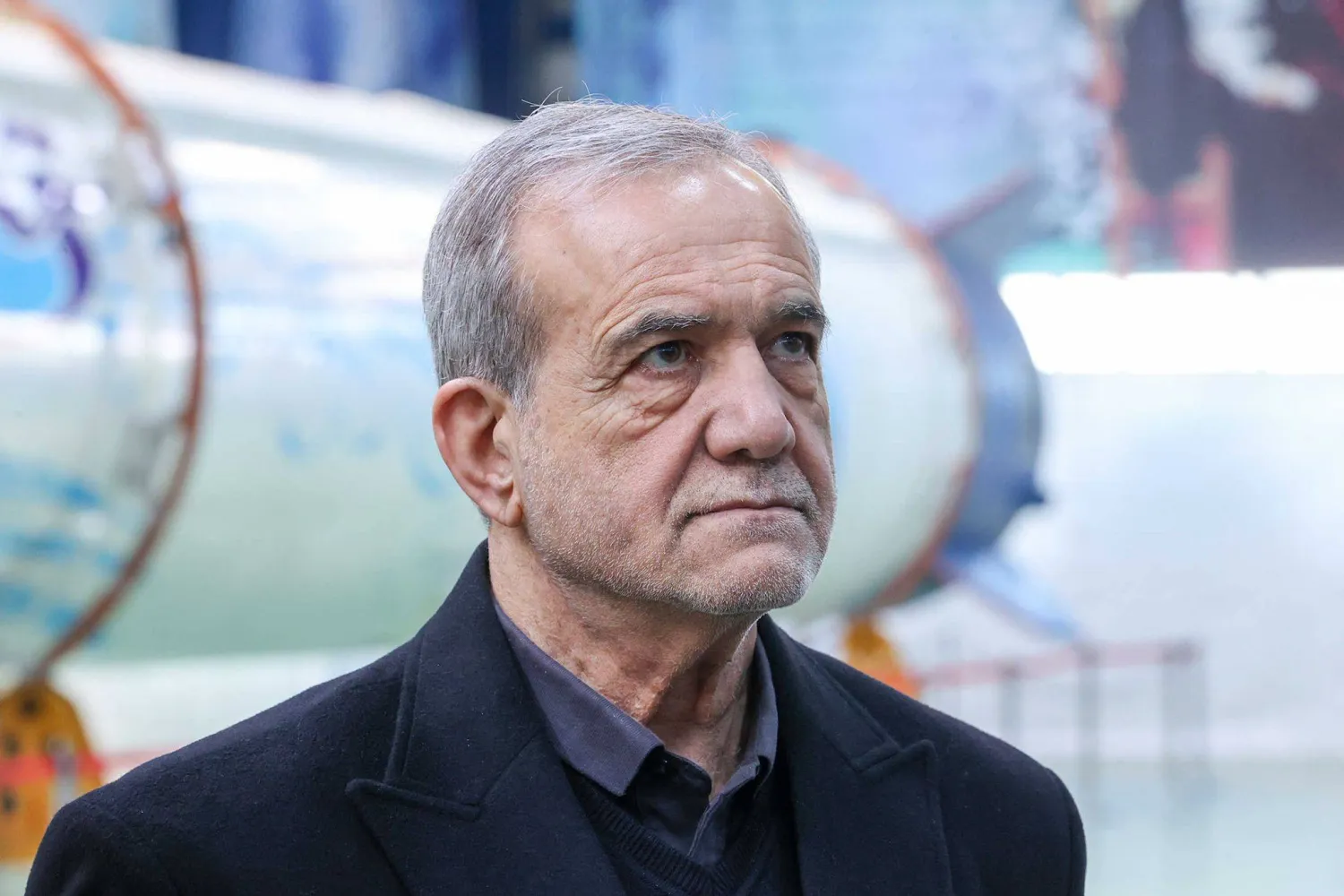
Iranian President Masoud Pezeshkian sits between Economy Minister Ali Madanizadeh and Central Bank Governor Abdolnasser Hemmati during a financial meeting on Wednesday. (Iranian Presidency)
TT

Tehran Races to Curb Inflation, Stem Rial’s Slide

Iranian President Masoud Pezeshkian sits between Economy Minister Ali Madanizadeh and Central Bank Governor Abdolnasser Hemmati during a financial meeting on Wednesday. (Iranian Presidency)

Iranian President Masoud Pezeshkian discussed the foreign exchange market, liquidity, inflation and the balance of payments during a three-hour meeting at the central bank, two days after the rial fell to a record low and Washington announced an expanded campaign to “choke” Iran’s economy.

Pezeshkian stressed the need to maintain economic stability and curb inflation expectations amid war, an economic blockade and external pressure, calling for full coordination between the central bank and institutions responsible for managing financial and currency markets, state news agency ISNA reported.

The Iranian president reviewed reports on liquidity levels, the foreign exchange market, the international balance of payments, monetary regulation policies and measures planned to steer the economy during and after the war.

Pezeshkian called for continued meetings with economic experts and for their proposals to be considered in shaping monetary, fiscal, banking, trade and corporate management policies. He also urged officials to explain the country’s economic problems to Iranians directly and transparently.

The meeting came after the United States imposed a new package of sanctions targeting about 60 individuals, entities and vessels, while expanding the risk of secondary sanctions to the digital assets, technology, gold, aviation and shipping sectors.

US Treasury Secretary Scott Bessent said Washington was seeking to sever “every economic lifeline” keeping the Iranian government afloat, pledging to hold accountable countries and companies that continue to deal with Tehran.

Pezeshkian said Tehran would continue to resist economic pressure, arguing that just as the United States had failed to achieve its objectives in the war, it would also fail through economic pressure.

Fuel stations

Pressure on the currency and prices coincided with disruption in the fuel market. Fuel stations in Tehran saw growing lines of cars and motorcycles on Tuesday after authorities announced a rare reduction in long-standing fuel quotas and imposed higher prices on purchases exceeding the allocated amounts.

Brent crude, meanwhile, fell below $90 a barrel on Tuesday as markets interpreted the new US sanctions as reducing, for now, the prospect of a resumption of large-scale military operations, despite continued risks to shipping through the Strait of Hormuz.

The dollar breached the 2-million-rial mark for the first time on Monday, trading at about 2.02 million rials on the open market, compared with an official central bank rate of about 1.5 million rials.

The dollar was worth about 1.65 million rials before the war began on Feb. 28, reflecting a further decline in the currency over the past six months.

Central Bank Governor Abdolnasser Hemmati sought to calm markets, describing the latest rise in foreign currency prices as “temporary” and saying the current volatility did not warrant a change in monetary policy direction.

He said the central bank had supplied the economy with an average of $175 million in foreign currency a day since the start of the Iranian year, compared with about $205 million during the same period a year earlier.

Hemmati announced a plan to allocate $20 billion to meet the industrial sector’s foreign-currency needs through the end of the year and pledged to supply the currency needed for medicines and essential goods.

He said the central bank had anticipated the outbreak of war since February and had therefore distributed foreign currency reserves across “different locations” that could be accessed when needed to secure essential supplies.

Hemmati described the past six months as “extremely difficult” but drew a distinction between enduring pressure and the “collapse” that authorities say the United States is seeking to force upon Iran’s economy.

He pledged to focus on curbing inflation and the currency’s decline, saying the central bank could not “print money without purpose and increase liquidity”.

Official data showed that annual inflation reached 66% in July, while consumer prices rose 87.9% from the same month a year earlier and food-price inflation reached 128%.

Rice prices have risen about 60% since the war began, while beef prices have increased by more than 150%, according to the Associated Press. The International Monetary Fund expects Iran’s economy to contract by more than 5%.

Financing production

The central bank plans to provide 700 trillion tomans to finance production through instruments it says do not rely on issuing new money.

Deputy Governor for Monetary Policy Vahid Majid said financing provided through instruments linked to production chains reached 197 trillion tomans during the first four months of the current Iranian year, as the bank seeks to expand “sustainable, non-inflationary financing”.

The central bank is also working to give exporters and importers greater flexibility in foreign currency trading, including by allowing direct agreements between the two sides and reducing the role of some intermediaries.

Hossein Tajiknejad, an official responsible for foreign currency allocation, said the central bank no longer purchased foreign banknotes itself but had allowed banks and importers to buy them at mutually agreed prices.

Tehran is also facing mounting restrictions on its foreign trade channels after the United Arab Emirates announced last week that it was suspending trade dealings with Iran, while the new US sanctions threaten companies and countries that continue to provide it with financial and commercial channels.

China, the largest buyer of Iranian oil and one of Tehran’s leading trading partners, warned that it would defend its interests after Washington announced the expansion of secondary sanctions.

Chinese Foreign Ministry spokesperson Lin Jian said the policy of “maximum pressure” and economic warfare would not resolve problems, warning that such measures could destabilize the global economic and financial system and harm other countries’ rights.

He said Beijing would “take all necessary measures” to protect its interests, posing a test of Washington’s ability to enforce the new restrictions on Iranian trade, particularly regarding Chinese-Iranian economic ties.

Iranian Economy Minister Ali Madanizadeh said his country had prepared a “two-year plan” to counter the new sanctions and that Washington would not achieve through economic pressure what, in his words, it had failed to achieve militarily.


Iranian Messages Seek to Defuse Iraq Dispute Over Armed Factions

Iraqi Prime Minister Ali al-Zaidi attends a Coordination Framework meeting in Baghdad. (INA)
TT

Iranian Messages Seek to Defuse Iraq Dispute Over Armed Factions

Iraqi Prime Minister Ali al-Zaidi attends a Coordination Framework meeting in Baghdad. (INA)

Iran has urged leaders of Iraq’s Coordination Framework to contain a dispute over armed factions’ weapons and avoid a confrontation with groups that may refuse to disarm after a Sept. 30 deadline set by Baghdad.

Iraq’s judiciary, meanwhile, said it would take action against anyone carrying weapons after the deadline.

Local reports cited informed sources as saying Tehran had called for negotiations with the factions rather than confrontation. The proposed talks would cover which weapons could be surrendered, how they would be handed over, and what the factions might receive in return.

Committees could also be formed to manage the process and prevent a direct confrontation with the government or the United States.

The move comes as Prime Minister Ali al-Zaidi’s government pushes ahead with a plan to place all weapons under state control.

Baghdad has tied the end of September to the conclusion of the US-led international coalition’s military mission against ISIS and the start of a new phase in bilateral security relations.

National Security Adviser Qassem al-Araji said this week that the coalition’s mission would end on Sept. 30. Dialogue with the factions over restricting weapons could begin afterward, he said, in an apparent effort to ease tensions over the deadline.

An informed source said a senior Iranian official briefly attended a recent Coordination Framework meeting and delivered messages on how to handle the coming political and security developments.

The messages also addressed the communication channel between the Framework and Tehran.

The reports identified the official as Mohsen Qomi, a representative of Iran’s supreme leader. Qomi attended part of the meeting in Baghdad during a visit that the source said was also intended to formally introduce his role to the Iraqi government and political and religious leaders.

The source said Qomi left shortly afterward and did not take part in all the discussions.

Qomi also met Coordination Framework leaders in Baghdad, including Iraqi Islamic Supreme Council President Humam Hamoudi and al-Zaidi.

The meeting, held at Hamoudi’s office, covered issues of mutual interest, according to the Iraqi News Agency.

The reports said Qomi told Framework leaders that Hamoudi had been designated as a channel of communication between Iran and Iraq. The move would organize political contacts with Tehran as pressure mounts on Iran-aligned armed factions.

The reports attributed the delay in Qomi’s visit to security conditions in Iran. His arrival coincided with growing debate in Iraq over the future of armed groups after the coalition’s mission ends.

Ghalib al-Daami, a professor of media studies at Mustansiriyah University, said the Coordination Framework forces understood the risks of confronting the United States over the weapons issue.

But they also did not want disarmament to be carried out quickly or fully if that would strengthen the government and the prime minister, he said.

Daami said Shi’ite forces could seek a formula that partly meets US demands without handing the government a major political victory. In his view, those forces generally prefer to keep the prime minister’s success within limits they can control.

Washington says ending the coalition’s military mission does not mean abandoning its security relationship with Baghdad. Instead, the relationship will shift to a bilateral defense partnership.

The United States and Iraq agreed in 2024 on a timetable to end the coalition’s military mission in Iraq by September.

The deadline has brought growing pressure on Iran-backed armed groups to surrender their weapons or fully integrate into state institutions.

Iraqi officials say some factions are resisting the move, making the issue one of the most sensitive tests facing al-Zaidi’s government as the coalition mission draws to a close.

International coalition withdrawal

In the Kurdistan Region, German forces serving with the international coalition ended their military and advisory duties this week, another step in the coalition’s gradual withdrawal.

An official ceremony was held on Tuesday at Camp Stephan at Erbil International Airport.

Officials from the Kurdistan Regional Government and the Peshmerga Ministry attended, along with representatives of the German Defense Ministry.

The Peshmerga Ministry said the German advisers and trainers had completed their mission after years of working with Peshmerga forces in the fight against ISIS.

Kurdistan Region President Nechirvan Barzani told a member of the German parliament that the region valued Germany’s support during the war against terrorism.

He highlighted the assistance Germany provided while Peshmerga forces were fighting and the region was receiving large numbers of displaced people.

The German withdrawal comes as US troops and the remaining coalition forces finalize plans to leave Iraq.

The United States and Iraq agreed in 2024 to end the coalition’s military mission and move to a bilateral security partnership. Cooperation against ISIS will continue under the new arrangements.

Separately, Iraqi Supreme Judicial Council President Faeq Zidan met with Joshua Harris, chargé d’affaires at the US Embassy in Baghdad, on Wednesday.

They discussed judicial measures against individuals and groups carrying weapons in violation of the Constitution and the law.

The meeting signaled a growing focus on the judiciary’s role as the end of the coalition’s military mission approaches.

The Supreme Judicial Council said the talks covered measures the judiciary would take after the mission ends on Sept. 30. They also discussed how to enforce the rule of law equally.

The meeting followed Zidan’s visit to Iran, where he met several senior officials.

They included Judiciary Chief Gholam-Hossein Mohseni-Eje’i, President Masoud Pezeshkian, Parliament Speaker Mohammad Bagher Ghalibaf and Supreme National Security Council Secretary-General Mohsen Rezaei, according to statements from Iraq’s judiciary.

After meeting Zidan in Tehran, Rezaei said the countries of the region would determine their own future and that the US would have no place there.

He said Iran wanted “an independent and strong Iraq.”

Rezaei also called for resolving the status of groups opposed to Iran that are based along the two countries’ border, a reference to Iranian Kurdish parties in Iraq’s Kurdistan Region.


Trump Believes Iran’s Supreme Leader Is Still Alive

Iranians shop at a bazaar in northern Tehran, Iran, 25 August 2026. (EPA)
TT

Trump Believes Iran’s Supreme Leader Is Still Alive

Iranians shop at a bazaar in northern Tehran, Iran, 25 August 2026. (EPA)

US President Donald Trump on Wednesday said he believes Iran's supreme leader, who has not been seen in public since taking over after his father's killing in February, remains alive. 

"I don't think he's dead. He was very seriously wounded. The left side of his body, the arm, the leg, the whole thing. He was very seriously wounded. But I don't think he's dead," Trump said in an interview with conservative radio host Glenn Beck. 

Officially, Mojtaba Khamenei continues to lead his country under US and Israeli attack. However, his public absence and the rise to power of veteran Revolutionary Guards figures has fueled speculation that he is either dead or not fully in command. 

His father was killed in bombing at the start of the US-Israeli assault. 

Trump -- who has already declared victory over Iran on multiple occasions but remains unable to force the opening of the Hormuz sea route or force Iran to surrender its nuclear materials -- said again that military and economic pressure was working. 

"Those things are going toward a very big victory," he said. "We're going to have a big victory here very soon." 

Trump also insisted that the Strait of Hormuz, where Iran's military has disrupted and to a large extent blocked shipping, is in fact fully open. 

"You could really say, you know, because the Strait is open. We take a lot of ships through the Strait now. We're taking them in. The mines are gone," he said. 

"We cannot let Iran have a nuclear weapon. That's what it's all about. That's 99.9 percent. We cannot let them because they are crazy and they will use it," he said, before adding that he had already "stopped it twice."