



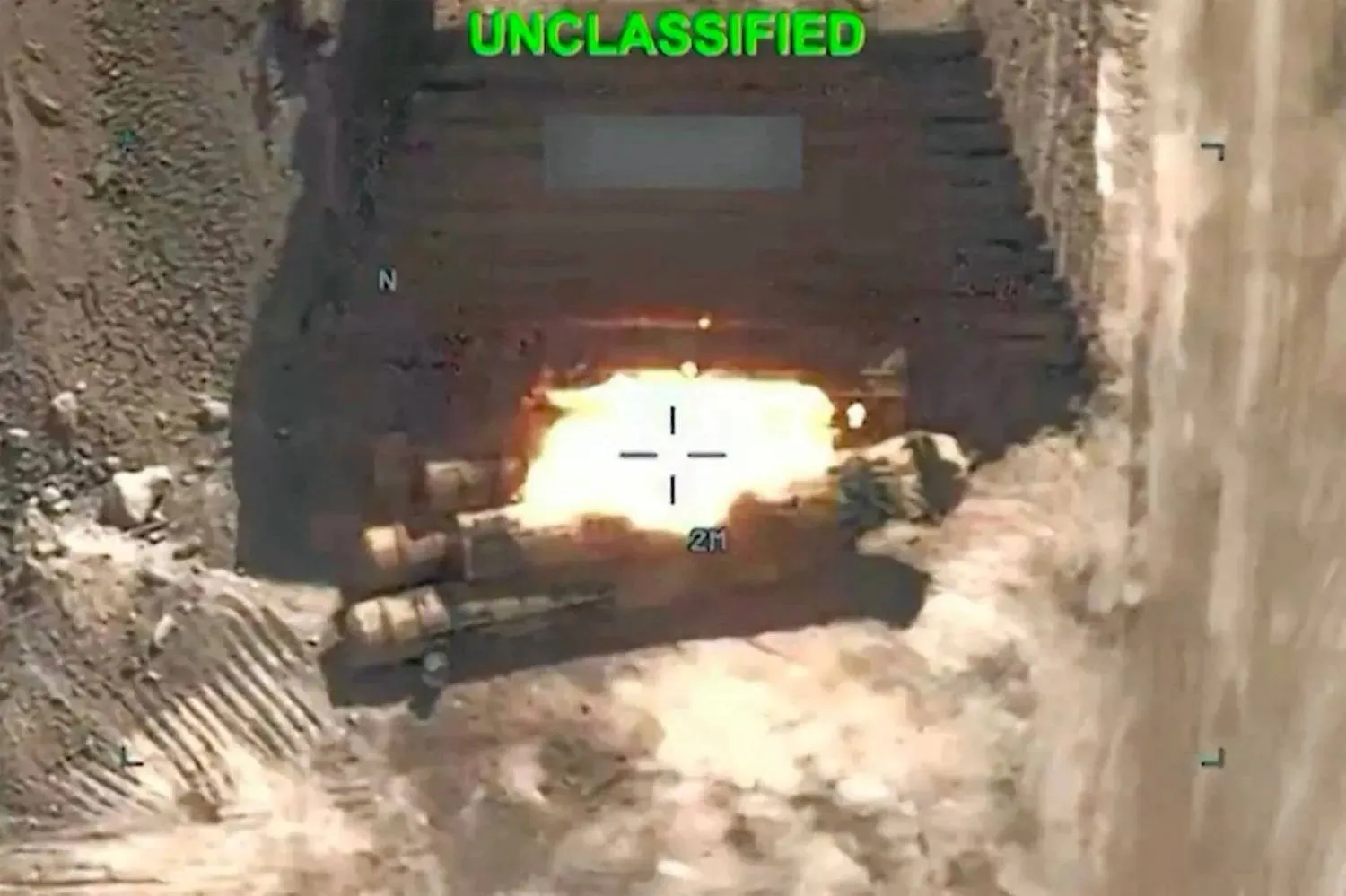

Iran’s government is unlikely to soften its negotiating position as a result of the ongoing US military strikes, according to a new intelligence assessment described by current and former US officials.
Analysts at US spy agencies have also concluded that Tehran and Washington are, for now, stuck in an indefinite limbo between peace and war, the officials told The Washington Post — an uneasy dynamic given the increasingly deadly nature of the tit-for-tat hostilities between the two nations.
The current and former officials spoke on the condition of anonymity to describe the assessments because of their sensitivity.
The findings, which have been briefed to the US administration, appear to underscore the dilemma President Donald Trump faces in a war that he and Israeli Prime Minister Benjamin Netanyahu began in late February.
Trump’s current course of ever-expanding attacks appears to have led to a stalemate. But with the war deeply unpopular at home, continuing escalation by the US, such as the possible introduction of ground troops, poses political risks for the president with no guarantee of military success.
With the prospect of a wider war erupting again, both Iran and the US signaled they were open to fresh negotiations, although no progress was reported.
Secretary of State Marco Rubio said the US remains open to a diplomatic solution in Iran and that parts of Iran’s government are also open to it, but hardliners have gotten in the way.
“They continue to send signals that they want to talk, that they want to negotiate but their behavior is what we’re responding to and their behavior is they’re launching missiles and drones at ships, including tonight,” Rubio told reporters Sunday evening as he departed for the Philippines.
The latest intelligence report was written primarily by the CIA, where analysts have underscored the Tehran regime’s staying power despite the loss of many of its top leaders and much of its military hardware to US and Israeli attacks.
In May, a CIA analysis concluded that Iran could survive a US naval blockade for at least three to four months before facing more severe economic hardship.
Intelligence assessments like those on Iran are not intended to be concrete predictions of the future, current and former intelligence officials said. Rather, they are a snapshot of current and likely future trends based on all available classified intelligence, including human espionage and technical collection, as well as open-source material.
Jonathan Panikoff, former deputy US national intelligence officer for the Near East, said that the Trump administration appears to believe that if it keeps hitting Iran harder militarily, Tehran eventually will become more flexible.
“That assessment is almost certainly incorrect,” said Panikoff, senior director at the Atlantic Council think tank.
Iran’s government has repeatedly shown that its number one priority is survival of the regime, and that it is willing to suffer blows despite the harm to its people and economy, he said.
“I’m struggling, because I don’t think there’s a lot of great options for the United States,” Panikoff said, adding that he is skeptical Trump would launch a ground invasion.
“You’ll continue to see significant flare-ups in this conflict,” he said, followed by periods of calm and then renewed fighting.
Inside Iran, US officials say they increasingly see tensions within the Tehran government between those Washington considers pragmatists and those seen as hardliners in the Revolutionary Guard Corps and elsewhere whose power has grown.
Rubio said the US has heard directly from Iranians in government that they support a diplomatic agreement, but he acknowledged “there’s a tension” with hardliners who seem to oppose it.


