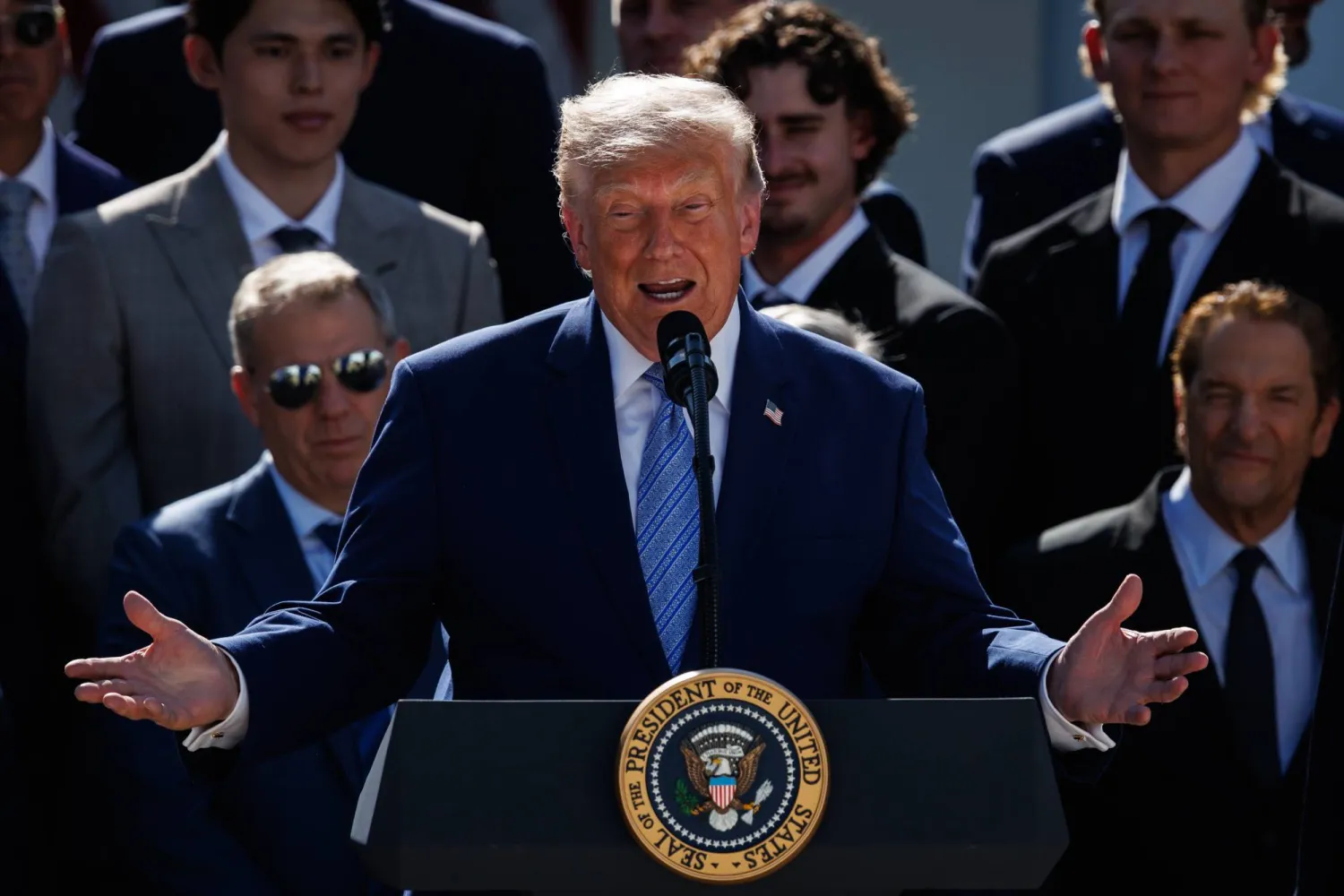

US President Donald Trump said Friday he had not yet decided whether to launch major strikes on Iran, as the renewed conflict threatened to widen across the region with Saudi Arabia striking Yemen's Iran-backed Houthi militias.
Trump said he would hold off on a major operation as Tehran was now getting "serious" in talks with Washington, for now dialing back reports that he was increasingly frustrated with the state of the war and mulling a large-scale military operation against Iran.
"No, I haven't," Trump told journalists in the Oval Office when asked if he had made a decision on hitting Iran hard.
"Look, we're talking to them right now. I think they're getting more and more serious as the days go by, for maybe the obvious reason."
Trump said Iran had a choice between making a deal or facing a "much higher level" of strikes, after nearly two weeks of US attacks that have left a ceasefire in tatters.
The war that Trump once predicted would last four or five weeks is now nearing its fifth month, and is weighing on the Republican's approval ratings ahead of crucial US midterm elections in November.
Trump added that he did not know what the "tipping point" would be for a decision, but reiterated that his red line would be if Iran was close to developing a nuclear weapon.
The United States says it is carrying out the strikes to stop Iran closing the crucial Strait of Hormuz.
Iran has responded with strikes on US bases that have killed four service members.
The Iranian military said Friday it had carried out attacks on Bahrain, Jordan and Kuwait in retaliation for Washington's latest strikes.
In Bahrain, sirens sounded again early Saturday, the interior ministry said.
"Citizens and residents are urged to remain calm and head to the nearest safe place," the ministry said on X.
- 'I trust them' -
In his comments, Trump also insisted Russia and China were not arming Iran, despite reports both were feeding Tehran intelligence to target US forces.
"President Xi (Jinping) said he will not partake, and President (Vladimir) Putin said the same thing... I trust them," Trump told reporters. "I don't think they'd want to have me disappointed."
On the diplomatic front, Chinese Foreign Minister Wang Yi met his Iranian counterpart Abbas Araghchi in Kyrgyzstan.
Wang called for an early resumption of negotiations and the implementation of a memorandum of understanding aimed at easing tensions in the Middle East and the Gulf region, Xinhua reported.
This referred to the preliminary deal aimed at ending the war which has collapsed as the foes fight to break a deadlock over the Strait of Hormuz.
"The door to negotiations, once opened, should not be closed, and as long as there is hope for peace, it should not be given up," Wang said.