Five of Cuba's 15 Provinces Without Power as Grid Fails Again

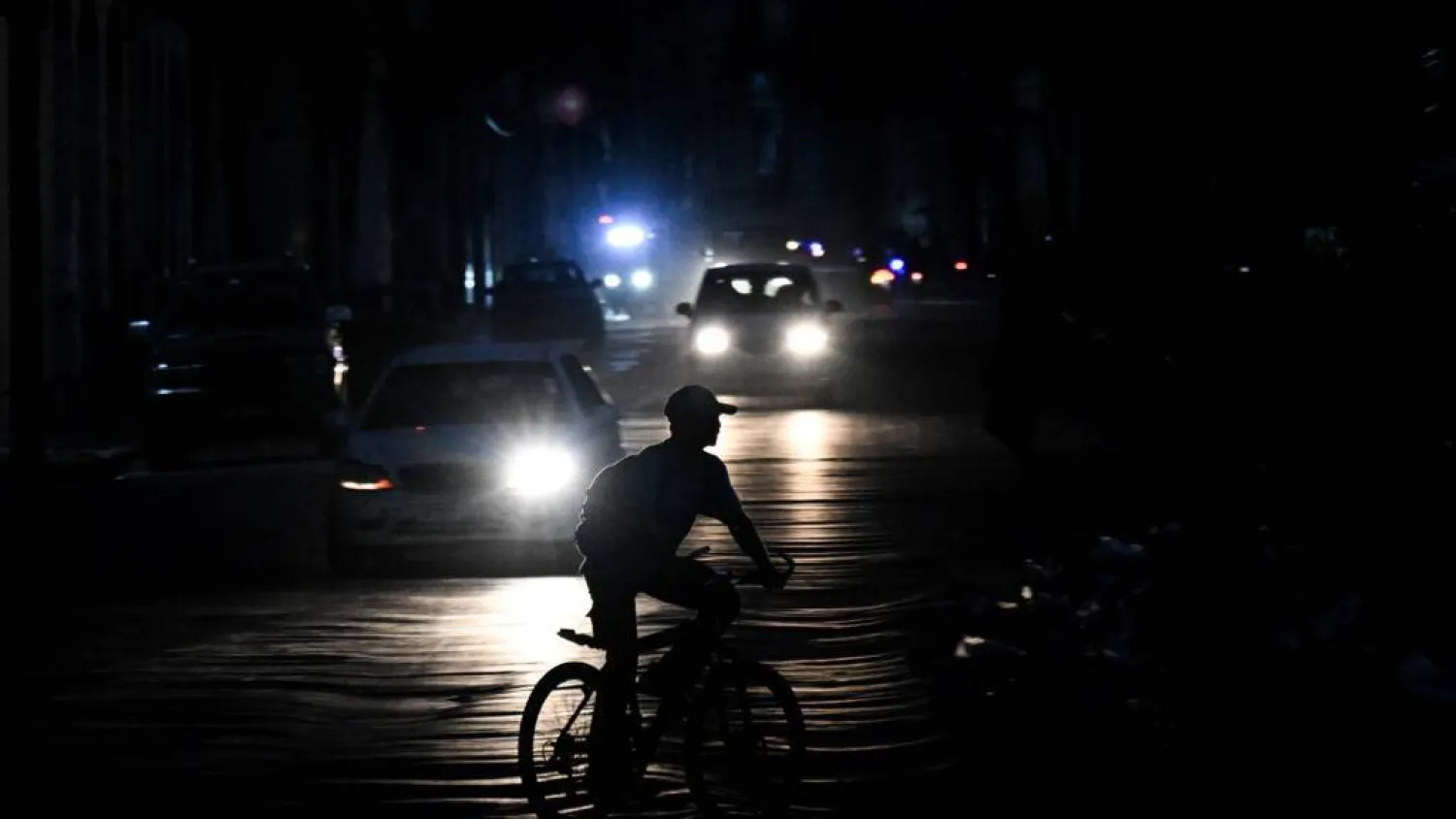
A man rides his bicycle down a street during a blackout in Havana. YAMIL LAGE / AFP
TT

Five of Cuba's 15 Provinces Without Power as Grid Fails Again

A man rides his bicycle down a street during a blackout in Havana. YAMIL LAGE / AFP

Havana and other parts of western Cuba were plunged into darkness Saturday due to the country's latest power grid failure, the state-run electric company announced.

Five of 15 provinces had no power due to a "partial collapse" of the electricity grid at 6:07 pm (2207 GMT), Cuba's UNE said on X.

Cuba is reeling from its worst economic crisis in decades -- one made worse by the fuel blockade imposed by US President Donald Trump in January as part of a pressure campaign aimed at ending six decades of communist rule.

UNE says the fuel shortages have made the national grid more susceptible to outages and made the use of emergency generators -- which typically run on diesel fuel -- all but impossible.

In recent weeks, some of the blackouts have lasted more than 30 hours in Havana, and for several days in other parts of the island nation, which has a population of 9.4 million people.

Since the start of 2026, Cuba has experienced five nationwide blackouts, three of them in July within a period of 10 days. Since late 2024, there have been 10 such total power outages.

Cubans are not shy about admitting that they are increasingly weary of the constant disruptions to daily life.

"We live practically like fireflies here -- in the dark all the time. You never know when you'll have power; it's our sad reality," Julian Gonzalez, a 72-year-old carpenter, told AFP.

Like many Havana residents who live near the Malecon, a coastal esplanade and seawall in the capital, Gonzalez was out trying to catch a bit of air.

"It's better than sitting at home feeling bitter," he said.

Havana blames Washington's punitive measures for the dire state of its electricity grid, while the US says the fault lies with Cuba's government and its mismanagement of the economy.

The seven thermal power plants that form the national grid's backbone have all been in operation for more than 40 years, and are in various states of disrepair.

Relations between Washington and Havana have been tense since the start of the year, especially since US forces snatched Venezuelan leader Nicolas Maduro from Caracas in early January and brought him to the US to face federal charges.

Maduro had long been a staunch ally of Cuba.

Washington has authorized the arrival of only one Russian tanker -- carrying 100,000 tons of crude -- which came in March. Those reserves have since been exhausted.

In addition to its oil blockade, the Trump administration has ramped up sanctions against Cuban state-owned businesses, prompting many foreign businesses to suspend operations in the country.

The United States has also indicted former president Raul Castro, brother of the late revolutionary leader Fidel Castro, over the downing of two civilian planes three decades ago.

In late June, Cuban Foreign Minister Bruno Rodriguez said "no progress" had been made in months of bilateral discussions.

But under pressure from all of the US measures, Cuban lawmakers adopted a raft of free-market reforms aimed at rolling back the state's role in the economy and attracting investment in everything from banking to tourism and agriculture.

And on Wednesday, Havana said it would open up major sectors such as gas stations, electricity generation, trash collection and pharmacies to private firms.


China Tells US Ready to Strengthen Cooperation

 Chinese Foreign Minister Wang Yi speaks during a press conference after the Lancang-Mekong Cooperation Foreign Ministers Meeting in Beijing Wednesday, Nov. 4, 2026. (AP)
Chinese Foreign Minister Wang Yi speaks during a press conference after the Lancang-Mekong Cooperation Foreign Ministers Meeting in Beijing Wednesday, Nov. 4, 2026. (AP)
TT

China Tells US Ready to Strengthen Cooperation

 Chinese Foreign Minister Wang Yi speaks during a press conference after the Lancang-Mekong Cooperation Foreign Ministers Meeting in Beijing Wednesday, Nov. 4, 2026. (AP)
Chinese Foreign Minister Wang Yi speaks during a press conference after the Lancang-Mekong Cooperation Foreign Ministers Meeting in Beijing Wednesday, Nov. 4, 2026. (AP)

China's top diplomat Wang Yi told US Secretary of State Marco Rubio on Wednesday Beijing was "willing to strengthen" cooperation with Washington, the Chinese foreign ministry said.

Wang and Rubio spoke by phone ahead of an expected meeting between US President Donald Trump and Chinese President Xi Jinping at the November 18-19 Asia-Pacific Economic Cooperation (APEC) conference in China's Shenzhen.

The two countries reached an agreement to calm trade tensions during last year's APEC summit in South Korea after they had exchanged tariff escalations earlier in 2025.

"(China) is willing to strengthen communication and cooperation with the US," Wang told Rubio during a "constructive" call, the ministry said in a statement.

Wang added that the countries would support each other in hosting the 2026 APEC summit and G20 summit in the United States.

Beijing stands ready to "properly handle differences and sensitive issues" with Washington, Wang said, adding that "stability" in US-China ties had been "hard won".

Next week's APEC summit could also see a trilateral meeting with Trump, Xi and Russian President Vladimir Putin, after each country said they were in discussions about such talks.

Trump said Sunday he would likely be meeting Xi and Putin to discuss ending the Iran war.


Italy Evacuates Hundreds of Schools Due to Bomb Alert, with Threats in Scotland and Ireland

Policemen stand outside the "Virgilio" middle school after children have been evacuated due to a bomb alert, in Rome on November 11, 2026. (AFP)
TT

Italy Evacuates Hundreds of Schools Due to Bomb Alert, with Threats in Scotland and Ireland

Policemen stand outside the "Virgilio" middle school after children have been evacuated due to a bomb alert, in Rome on November 11, 2026. (AFP)

Italian authorities evacuated hundreds of schools Wednesday after an emailed bomb threat, the latest in a series of disruptions affecting European institutions following recent hoaxes aimed at airlines and broadcasters.

Schools in Ireland, Scotland and Northern Ireland received similar threats, but no evacuations were reported.

The Italian Education Ministry said the email threat was received by over 6,300 schools, but it was not immediately known how many had been evacuated.

Italian Premier Giorgia Meloni said there was no indication of any “concrete danger” to schools and that the threats appeared aimed at “generating alarm and concern.” She said investigations were underway and that she had called a meeting of ministers for later Wednesday.

The anonymous email also threatened Meloni, according to copies obtained by Italian media, including the LaPresse news agency. She did not address the personal threat in her statement, and her office had no immediate comment.

The email purported to come from the leader of an otherwise unknown group with an anti-woman name and contained particularly violent threats. It was signed with the same Russian name used in last week’s threats against European broadcasters.

Authorities have not attributed the threats to any group or state, and no evidence has emerged linking the hoaxes to a government.

Threats reported in other countries

Police in Northern Ireland said they were conducting “urgent inquiries” after a threatening email was sent to hundreds of schools. Police in Scotland said they were treating similar messages as hoaxes and were not requiring schools to evacuate.

“Our assessment remains that they do not represent a credible threat,” Police Scotland said.

Police in Ireland also said they were aware of a “generic communication” sent to several educational institutions.

Rome students learn of threat after evacuation

“These are very delicate considerations, because there is always the risk that there is someone else behind the madman,” Italian Education Minister Giuseppe Valditara told reporters. “Given that so many schools are involved, the real risk is almost non-existent.”

At Rome’s Mamiani high school, students poured into the streets, mistaking the alarm for the recess bell. They learned of the bomb threat only after they were outside.

“They are saying it was a bomb alert because an email arrived from Russian hackers in which they said they would have killed everyone. It was pretty violent,” said Anita Bartocci, an 18-year-old student.

Hoax pattern emerges

Bomb threats targeted dozens of flights across Europe last week, following a string of hoaxes that forced flight diversions and left airlines scrambling to keep passengers safe and minimize disruption.

False bomb threats are relatively common, but so many in such a short period are unusual. No suspicious items were found and no one was injured. Still, the threats raised concerns because they followed other disruptions across Europe, including attacks on supermarket refrigeration systems and drone incursions.

Defense Minister Guido Crosetto said the emailed threats were aimed at “sowing terror, or creating concern.”

“It’s too easy. Any one of us can use the available means and instruments to send an email to a school, a daycare, an airline, saying that there’s a bomb,” Crosetto told reporters at an event Wednesday.

Italian Foreign Minister Antonio Tajani said Saturday that his personal data had been leaked to the dark web, an encrypted part of the internet. PM Meloni blamed pro-Russian hackers.

The company overseeing construction of the Brenner Base Tunnel, which will connect Austria and Italy, also said over the weekend that it had been hacked last month.


World Leaders Urge Stronger and Faster Action at UN Climate Talks Over Inadequate Response

Turkish President Recep Tayyip Erdogan plants an olive sapling ahead of the World Leaders Climate Action Summit at the 31st United Nations Climate Change Conference (COP31) in Antalya, Türkiye. (Kiara Worth/UN Climate Change/dpa)
TT

World Leaders Urge Stronger and Faster Action at UN Climate Talks Over Inadequate Response

Turkish President Recep Tayyip Erdogan plants an olive sapling ahead of the World Leaders Climate Action Summit at the 31st United Nations Climate Change Conference (COP31) in Antalya, Türkiye. (Kiara Worth/UN Climate Change/dpa)

World leaders called for urgent and decisive action on global warming Wednesday as formal talks began at the United Nations climate conference in Türkiye, saying the crisis is disproportionately harming some of the world’s most vulnerable countries.

“You might as well bomb us. That might have been easier than watching climate change tear apart our homes piece by piece,” said Surangel Whipps Jr., president of the island nation of Palau. “We are at war with a crisis we did not create. A war no peace treaty can end, only urgent action can.”

The annual summit follows a year of deadly floods, heat waves and other disasters. Leaders said geopolitical conflicts had diverted attention from climate change.

Leaders of the world’s three biggest polluting nations — China, the United States and India, which together account for more than half of global carbon dioxide emissions — skipped the summit at COP31.

Their absence left a handful of national leaders and UN officials to press for action as a new report warned of a widening gap between countries’ climate pledges and actual emissions cuts.

Scientists say global warming is likely to exceed 1.5 degrees Celsius (2.7 degrees Fahrenheit) above preindustrial levels. Limiting warming to that threshold was a goal of the 2015 Paris Agreement and remains a focus of international negotiations.

“We know the truth. Now we must act on it because climate action is more than a fight over a number or a thermometer,” UN Secretary-General Antonio Guterres said in an opening speech. “We are in the fight for our lives and our children’s future.”

'Every fraction of a degree counts'

Guterres outlined a framework for climate negotiations, saying they must prioritize ending fossil fuel reliance, adapting to a warmer world, increasing financial support for poorer countries bearing the brunt of climate change, and promoting cooperation over conflict.

“We do not need countries to agree on everything. But we do need them to cooperate on the things no country can solve alone,” he said.

But addressing climate change has been overshadowed by wars, inflation and geopolitical conflicts, Brazil's President Luiz Inácio Lula da Silva said. He pledged to protect the Amazon, the world’s largest rainforest, and urged world leaders to work together for a just, sustainable future.

“Brazil is back to defend the continuity of a healthy planet,” he said.

Micronesian President Wesley Simina said his country is already suffering irreversible losses of coral reefs that “protect our shores, sustain our fisheries, feed our families and carry the stories and traditions of our communities.”

He called climate change the “single greatest threat to the security, livelihoods, and well-being of Pacific peoples, but perhaps worse than what we’ve already experienced is what has yet to come” as temperatures continue to rise.

“Every fraction of a degree counts. Every fraction avoided reduces risk. Every year in which we can slow the rate of warming provides more time for adaptation and reduces the pressure on ecosystems that are approaching their limits,” he said. “This is why the world must act not only deeply, but quickly.”

Amy Pope, director general of the International Organization for Migration, called for more funding to help communities adapt to climate change and build resilience.

Climate change displaced almost 30 million people in 2025, while hundreds of millions more live in places unprepared to withstand future risks, Pope told The Associated Press on the sidelines of the summit.

“The issue that policymakers fail to understand is that making these investments in building resilience to climate in these vulnerable communities will actually save millions of dollars, millions of lives in the end,” she said.

Leaders of some major polluting nations absent

More than 70 world leaders and senior government officials are speaking at the summit, though what can be accomplished remains uncertain in the absence of leaders from key nations.

“It really is a disgrace that just one of the seven G7 heads of state and only a handful of G20 leaders are attending this summit,” said Mohamed Adow, director of Power Shift Africa, a climate and energy think tank. “The world’s biggest economies should be leading the response to the climate crisis, not leaving it to others.”

The United States, the world’s second-largest polluter after China, is absent from the talks for the second consecutive year. President Donald Trump, who has called climate change a hoax, has targeted offshore wind projects and removed rules limiting power plant emissions.

European Commission President Ursula von der Leyen attended, but many leaders of European countries stayed away.

“More than half of the top leaders of the EU countries are not showing up at the leaders’ summit,” Climate Action Network Europe Director Chiara Martinelli told The Associated Press. “If Europe wants to help steer the global transition, it needs to show up and be part of it.”

Conference colored by fears over speed of climate action

The gap between nations’ climate plans and action on the ground is widening, according to an annual climate change performance index published Wednesday by Germanwatch and the New Climate Institute.

“Overall, current collective efforts are not enough to prevent catastrophic climate change. But we see clear potential for improvement,” said Jan Burck of Germanwatch.

COP31 host Türkiye and Australia, which is leading the negotiations, ranked among the worst performers in curbing emissions.

The talks come as the war in Iran has driven up global prices for oil, gasoline and products such as fertilizers and pesticides, prompting governments to rethink energy policies and investment in renewable sources such as wind and solar.

Past talks have been criticized for producing promises that later went unfulfilled.

Delegates at the 2023 conference in Dubai agreed to transition away from fossil fuels such as coal, oil and gas, the main drivers of climate change. But subsequent conferences in Azerbaijan and Brazil yielded little agreement on how to reduce their use. Last year’s conference in Brazil produced a compromise deal pledging more money to help vulnerable nations adapt to climate change.