


Iran Says Close to Hormuz Plan with Oman, but Reopening Depends on US

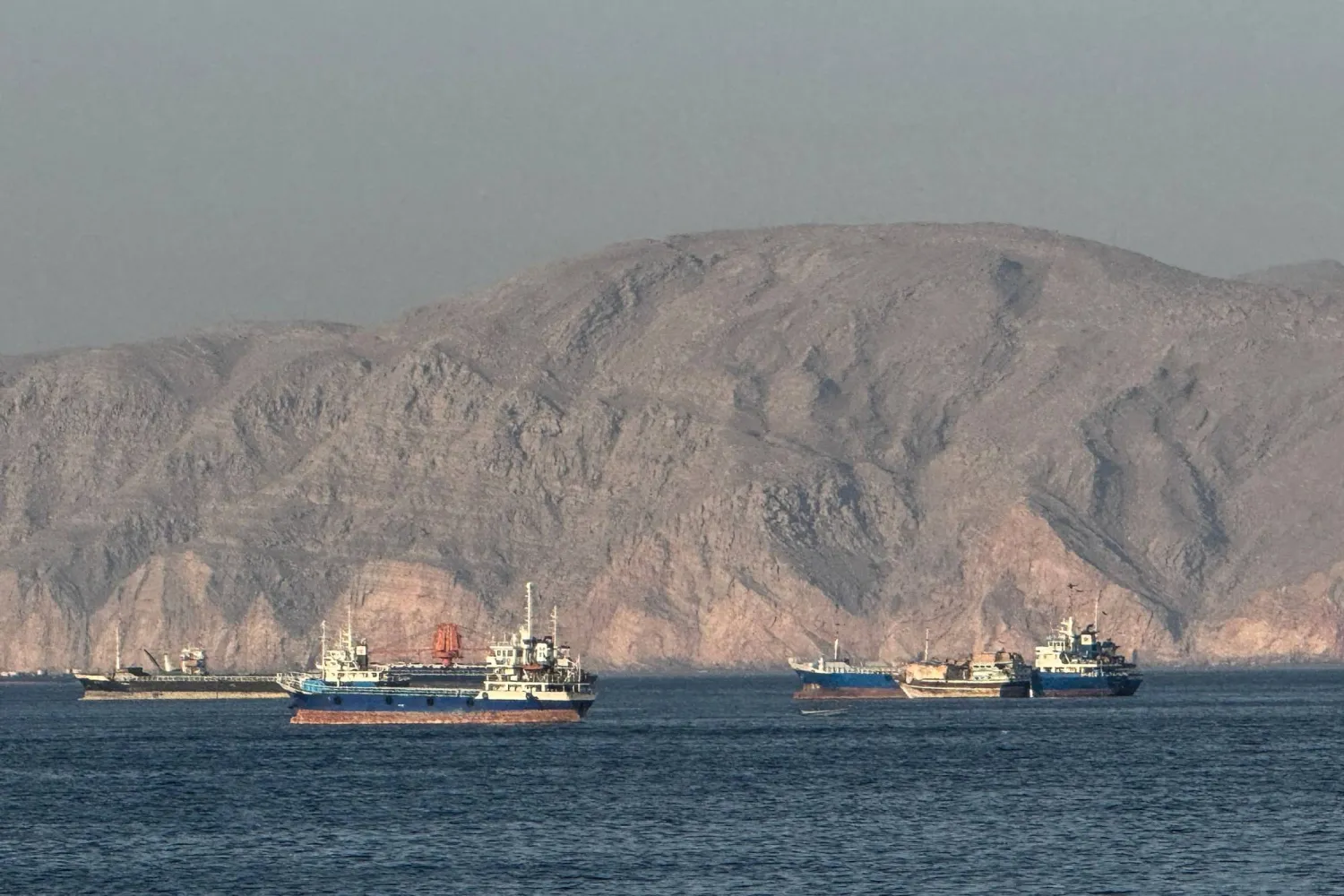
(FILES) Vessels are seen anchored in the Strait of Hormuz, off the port city of Khasab on Oman's northern Musandam Peninsula on May 17, 2026. (Photo by AFP)
TT

Iran Says Close to Hormuz Plan with Oman, but Reopening Depends on US

(FILES) Vessels are seen anchored in the Strait of Hormuz, off the port city of Khasab on Oman's northern Musandam Peninsula on May 17, 2026. (Photo by AFP)

Iran and Oman have agreed a route for ships transiting the Strait of Hormuz and were finalizing arrangements for jointly managing the strategic waterway, Tehran said Wednesday, even as fresh security incidents highlighted continued risks for regional shipping.

The agreement would be a step towards reopening the key energy route, but official sources briefing Iranian media stressed that any easing still hinged on Washington ending its own naval blockade of Iran's ports, AFP reported.

US President Donald Trump has repeatedly insisted Tehran is keen for a deal to reopen Hormuz, but Iran has denied this and said it will instead make arrangements with its neighbor across the strait, Oman.

"The geographical coordinates of the route envisaged by the two sides have been agreed upon and, if certain third parties do not obstruct the process, the joint statement of the two countries, containing the main considerations and points of agreement, is also in the final review and drafting stage," Iran foreign ministry spokesman Esmaeil Baqaei said, according to state news agency IRNA.

According to the report, Baqaei told journalists that talks with Oman were moving forward, but that even if an understanding was reached, it would not mean that the strait had become safe for all passing vessels.

"The factors making the Strait of Hormuz insecure still exist on the part of the United States, particularly the naval blockade and other aggressive and threatening actions against Iran and its interests," he said.

Highlighting the risks, the captain of an oil tanker reported hearing two explosions while transiting the strait, nine nautical miles (17 kilometers) southeast of Kumzar, Oman, Britain's maritime security agency UKMTO said on Wednesday. The crew and vessel were safe.

Before the war, Hormuz carried around a fifth of the world's oil and LNG exports, and prices have repeatedly surged since the dispute over the waterway erupted, piling economic and political pressure on Washington.

US Vice President JD Vance acknowledged American frustrations with the pace of diplomacy with Iran, saying negotiations would take time because of divisions within the country's leadership.

"It's going to be messy and it's going to take some time to get there," Vance told Fox News in an interview broadcast Wednesday.

"The reality... is that number one, the Iranians are extraordinarily difficult people. Number two, they have a fractured system," he said.

After imposing an effective blockade on the strait, Iran has insisted ships take a route that hugs the Iranian coast.

Many vessels have instead chosen to take a southern route, close to Oman on the opposite side of the strait, occasionally coming under fire.

Iran wants to control the strait and charge tolls, powers it did not exercise before the war and a development that the US would fiercely oppose.

In what has become a regular pattern, Trump last week threatened to hit Iran "very hard,” potentially with attacks against civilian infrastructure, only to pull back, hinting a deal was near.

But Iran's foreign ministry denied negotiations were taking place with Washington.


Turkish F-16 Crashes After Pilot Ejects Safely

Six months ago, another Turkish F-16 fighter jet crashed, killing the pilot, shortly after takeoff during an alert-response mission near the Bulgarian border. (AFP file)
TT

Turkish F-16 Crashes After Pilot Ejects Safely

Six months ago, another Turkish F-16 fighter jet crashed, killing the pilot, shortly after takeoff during an alert-response mission near the Bulgarian border. (AFP file)

A F-16 fighter jet crashed during a training exercise in northwestern Türkiye on Wednesday but no-one was hurt, the pilot ejecting to safety, the defense ministry said.

"An F-16 aircraft belonging to our air force was involved in an accident during a training flight in Yalova, and our pilot survived by ejecting," a statement said, pledging a thorough investigation.

Yalova lies southeast of Istanbul on the shores of the Sea of Marmara.

CCTV footage broadcast by IHA news agency showed a plane hurtling through the air at a very low altitude before disappearing behind some trees, sending up a cloud of thick black smoke as it crashed.

According to the private NTV channel, the plane crashed near an air base, with several teams of rescuers dispatched to the scene. It said the pilot had been taken to hospital.

Six months ago, another Turkish F-16 fighter jet crashed, killing the pilot, shortly after takeoff during an alert-response mission near the Bulgarian border.

In November, Türkiye suspended flights by its C-130 cargo planes after one crashed in Georgia while returning from Azerbaijan, killing all 20 on board.


More Than 25 Countries Condemn in ‘Strongest Terms’ Iran Executions

People walk in the Grand Bazaar in Tehran, Iran, August 11, 2026. Majid Asgaripour/WANA (West Asia News Agency) via Reuters
TT

More Than 25 Countries Condemn in ‘Strongest Terms’ Iran Executions

People walk in the Grand Bazaar in Tehran, Iran, August 11, 2026. Majid Asgaripour/WANA (West Asia News Agency) via Reuters

More than 25 nations, including France, the UK and Canada, on Wednesday condemned the use of capital punishment by Iranian authorities, saying in a joint statement Tehran was executing protesters to "silence dissent".

The countries, joined by the European Union's top diplomat, "condemn in the strongest terms the ongoing executions of protesters and use of the death penalty" by Iran.

"The use of capital punishment to silence dissent, intimidate communities, and punish individuals exercising their human rights can never be justified," the statement said.

"The people of Iran must be free to exercise their rights to freedom of expression and peaceful assembly without fear."

Australia, New Zealand, Ireland, Germany and other European nations also joined the statement calling for Iran "to immediately end the use of the death penalty and release all those arbitrarily detained".

The statement joins growing alarm from the United Nations and rights groups over a surge in executions in recent months, after Iran was rocked by nationwide anti-government protests earlier in the year and the start of the Middle East war in February.

Earlier in August UN rights chief Volker Turk said the death penalty was being used by Tehran to "instill fear".

According to the UN, since March 19, at least 56 people have been executed on national security-related charges, including 27 people in cases linked to the protests.

More than 100 others are at risk of being put to death on similar charges, Turk said.

The UN and rights groups have warned of a lack of fair trials and forced confessions.

In late December last year, a protest movement initially sparked by the high cost of living exploded into widespread anti-government demonstrations.

Iranian authorities reported more than 3,000 deaths, but attributed the violence to "terrorist acts" orchestrated by the United States and Israel.

Rights groups based abroad recorded a far higher toll and said the security forces had fired on demonstrators.

The United States and Israel launched a joint attack on the country weeks later, on February 28, triggering the Middle East war.

Since then, arrests and executions have multiplied in the country, linked to both the conflict and the protests.

Last year, Iran put to death over 2,150 people, according to Amnesty International, making it again by a huge margin the world's most prolific executioner after China.


Trump Says US Will ‘Keep’ Hormuz Strait Control

 President Donald Trump talks to reporters after arriving on Air Force One Tuesday, Aug. 11, 2026, at Joint Base Andrews, Md. (AP)
President Donald Trump talks to reporters after arriving on Air Force One Tuesday, Aug. 11, 2026, at Joint Base Andrews, Md. (AP)
TT

Trump Says US Will ‘Keep’ Hormuz Strait Control

 President Donald Trump talks to reporters after arriving on Air Force One Tuesday, Aug. 11, 2026, at Joint Base Andrews, Md. (AP)
President Donald Trump talks to reporters after arriving on Air Force One Tuesday, Aug. 11, 2026, at Joint Base Andrews, Md. (AP)

President Donald Trump on Wednesday said the United States is in control of the strategic Strait of Hormuz and will "keep it."

"The U.S.A. has total control over the Strait of Hormuz. I THINK WE WILL KEEP IT!" Trump wrote on his Truth Social platform. "Our Naval Blockade is being called, by everyone, 'A WALL OF STEEL,' and there is nothing Iran can do about it."

Trump has repeatedly claimed the United States controls the strait, which is vital for the flow of energy and other commodity shipping through the Middle East.

However, Iran says it effectively controls much of the waterway and intends to impose a toll system in response to the US war launched by Trump on February 28.

Late Tuesday, Trump told reporters: "We have total control over the Hormuz Strait right now. They don't have control. We have total control. We own it."

US and Israeli forces have heavily bombed Iran's military and killed a swath of the country's leadership so far in the nearly six-month war, launched initially with goals including forcing Tehran to abandon its nuclear power program and regime change.

Iran has resisted with missile attacks on US bases in the region, Israel and targets in Gulf countries.

Its most effective response has been to strike shipping in Hormuz, effectively snarling the trade route, rattling the world economy.

With his political popularity sinking at home ahead of the November midterm congressional elections, Trump has backed off threats to escalate the war in search of a decisive victory.

That leaves the war in a standoff.

However, the Republican says that the United States is prepared to focus on blockading Iranian ports in a strategy that he told Axios was "low-keying."

"We are only semi-negotiating with them. We are just watching Iran with its huge inflation and the fact they have no money," Trump told Axios on Sunday.
