Zelensky: Ukraine Needs 5% of US Patriot Stocks to Get Through Winterhttps://english.aawsat.com/world/5306401-zelensky-ukraine-needs-5-us-patriot-stocks-get-through-winter
Zelensky: Ukraine Needs 5% of US Patriot Stocks to Get Through Winter
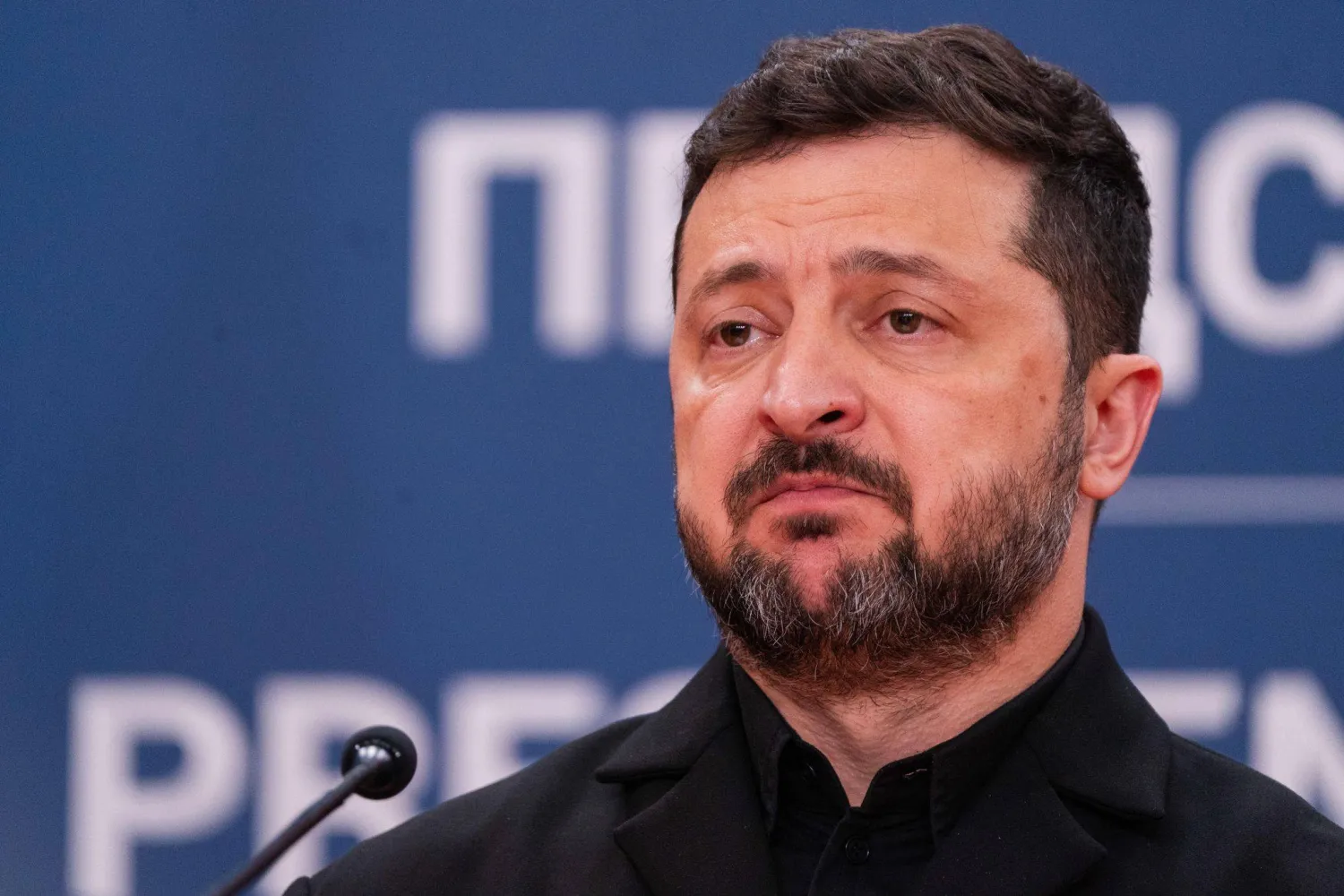
08 August 2026, Serbia, Belgrade: Ukraine's President Volodymyr Zelensky speaks during a joint press conference with Serbia's President Aleksandar Vucic following their meeting at the Palace of Serbia. Photo: Marko Dimic/ZUMA Press Wire/dpa
Ukraine needs five percent of the United States' Patriot interceptor missiles to get through the winter and 10 percent to destroy all of Russia's ballistic projectiles, President Volodymyr Zelensky said in an interview published on Thursday.
Russia has recently been firing mass barrages at the Ukrainian capital Kyiv roughly once a week, killing civilians and damaging or destroying homes, said AFP.
In one attack, Ukraine failed to intercept any of the 28 ballistic missiles launched at it.
Speaking to CNN, Zelensky said Ukraine this year "had two-and-a-half times less interceptors than we had in 2025".
"Russia has two times more ballistic missiles per month than they had before," he said in English.
"This year, I'm asking American partners to sell me five percent of missiles (that) they have in their stocks.
"If they sell us five percent, we will go through the winter and save people's lives.
"If they can sell us 10 percent, we will destroy all the Russians' ballistic missiles."
Ukraine has reported an acute shortage of Patriot interceptors since the United States and Israel went to war with Iran in February, diverting supplies of the advanced systems.
Ballistic missiles are much harder to intercept than cruise missiles or drones because they move faster and follow steep trajectories.
Asked if the United States had responded to his requests, Zelensky said: "The answer is, for today is next. I have one percent."
"From one percent to five percent, I have some months and millions (of) phone calls and anything else.
"I do some things which I can't even share. It doesn't mean that it's out of the law. But I can't speak about it."
Ukraine's air force said on Wednesday it would stop publishing detailed figures on Russian ballistic missile strikes.
The restrictions will concern "the number of targets launched, shot down, suppressed or those that failed to reach their targets", communications chief Yuriy Ignat said on Facebook.
Real-time warnings would continue unchanged, and the air force would keep providing generalized figures on Russian missile launches, he said.
Last month, Russia fired more than 450 missiles at Ukraine, nearly 200 of them on ballistic trajectories.
Washington Offers $20 Million Reward for Information on Iran's Nuclear Programhttps://english.aawsat.com/world/5338498-washington-offers-20-million-reward-information-irans-nuclear-program
Washington Offers $20 Million Reward for Information on Iran's Nuclear Program
The Iranian president visiting a centrifuge facility as part of Iran's nuclear program (Archive - Iranian Presidency)
Washington is offering a $20 million reward “and possible relocation” for information about Iran’s nuclear program, the US military said Friday, as President Donald Trump reiterated Tehran wants to make a deal to end the war.
The US Department of State’s Rewards for Justice program said in an announcement posted to X that the “government remains committed to countering any attempt by Iran to develop a nuclear weapons program.”
The State Department agency said it was seeking information on “nuclear scientists and staff, nuclear program-related technologies, and capabilities, associated organizations and personnel.”
“If you have information on Iran’s nuclear program, assets, or associated individuals, send it to us via Signal or our Tor-based tip line. You may be eligible for a reward and relocation,” it added.
Anticipating Trump’s Decision
The announcement came a day after Trump said he would decide “soon” on whether to resume the war on Iran following a meeting with his top national security advisers.
“I would rather not destroy the rest of the country if possible, but maybe I will have to. You'll know soon enough,” Trump told reporters in the Oval Office.
US-Iran negotiations remain deadlocked over Iran's stockpile of near-weapons-grade uranium. Trump has said Iran must give up the stockpile, which he has referred to as “nuclear dust.” But Iranian officials have been adamant that they will not ship the uranium outside the country.
Earlier on Friday, two Middle East government officials told AP that Iran was reviewing proposals presented by Qatar to address differences with Washington over Tehran's nuclear program.
The Qatari draft involves lifting the US blockade on Iran's ports and releasing some of Tehran's frozen funds in exchange for allowing International Atomic Energy Agency inspectors to visit sites bombed by the US and Israel, according to regional officials cited by AP.
Mohsen Rezaei, secretary of Iran's Supreme National Security Council, said on Thursday that the Strait of Hormuz would not reopen to Washington and no negotiations would take place until Tehran’s “seven conditions” were met.
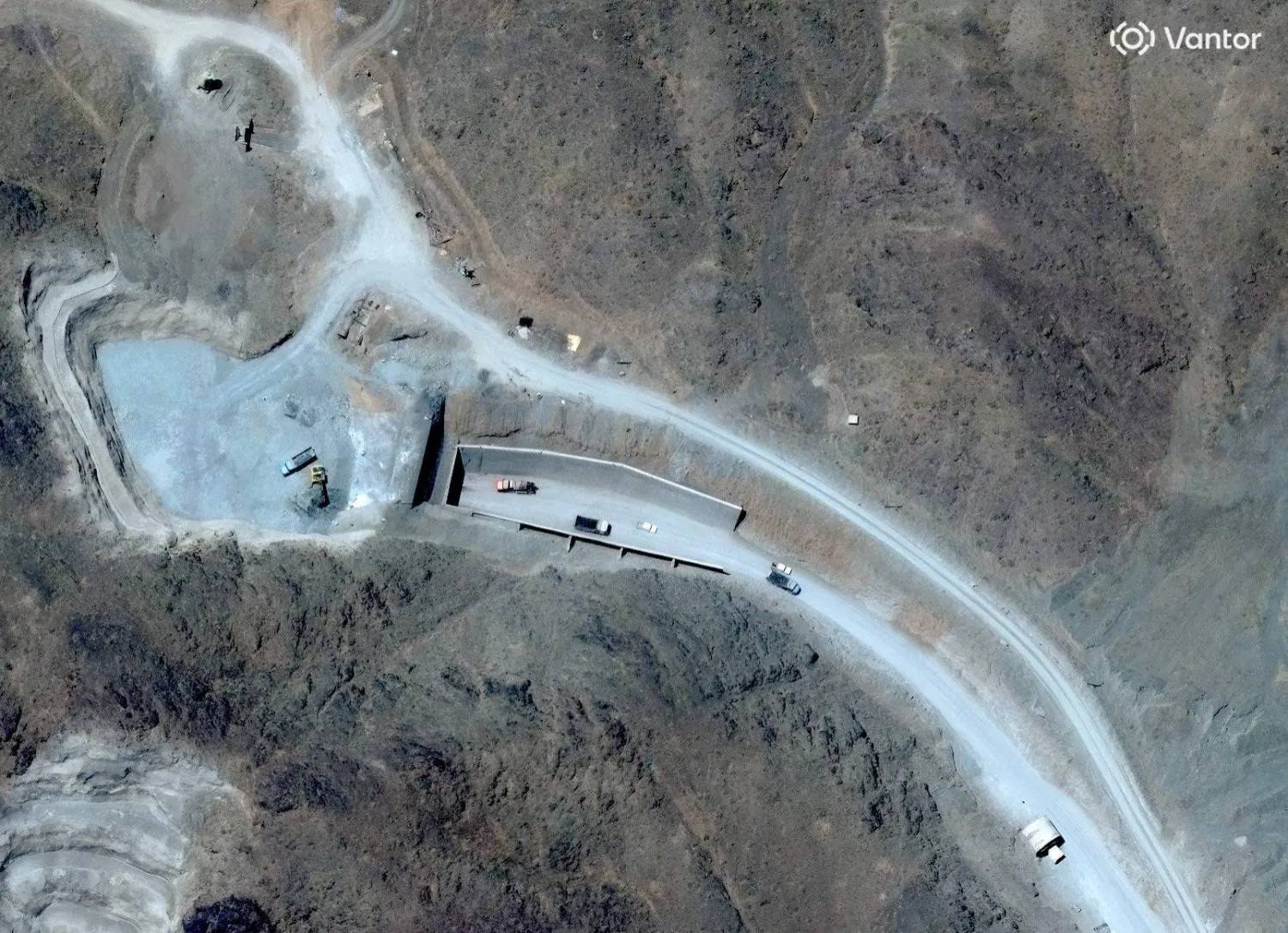
SATELLITE VIEW shows vehicles at an entrance to Pickaxe Mountain tunnels, near Natanz nuclear facility, in Iran, June 21. (VANTOR/HANDOUT VIA REUTERS)
Reviewing Nuclear Doctrine
In Iran, calls are growing for a reassessment of the country’s nuclear doctrine and a withdrawal from the Treaty on the Non-Proliferation of Nuclear Weapons (NPT).
Despite those demands, Rezaei said earlier this month that Iran has made no official decision to change its nuclear doctrine.
“So far, no official decision has been made by the government or the Supreme National Security Council to change the nuclear doctrine,” Rezaei said, according to remarks carried by the semi-official Tasnim News Agency.
Last week, Mohammad-Javad Haj-Ali-Akbari, Tehran’s interim Friday prayer leader, called for a revision of Iran’s nuclear doctrine and a move toward acquiring nuclear weapons. He claimed that the issue has now become a “national demand.”
Few days later, Nasrollah Pejmanfar, head of the Iranian parliament’s Article 90 Commission, called for Iran to seriously consider withdrawing from the Nuclear Non-Proliferation Treaty, intensifying the debate over Tehran’s nuclear policy amid escalating tensions with Western powers.
On Thursday, Iranian lawmaker Mohammad Taghi Naghdali said that public demands had shifted from nuclear energy to nuclear warheads, calling on parliament to prioritize Iran's withdrawal from the Nuclear Non-Proliferation Treaty.
The New York Times wrote on Thursday that senior Iranian officials and clerics are also debating whether Iran should withdraw from the NPT, which prohibits the development of a nuclear weapon.
Iran’s Leader Mojtaba Khamenei has not taken a clear public position on the issue. His father, former Leader Ali Khamenei had stated that nuclear weapons are forbidden.
Late last month, International Atomic Energy Agency chief Rafael Grossi said there were no signs of suspicious activity at Iranian nuclear sites bombed by the United States in June.
“We do not see anything that would give rise to hypotheses of any substantive work going on there,” Grossi said in New York.
Grossi told reporters that inspectors had no access to the two sites stricken in June, but confirmed that some inspection was under way.
“We are trying to build it back, and we are inspecting in Iran,” he said.
On Friday, a BBC report said Iran appears to be undertaking significant new construction near at least two of its major missile sites and repairing bases damaged by months of US and Israeli air strikes, according to analysis of satellite images.
It said evidence of digging and new buildings are visible in satellite imagery taken in November at the Garmdareh military base in Karaj near the capital Tehran and the Shahroud base in the north, analysts at British intelligence company MAIAR, who reviewed the photos, told BBC Verify.
Army Spokesman: Iranian Forces 'Stronger' Than at Beginning of Warhttps://english.aawsat.com/world/5338484-army-spokesman-iranian-forces-stronger-beginning-war
Army Spokesman: Iranian Forces 'Stronger' Than at Beginning of War
Iranian Army spokesman Mohammad Akraminia (Daneshjoo file photo)
Iran's military is "stronger" and more motivated than it was when the United States and Israel started the war in February, Iranian state media reported on Saturday, citing an army spokesman.
"Today, the Islamic Republic's armed forces... having gained experience from direct confrontation with the United States and the Israeli regime, are on higher alert and are stronger than they were at the beginning of the war," Mohammad Akraminia said, according to the state news agency IRNA.
"They now possess greater motivation, commitment, and self-confidence."
The war, which began when the United States and Israel carried out a massive wave of strikes in late February, has been deadlocked for months.
Tehran has sought to limit traffic through the Strait of Hormuz, which normally carries about one-fifth of global oil consumption.
According to AFP, Akraminia said that Iranian armed forces retained control over the strategic waterway and that it would remain closed until the United States accepted Tehran's demands.
"Under the order of the Supreme Leader, the response of the armed forces will be immediate, effective, and without geographical limitations," he added.
US President Donald Trump this week confirmed new strikes on Iran, after American media reported attacks on Iran's Qeshm Island in the Strait of Hormuz.
On Saturday, the local Tasnim news agency reported that two missiles had struck Qeshm, adding that there was no official information so far on the damage.
Iranian state television reported two explosions on the island.
The Iranian army said early Saturday that its air defenses had "struck and destroyed" a US drone that was flying over the island, according to state media. It did not say whether the island was attacked.
US Military Carries Out New Targeted Strikes on Iranhttps://english.aawsat.com/world/5338474-us-military-carries-out-new-targeted-strikes-iran
A banner depicting US President Donald Trump, Israeli Prime Minister Benjamin Netanyahu, US Vice President JD Vance and US Special Envoy Steve Witkoff is displayed as a woman walks on a street in Tehran, Iran, November 4, 2026. Majid Asgaripour/WANA (West Asia News Agency) via REUTERS
US Military Carries Out New Targeted Strikes on Iran
A banner depicting US President Donald Trump, Israeli Prime Minister Benjamin Netanyahu, US Vice President JD Vance and US Special Envoy Steve Witkoff is displayed as a woman walks on a street in Tehran, Iran, November 4, 2026. Majid Asgaripour/WANA (West Asia News Agency) via REUTERS
President Donald Trump said the US military on Friday carried out new limited strikes on Iran, targeting an Iranian air defense system.
Iranian state media reported the sound of two explosions in the Suza area of Qeshm Island, which is in the crucial waterway for oil shipments.
Trump in an exchange with reporters described the military action as “minor."
“They knocked out -- they built a little bit of an anti-aircraft device and we knocked it out in about 15 minutes, maybe five," Trump told reporters shortly after arriving in West Palm Beach, Florida, on Friday evening.
Trump did not offer further details about the target. But US officials have reported that most of Iran’s air defense systems were destroyed or severely degraded during a June 2025 bombardment by Israel and in the early stages of the current conflict. US officials have assessed that Iran would try to rebuild them and other military infrastructure over time.
The US military also reported carrying out what it described as defensive strikes on Monday. Explosions were heard on the islands of Qeshm and Hengam in the strategic Strait of Hormuz, and in the nearby mainland area of Bandar Abbas.
Friday's strikes are the first since Trump’s Republican Party was dealt a stunning repudiation in Tuesday’s midterm elections in the US.
لم تشترك بعد
انشئ حساباً خاصاً بك لتحصل على أخبار مخصصة لك ولتتمتع بخاصية حفظ المقالات وتتلقى نشراتنا البريدية المتنوعة