


Sources: US Could Not Verify Israeli Warnings of Iran Plots Against Trump

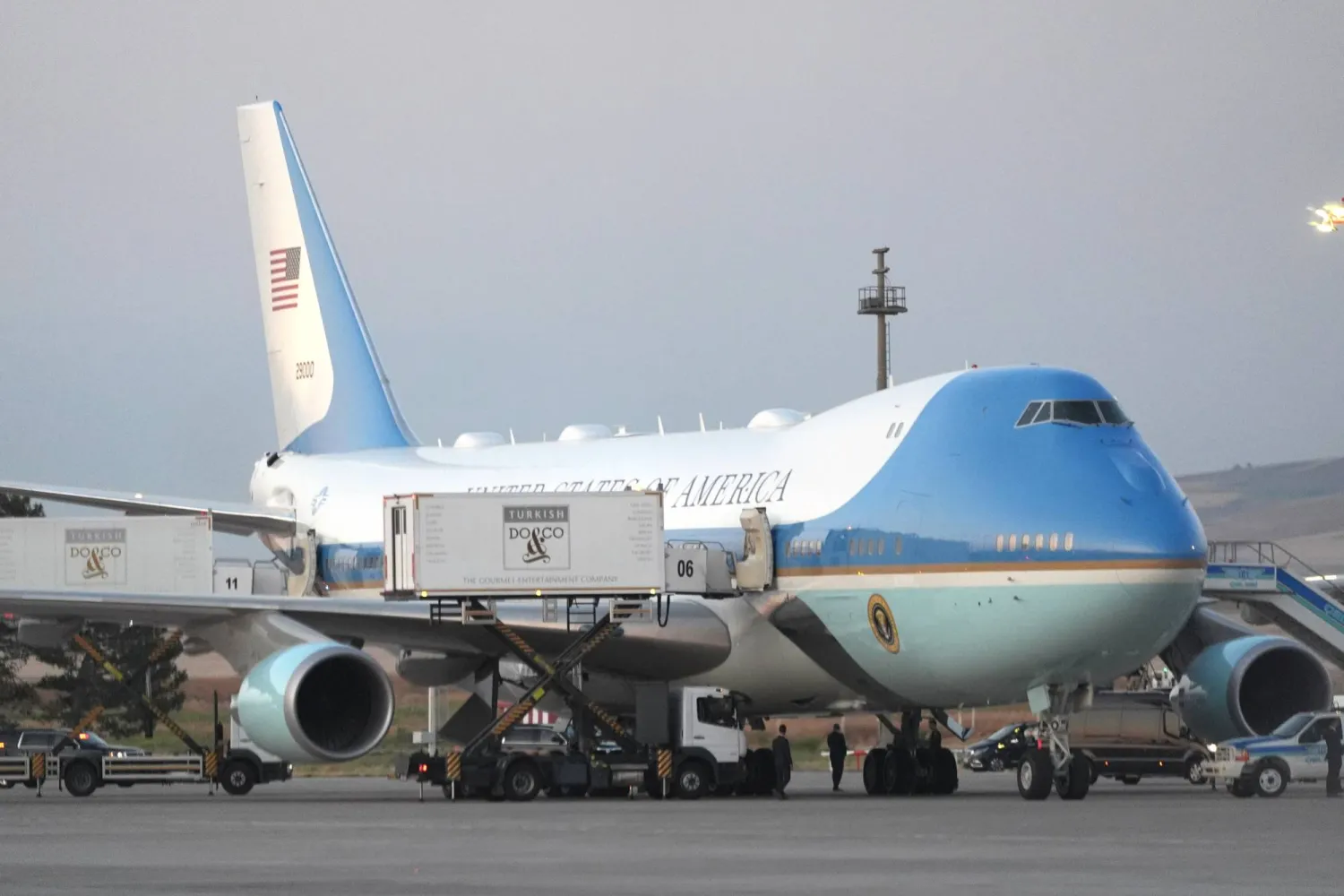
Catering trucks are parked at Air Force One on the tarmac as the motorcade carrying US President Donald Trump arrives on the tarmac to depart following the NATO summit at Ankara International Airport in Ankara, Türkiye, Wednesday, July 8, 2026. (AP Photo/Alex Brandon)
TT

Sources: US Could Not Verify Israeli Warnings of Iran Plots Against Trump

Catering trucks are parked at Air Force One on the tarmac as the motorcade carrying US President Donald Trump arrives on the tarmac to depart following the NATO summit at Ankara International Airport in Ankara, Türkiye, Wednesday, July 8, 2026. (AP Photo/Alex Brandon)

The US has received several warnings from Israel over the past year that Iran intended to assassinate President Donald Trump, including before a secret Air Force One ruse in Türkiye, that US intelligence officials could not independently verify, according to a current US official and two former officials.

The warnings, passed to US intelligence agencies and in some cases relayed directly by Israeli officials to senior White House officials, included possible plots to shoot Trump with a sniper or recruit someone to attack him with a knife at a large public event, the sources said. The tips began in the lead-up to the 12-day war in June 2025 and intensified prior to the US decision to go to war in Iran in February, the sources said.

The most detailed warning came ahead of the NATO summit in Ankara in July, the US official and the other person familiar with the matter said. Israeli officials briefed the White House about intelligence that indicated Iran may try to kill Trump, potentially with a shoulder-launched missile, while he traveled on Air Force One for the summit, Reuters quoted the officials as saying.

The US intelligence community has long assessed that Iran wants to retaliate for Trump’s killing of Iranian military commander ⁠Qassem Soleimani in ⁠2020. But the Central Intelligence Agency has not been able to corroborate some of the specific threats against Trump's life shared by Israeli intelligence since early last year, the officials said.

In the case of the NATO episode, a Turkish official said the country's intelligence agencies also did not have any evidence to corroborate the Israeli claim about the threat to Trump's life, an assessment the host country shared with Americans.

Despite the lack of verification, White House officials and the Secret Service have taken steps to mitigate the threats out of an abundance of caution, including an extraordinary deception operation during the Türkiye trip that involved moving Trump from Air Force One to a different aircraft for his flight out of the country.

That episode underscores how Israeli intelligence is influencing the Trump administration's decision-making about Iran at a time ⁠of heightened tensions with Tehran — and broader disagreement between US and Israeli intelligence assessments on Iran's threat overall.

Earlier this year, American intelligence agencies assessed that Iran was not actively building a nuclear weapon, even as Israel argued Tehran posed an urgent threat. Despite the reports from the US intelligence community, Trump moved forward with strikes in Iran in February.

Trump also took into consideration intelligence shared by Israel that Tehran had tried to assassinate him before launching the military campaign, Reuters previously reported.
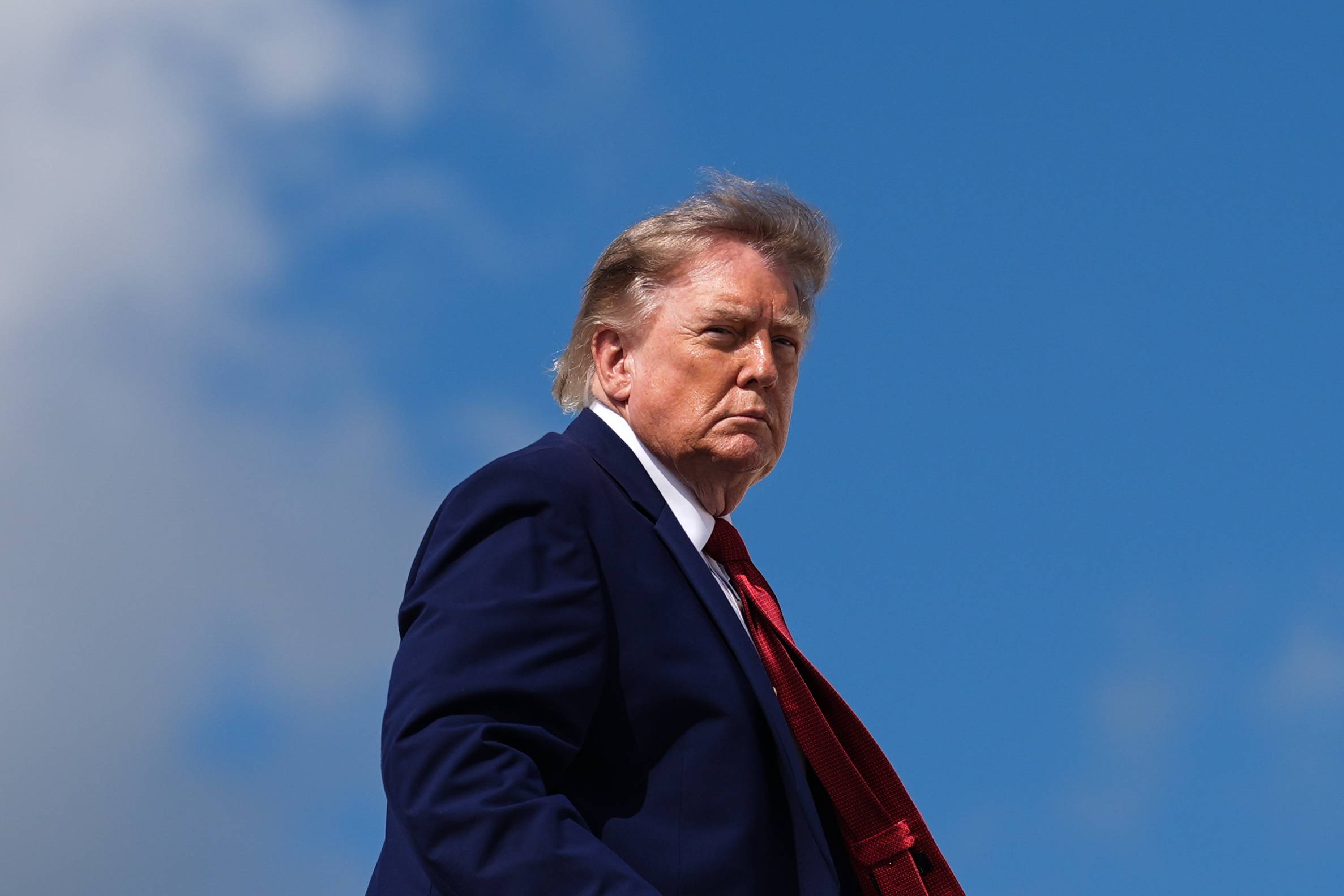
FILE - President Donald Trump boards Air Force One, Aug. 7, 2026, at Joint Base Andrews, Md. (AP Photo/Julia Demaree Nikhinson, File)

A spokesperson for the Israeli embassy disputed that Israel was using its intelligence to influence US policy on Iran.

"The same people who claim that Israel is trying to influence US policy through alleged intelligence sharing would just as soon accuse Israel of concealing critical information if it benefited their own agenda," the spokesperson said.

The White House and CIA both declined comment.

Secret Service spokesman Anthony Guglielmi declined to discuss specific intelligence matters but said the agency remains focused on Trump's security amid recent assassination attempts and an increase in threats against the president. "The US Secret Service continuously analyzes a wide range of information to guide our protective operations in real time and across every location we secure," he said.

The US has long relied heavily on Israeli intelligence ⁠on Middle East matters, particularly as they ⁠relate to Iran.

The current and former officials said Israeli intelligence on Iran typically flows to the CIA or the National Security Agency through formal channels and is subsequently analyzed, two former US officials said.

The US intelligence agencies often cannot verify Israeli intelligence but will use other forms of information to make judgment calls on its authenticity and accuracy, the officials said.

In several instances over the course of the two US military offensives in Iran, the CIA assessed it had "low confidence" in the Israeli intelligence about the threats posed by Iran, including any plans to assassinate Trump, according to one former official and another person familiar with the matter.

It is unclear how widely those assessments have been circulated inside the administration.

The NSA declined to comment.

Two of the former US officials described to Reuters several instances in which senior Israeli officials and representatives over the last year called the White House, including in the Situation Room, to brief senior Trump officials on Iranian threats directly.

The direct engagement comes amid a breakdown in US intelligence sharing inside the Trump administration.

Last year, amid increased tension with the Office of the Director of National Intelligence, the CIA stopped working on joint assessments with the National Intelligence Council, the former officials said.

The council is the US intelligence community's elite analytical group overseen by ODNI to turn out reports reflecting the view of the broader intelligence community, with the CIA being the largest contributor to its assessments.

Fewer recent Iran assessments by the NIC have stemmed partly from recent layoffs at ODNI, the officials and another person familiar with the matter added.



Qatar Delivers US Response to Iran on Seven-Day Proposal

This handout picture released by the Qatari Ministry of Foreign Affairs shows Qatar's Prime Minister and Foreign Minister Sheikh Mohammed bin Abdulrahman Al Thani, (L) meeting with Iran's Foreign Minister Abbas Araghchi (R) in Tehran on August 27, 2026. (Qatari Ministry of Foreign Affairs / AFP)
TT

Qatar Delivers US Response to Iran on Seven-Day Proposal

This handout picture released by the Qatari Ministry of Foreign Affairs shows Qatar's Prime Minister and Foreign Minister Sheikh Mohammed bin Abdulrahman Al Thani, (L) meeting with Iran's Foreign Minister Abbas Araghchi (R) in Tehran on August 27, 2026. (Qatari Ministry of Foreign Affairs / AFP)

Iranian Foreign Minister Abbas Araghchi met Qatari mediators in Doha on Tuesday night and received US feedback ‌on ‌a proposed ‌seven-day ⁠trust-building plan, which he ⁠will discuss in Tehran on Wednesday, an official briefed ⁠on the talks ‌told ‌Reuters.

The main ‌disagreement is ‌over the sequencing of the plan, which aims ‌to build trust and return ⁠to ⁠an enhanced version of a US-Iran memorandum of understanding signed in June, the official said.

President Donald Trump said on Tuesday he does not know if Iran is going to "give up yet" but cast the country as doing "very poorly" in its war with the US.

"I don't know if they are going to give up ‌yet but ‌they'll give up," Trump told reporters.

"They ‌are ⁠doing very poorly," ⁠he added.

A US blockade has cut Iran's financial lifeline - oil exports, and economic costs of the war have made life tougher for Iranians.

Iran's president told the UN General Assembly last ⁠week that Tehran would never surrender to ‌US pressure.

The rise in oil prices due to the ‌war has also become a major issue ‌for Trump's Republican Party heading into the November US midterm elections.

The war has led to the blockade of the Strait of ‌Hormuz, which carried a fifth of global supplies of crude oil ⁠and ⁠LNG before the conflict.

Trump has offered shifting goals and timelines for the Iran war that began on February 28 when the US and Israel attacked Iran and Tehran responded with its own strikes on Israel and Gulf states.

US-Israeli strikes on Iran and Israeli attacks on Lebanon have killed thousands and displaced millions.


US Supreme Court Lifts Limits on Third-country Deportations

The United States has deported thousands of migrants to so-called third-countries, including Liberia, as part of US President Donald Trump's immigration crackdown. Matthew Jacobs / AFP
TT

US Supreme Court Lifts Limits on Third-country Deportations

The United States has deported thousands of migrants to so-called third-countries, including Liberia, as part of US President Donald Trump's immigration crackdown. Matthew Jacobs / AFP

The US Supreme Court on Tuesday lifted restrictions on the deportations of immigrants to countries that are not their own, while agreeing to hear the issue on its merits in December.

The conservative-dominated high court granted an emergency request by the Trump administration to suspend a lower court ruling that restricted, but did not outright ban, so-called "third-country removals."

The lower court had said people targeted with deportation must be given effective notice ahead of time about where they are being sent to allow them to raise concerns about potential persecution, said AFP.

The three liberal justices on the nine-member bench said they would not have granted the administration's request.

President Donald Trump campaigned on promises to expel millions of undocumented migrants from the United States and has taken several actions aimed at speeding up deportations since returning to the White House in 2025.

The Trump administration has defended third-country deportations as necessary since the home nations of some of those who are targeted for removal sometimes refuse to accept them.

In a brief to the Supreme Court, opponents of lifting the restrictions argued that the lower court ruling did not fully block all third-country deportations, "it simply requires them to do so lawfully."

Trump's solicitor general, John Sauer, meanwhile told the court that the rapid deportation to third countries was "an essential tool to remove certain aliens, including some of the worst criminal aliens."

The lower court ruling "created substantial logistical problems" with removals, he said.

- 'Indefensible' -

An AFP investigation found that the US has offered multimillion-dollar deals and threatened visa restrictions in a bid to get "third countries," especially in Africa, to take such deportees.

Once in these countries -- and outside US jurisdiction -- deportees have been subject to abuse by local guards, indefinite detention, or quickly re-deported to their home countries.

According to an investigation published last week, the United States has deported more than 25,000 people under secretive agreements with 35 countries to take migrants with no ties to those nations.

The investigation by Forbidden Stories found the administration has earmarked $410 million to be paid directly to the receiving countries, or to United Nations agencies to facilitate the returns.

The vast majority of the deportees -- around 20,000 -- were sent to Mexico, but the rest were dispersed to 27 other countries across Latin America, Africa, and the Pacific, and agreements have been finalized with seven more.

Congress has made it US policy not to deport people to countries where their lives would be in danger or they could be subject to torture.

After the high court's ruling, some Democratic lawmakers were calling for more formalized steps to prevent such deportations and uphold due process.

"Congress must step in. No one should be shipped off to a country that is not their own without basic due process and a meaningful opportunity to raise legitimate fears for their safety," House Democrat Lois Frankel said on X.

Rob Menendez, another congressional Democrat, called the Supreme Court's decision "indefensible."

"Taxpayers shouldn't fund tearing people from the only home they've ever known, nor should our legal system fast-track these unilateral deportations."


US Withdraws from European Anti-Corruption Panel

FILE PHOTO: A general view of a US State Department sign outside the US State Department building in Washington, DC, US, July 11, 2025. REUTERS/Annabelle Gordon/File Photo
TT

US Withdraws from European Anti-Corruption Panel

FILE PHOTO: A general view of a US State Department sign outside the US State Department building in Washington, DC, US, July 11, 2025. REUTERS/Annabelle Gordon/File Photo

The Trump administration has withdrawn the United States from a top European anti-corruption watchdog as it forges ahead with plans to disengage from international and multilateral organizations that it accuses of exceeding their mandates, being inefficient or not adapting to US policies.

The Council of Europe said Tuesday that the US formally notified it a day earlier that it would leave the Group of States against Corruption, or GRECO. Only two other countries have left GRECO before — Russia and Belarus.

The State Department confirmed the move, saying that US participation, which requires an annual monetary contribution, “does not provide tangible benefits to US national security.”

“The era of writing blank checks to international bureaucracies is over,” it said. “The department is instead prioritizing higher-impact tools to combat corruption, such as visa restrictions, sanctions, and targeted foreign assistance to strengthen foreign criminal investigations into corruption directly threatening US security and prosperity.”

The Strasbourg-based Council of Europe said the US had been “a valuable contributor” to GRECO "and to the exchange of experience and good practice in preventing and combating corruption.”

“GRECO remains open to resuming cooperation with the United States in the future in support of shared efforts to prevent corruption, strengthen integrity and uphold the rule of law,” it said in a statement.

The decision was announced a week after the Organization for Security and Cooperation in Europe said the US had declined to invite its members to observe November’s congressional midterm elections, a sharp break from past practice.

The US has already withdrawn from a number of European-based UN and multilateral agencies, including the World Health Organization and the UN Human Rights Council, and is weighing further such steps.

The US withdrew in January from another Council of Europe panel — the Venice Commission, which is an advisory body on constitutional law.

GRECO was created in 1999 by the Council of Europe to monitor compliance with the organization’s anti-corruption standards. Membership is not limited to European Union members, and the United States joined a year after its founding.