Iran Fires Back at Trump's Threat to Declare Hormuz a US Territory

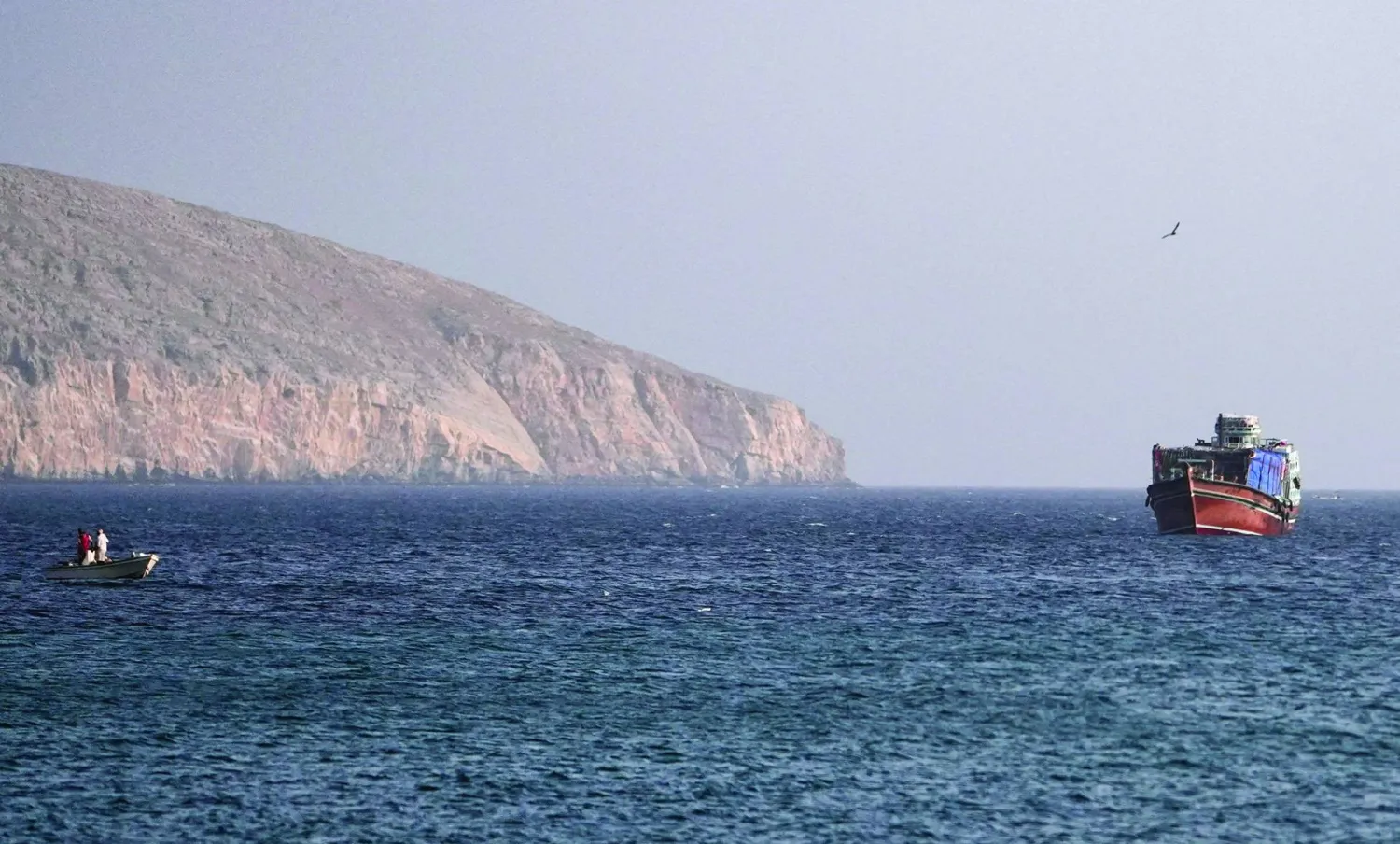
A ship near the Strait of Hormuz (Reuters)
TT

Iran Fires Back at Trump's Threat to Declare Hormuz a US Territory

A ship near the Strait of Hormuz (Reuters)

Iran on Saturday fired back at US President Donald Trump's claim that he would soon declare the Strait of Hormuz part of US territory, saying the crucial energy waterway it has blockaded "will remain Iranian".

Trump has repeatedly insisted that the strait, which Tehran effectively closed at the start of the Middle East war in late February, is under US control despite traffic remaining throttled, reported AFP.

"The Strait of Hormuz has been Iranian, is Iranian, and will remain Iranian," Iranian Deputy Foreign Minister Kazem Gharibabadi said on X.

"This strait will only be closed and opened under Iran's command."

Trump told a political rally in New York state on Friday that after the US defeats Iran, "pretty soon I'll be declaring the Hormuz Strait a territory of the United States".

"It's true," he added.

An unnamed White House official later clarified that Trump was joking, the Wall Street Journal reported.

Last week, a top Iranian official set out a list of conditions for reopening the strait, including an end to the "war and aggression against Iran and its allies in Lebanon, Palestine, Yemen, and Iraq".

Mohammad Bagher Zolghadr also demanded the end of crippling sanctions, the release of frozen assets and compensation for wartime damage.

- Ongoing attacks -

As diplomacy stalls between the longtime foes, attacks in the Hormuz strait have continued, highlighting the continued risks to regional shipping.

The United Arab Emirates' state-owned oil giant ADNOC said on Saturday that one of its vessels came under attack the night before.

Abu Dhabi's foreign ministry later blamed Tehran, and said that Iran's Revolutionary Guards were engaged in "acts of piracy" in the strait.

On Friday the Gulf nation blamed Iran for other attacks on two vessels linked to ADNOC as they passed through the waterway.

Such attacks led to the collapse of an April ceasefire between the United States and Iran.

A June deal between Washington and Tehran -- meant to serve as a jumping-off point for negotiations on a permanent settlement -- had said Iran and Oman would hash out future arrangements for the Hormuz in discussion with other Gulf countries and "in line with the applicable international law".

Before the war, the strait carried around a fifth of the world's oil and LNG exports, and prices have repeatedly surged since the dispute over the waterway erupted, piling economic and political pressure on Washington.

Iran wants to control the strait and charge tolls, powers it did not exercise before the war and ones that the US fiercely opposes.

The closure of Hormuz has driven up prices for US voters, creating a political headache for Trump as November's midterm elections near.

US Vice President JD Vance said this week that Washington's top priority in the Iran war was keeping energy prices low for Americans, while preventing Tehran from acquiring a nuclear weapon ranked second.

Tehran signaled last week that it had agreed with Oman on a route for ships to transit the strait and were finalizing arrangements to jointly manage the waterway.

The US has imposed its own retaliatory blockade of Iranian ports in an attempt to cripple its economy.

"We have the blockade. No ships get through unless we want them to," Trump said to a cheering crowd of supporters on Friday.


Israel to Give Verdict on Netanyahu in Pivotal Election

A man casts his ballot at a polling station during Israel's general election in Jerusalem, Tuesday, Oct. 27, 2026. (AP Photo/Ohad Zwigenberg)
TT

Israel to Give Verdict on Netanyahu in Pivotal Election

A man casts his ballot at a polling station during Israel's general election in Jerusalem, Tuesday, Oct. 27, 2026. (AP Photo/Ohad Zwigenberg)

A deeply divided Israel heads to the polls on Tuesday for the first time since Hamas's October 7, 2023 attack, with voters delivering their verdict on veteran Prime Minister Benjamin Netanyahu and the country's rightward drift.

Israelis are casting their ballots in the shadow of three years of multi-front regional wars triggered by October 7, with the trauma still fresh and questions over accountability and security central to the campaign, said AFP.

The close-fought vote comes as Israel looks increasingly isolated on the world stage, driven by a devastating military campaign in Gaza, soaring settlement construction and violence in the occupied West Bank, and a move towards hard-right religious nationalism.

The last polls to be published showed Netanyahu, Israel's longest-serving prime minister, running neck and neck with his main centrist rival Gadi Eisenkot, a political novice and former military chief whose mild manner is seen as the antithesis of the incumbent.

Some 7.3 million people are eligible to vote, with more than half a million young people due to cast their ballot for the first time. Surveys show they overwhelmingly identify as center-right or right-wing.

Tens of thousands of Israelis are estimated to have flown in from abroad to vote in an election seen as crucial to deciding the future character of their country.

"I think this is one of the most important election days in the history of the state of Israel," Uriel Brandler, a 58-year-old real estate agent, told AFP in Jerusalem the day before the vote.

"The country definitely needs a change for the better in every aspect."

Netanyahu, 77, has served as Israel's prime minister on and off for more than 19 years.

The wily political operator focused heavily on his security credentials during his campaign, playing on his relationship with US President Donald Trump and insisting he is the only one who can keep Israelis safe.

In the years since October 7, Netanyahu led multiple wars that have seen Israeli forces reduce Gaza to rubble, occupy southern Lebanon and for the first time pummel arch-foe Iran with US help.

At home, Israelis have faced bombardment from Iran, Hamas, Lebanese militant group Hezbollah, and Yemen's Houthis.

- 'Not afraid to take action' -

Zipporah Bennett, an 85-year-old retiree, said she was voting for Netanyahu "because he has had the experience of navigating the country through a lot of difficult seasons".

"He has the full support of the American government," she said, "and I believe he's a man who's not afraid to take action."

Netanyahu returned to power in December 2022, bringing into his coalition far-right ultra-nationalists who have since seen their political clout skyrocket.

The opposition has scorned the premier for his backing of ultra-Orthodox parties fighting to keep exemptions for religious Jewish students from drafting into the military, which faces personnel shortages.

But one of the biggest criticisms levelled at Netanyahu is his failure to take responsibility for the October 7 attack, the deadliest day in the country's history.

Eisenkot, 66, has pledged to establish an independent state commission of inquiry into the security failures that led to the attack, something Netanyahu's government has resisted.

Seeking to unseat the premier is an informal bloc of parties led by Eisenkot's Yashar and spanning from the right to the center-left.

Eisenkot has vowed to prevent the creation of a Palestinian state and expressed support for Israeli settlements, but has promised to crack down on violent settlers.

Neither Eisenkot nor Netanyahu have publicly said they would partner with the predominantly Arab lists, which represent some 21 percent of Israel's population and who could become kingmakers if the results are as close as expected.

Most polling stations will close at 10:00 pm (2000 GMT).

Final results could take days to trickle in and it is highly unlikely that any single party will come close to the 61 seats needed for a majority in the 120-member parliament.

Cobbling together any coalition could take weeks or months, with possible new elections on the horizon if negotiations fail.


Algeria to Deploy Army Units to Niger to Protect Energy and Economic Interests

 People walk past Algerian flags outside the parliament building in Algeria, Sunday, Oct. 25, 2026. (AP)
People walk past Algerian flags outside the parliament building in Algeria, Sunday, Oct. 25, 2026. (AP)
TT

Algeria to Deploy Army Units to Niger to Protect Energy and Economic Interests

 People walk past Algerian flags outside the parliament building in Algeria, Sunday, Oct. 25, 2026. (AP)
People walk past Algerian flags outside the parliament building in Algeria, Sunday, Oct. 25, 2026. (AP)

Algeria will send army units to Niger to protect energy and economic interests, according to a statement from the presidency on Monday, marking Algeria's first foreign troop deployment since it sent forces to support Egypt in the 1973 war.

Algeria's parliament approved a resolution on Sunday authorizing ‌the deployment ‌of National Army units ‌to ⁠Madama in northern Niger, near ⁠the Libyan border.

The presidential statement did not say when the troops will be sent or how many there would be.

Military officers have ruled Niger, a nation rich ⁠in uranium, oil and gold resources, ‌since the ‌July 2023 coup that ousted President Mohamed Bazoum, ‌which Algeria opposed.

Relations worsened last ‌year, when Niger recalled its ambassador from Algiers after Algeria shot down a Malian drone near their border.

Algeria's interests in Niger ‌are mainly in energy. Its state-run Sonatrach is working with ⁠Niger ⁠and Nigeria on the Trans-Saharan Gas Pipeline, which is intended to create a new export corridor for African gas to international markets, particularly Europe.

Niger is battling insurgents linked to al-Qaeda and ISIS. The fighting has killed thousands and displaced millions across West Africa's central Sahel region over the past decade.


France's Macron to Visit Marseille after Protest Violence

Interior Minister Laurent Nunez said the outcome of Saturday's protests was more 'positive' than a week ago. Sylvain THOMAS / AFP
TT

France's Macron to Visit Marseille after Protest Violence

Interior Minister Laurent Nunez said the outcome of Saturday's protests was more 'positive' than a week ago. Sylvain THOMAS / AFP

The French government sought to draw a line Monday under weeks of protests that have been marred by violence, with President Emmanuel Macron headed to Marseille and the prime minister to meet with students demanding better school conditions.

France has been rocked by widespread anger over the rising cost of living, with nationwide demonstrations on October 17 degenerating into some of the country's worst rioting in years.

The demonstrations have come at a critical moment for France, six months ahead of a presidential election to replace centrist Macron.

The frontrunner -- far-right leader Marine le Pen -- held an election rally in Orleans Sunday, a day after yet more demonstrations also saw some violent clashes on the sidelines.

She vowed to "restore the rule of law" if elected next year. Polls show the protests and ensuing disorder have boosted her support, as the government and Macron faced sharp criticism over the unrest.

Authorities have admitted to security and intelligence failures that paved the way for the clashes, large-scale looting and vandalism of public property that erupted on October 17, and had stepped up security for Saturday's protests.

While Interior Minister Laurent Nunez said the outcome of Saturday's rallies was more "positive" than a week ago, street violence still erupted in the French capital and a number of other cities including Marseille.

The Elysee said Macron would visit the city hall in Marseille, France's second-largest city, on Monday, after it was damaged in the protest violence on October 17.

He was also due to meet shopkeepers who had fallen victim to looting and vandalism, the Elysee said.

"He will also pay tribute to and thank the internal security forces that helped restore republican order," the presidency said.

After this weekend's protests, many shopfronts in the city center were still boarded up early Monday, just hours before Macron's arrival.

Macron's visit was intended to demonstrate that "the state is present, standing firm and fulfilling its mission to protect," an aide said.

- 'High level of violence' -

A total of 1,435 people were arrested on the sidelines of the most recent weekend protests, Nunez said on Monday.

"The day was brought under control and there were no serious incidents," he told broadcaster BFMTV.

"Nevertheless, we saw a very high level of violence directed at the internal security forces," Nunez added.

He said that 267 police officers and gendarmes were injured, along with 150 protesters, including three who were seriously hurt in Toulouse, Reims and Clermont-Ferrand.

The unrest followed weeks of demonstrations by students campaigning for better learning conditions.

Several teenage protesters have been seriously injured and thousands arrested.

The police response to their demonstrations, which included blockades of schools, has been criticized as heavy-handed and sparked a broader movement against the cost of living and police violence.

In Paris on Monday, Lecornu was to meet student leaders, with National Education Minister Edouard Geffray and Higher Education Minister Philippe Baptiste joining him for the talks. Following that meeting, Geffray and Baptiste will hold a news conference.

Macron already met representatives of secondary school pupils last Friday, but they emerged from the talks urging students to keep protesting until the government put forward concrete proposals to address their demands.

On top of the protests, the country was last week shaken by a shooting that killed one person and wounded five, including a 12-year-old girl, outside Paris.

Macron has branded the shooting a "racist terrorist attack", as most of the victims were from foreign backgrounds.