


IRGC Signals Shift Toward Wider, More Offensive War

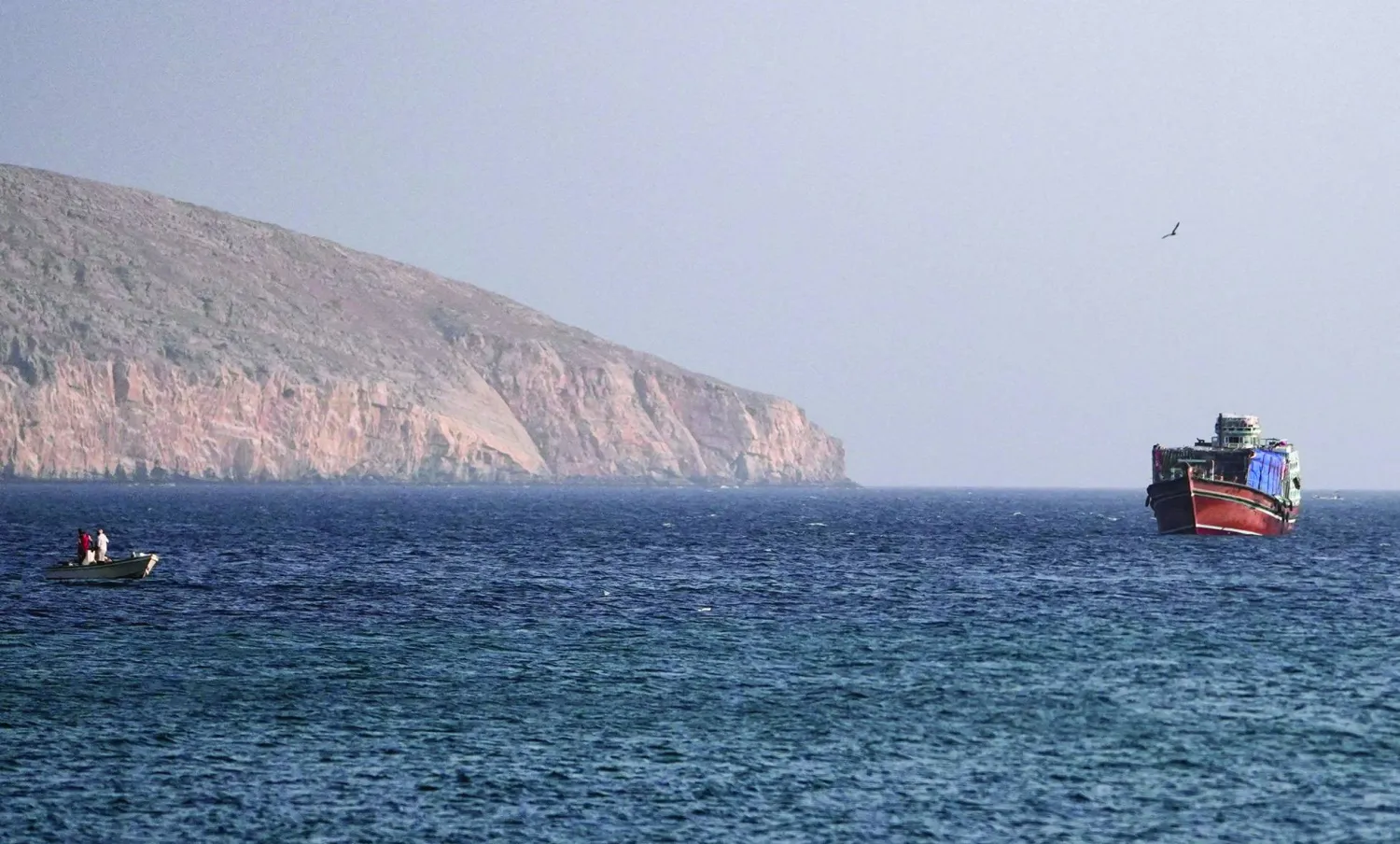
A ship near the Strait of Hormuz (Reuters)
TT

IRGC Signals Shift Toward Wider, More Offensive War

A ship near the Strait of Hormuz (Reuters)

A senior Iranian Revolutionary Guard Corps official has warned that Iran could shift from defensive to offensive military operations, as Tehran and allied armed groups in Iraq, Yemen and Lebanon reportedly prepare plans to broaden the conflict and raise the cost for the United States and its allies.  

Yadollah Javani, the IRGC’s deputy for political affairs, told Iranian state television that Iran’s military actions had so far been defensive because its adversaries had started the war, but could become offensive in the future.  

He said the armed forces would adopt new approaches following recent appointments and directives from Supreme Leader Mojtaba Khamenei and warned Iran’s adversaries to expect what he described as strategic surprises. 

The warning came as a senior Iranian official told Reuters on Monday that Tehran would escalate tensions in the Strait of Hormuz and the wider region if diplomacy with Washington failed. 

The official said Iran had decided to shift from a defensive posture to a “fully offensive” one and had given the United States “a few weeks” to fully implement the memorandum of understanding. The official noted that relying on pressure or mediators to secure a lasting agreement was no longer considered realistic. 

Javani reiterated Iran’s position that ending the war and reopening the Strait of Hormuz depended on Washington fulfilling its commitments under the Islamabad memorandum. He said the waterway and the arrangements governing it would not return to their prewar status, adding that Iran’s talks with Oman over a shipping corridor concerned the period after hostilities had definitively ended. 

He described Khamenei’s recent military appointments as a restructuring aimed at adapting Iran’s defense doctrine to current conditions. Mohammad Reza Naqdi, an adviser to the IRGC commander, has also spoken of moving from a defensive military doctrine toward a more offensive approach. 

IRGC Deputy Commander Maj. Gen. Mostafa Izadi, meanwhile, claimed Iran had endured the war, sanctions and blockade while spending only a fraction of what its adversaries had spent. He also claimed Iranian forces had shot down more than 200 aircraft during the conflict. 

At the same time, intercepted communications and intelligence indicate that the IRGC has been working with allies in Iraq, Yemen and Lebanon on plans to expand the battlefield, The Wall Street Journal reported, citing regional officials. 

According to the newspaper, Tehran used the relative lull following the June 17 memorandum with Washington to reorganize its military and security structure, rebuild capabilities and prepare for a broader confrontation, based on an assessment that war remained the most likely scenario and negotiations might amount only to a temporary pause. 

Preparations reportedly included giving the IRGC greater influence over the regular military, reorganizing the chain of command, expanding counterintelligence efforts and accelerating missile and drone production while improving accuracy. 

Iran also dispatched advisers and commanders to allied armed groups to discuss a possible expansion of the fighting. Plans included positioning missiles, naval weapons and drone launchers near the Red Sea, supplying allies with intelligence, target lists and operational advice, and threatening regional energy facilities if the United States struck similar infrastructure inside Iran. 

Other options reportedly under consideration include preemptive strikes, operations on adversaries’ territory, possible sabotage of undersea internet cables, and greater use of the Strait of Hormuz and Red Sea to exert military and economic pressure. 

The military restructuring has also placed veteran security figures in key positions, including Mohsen Rezaei, Hossein Taeb, Ali Abdollahi and Ahmad Vahidi, as Tehran prepares for the possibility of a broader confrontation. 


Far-Right Triumph in Eastern Germany Leaves Migrants Questioning Their Future

A general view taken on September 7, 2026 in Magdeburg, eastern Germany, shows Saxony-Anhalt's State Parliament, the day after the state election. (AFP)
TT

Far-Right Triumph in Eastern Germany Leaves Migrants Questioning Their Future

A general view taken on September 7, 2026 in Magdeburg, eastern Germany, shows Saxony-Anhalt's State Parliament, the day after the state election. (AFP)

Mamad Mohamad watched with mixed emotions as the far-right Alternative for Germany (AfD) swept to a historic victory on Sunday evening in the eastern state of Saxony-Anhalt.

A member of the Greens, the 46-year-old is set to become one of the first lawmakers with an immigrant background to enter the state parliament, alongside Mustafa Groener of the Left (Die Linke) party.

For Mohamad, who arrived in Germany from Syria as a 16-year-old Yazidi Kurd in 1996, it was a milestone that should have been a moment of celebration. Instead, he described it as a "poisoned victory".

"My heart was split," Mohamad said, recalling the first projections that showed the AfD outperforming expectations ‌while Chancellor Friedrich Merz's ‌governing conservatives slumped to a historic low.

'CULTURALLY ALIEN'

The AfD has long ‌campaigned ⁠for tighter immigration ⁠and asylum policies, arguing that Germany has lost control of its borders and that migration is putting heavy pressure on public services, security and social cohesion.

According to its election manifesto, an AfD-led Saxony-Anhalt would launch a state-level campaign to deport rejected asylum seekers.

The party also proposes encouraging businesses to adopt artificial intelligence and automation rather than rely on skilled migration from what it describes as "culturally alien" backgrounds.

The AfD rejects accusations that its rhetoric contributes to a hostile climate for migrants, insisting it opposes only illegal and uncontrolled ⁠migration.

"Everyone is warmly welcome who contributes positively to our society, who ‌wants to work here, who is qualified, who pays taxes, ‌and who abides by the law," AfD co-leader Alice Weidel said on Monday.

PACKED BAGS

The mood in Mohamad's ‌family was somber on Monday.

His daughter, he said, was reluctant to attend school, one of ‌several criticized by the AfD over projects that examine threats to democracy.

Though anxiety is running high in many immigrant communities, the result has prompted unease rather than surprise, said Undra Dressler, managing director of the State Network of Migrant Organizations in Saxony-Anhalt.

People with migrant backgrounds have long faced discrimination and structural barriers in access ‌to work, education, healthcare and public services, Dressler said.

"All of this is our reality," she told Reuters.

Sunday's result nevertheless marks a turning ⁠point, she said. "There are ⁠many people in our communities who say: 'We've already packed our bags and have concrete plans, and we'll be leaving soon,' or, in some cases, have already left."

Pascal Begrich, managing director of democracy advocacy group Miteinander, said he did not expect a large-scale exodus, partly because of economic realities, but agreed that many migrants but also employers were reassessing their future in Saxony-Anhalt.

"There are companies asking themselves whether they really want to locate here and whether they can ensure their workers will be safe," Begrich told Reuters.

CONSTITUTIONAL LIMITS

Mohamad said he feared the political shift could make it harder to attract newcomers to a state already grappling with demographic decline.

"Skilled workers and families will look elsewhere," he said.

Despite concerns about the state's political direction, both Dressler and Begrich stressed that any future government would remain bound by Germany's constitutional order and protections for minorities.

"Every government is bound by this," Dressler said. "And the 15 other federal states have a duty to monitor this and, if necessary, to intervene."


Russia Announces the Closure of the German Consulate in St. Petersburg

A person walks past the German Consulate General in Saint Petersburg, Russia September 2, 2026. Picture taken with a mobile phone. REUTERS/Dmitry Vasilyev
TT

Russia Announces the Closure of the German Consulate in St. Petersburg

A person walks past the German Consulate General in Saint Petersburg, Russia September 2, 2026. Picture taken with a mobile phone. REUTERS/Dmitry Vasilyev

Russia’s Foreign Ministry said Monday that the German consulate in St. Petersburg will have to close, a tit-for-tat move that reflected the simmering tensions between the two countries.

Russia’s Foreign Ministry said the German consulate must stop operations by Sept. 18, following an earlier move by Moscow to close German cultural centers on its territory.

The ministry said the closure was in retaliation for Germany’s decision Wednesday to close both the Russian consulate in Bonn and the Russian House cultural center in the German capital, Berlin.

Germany blamed Russia for an attempted drone attack at Leipzig/Halle Airport on Aug. 4, when an explosives-laden drone was found near a Ukrainian plane.

The airport is a major international freight hub used for providing support to Ukraine. The drone was later defused.

Moscow has denied involvement.


North Korea, Russia Open their First Road Bridge, a Symbol of Expanding Ties 

The first road bridge between Russia and North Korea across the Tumen River, locally known as Tumannaya, on the border with North Korea in the Primorsky region, Russia, in this still image from a video released September 7, 2026. Russian Government/Handout via REUTERS
TT

North Korea, Russia Open their First Road Bridge, a Symbol of Expanding Ties 

The first road bridge between Russia and North Korea across the Tumen River, locally known as Tumannaya, on the border with North Korea in the Primorsky region, Russia, in this still image from a video released September 7, 2026. Russian Government/Handout via REUTERS

North Korea and Russia opened their first road bridge on Monday in a carefully choreographed display of friendship, a structure which spans the Tumen river and which both sides cast as an important milestone in their deepening strategic partnership.

The first flag-adorned trucks trundled across the 1 km (0.6 mile) long two-lane bridge as Russian Prime Minister Mikhail Mishustin and North Korea's Premier Pak Thae Song tuned in by video link to address workers and government officials from both countries.

Construction of the new bridge, which had been under discussion for years, began in April last year after the project was agreed during a visit by President Vladimir Putin to North Korea in 2024. There are already direct air and rail links between Moscow and Pyongyang, but until Monday there had not been a proper road link. Instead, since 1959 and by special arrangement, planks had been placed on the nearby rail bridge - for decades the sole border crossing point - in order to move vehicles across the border between the two countries.

"I am convinced that the expansion of cross-border transport infrastructure will provide a powerful impetus for the further development of trade, economic, scientific, technological and cultural cooperation," said Mishustin, who said ties between Moscow and Pyongyang were "at an unprecedented high level" and called the opening of the bridge "a genuinely historic event."

The construction of the bridge was not merely an engineering project, he said, but "a new symbol of friendship".

Mishustin said up to 300 vehicles would be able to cross every day and that the bridge would be linked to Russia's federal road network and have easy access to the transport corridor which runs from the far eastern city of Vladivostok to St Petersburg. Trucks would begin to use the bridge immediately to transport cargo, the Russian government said. At the end of this year, the bridge would be fully operational and could be used for passenger traffic too.

The bridge was built near an existing "Friendship Bridge", a rail bridge which was commissioned in 1959 after the Korean war. Symbolically, the new bridge is named after Yakov Novichenko, a Red Army soldier who Pyongyang credits with protecting the life of North Korea's first leader Kim Il Sung in 1946 by intercepting a grenade thrown at him and others.

Ties between the two countries have grown stronger since the start of the war in Ukraine in 2022, with Pyongyang sending thousands of troops to Russia's Kursk region to help repel a 2024 Ukrainian incursion there.

Mishustin made a reference to that in his speech on Monday, referring to "the Korean heroes who, only recently, fought shoulder to shoulder with our soldiers and defended Russian soil".
