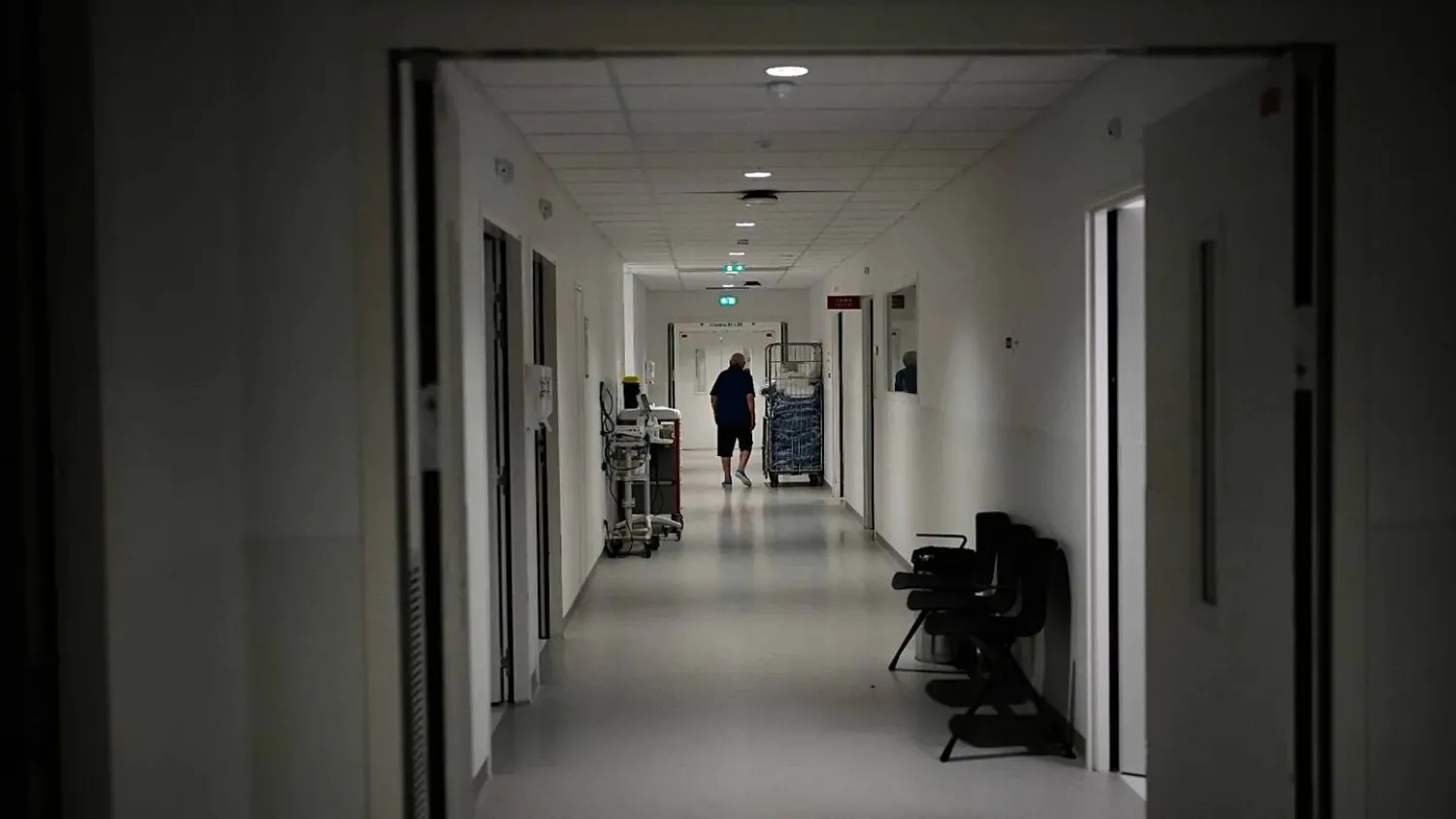
Only 40% of World’s Health Facilities Meet Basic Sanitation Standards, Says UN

The report from the World Health Organization and UNICEF for the first time provided global estimates of basic sanitation services in healthcare settings. (AP file)
TT

Only 40% of World’s Health Facilities Meet Basic Sanitation Standards, Says UN

The report from the World Health Organization and UNICEF for the first time provided global estimates of basic sanitation services in healthcare settings. (AP file)

Only four in 10 healthcare facilities worldwide meet basic sanitation standards for accessible and usable toilets, the United Nations said Tuesday, while 11 percent have no sanitation services at all.

In a report, the UN's health and children's agencies said only 40 percent of healthcare facilities last year had toilets that adequately met the needs of patients and staff, including people with limited mobility.

The report from the World Health Organization and UNICEF for the first time provided global estimates of basic sanitation services in healthcare settings.

Its 2025 estimate found significant gaps in access to basic sanitation standards, which it said required usable facilities including at least one toilet dedicated to staff, at least one sex-separated toilet with menstrual hygiene facilities and at least one toilet accessible for people with limited mobility.

Relying on data from 70 countries, the report showed that sanitation levels in healthcare facilities varied widely between regions, with only 23 percent of facilities in sub-Saharan Africa providing basic services, compared to 55 percent in central and southern Asia.

It found there was no sanitation service at more than one in 10 health facilities globally, serving 936 million people.

In addition to sanitation, the report estimated access in healthcare facilities to water, hygiene, environmental cleaning and waste management.

It found that an estimated 85 percent of facilities last year had basic water services, 72 percent had basic hygiene services and 71 percent basic healthcare waste management services.

Only 59 percent of facilities meanwhile met basic so-called environmental cleaning standards, which require both cleaning protocols and trained cleaning staff and is core to infection prevention and control.

A full 18 percent of facilities, serving around 1.5 billion people, met neither of the environmental cleaning requirements, said the report, which for this category relied on data from 54 countries.

The situation is particularly dire in poorer countries.

The environmental cleaning standard was met by just 24 percent of facilities in the world's least-developed nations.


Japan's Defense Minister Says Cooperation with US, S.Korea 'Critical' for Region

Japan's Defense Minister Shinjiro Koizumi (C) reacts as he talks with Australian Deputy Prime Minister and Defense Minister Richard Marles (L) during a meeting at Parliament House in Canberra on August 18, 2026. (Photo by HILARY WARDAUGH / AFP)
TT

Japan's Defense Minister Says Cooperation with US, S.Korea 'Critical' for Region

Japan's Defense Minister Shinjiro Koizumi (C) reacts as he talks with Australian Deputy Prime Minister and Defense Minister Richard Marles (L) during a meeting at Parliament House in Canberra on August 18, 2026. (Photo by HILARY WARDAUGH / AFP)

Japan's defense minister said Tuesday that cooperation between his country, the United States and South Korea was "critical", after US President Donald Trump scaled back military drills with Seoul, said AFP.

"As Japan faces the most severe and complicated security environment in the post-war era, the cooperation among Japan, the United States and South Korea is critical to the peace and stability of the region," Shinjiro Koizumi said in Australia after talks with his counterpart Richard Marles.


Russia Warns Britain of ‘Consequences’ for Supplying Drones to Ukraine

 An FP-2 middle strike drone flies after being launched by Servicemen of the 20th Separate K-2 Unmanned Systems Brigade of the Unmanned Systems Forces, amid Russia's attack on Ukraine, in Kharkiv region, Ukraine August 16, 2026. (Reuters)
An FP-2 middle strike drone flies after being launched by Servicemen of the 20th Separate K-2 Unmanned Systems Brigade of the Unmanned Systems Forces, amid Russia's attack on Ukraine, in Kharkiv region, Ukraine August 16, 2026. (Reuters)
TT

Russia Warns Britain of ‘Consequences’ for Supplying Drones to Ukraine

 An FP-2 middle strike drone flies after being launched by Servicemen of the 20th Separate K-2 Unmanned Systems Brigade of the Unmanned Systems Forces, amid Russia's attack on Ukraine, in Kharkiv region, Ukraine August 16, 2026. (Reuters)
An FP-2 middle strike drone flies after being launched by Servicemen of the 20th Separate K-2 Unmanned Systems Brigade of the Unmanned Systems Forces, amid Russia's attack on Ukraine, in Kharkiv region, Ukraine August 16, 2026. (Reuters)

Russia warned ‌Britain on Tuesday it would face consequences for supplying drones to Ukraine which are used to attack targets on Russian territory.

Russia's embassy in London was responding to a report in the Times newspaper on Saturday which said British-made drones had been used for long-range strikes against Russia for the first time.

"London's actions will ‌inevitably carry ‌consequences for which it will ‌have ⁠to answer," the ⁠embassy said in a statement posted on its Telegram channel.

"The deeper its involvement in the conflict and the greater its support for Kyiv's terrorist machinery, the higher the price it will pay."

Ukraine ⁠has been using deep-strike drones ‌to hit oil refineries ‌and logistics facilities.

Britain's Ministry of Defense did ‌not confirm whether British drones had been ‌used.

In June, Britain said it would provide 150,000 drones to Ukraine by the end of 2026 as part of a £752 million ($996 million) ‌funding package.

Asked about the Russian embassy comments, a defense ministry spokesperson ⁠said: "Britain ⁠stands shoulder to shoulder with Ukraine and we are committed to providing the equipment Ukraine needs to defend itself against Putin's illegal invasion."

Since the start of Russia's war against Ukraine in 2022, Moscow has repeatedly warned Britain and other Western allies that their support for Kyiv, including the supply of equipment, could provoke retaliatory measures and increase the risk of a broader confrontation.


Russia Summons Japan Ambassador Over Disputed Islands Row

 In this pool photograph distributed by the Russian state agency Sputnik, Russia's President Vladimir Putin interacts with local residents on Iturup island, one of four islands in the contested chain known as the Kuril Islands in Russia and the Northern Territories in Japan, on August 13, 2026. (Gavriil Grigorov / Pool / AFP)
In this pool photograph distributed by the Russian state agency Sputnik, Russia's President Vladimir Putin interacts with local residents on Iturup island, one of four islands in the contested chain known as the Kuril Islands in Russia and the Northern Territories in Japan, on August 13, 2026. (Gavriil Grigorov / Pool / AFP)
TT

Russia Summons Japan Ambassador Over Disputed Islands Row

 In this pool photograph distributed by the Russian state agency Sputnik, Russia's President Vladimir Putin interacts with local residents on Iturup island, one of four islands in the contested chain known as the Kuril Islands in Russia and the Northern Territories in Japan, on August 13, 2026. (Gavriil Grigorov / Pool / AFP)
In this pool photograph distributed by the Russian state agency Sputnik, Russia's President Vladimir Putin interacts with local residents on Iturup island, one of four islands in the contested chain known as the Kuril Islands in Russia and the Northern Territories in Japan, on August 13, 2026. (Gavriil Grigorov / Pool / AFP)

Japan's ambassador to Moscow was expected Tuesday to respond to Russia's summons over a row about disputed islands visited by President Vladimir Putin for the first time last week.

Bilateral relations have long been dogged by the Kuril islands, known in Japan as the Northern Territories and seized in 1945 by the Soviet Union which then expelled the Japanese population.

Putin, 73, visited the territories last Thursday, prompting Japan to summon Russia's ambassador in protest.

It was the first trip there by a Russian president since Dmitry Medvedev in 2010, who served as head of state from 2008-12 while Putin was prime minister.

Japanese Prime Minister Sanae Takaichi said the islands "are an inherent part of Japan's territory, both historically and under international law."

Moscow said Monday it had summoned the Japanese envoy, Akira Muto, with Foreign Minister Sergei Lavrov saying that Tokyo had "crossed the line of decency".

Muto did not immediately accede to the summons however.

"We were told either that he was not in Moscow or that he was unwell. We did not quite understand the situation," Lavrov said.

Ministry spokeswoman Maria Zakharova later told state news agency TASS that after Lavrov's comments the ambassador had "suddenly started feeling better" and would attend on Tuesday.

Japanese public broadcaster NHK reported that Muto did not initially respond out of concern that Russia would unilaterally dominate the discussions, making a balanced exchange difficult.

However, Tokyo decided to reply to the summons after internal deliberations, NHK said citing unnamed sources.

Ties between Japan and Russia have worsened since the full-scale conflict in Ukraine began in 2022.

Japan has joined other G7 countries in sanctioning Russia and giving money and non-lethal defense aid to Kyiv, which like Washington recognizes Japanese sovereignty over the disputed islands.

Japan indirectly supports Ukraine's air defense by exporting domestically produced Patriot interceptor missiles to the United States, helping replenish US stockpiles that have been reduced by military aid to Kyiv.

Analysts said that Putin's visit to the Kurils could have been aimed at warning Japan off deepening support to Ukraine, potentially by supplying Patriot missiles directly, and cooperation with NATO.

While Japan has eased restrictions on defense exports in recent years, it remains unable to supply lethal military equipment directly to a country at war, including Ukraine.