Iran and Oman Agree on Temporary Route in Hormuz Strait
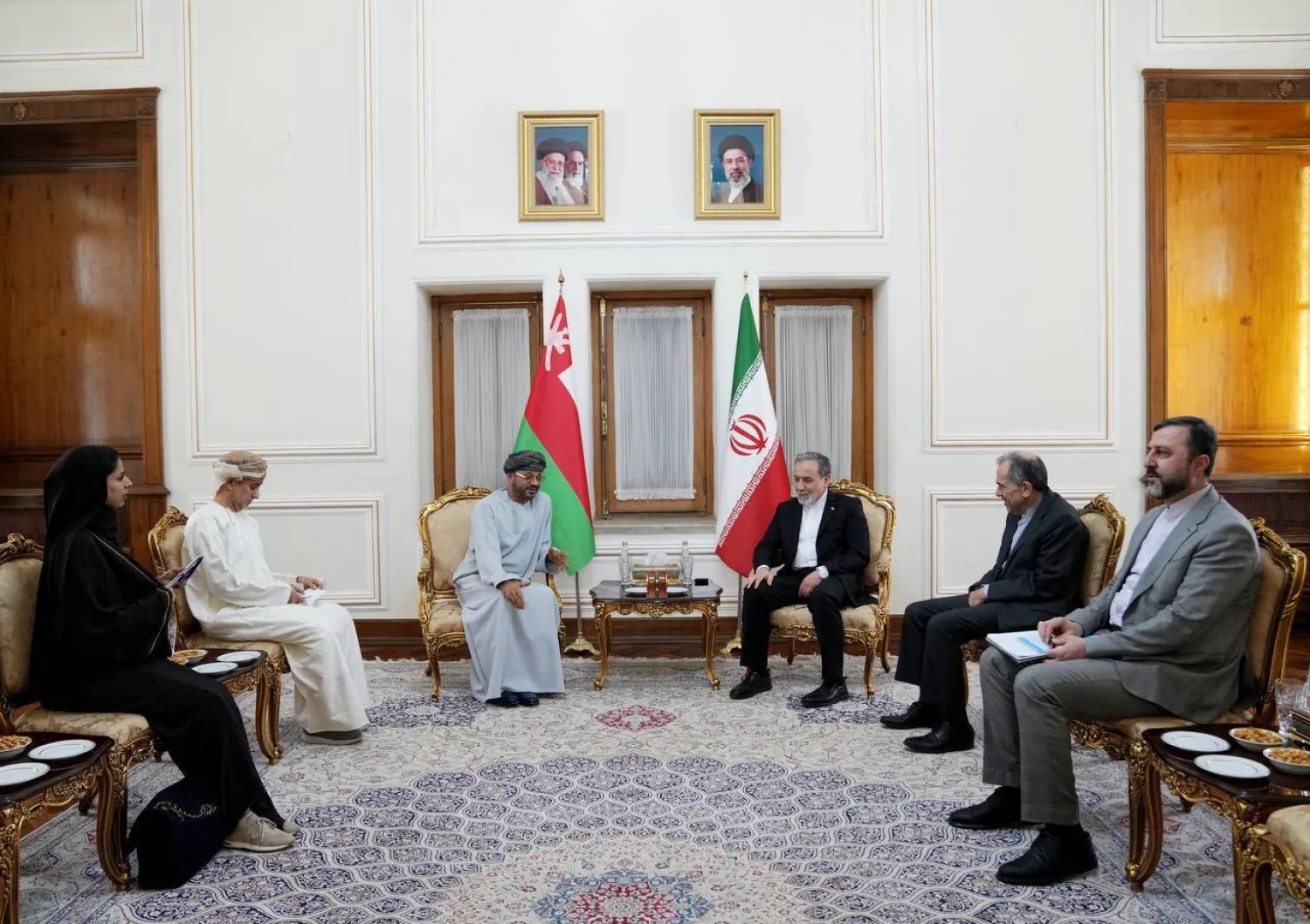
A handout picture provided by the Iranian Foreign Ministry Office, shows Iranian Foreign Minister Abbas Araghchi (top-R) and Omans' Foreign Minister Badr al-Busaidi (Top-L) meeting in Tehran on August 25, 2026. (Iranian Foreign Ministry Office / AFP)
TT
TT
Iran and Oman Agree on Temporary Route in Hormuz Strait
A handout picture provided by the Iranian Foreign Ministry Office, shows Iranian Foreign Minister Abbas Araghchi (top-R) and Omans' Foreign Minister Badr al-Busaidi (Top-L) meeting in Tehran on August 25, 2026. (Iranian Foreign Ministry Office / AFP)
Omani Foreign Minister Badr al-Busaidi met with his Iranian counterpart, Abbas Araghchi, in Tehran, Iran's capital, on Tuesday to discuss a framework for managing ship traffic in the Strait of Hormuz.
A joint statement by the two countries, located on opposite sides of the narrow strait, said the proposed framework includes a “joint temporary navigational corridor” and both countries working to clear mines from the waterway.
The statement said Iran and Oman will continue technical negotiations toward establishing a permanent shipping corridor and an agreement on the future administration of the strait.
Iranian Deputy Foreign Minister Kazem Gharibabadi told state TV that the two countries had reached an understanding on a temporary route.
Traffic into the Gulf from the Gulf of Oman would pass entirely through Iranian waters, while the outbound route would pass partly through Iranian waters and partly through Oman’s territorial waters.
Iran and Oman would then hold negotiations over 30 to 60 days to “reach an understanding on a new permanent and sustainable route,” he said.
About a fifth of the world’s traded oil passed through the strait before the United States and Israel attacked Iran on Feb. 28.
It’s unknown whether the US will accept the emerging deal.
Iran’s president and other senior officials also discussed the strait with a delegation from Pakistan that left Tehran on Tuesday following talks on reviving negotiations to end the Iran-US conflict, the Pakistani military said.
The World: End of Unipolarity or Dawn of a More Turbulent Global Order?https://english.aawsat.com/world/5343974-world-end-unipolarity-or-dawn-more-turbulent-global-order
The World: End of Unipolarity or Dawn of a More Turbulent Global Order?
Multiple poles and shifting centers of power (Reuters illustration)
The world today no longer resembles the one that emerged after the collapse of the Soviet Union in 1991. The international order, characterized for three decades by US supremacy and Washington's ability to influence political, economic and security decisions, is undergoing profound transformations that are reshaping the global balance of power.
At the forefront of these changes are China's rise, Russia's re-emergence as an influential strategic power, India's growing international presence, and the economic and political weight of the European Union and other regional powers.
But has the world truly entered an era of multipolarity, or is it still in a transitional phase marked by US dominance, Chinese competition and conflicting international ambitions? And will the distribution of power among more countries produce a more balanced global order, or lead to greater rivalry and instability?
From Unipolarity to Multiple Centers of Power
A multipolar world is generally understood as an international system in which three or more major powers possess the military, economic and diplomatic capabilities to influence global affairs.
It differs from a unipolar system dominated by a single state and from the bipolar order that defined the Cold War between the United States and the Soviet Union.
Following the end of the Cold War, Washington enjoyed broad military, technological and economic superiority, supported by a network of alliances and financial and trade institutions that helped shape the global economy.
China, however, gradually emerged as a major economic and technological power and expanded its military capabilities, while Russia sought to restore its strategic standing, drawing on its nuclear arsenal, geographical position and natural resources.
Multipolarity does not necessarily mean that rising powers form cohesive alliances. Differences in political systems, economic interests and historical experiences remain significant. Their main point of convergence may simply be a shared desire to limit US unipolar dominance and redistribute international influence.
China-Russia relations are an obvious example. Their ties have developed into a strategic and economic partnership encompassing energy, trade, and military and diplomatic cooperation. Yet describing the relationship as a fully integrated alliance may be an exaggeration, given that both countries maintain their own interests and strategic calculations.
China occupies a central position thanks to its industrial and commercial strength, technological advances, overseas investments and Belt and Road Initiative.
It is not merely competing economically with the United States but is also seeking to expand its influence within international institutions and develop alternative or parallel financial and trade arrangements.
Russia, meanwhile, derives much of its power from its military and nuclear capabilities, its position on the UN Security Council and its role in energy markets.
The war in Ukraine has placed Moscow at the center of geopolitical confrontation with the West, but it also faces economic and technological constraints and mounting military costs.
India presents a different model, seeking to expand its influence without aligning itself entirely with any single political or military bloc.
Its foreign policy is based on the principle of "strategic autonomy," allowing it to participate in BRICS alongside China and Russia while simultaneously strengthening cooperation with the United States, Japan and Australia through the Quad.
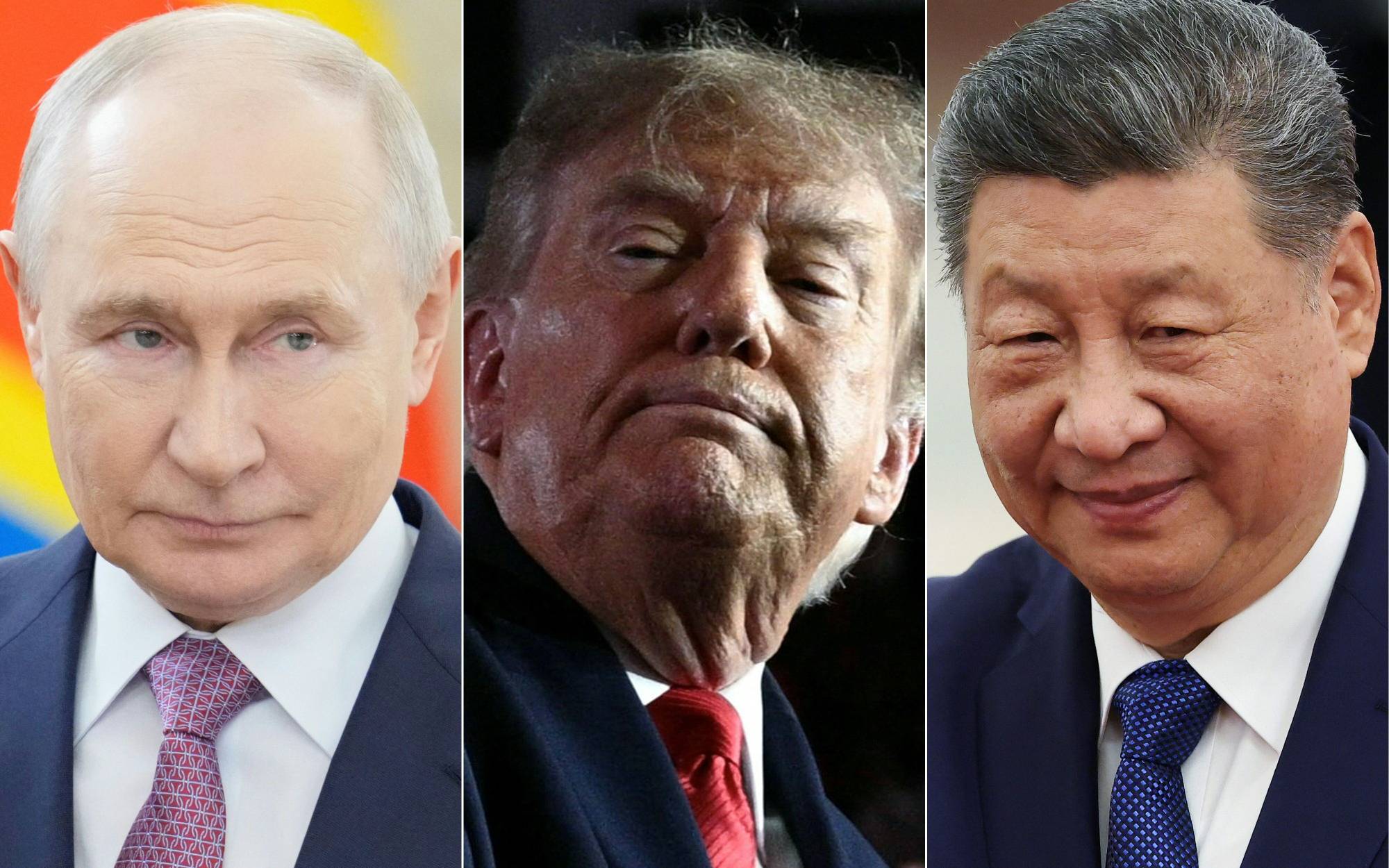
This combination of pictures created on November 15, 2026 shows (L/R) Russia's President Vladimir Putin in Moscow on October 30, 2026, US President Donald Trump in Dubuque, Iowa on November 1, 2026, and Chinese President Xi Jinping in Beijing on November 6, 2026.(Photo by various sources / AFP)
Europe and Middle Powers
The transformation of the international order is not limited to major powers. The European Union possesses considerable economic and regulatory influence, with its single market, trade policies and legal standards allowing it to shape the behavior of governments and businesses beyond its borders.
However, the absence of unified military capabilities and full strategic autonomy, together with several member states' reliance on the North Atlantic Treaty Organization (NATO) and differences in their foreign policies, limits the EU's ability to act as a fully integrated political and military pole.
At the same time, middle powers such as Brazil, Türkiye and Indonesia are becoming increasingly important.
Their resources, geographical positions and diplomatic relationships give them leverage in international negotiations, while competition among major powers for their cooperation provides greater room to diversify their economic and security partnerships.
International Institutions Face a Test
One of the most significant consequences of the shift toward multiple centers of power is the growing debate over the legitimacy and effectiveness of international institutions.
The United Nations, International Monetary Fund, World Trade Organization and other bodies were established under balances of power that differ considerably from those prevailing today.
The UN Security Council illustrates this contradiction. Its five permanent members, the United States, Russia, China, France and the United Kingdom, retain veto power despite profound changes in the global economic and political landscape.
This has intensified calls to reform the council and expand representation for countries and regions whose current influence is not reflected in its permanent membership.
The rise of BRICS and the establishment of the New Development Bank also reflect emerging economies' desire for financial and institutional mechanisms that give them a greater role in shaping international policy.
These developments do not necessarily signal the displacement of existing institutions. Rather, they indicate a declining willingness to accept the Western-dominated order as the only framework for global governance.
Multipolarity: Balance or New Conflicts?
Scholars disagree over whether a multipolar international system is more stable than a unipolar or bipolar one.
Some argue that the presence of multiple major powers reduces the likelihood of domination, since any state seeking to expand its influence may encounter counterbalancing alliances. Such a system also gives countries more options for diplomatic maneuvering.
Others warn that multiple centers of power increase the risk of miscalculation because alliances become more complex, interests overlap and reactions during crises become harder to predict.
Europe before World War I provides an example of these dangers. Interlocking alliances, colonial rivalries and an arms race helped turn the assassination of Archduke Franz Ferdinand of Austria in 1914 into the spark that ignited a world war.
Yet multipolarity does not inevitably lead to war. The understandings reached among European powers after the Congress of Vienna in 1815 demonstrated that a relative balance of power could be maintained.
Nuclear weapons add another crucial dimension to this equation.
Nuclear deterrence makes direct confrontation between major powers less likely, but it does not prevent conventional wars, proxy conflicts or economic and technological pressure.
What Kind of World Lies Ahead?
The most important question may not be whether the world has become multipolar, but what kind of multipolarity is taking shape.
The United States continues to enjoy military superiority, a global presence and an extensive network of alliances, while China represents the most serious challenger to its influence.
Russia, India, the European Union and other regional powers also affect the global balance of power to varying degrees, although their capabilities and roles are far from equal.
As the world awaits the full implications of the trilateral summit between China, the United States and Russia in Shenzhen, the international system appears to be in a transitional phase whose defining features have yet to emerge.
US unipolar dominance is no longer as firmly established as it once was, but multipolarity has not yet evolved into a stable system governed by clear rules and institutions capable of managing competition.
The central challenge lies not in the number of major powers, but in the nature of the relationships that develop among them.
If the emergence of multiple centers of power is accompanied by reforms to international institutions, stronger cooperation and respect for international law, it could lead to a more representative and balanced global order.
But if it develops into an unrestricted struggle for influence, weapons and resources, the world could enter a prolonged period of instability, potentially culminating in a major war.
Iran Considers Uranium a Red Line, Trump Says: ‘They Don't Want to Make a Deal That's Acceptable to Me’https://english.aawsat.com/world/5343930-iran-considers-uranium-red-line-trump-says-%E2%80%98they-dont-want-make-deal-thats-acceptable
Iran Considers Uranium a Red Line, Trump Says: ‘They Don't Want to Make a Deal That's Acceptable to Me’
Iran's Foreign Minister Abbas Araghchi speaks to media representatives in Islamabad on November 16, 2026. (Photo by AFP)
Iran's Foreign Minister Abbas Araghchi said Tehran still hoped diplomacy could end its war with the United States, while US President Donald Trump said Iran wanted a deal but one that was not acceptable to him.
Araghchi told the state-owned Iran newspaper that messages continued to be exchanged between Iran and Washington through mediators, and that Tehran was seeking "an agreement that would ensure there was no further war".
He also said Iran wanted guarantees that Washington was serious about negotiations before proceeding further, adding that Iran had discussed with mediators the form and nature of confidence-building measures.
The remarks came as diplomatic efforts continued to try to end a conflict that has destabilized the Middle East, disrupted shipping, driven up global energy prices and drawn in countries across the region.
The foreign minister said Iran's red lines included keeping its highly enriched uranium in the country, though he said a "fair solution" was still possible.
Authorities have previously mentioned "feasible formulas" to resolve the dispute between Tehran and Washington over the matter, including diluting the highly enriched uranium stockpile under the supervision of the International Atomic Energy Agency.
The IAEA estimates that Iran had 440.9 kg of uranium enriched to 60% when Israel and the US attacked Iranian nuclear facilities in June 2025. How much of that has survived is unclear.
"I believe a fair solution can be reached on the issue of nuclear material, one that is based on our national interests while also meeting the country’s needs," Araghchi said.
Trump, in a press conference on Friday, said: "They want to make a deal, but they don't want to make a deal that's acceptable to me."
The United States and Israel attacked Iran on February 28, prompting Tehran to strike Israel and Gulf states hosting US military bases.
Qatari and Iranian officials met on Tuesday in talks aimed at "bridging perspectives and narrowing the gap between proposals presented on the ground," a spokesperson for Qatar's foreign ministry said.
Two Tankers Attacked in Strait of Hormuzhttps://english.aawsat.com/world/5343927-two-tankers-attacked-strait-hormuz
In this handout photo provided by the Lewis Pugh Foundation, taken from a boat accompanying endurance swimmer Lewis Pugh, smoke rises from a burning liquefied petroleum gas tanker in the Strait of Hormuz off the Musandam Peninsula, Oman, Tuesday, Nov. 17, 2026. (Lewis Pugh Foundation via AP)
In this handout photo provided by the Lewis Pugh Foundation, taken from a boat accompanying endurance swimmer Lewis Pugh, smoke rises from a burning liquefied petroleum gas tanker in the Strait of Hormuz off the Musandam Peninsula, Oman, Tuesday, Nov. 17, 2026. (Lewis Pugh Foundation via AP)
A tanker sailing outbound through the Strait of Hormuz was hit on its stern by an unidentified projectile about 11 nautical miles north of Oman's Khasab, the United Kingdom Maritime Trade Operations (UKMTO) said on Saturday.
UKMTO later reported another incident involving a tanker hit in its engine room by an unidentified projectile 17 nautical miles east of Khasab.
No casualties were reported in either incident, while the environmental impact remained unknown, UKMTO said.
The incidents followed a similar attack on a tanker near Khasab on Friday that caused a fire on board, according to the British maritime security agency.
Khasab lies on Oman's Musandam Peninsula at the entrance to the Strait of Hormuz, a strategic waterway that carried nearly one-fifth of global crude oil supplies before the US-Israeli conflict with Iran.
Shipping through the strait has been disrupted since Iran moved to close the waterway following the eruption of the conflict on February 28.
لم تشترك بعد
انشئ حساباً خاصاً بك لتحصل على أخبار مخصصة لك ولتتمتع بخاصية حفظ المقالات وتتلقى نشراتنا البريدية المتنوعة