
Trump Says Russia ‘Is Not Going to Attack NATO Territory’

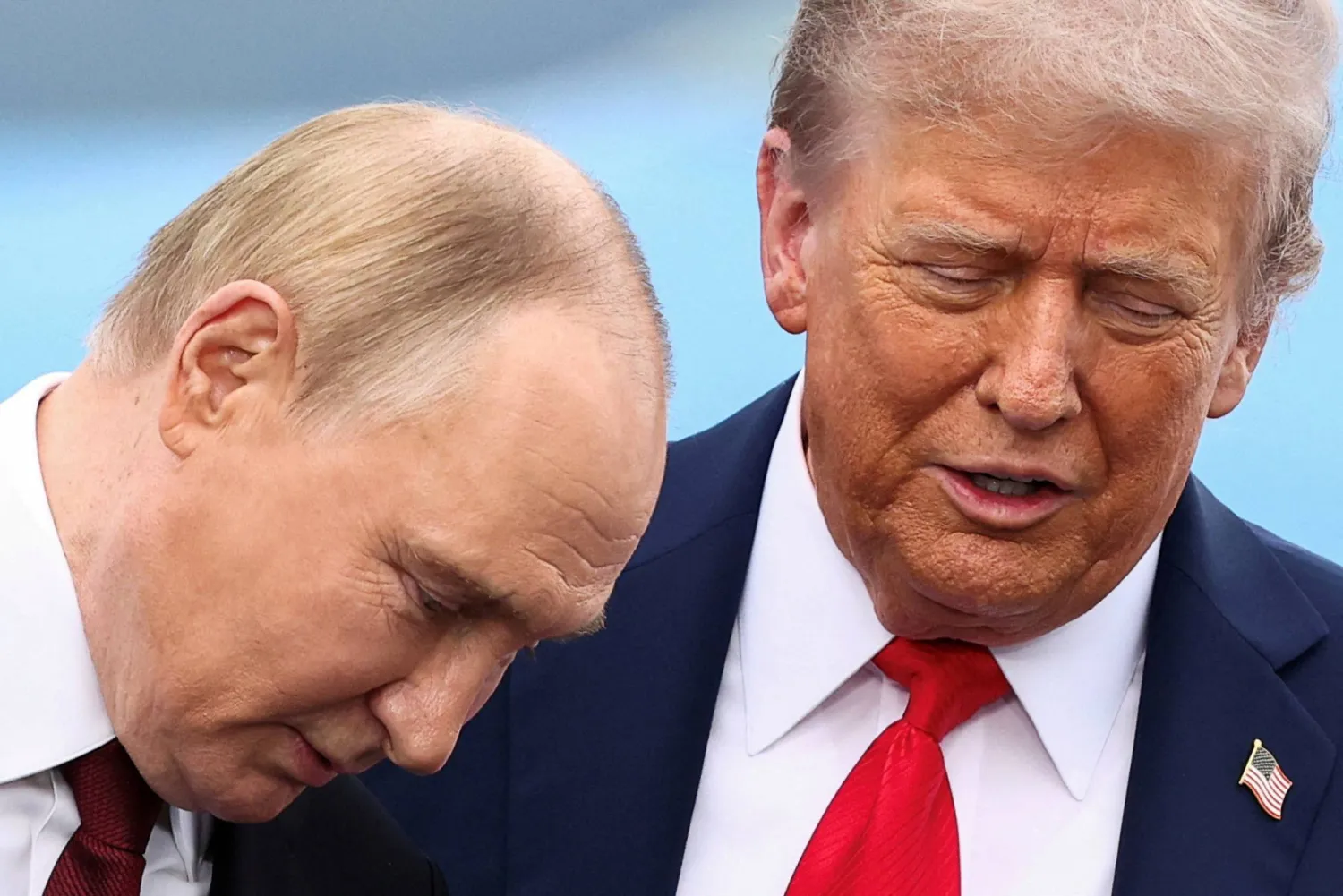
US Donald Trump and Russian President Vladimir Putin at a meeting in Alaska on Aug. 15, 2025 (Reuters) 
TT

Trump Says Russia ‘Is Not Going to Attack NATO Territory’

US Donald Trump and Russian President Vladimir Putin at a meeting in Alaska on Aug. 15, 2025 (Reuters) 

US President Donald Trump on Thursday said Russia is “not going to attack” NATO territory, pushing back against media reports that Washington is concerned about a possible Russian move on Europe.

“I've had good talks with him. He's not going to be attacking a NATO territory,” Trump told reporters in the Oval Office when asked if Russian President Vladimir Putin had agreed not to do so.

Trump's comments came two days after CIA Director John Ratcliffe flew to Moscow for surprise talks that the Wall Street Journal and CBS News had said was an attempt to dissuade Russia from attacking NATO members, amid US intelligence assessments that Moscow could seek to test the alliance.

Last Wednesday, Trump said that Ratcliffe's unannounced trip to Russia was “semi-routine,” downplaying the visit amid speculation that the spy chief had an urgent reason to make an appearance in Russia's capital.

In the interview with Glenn Beck, Trump instead talked about trying to end the Ukraine war, a goal he has pursued without success since returning to office last year.

A senior EU official told AFP on Thursday that European intelligence agencies see no sign Russia is planning a military attack on European NATO countries, after US reports that the head of the CIA warned Moscow not to strike the alliance.

“European services in general do not see any risk of an attack from Russia to the European countries, and this assessment has not changed,” said the official, speaking on condition of anonymity.

Meanwhile, Russia bombarded cities across Ukraine with missiles and drones in an overnight onslaught that ran into the daylight of hours Thursday, when explosions echoed around Kyiv through the morning.

Ukraine is desperately short of US-made Patriot air defense missiles that can counter Russia’s ballistic missiles, and Moscow’s fast-flying jet-powered drones have brought another challenge since the Russian military’s full-scale invasion began 4½ years ago.

On Friday, Ukrainian President Volodymyr Zelenskyy said Ukraine has struck a Russian Tu-95MS missile-carrying aircraft at the Engels base.

“These are the aircraft that are carrying out strikes against Ukraine,” Zelenskyy said on X, adding the strike was carried out by the Alpha unit of Ukraine’s SBU domestic security service.

Ukrainian officials say Russia builds up missile stocks and launches major attacks every few days, hoping to exhaust Ukrainian defenses through the sheer weight of numbers.

In response, Ukraine has hit high-profile targets on Russian soil as the countries inflict mutual destruction.

The Russian Defense Ministry said its forces carried out a “massive” strike on targets in nine Ukrainian cities that began after nightfall on Wednesday.

It described the targets as military-related, including industrial facilities, oil refineries, logistics hubs and port infrastructure.

“Russia continues to invest in missiles and in expanding its war, and that means more countermeasures are needed,” Zelenskyy said on social media, noting promises earlier this week by European countries to provide more air defense assistance.

“It is important that these (measures) are also supplemented by additional ballistic missile defense packages” through European purchases of weapons from the United States, he said.

Though the Russian Defense Ministry insisted only war-related targets were attacked, Russia appears determined to hurt Ukrainian businesses and dent the country's economy through attacks on private enterprise after Ukraine’s long-range drone strikes caused financial difficulties for Moscow.

Russian drones hit three major distribution centers, destroying depots belonging to a toy store chain and a confectionery company, and damaging another run by an electronics retailer, the companies said.

In addition, Moscow continued its efforts to wreck the Ukrainian power grid before the freezing winter months.

Also, people in the southern Ukrainian city of Kherson were urged to leave due to intensifying Russian attacks that risked cutting electricity and heating supplies for an extended period.

“I am once again addressing the residents of Kherson, especially families with children and elderly people: if you have the possibility.., please leave,” regional governor Oleksandr Prokudin wrote on Telegram.

“The enemy is intensifying its attacks every day on the region’s critical infrastructure,” he added.

“Last night, Russian forces again attacked Kherson’s district heating plant with glide bombs... the facility sustained very serious damage. Kherson may find itself without electricity or heating not for hours or days but for a long period,” he said.

Prokudin also wrote that, “Currently, there is no way to destroy these types of drones or the aerial bombs in any region of our country.”

Meanwhile, Ukraine's budget deficit in 2027 could be larger than forecast, requiring additional aid from the European Union as a result, Bloomberg wrote, citing sources.

Talks between Kiev and the International Monetary Fund (IMF) have faced headwinds due to “politically sensitive demands” from the country’s second-largest lender, sources said.

In July, the IMF projected that Ukraine’s deficit would total 17.8% of GDP in 2027 - 3.3 percentage points lower than in 2025. However, this forecast presumes that the Ukraine conflict will end in 2026, the agency noted. “As the war drags on, the figure is expected to be revised upward,” Bloomberg said, citing one of its sources.



Washington Proposes Exchanging AI Safety Alerts with Beijing

US Treasury Secretary Scott Bessent stands next to US Trade Representative Jamieson Greer, speaking to the media, after meeting with China's Vice Premier He Lifeng (AFP) 
TT

Washington Proposes Exchanging AI Safety Alerts with Beijing

US Treasury Secretary Scott Bessent stands next to US Trade Representative Jamieson Greer, speaking to the media, after meeting with China's Vice Premier He Lifeng (AFP) 

US Treasury Secretary Scott Bessent said Sunday Washington has proposed a new “notification mechanism” for artificial intelligence incidents that could affect national security, part of weekend discussions ahead of talks at the White House this week between US President Donald Trump and China’s Xi Jinping.

“We want a shared vision of common goals and common threats,” Bessent told reporters after talks with Chinese Vice Premier He Lifeng in New York.

“We think that just like any cross-border activity, that moving from opaque to more transparency between the No 1 and the No 2 AI powers in the world is very important,” he added.

Trump has resisted calls to slow down AI development, saying that would help China catch up to US companies.

Standing together in the soaring lobby of the JPMorgan Chase headquarters late Sunday, Bessent and US Trade Representative Jamieson Greer said the groundwork had been laid for talks between Xi and Trump set to take place on Thursday.

They said the two sides had agreed to operationalize a new “Board of Trade” that the two leaders had discussed when they met in Beijing in May.

“Today those notions have become reality,” Greer said.

Greer said the countries were still discussing what “nonsensitive” items could be considered for lower tariffs, but that the list could potentially include consumer and agricultural goods, energy products and medical devices.


Russian Document Reveals How Moscow Sought to Deepen Ties with Iran to Evade US Sanctions

Russian President Vladimir Putin with Iran's President Masoud Pezeshkian during a session held on the sidelines of the BRICS summit (EPA) 
TT

Russian Document Reveals How Moscow Sought to Deepen Ties with Iran to Evade US Sanctions

Russian President Vladimir Putin with Iran's President Masoud Pezeshkian during a session held on the sidelines of the BRICS summit (EPA) 

An official Russian document obtained and reviewed by Fox News reveals how Moscow sought to deepen its relationship with Iran to bypass US sanctions, laying out plans for alternative financial channels, nuclear cooperation, Iranian production of Russian aircraft components, well as open new financial avenues.

The 44-page Russian-language document was approved on the Russian side on Sept. 2, 2024. It indicated that Russia had drawn up a comprehensive plan for the period 2024-2026, which included the creation of alternative financial channels, the use of national currencies in transactions, strengthening nuclear cooperation, projects in the oil and gas sectors, the production of spare parts for Russian aircraft in Iran, and the continuation of the operation of the Bushehr nuclear power plant by Rosatom.

The roadmap also calls for Russia to help establish production in Iran of individual parts and assemblies for Russian aircraft.

Russian authorities were instructed to determine which aircraft parts could be repaired or manufactured in Iran, identify Iranian companies capable of producing them, certify selected sites through Russia’s aviation regulator Rosaviatsiya and conclude a localization agreement, according to Fox News.

The document also proposed building a railway line from the Iranian border with Azerbaijan to ports on the Arabian Gulf. However, it remains unclear which of these projects are still being implemented, given the changes brought about by the current war.

Russia has maintained close ties with Iran for years, but those relations have intensified since Russia's invasion of Ukraine. US reports say Iran has provided drone support to Russia, but Tehran has categorically denied them.

This cooperation was further strengthened as the US exerted pressure on Iran through economic sanctions, amid reports that Moscow had offered Tehran assistance in the production of cruise missiles.

Keti Korkiya, a research analyst with the Foundation for Defense of Democracies’ Russia program, reviewed the document for Fox News Digital and said its significance lies less in any single project than in the architecture Moscow was trying to build around the relationship.

“The roadmap is not revelatory: people paying close attention to the relationship between Russia and Iran will see many collaborations between the two countries that have been public for years,” Korkiya said in written analysis provided to Fox News Digital.

“What is more revealing is the architecture of the relationship Moscow is trying to build,” she said, pointing to financial mechanisms, transportation routes, energy investment and aviation cooperation as different ways of reducing vulnerabilities created by sanctions and Western economic pressure.


Trump Administration Prepares Sanctions against International Criminal Court

(FILES) This general view shows the exterior of the International Criminal Court (ICC) in The Hague on March 28, 2026. (Photo by JOHN THYS / AFP)
TT

Trump Administration Prepares Sanctions against International Criminal Court

(FILES) This general view shows the exterior of the International Criminal Court (ICC) in The Hague on March 28, 2026. (Photo by JOHN THYS / AFP)

President Donald Trump's administration has prepared sanctions against the entire International Criminal Court and plans to announce them soon, two sources familiar with the matter said, a move that would step up its attack on the global tribunal that prosecutes war crimes and genocide worldwide.

The Trump administration has made no secret of its disdain for the court and has worked to undermine it. US officials want the ‌court to drop ‌its arrest warrants against Israeli leaders as well as ‌a ⁠past probe into American ⁠troops in Afghanistan, Reuters said.

US Secretary of State Marco Rubio in July announced a campaign to isolate the court, calling on other countries to withdraw from the tribunal. Washington has imposed sanctions on a number of ICC judges and prosecutors but has so far held off from imposing sanctions on the court itself, although the move has long been considered as one of the options.

The State Department did not immediately respond to a request ⁠for comment.

Sanctions against the court have been prepared, the sources said, ‌even though the exact timing of an ‌announcement remained unclear. The Wall Street Journal cited officials who said the decision could be finalized ‌as soon as this week during the United Nations General Assembly meeting.

Targeting the ‌entire organization directly, as well as entities that cooperate with it, could severely undermine the court's work.

Any entity-wide sanctions imposed by the US Treasury would prohibit US citizens and companies from providing funds, goods, or services to the court without a license from the US Treasury's Office ‌of Foreign Assets Control (OFAC). Banks often over-comply with such US sanctions because they depend on access to the American financial system.

Among ⁠the court's operations ⁠that could be affected by sanctions against the entire organization are the purchasing of IT services and insurance, the hiring of investigators and conducting everyday financial transactions, such as paying dozens of American employees, the ICC's registrar and president have warned.

Trump's opposition to the court goes back to his first term. It surfaced again with a plan to penalize ICC officials, an idea developed in November 2024 when Trump was reelected and the ICC issued an arrest warrant for Netanyahu for alleged war crimes and crimes against humanity in the Gaza conflict.

The ICC was established in 2002 by the international community to prosecute war crimes, genocide and crimes against humanity. It asserts jurisdiction only if a member state is unable or unwilling to prosecute atrocities itself.

The United States has never been a member.