
Iran's President Admits Sanctions Impacting Economy

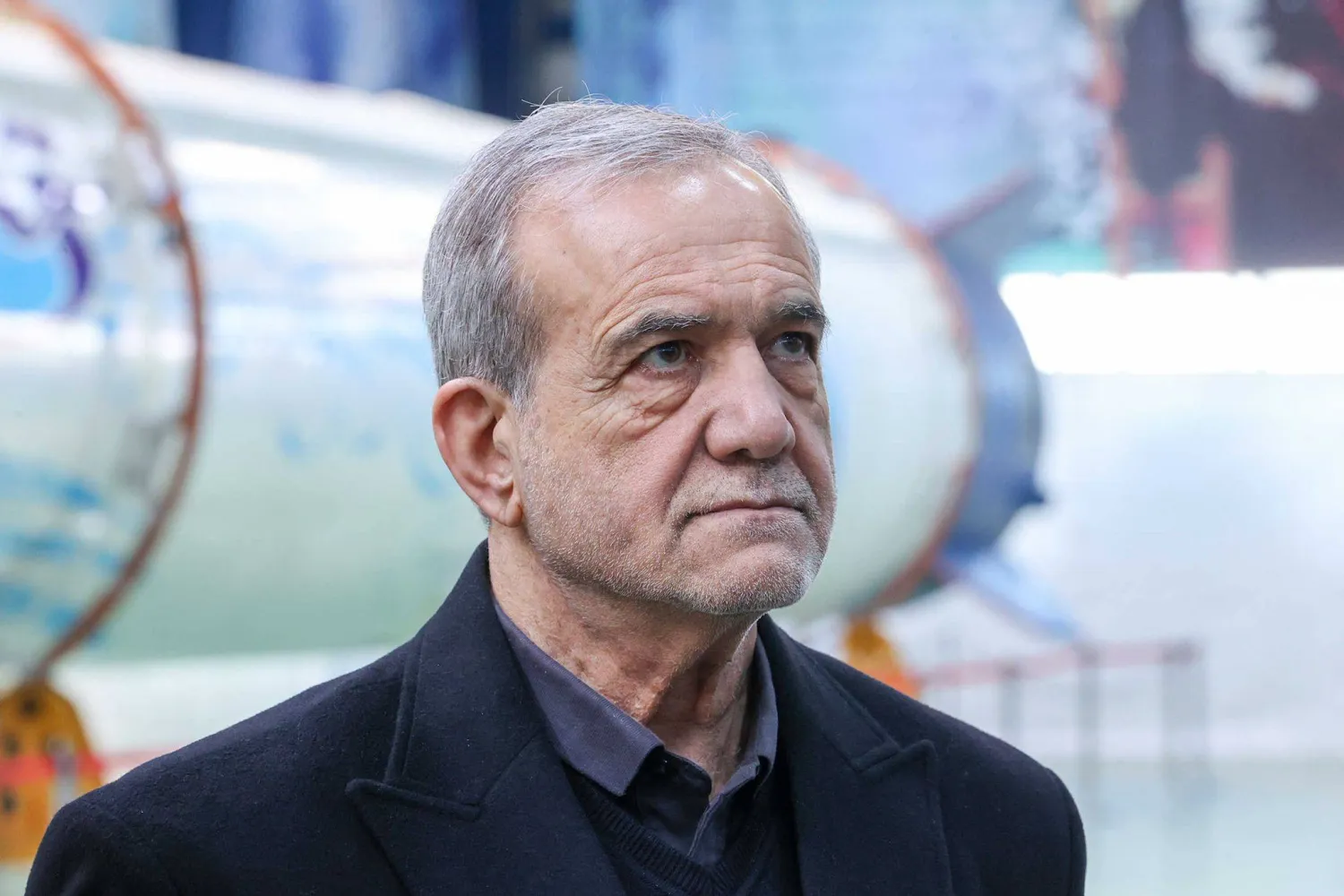
FILED - 02 February 2025, Iran, Tehran: FILE PHOTO - Iranian President Masoud Pezeshkian visits an exhibition that showcases the defense ministry's latest advancements in defense and space in Tehran. Photo: -/Iranian Presidency/dpa
TT

Iran's President Admits Sanctions Impacting Economy

FILED - 02 February 2025, Iran, Tehran: FILE PHOTO - Iranian President Masoud Pezeshkian visits an exhibition that showcases the defense ministry's latest advancements in defense and space in Tehran. Photo: -/Iranian Presidency/dpa

Iran's President Masoud Pezeshkian has admitted that US sanctions on his country are hurting its economy, despite just days ago insisting they would achieve nothing.

"Some say sanctions have no effect at all; to those people, I really don't know what to say," Pezeshkian told state TV in an interview late on Friday.

"We are in a war situation, and we must accept these wartime conditions," he added.

On Monday, US Treasury Secretary Scott Bessent laid out plans for the "economic asphyxiation" of Iran, warning of dire consequences for countries that do not join the American campaign.

The new measures build on a sanctions regime by the US and allies that has been in place since 2018 when President Donald Trump withdrew from an international deal struck with Tehran on its nuclear program.

Pezeshkian said Friday that Iran's exports and imports had fallen by 25 to 35 percent in recent months as the US maintains a naval blockade of Iranian ports.

The president said the price of petrol should be increased in Iran to account for the fall in trade.

"We should raise the price of the third-tier quota... For example, from 5,000 tomans to 10,000 tomans," he added.

That quota refers to one of several consumption rates that determine the price an Iranian consumer is charged.

Iran, a major oil producer with some of the world's cheapest fuel, has for years heavily subsidized petrol, making any changes to pricing politically sensitive.

Vice President Mohammad Jafar Ghaempanah said Wednesday that the US blockade had prevented his country from importing enough petrol to cover a shortfall in domestic production.

But Pezeshkian said that same day that the latest US sanctions "will not achieve anything".

"We will stand firm against economic pressures, as we have done so far and will continue to do," Pezeshkian told state media.

MI5 Chief Says Iran is Targeting Military Sites and Suspected Plot at RAF Fairford is 'Not Unique’

Director General of MI5 Ken McCallum speaks at Thames House, the headquarters of the UK's Security Service in London, Tuesday Oct. 13, 2026. (Jonathan Brady/PA via AP, Pool)
TT

MI5 Chief Says Iran is Targeting Military Sites and Suspected Plot at RAF Fairford is 'Not Unique’

Director General of MI5 Ken McCallum speaks at Thames House, the headquarters of the UK's Security Service in London, Tuesday Oct. 13, 2026. (Jonathan Brady/PA via AP, Pool)

Iran is trying to hit military sites in the UK and the suspected plot to attack a US-run military air base in September is “not unique," the head of Britain's MI5 spy agency said Tuesday.

Ken McCallum, who leads the UK’s domestic security service, said Tehran is seeking to intensify its attacks in Britain beyond the traditional targets of Iranians opposed to the country's Islamic authorities.

That has included arson and sabotage attacks on Jewish sites that Britain says were carried out by Iranian proxies.

McCallum said another “major shift this year has been Iranian ambitions to come at harder targets, like military sites.”

The incident at RAF Fairford “is not unique. There have been other examples, not just in the UK but around the world,” McCallum said.

McCallum delivered a speech outlining major threats to the UK as detectives investigate a suspected terror plot against the US-run base in western England, which has been used to bomb Iran during this year’s war.

Scores of residents were evacuated from their homes near the base on Sept. 27 as armed police officers and army bomb-disposal experts swarmed the rural area. Police later said they had found a quantity of an accelerant — gasoline — in three vans at the site, but no explosives, The AP news reported.

British authorities have linked Tehran to the incident, which led the US to pull its bombers from RAF Fairford. Prime Minister Andy Burnham said Monday that the apparent plot was “almost certainly” directed by Iran’s Revolutionary Guard.

Seven men in their 20s have been arrested and released on bail under investigation.

Iran has denied involvement, although it has previously said that it considers any base used to attack its territory a legitimate target.

MI5 says AI could bring bioweapon risk In a stark speech, McCallum argued that the UK faces a “new era of national security” and is at a turning point equivalent to the 9/11 attacks a quarter century ago.

He said his agency’s work countering state threats – chiefly from Russia, Iran and China – has quadrupled in the past decade, and claimed that both Russia and Iran are expanding their hybrid warfare campaigns against the UK.

Meanwhile, technology is racing ahead, with artificial intelligence “supercharging” the cybersecurity battle between attackers and defenders, he said.

McCallum said terror plotters have used artificial intelligence for reconnaissance and attacks, including AI-enabled drones. Even more concerning, he said, is “AI’s potential to change the stakes on existing or even new bioweapons.”

He said terror groups “would dearly love” to have chemical, biological or radiological weapons, but these are hard to obtain.

“One risk is that AI could enable dangerous knowledge to get into the hands of people we would all rather didn’t have that knowledge,” he said. “A second and different risk ... is the possibility that AI could generate novel pathogens not previously seen.”

McCallum said MI5 has set up a new AI Threat Assessment Center to try to keep ahead of the risks.

“Human history has given us no experience of facing an actor which is smarter than we are. It is capable of outthinking us. This is genuinely novel, and deserves the serious attention it is getting, including in MI5,” he said.


Iran Reportedly Fortifies Nuclear Sites, Rallies its People for Return to Combat

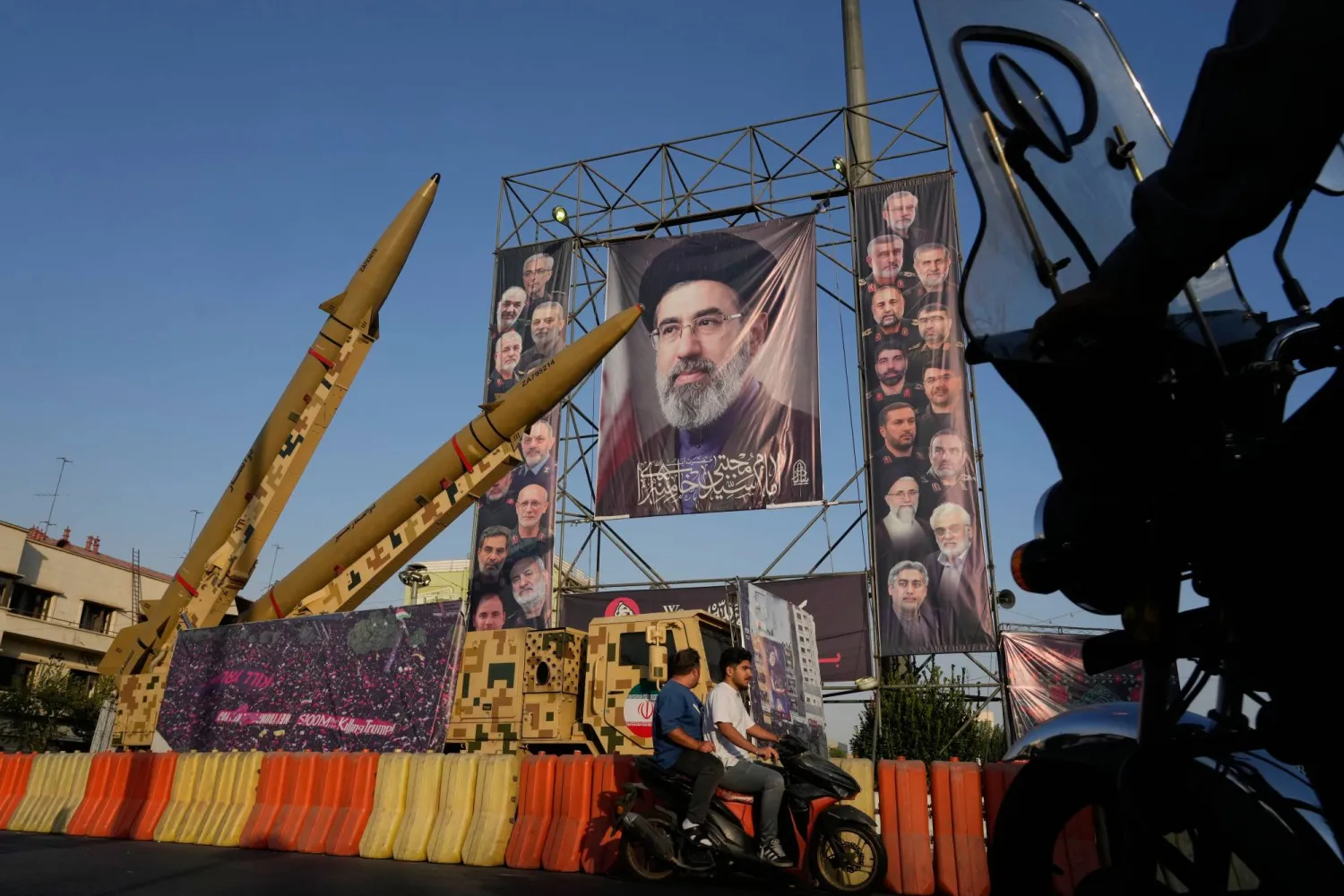
Motorbikes drive past Iranian missiles and banners showing portraits of the Iranian Supreme Leader, Mojtaba Khamenei, center, and the late armed forces commanders and nuclear scientists, who were killed in Israeli and US strikes, displayed in a military exhibition commemorating the anniversary of the start of the 1980-88 Iraq-Iran war at Baharestan Square, in Tehran, Monday, Sept. 28, 2026. (AP Photo/Vahid Salemi)
TT

Iran Reportedly Fortifies Nuclear Sites, Rallies its People for Return to Combat

Motorbikes drive past Iranian missiles and banners showing portraits of the Iranian Supreme Leader, Mojtaba Khamenei, center, and the late armed forces commanders and nuclear scientists, who were killed in Israeli and US strikes, displayed in a military exhibition commemorating the anniversary of the start of the 1980-88 Iraq-Iran war at Baharestan Square, in Tehran, Monday, Sept. 28, 2026. (AP Photo/Vahid Salemi)

Iran is fortifying its defenses as it prepares for potential American attacks after the midterms and seeks to deter them, The Wall Street Journal reported.

Satellite images show Iran is strengthening sensitive locations, including nuclear sites and border areas, to make them more resilient to attacks, the newspaper said.

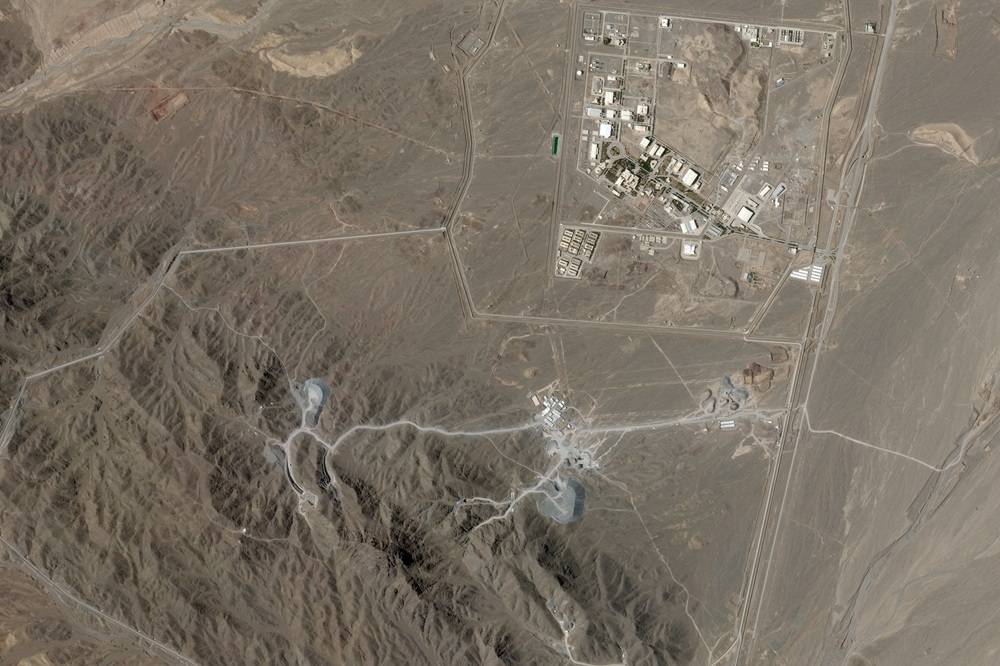
This June 15, 2026, photo from Planet Labs PBC shows Iran's Natanz nuclear enrichment facility, upper right, and the under-construction at Pickaxe Mountain directly to the south of it. (Planet Labs PBC via AP)

Last month, it built passive defense measures such as makeshift dirt mounds around its Pickaxe Mountain and Natanz nuclear sites to impede any attempted raid by ground forces, according to Vantor satellite images analyzed by the Institute for Science and International Security, a Washington, D.C.-based nonprofit.

Iranian officials are touting their efforts. The country’s airports, seaports and power plants “have prepared for wartime conditions,” installing shelters and backup supplies to continue operating in a crisis, Brig. Gen. Gholamreza Jalali, the official in charge of the country’s contingency plans, told reporters at the end of September.

While US President Donald Trump last week ruled out an attack before the Nov. 3 midterm elections, he has publicly mulled hitting the Pickaxe Mountain nuclear site, and US officials have said that the military is preparing a range of options for new strikes.

Iran’s government is also preparing Iranians for renewed war, sending paramilitary forces to read war stories to kindergartners, advertising training in firing shoulder-mounted antiaircraft missiles and holding rallies.

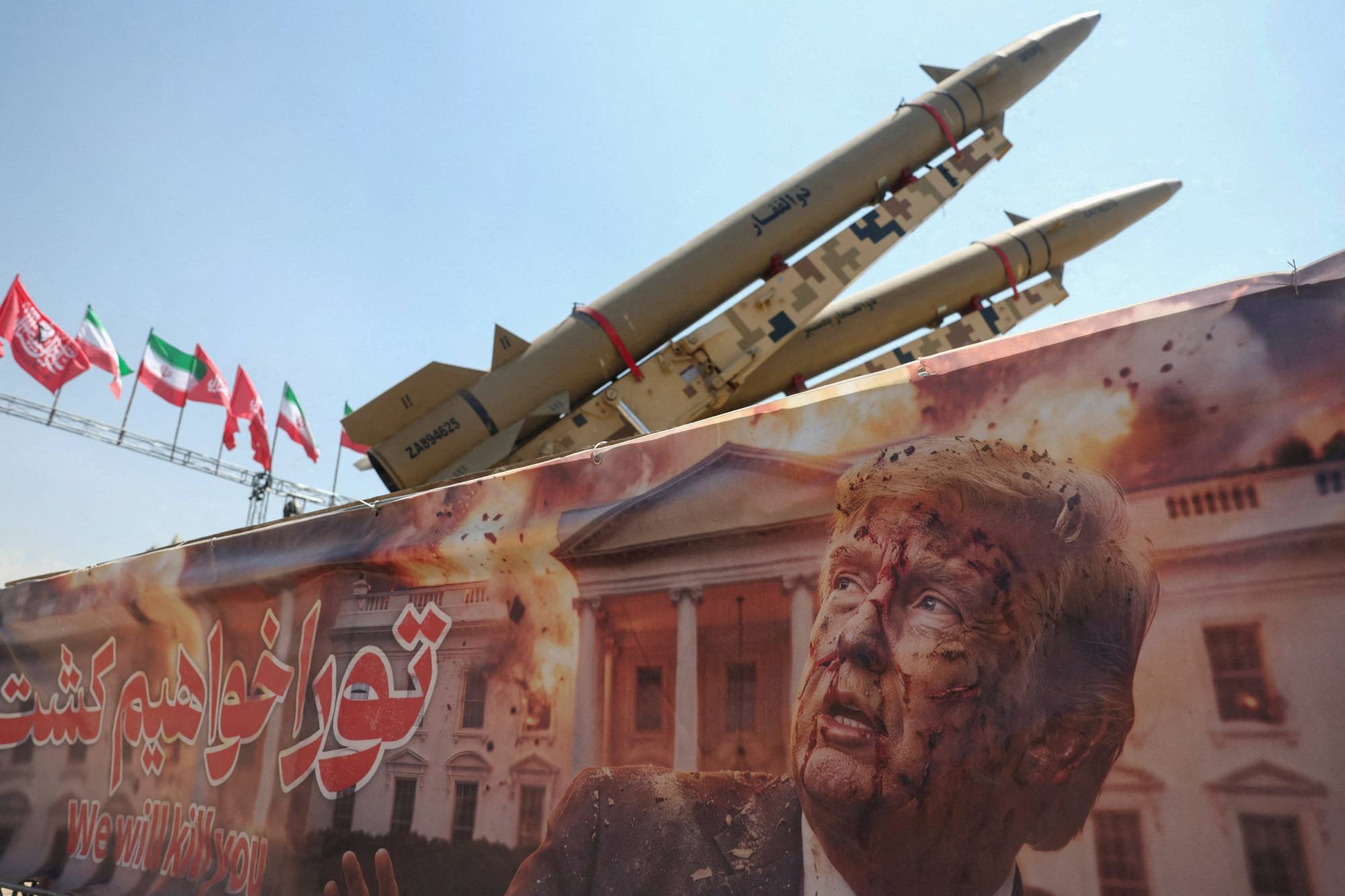
A banner with a picture of US President Donald Trump next to an Iranian missile system at Azadi Square in Tehran, Iran, July 30, 2026. Majid Asgaripour/WANA (West Asia News Agency) via REUTERS

Billboards in Tehran now advertise civilian training courses in the use of shoulder-fired antiaircraft missiles and sniper rifles.

Last month, the Revolutionary Guard boasted that it had trained its first female commando units in guerrilla tactics, firearms use and drone piloting, according to footage posted by the Fatehin, an elite unit of Iran’s Basij volunteer defense forces.


Australia Will Do 'Anything We Can' to Stop US Execution Being Shown Online, Says PM

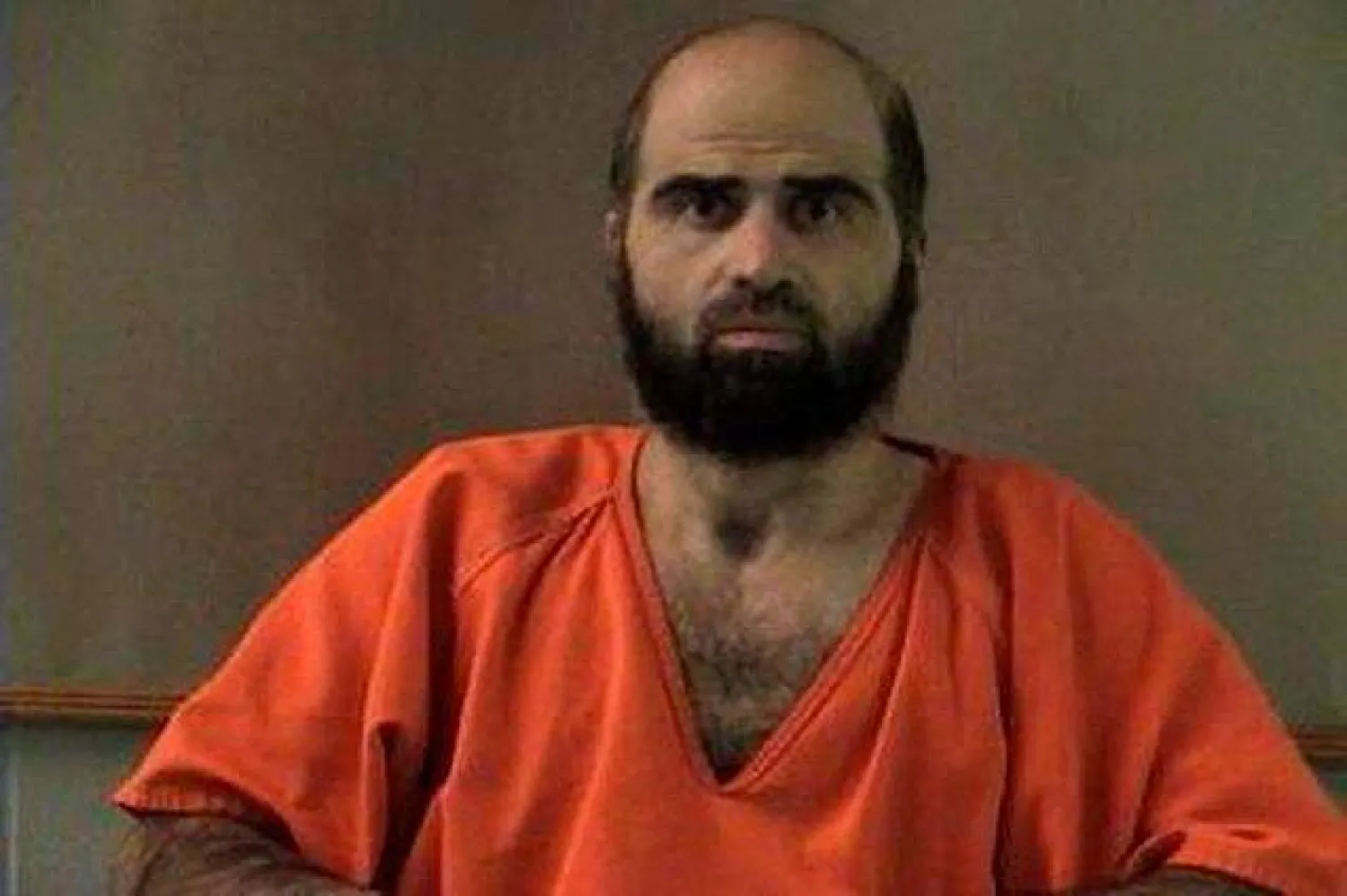
FILE PHOTO: Nidal Hasan, charged with killing 13 people and wounding 31 in a November 2009 shooting spree at Fort Hood, is pictured in an undated handout photo obtained by Reuters on June 29, 2012. REUTERS/Bell County Sheriff's Office/Handout/File Photo
TT

Australia Will Do 'Anything We Can' to Stop US Execution Being Shown Online, Says PM

FILE PHOTO: Nidal Hasan, charged with killing 13 people and wounding 31 in a November 2009 shooting spree at Fort Hood, is pictured in an undated handout photo obtained by Reuters on June 29, 2012. REUTERS/Bell County Sheriff's Office/Handout/File Photo

Australia will do whatever it can to stop the "completely abhorrent" livestreaming of the execution of a US prisoner from being available to view in the country, Prime Minister Anthony Albanese said on Tuesday.

Nidal Hasan's execution -- scheduled for December 3 at Fort Hood, Texas, where he gunned down 13 people in 2009 -- is set to be the first by a US military firing squad since 1945.

A Pentagon official told AFP last week the execution would be streamed live, after US Defense Secretary Pete Hegseth said "we'll make sure that people are able to watch it, that it's public."

Albanese told national broadcaster ABC he had a "social responsibility" to stop it being shown.

"I do not know why anybody would want themselves to watch such an event, let alone sit back and allow potentially kids and families to get access to this," Albanese said.

Australia's internet regulator has said it does not have the power to prevent the execution from being shown online.

Albanese said it was "not as simple as turning off a light switch".

But he said his government would make clear to social media companies that "this has no place in our country".

"If there is anything we can do, we will do, I assure you of that."

Albanese's Environment Minister Murray Watt also said he found the plans "absolutely disgusting".

Plans for Hasan's execution to be shown online have drawn broad revulsion both in the United States and internationally.

The UN High Commissioner for Human Rights said "the livestreaming of an execution is tantamount to a public execution and would breach the absolute prohibition of torture".

In Australia, the issue has prompted rare consensus across the political spectrum in opposition.

Far-right lawmaker Barnaby Joyce described it as "Roman amphitheater stuff", while Greens senator Sarah Hanson-Young called for regulators to stop the execution being shown in Australia.